
This strategic brief analyzes China’s systemic shift toward subnational and localized influence operations within the broader United States domestic landscape, exposing how decentralized democratic institutions are vulnerable to asymmetric political warfare.
Subnational vulnerabilities are rapidly transforming into primary strategic theaters as Beijing systematically pivots away from deadlocked federal channels to exploit highly decentralized regional political ecosystems. The evolving landscape of US-China Competition demands an immediate paradigm shift from traditional top-down counterintelligence toward aggressive localized defense protocols. By weaponizing localized authentic sentiment, adversarial influence operations can successfully penetrate municipal policy frameworks and compromise domestic institutions below the federal detection threshold. Safeguarding national sovereignty now hinges entirely on establishing robust monitoring frameworks that insulate community networks from covert subnational co-optation while simultaneously preserving the foundational liberties of a democratic society within this critical US-China Competition framework.
US-China Competition Under Surface Rubric
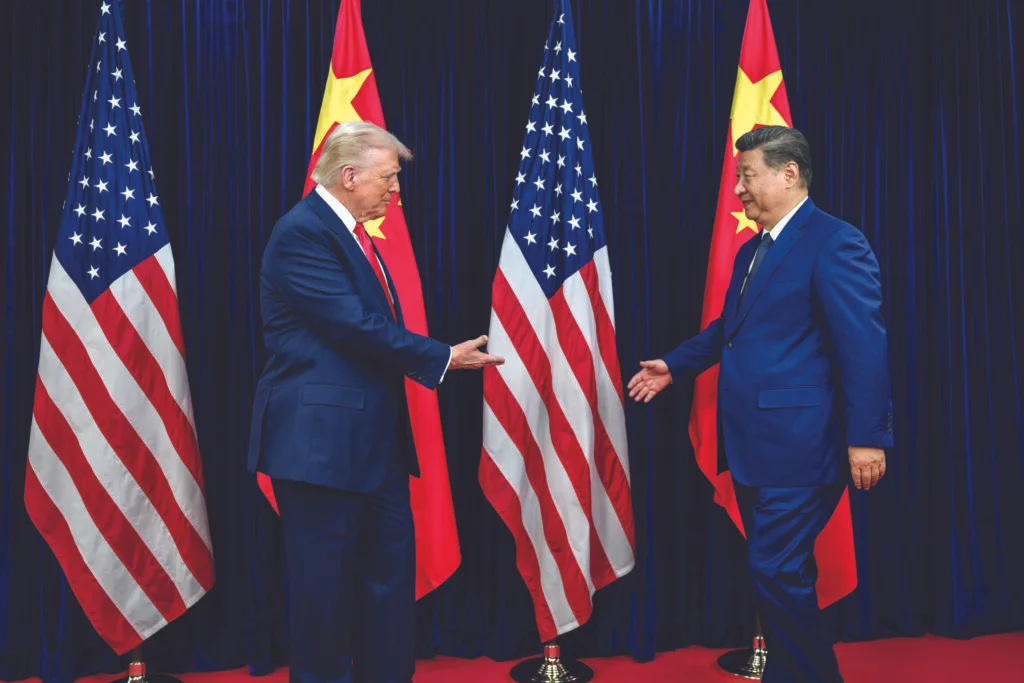
In the aftermath of the high-level summit between Presidents Donald Trump and Xi Jinping last month, much discussion focused on the substance of the agenda, from ongoing negotiations, tariffs, curbing the amount of fentanyl exported to the United States, and “opening new spaces” on Taiwan. Even the leaders’body language was debated. While the outcome of the meetings might lead to more purchases of American airplanes and a broader stabilization of the relationship, Beijing’s effort to shape the American political environment at the local level was not on the agenda.
China’s influence activity has increasingly shifted toward softer targets: social media ecosystems, local politics, diaspora organizations, campaign finance networks, universities, and state-level institutions. Most worryingly, these campaigns now appear to reflect organic American community sentiment.
Digital Fronts Exploit US-China Competition Tactics
Beijing’s influence campaigns manifest in both the digital and physical realms. In the run-up to the 2024 presidential election, social media analytics firm Graphika revealed Chinese influence operations that masqueraded as US voters on X and TikTok. These users claimed to be US citizens or US-focused advocates for peace, human rights, and information integrity, frustrated by American politics. By flooding social networks with “spamouflage”—political messaging created by fake American users—China is trying to disguise coordinated influence operations as authentic online discourse.
These operations push hot-button issues, including gun control, homelessness, drug abuse, racial inequality, and the Israel–Hamas conflict. In a similar vein, the Institute for Strategic Dialogue identified accounts posing as right-wing Americans, exploiting domestic US divides.
Shifting Target Paradigms Facing US-China Competition
Much of this activity aligns with the Chinese Communist Party’s global influence network, known as the “United Front.” Their system is designed to co-opt elites, shape narratives, marginalize critics, and cultivate influence abroad through ostensibly non-state actors. While many Chinese diaspora organizations in the United States operate independently and legitimately, US officials and researchers have repeatedly warned that some organizations, business associations, and cultural groups have been leveraged by actors tied to the CCP’s United Front Work Department to pressure dissidents, shape local politics, and normalize Beijing’s preferred narratives.
US-China Competition Targeting Local Frameworks
As pressure to push China-linked businesses, organizations, and funding out of the federal sector increased, Beijing is zeroing in on new targets: state, local, and subnational entities. Nowhere has this been more prominent than in New York City, where China-backed social clubs undermined a congressional candidate. At the same time, Chinese security officials operated a secret underground police station in Manhattan’s Chinatown.
Municipal Networks Enter US-China Competition Domain
But the People’s Republic of China is not just eyeing New York. Beijing-backed entities have poured millions of dollars into citywide and congressional races from Rhode Island to California. In May of 2026, the mayor of Arcadia, California, resigned after being accused of acting as an illegal agent for China. Even Alaska might now be a target—its Alaskan Native Corporations, organizations which play significant roles in defense contracting, mining, energy services, have been targeted by lobbyists that represent Chinese clients, including DJI Technologies and Shein—firms that themselves have faced growing scrutiny in Washington over supply chain security, data concerns, and ties to the Chinese state.
What unites these seemingly disparate influence efforts is their tactic of making Beijing’s preferences appear to be organic American community sentiment. And by focusing on local politics, social media ecosystems, diaspora networks, universities, and state-level institutions with manufactured authenticity, China is hitting spaces where American democracy is most decentralized and therefore most vulnerable. The challenge, then, is to distinguish legitimate civic engagement by Chinese-American communities from coordinated influence efforts tied to the CCP’s broader United Front strategy. Overreaction risks fueling xenophobia and undermining the very openness Beijing seeks to exploit. Underreaction, however, risks allowing foreign influence networks to shape political discourse below the threshold of national attention quietly.