

The Saudi F-35 deal, combined with Washington’s approval of F110 engines for Turkey’s KAAN, challenges Israel’s qualitative military edge and forces a renegotiation of regional air power.
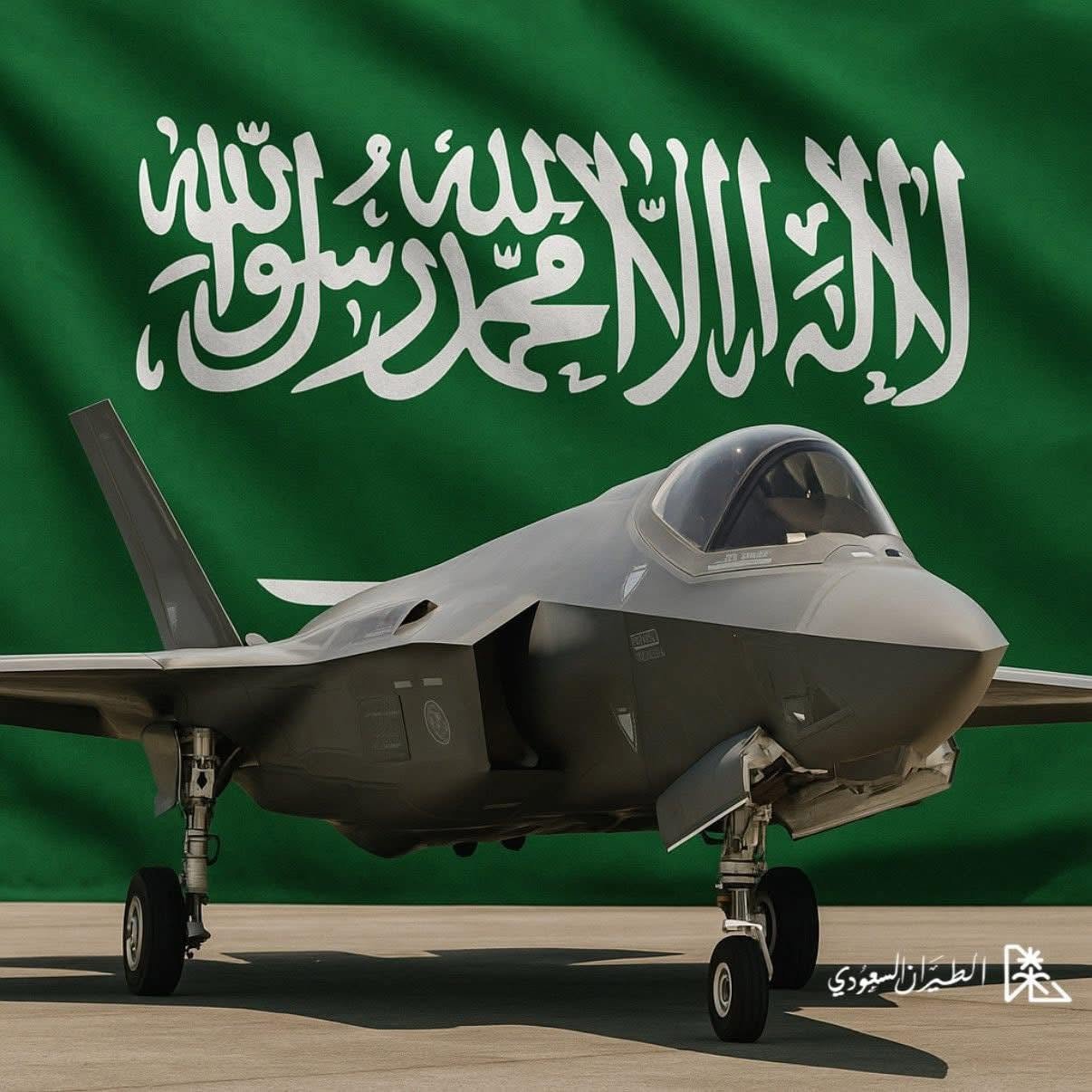
The intersection of U.S. arms export policy and Middle Eastern strategic rivalries has entered a precarious new phase, with the Saudi F-35 deal emerging as the critical test of Israel’s Qualitative Military Edge. The promise of F-35A stealth fighters to Riyadh, extended in November 2025 alongside a strategic defense pact, remains stalled, but the simultaneous clearance of 80 General Electric F110 engines for Turkey’s indigenous KAAN fighter has reshaped the political landscape.
Washington’s willingness to unlock components for a NATO member with its own fifth-generation program creates an unavoidable precedent, one that erodes the justification for indefinitely delaying Riyadh’s acquisition. Israeli strategists, long accustomed to calibrating arms transfers through compensatory offsets, now face a dual-track challenge that links Ankara’s ambitions and Riyadh’s procurement in a single, politically charged negotiation.
The resulting friction exposes the tensile limits of the QME framework, which was already strained by Algeria’s Su-57 acquisition and the maturation of non-American stealth programs. Rather than a simple binary of approval or denial, the emerging pattern forces decision-makers to weigh delivery timelines, software restrictions, and offset packages in a complex calculus where the identity of the buyer—NATO ally versus Gulf partner—dictates the degree of political risk. In this environment, the Saudi F-35 deal ceases to be an isolated procurement question and becomes the fulcrum upon which the next iteration of regional air superiority will be balanced.
Turkey’s F-35 Push Tests Saudi F-35 Deal
Turkey’s renewed push to rejoin the F-35 Joint Strike Fighter program, from which it was expelled in 2019 over its acquisition of Russian S-400 air defense systems, has resurfaced as one of the most contentious files in U.S. Middle East arms policy, and one whose real stakes lie as much in Riyadh as in Ankara. Should Washington clear a Turkish return, it would establish a precedent that Saudi Arabia would invoke directly, making continued delay on its own F-35 file politically harder to sustain. Riyadh has been waiting on the F-35A acquisition it was promised in November 2025.
Israeli Prime Minister Benjamin Netanyahu voiced open opposition to any Turkish sale in a July 7 interview with CNN, the first time Israel has publicly opposed a prospective U.S. fighter sale to a fellow NATO member. Discussing the sale, Netanyahu stated “it would destroy the power balance in the Middle East, because Turkey, I think, has aggressive aspirations.”
Whether or not Ankara’s F-35 ambitions are ultimately revived, a second and more concrete decision has already moved forward. On July 9, Congress allowed a review period to lapse without objection, clearing the export of 80 General Electric F110 engines needed to power the serial production of Turkish Aerospace Industries’ (TAI) KAAN fighter. Together, the two decisions mark a shift whose implications extend well beyond Ankara, reopening questions about Israel’s Qualitative Military Edge (QME) and, by extension, how much longer Saudi Arabia’s stalled F-35 bid can remain in limbo.
Why the F110 Engine License Matters
The F110 clearance is the more concrete of the two developments. TAI CEO Mehmet Demiroğlu confirmed at the Farnborough International Airshow that “we have the export license” for the engines, explaining that ten units already power KAAN’s prototypes.
The newly approved 80 engines will supply serial production, a phase that he said remains “at least two and a half years away.” A company official told Breaking Defense the first batch is expected by 2027. The F110, which also powers the F-16 Fighting Falcon and the F-15EX Eagle II, will continue to power KAAN until Turkish Engine Industries (TEI) fields the indigenous TF35000, targeted for the early 2030s. Turkey Today and Quwa both reported the clearance as removing a long-standing geopolitical obstacle tied to Turkey’s 2019 removal from the F-35 program.
The F-35 question itself remains unresolved and far more politically loaded. As Forbes documents, Israel has repeatedly opposed American fighter sales in the region before, objecting to Saudi Arabia’s F-15C/D Eagle purchase in the late 1970s, its later F-15S and F-15SA acquisitions, Qatar’s F-15QA order, and the UAE’s F-16E/F Block 60 “Desert Falcon.” Yet Tel Aviv has largely refrained from public opposition to sales that did not directly mirror its own operational inventory. The Turkish case breaks that pattern precisely because it does mirror Israel’s own fleet.
Riyadh’s F-35 Wait Gets More Complex
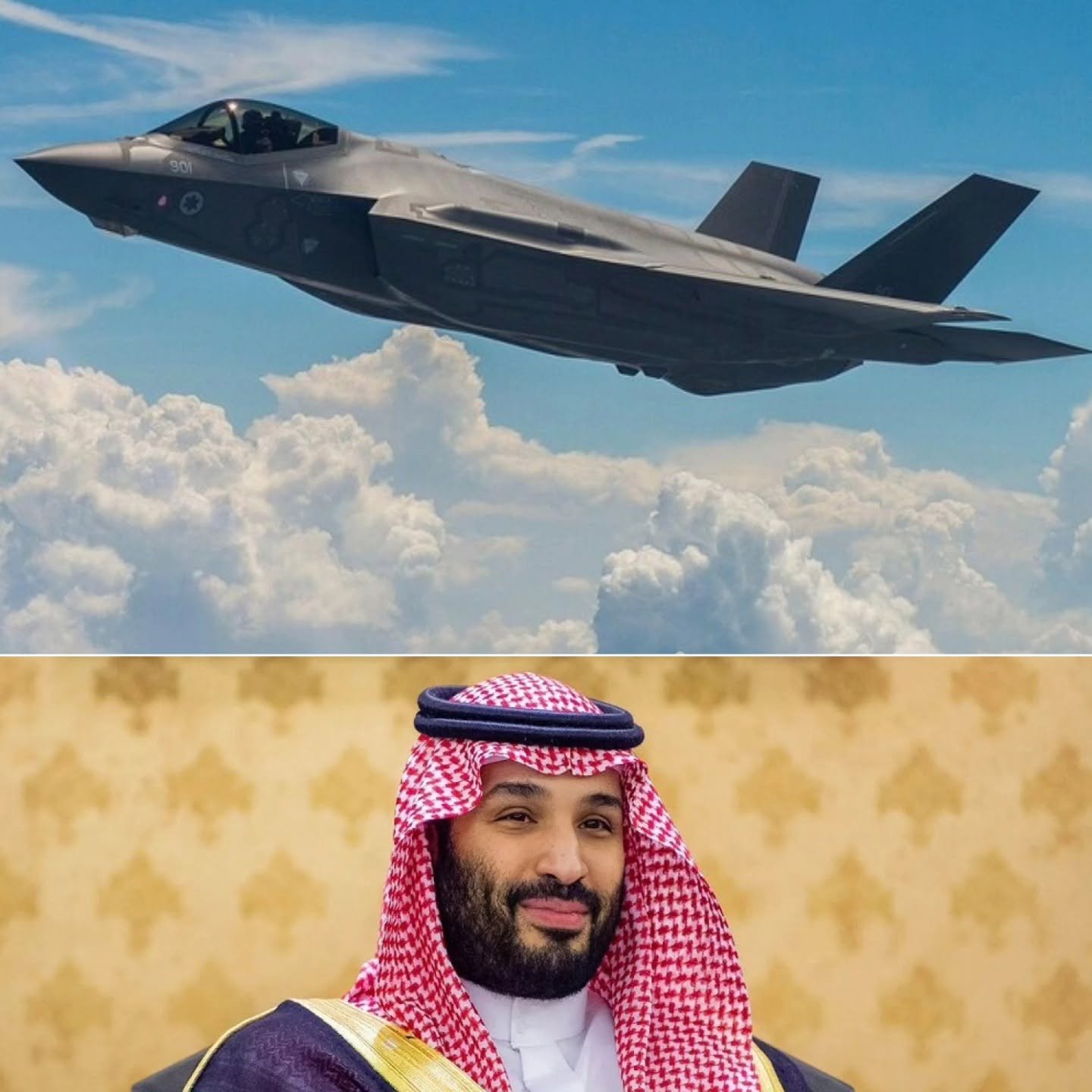
For Saudi Arabia, the Turkish file matters primarily because of what it could mean for the kingdom’s own ambitions. Riyadh received a positive signal on a prospective F-35A acquisition when the U.S.–Saudi Strategic Defense Agreement was signed in November 2025, alongside its designation as a Major Non-NATO Ally and a broader defense package reportedly including nearly 300 M1A2 Abrams tanks.
Since then, momentum has stalled: no confirmed aircraft numbers, no delivery timeline, and no indication of how the legal requirement to preserve Israel’s QME will be satisfied. Current estimates still place Saudi F-35 deliveries in the early 2030s at the earliest. The aircraft would likely be configured to the latest Technology Refresh 3 (TR-3) standard, with restrictions on Block 4 weapons integration and electronic-warfare modes.
A Turkish F-35 breakthrough would not resolve these obstacles automatically, but it would shift the political arithmetic. If Washington accepts the erosion-of-monopoly argument for a NATO member operating its own indigenous fifth-generation program, it becomes harder to justify continued delay for a Gulf partner that has already secured a strategic defense pact and a public presidential commitment.
KAAN Engine Approval Boosts Saudi Options
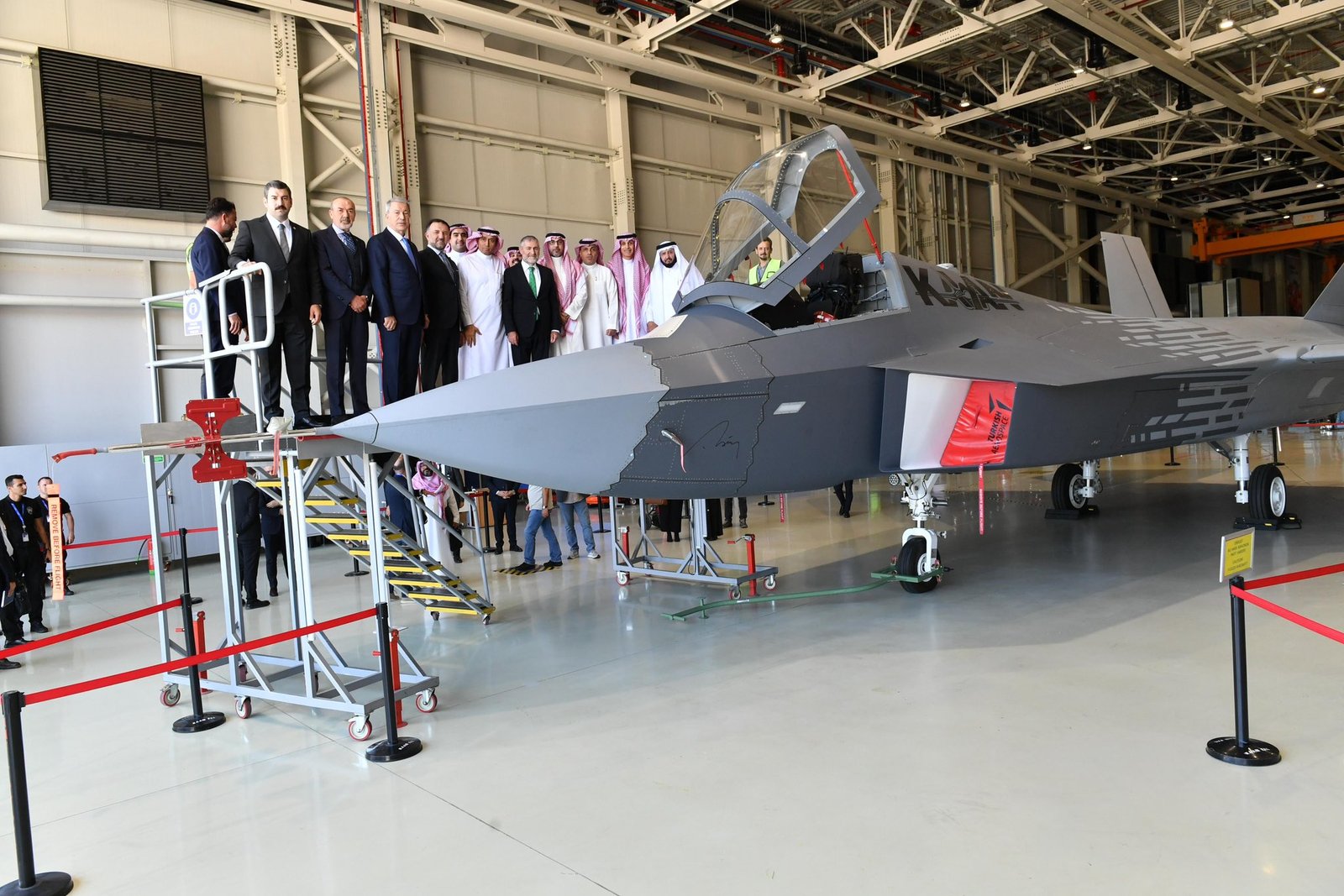
The removal of the engine obstacle strengthens a second, parallel track: direct Saudi engagement with KAAN itself. Talks between Riyadh and Ankara had already entered what TAI described as the “final stages” of decision-making before the 2026 Gulf war. A KAAN mock-up bearing Saudi Air Force markings was even seen on display at the World Defense Show in February. Turkish officials have outlined cooperation models ranging from a modest procurement of roughly 20 aircraft to deeper industrial participation requiring orders of 50 to 100 units to justify a localized final-assembly line, in line with Saudi Vision 2030 localization targets.
The F110 clearance removes a layer of supply-chain uncertainty from this calculus at least through KAAN’s serial production phase. This move reinforces the program’s credibility as an industrial partner rather than a merely symbolic one. Alongside Turkey’s parallel restart of the CAATSA-stalled Sikorsky T70 Black Hawk-derivative helicopter line, it also signals that Washington’s willingness to unlock components of Turkey’s defense-industrial base is not confined to a single platform.
Saudi F-35 Deal Redraws QME Calculus
This distinction runs through the way Israeli strategists have approached both the Saudi and Turkish files. In an April 2026 memo for the Foundation for Defense of Democracies, retired Major General Amir Eshel, former commander of the Israeli Air Force and later director general of Israel’s Defense Ministry, warned that transferring roughly 50 F-35As to Saudi Arabia “without robust offsets would severely undermine Israel’s QME.”
He cited the demonstrated value of Israel’s F-35I fleet during Operation Rising Lion and Operation Roaring Lion against Iran in 2025 and 2026. His prescribed offsets—exclusive F-35I software and weapons upgrades unavailable for export, additional F-35 deliveries to Israel, and Israeli inclusion as a partner in the sixth-generation F-47 program—outline the compensatory package Israel is likely to seek regardless of which Gulf state or NATO ally moves first.
On Saudi Arabia specifically, Israeli experts struck a cautious but largely pragmatic note following the November 2025 announcement. Former National Security Advisor Yaakov Amidror acknowledged that “at the end of the day we have concerns because it is clear that this plane in the hands of another country in the Middle East will be problematic,” while predicting a five- to ten-year delivery horizon that would give Israel time to widen the technological gap.
But in Turkey’s case, Eshel’s memo goes further than it does on the Gulf states, explicitly urging that any Turkish F-35 transfer be factored into QME evaluations because of Ankara’s military footprint in Syria, Libya, and northern Iraq, as well as its openly adversarial posture toward Israel since the Gaza war. The asymmetry is telling: Turkey, a NATO member fielding one of the alliance’s largest F-16 fleets, is treated as a more acute QME risk than Saudi Arabia, despite Riyadh’s F-35 file being politically further advanced.
Who Flies Stealth in the Mideast?
It is worth noting how narrow the field of fifth-generation fighter operators in the Middle East and North Africa remains. Only two states in the region currently fly aircraft of this class: Israel, with its heavily customized F-35I Adir, and Algeria, which in early 2026 became the first foreign buyer of Russia’s Sukhoi Su-57E, receiving the first of 14 aircraft under a roughly $2 billion contract.
That the Algerian acquisition has drawn little concern in Israeli policy circles is instructive, suggesting that Israeli anxiety over fifth-generation proliferation is not simply about capability diffusion, but specifically about the F-35 reaching a U.S. ally in the region. A Su-57E sourced from Moscow, outside the American technological ecosystem, does not touch the same nerve, whatever Algeria’s distance from Israel’s own threat calculus.
A Negotiated Sky
None of this points to an imminent transformation of the regional air balance. Turkish F-35 deliveries, if approved at all, would take years to materialize. Saudi Arabia’s own F-35 file remains procedurally incomplete, and KAAN remains a program still undergoing flight testing rather than serial deliveries. What has changed is the political terrain beneath these parallel tracks.
The F110 clearance shows Washington is willing to unlock components of Ankara’s indigenous fighter ambitions even while the F-35 question remains open, demonstrating to Gulf capitals that U.S. export policy toward Turkey can evolve as strategic priorities change. For Saudi Arabia, the lesson is less about acquiring any single platform than about maintaining optionality across suppliers and political tracks simultaneously, whether that be American, Turkish, or otherwise.
As Washington calibrates how far it can loosen restrictions on Ankara without triggering a full Israeli backlash, it is also, whether deliberately or not, recalibrating the terms on which every other regional actor will eventually make its own case. Air superiority in the Gulf and the wider Middle East is no longer a fixed hierarchy anchored to a single American ally. It is becoming, deal by deal, a more negotiated balance shaped by competing suppliers and political bargains.