
A strategic breakdown analyzing Donald Trump’s declaration in Ankara regarding the termination of the memorandum with Tehran, evaluating whether the rhetoric signals a structural shift toward military conflict or a volatile negotiating tactic.
Trump and Iran face an unprecedented geopolitical fracture as Washington recalibrates its Middle Eastern posture through targeted rhetorical escalation. President Donald Trump’s calculated decision to pronounce the bilateral understanding defunct while standing in close geographic proximity to Tehran signals an aggressive doctrine that weaponizes diplomatic theater.
By deploying this high-stakes rhetoric from a strategic border state, the administration aims to project overwhelming leverage, forcing both regional allies and adversaries to navigate a highly volatile security landscape where the line between psychological warfare and kinetic conflict is intentionally blurred. This strategic maneuver leaves global markets and intelligence networks questioning whether the administration is orchestrating a definitive pivot toward open containment or merely executing an aggressive negotiation tactic designed to force absolute concessions.
Trump and Iran: Ultimate Diplomatic Excision
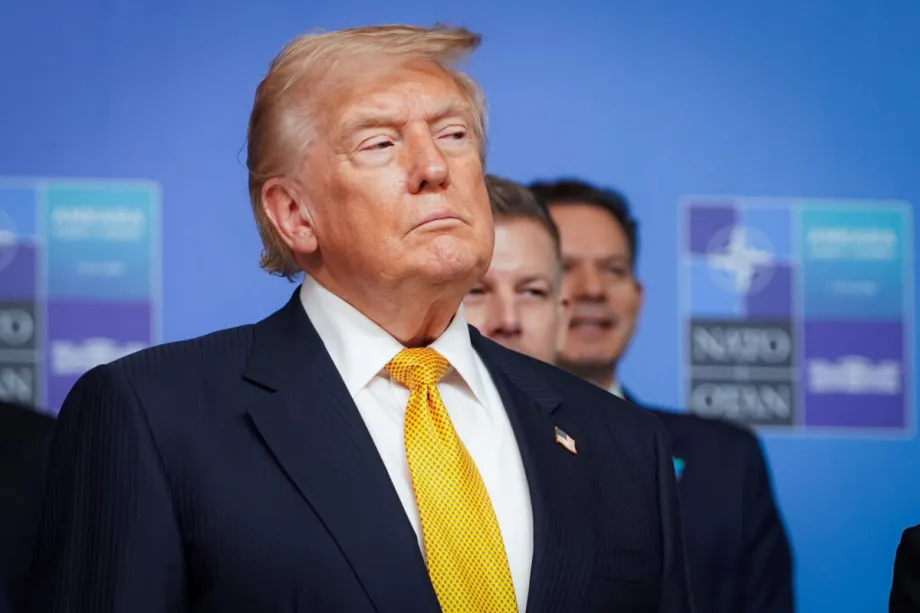
What does it mean for Donald Trump to choose Ankara—politically and geographically the closest major capital to Iran—to declare that the memorandum of understanding with Tehran “is over,” and that he no longer wishes to “deal with sick leaders”? Is this simply another burst of anger from a president known for saying one thing in the evening and contradicting it the next morning? Or does the place and the moment carry deeper significance than a passing remark on the sidelines of a NATO summit?
Ankara is not a neutral city in the map of the Iran–U.S. confrontation. It is the capital of a country whose interests intersect with Tehran in several files, compete with it in others, and oscillate between acting as mediator and partner depending on the season. For Trump to choose this capital specifically to announce that “the memorandum with Iran is finished,” and that he does not want to “waste time” dealing with “sick leaders,” opens the door to a larger question: Who is he really addressing? His NATO allies? Or is he sending his voice across the border directly to Tehran, exploiting the proximity and symbolism of the moment?
Decoupling Brinkmanship From Trump and Iran
In politics, place is never a trivial detail. Saying something in Washington is not the same as saying it in Ankara, Riyadh, or Brussels. When Trump declares that “the memorandum is over” after a wave of mutual strikes, he is not merely describing a military situation. He is attempting to redefine the relationship with Iran in front of allies, adversaries, and a global audience watching the NATO summit for clues about the future of the conflict.
But the deeper question remains: Can we rely on this statement and build political indicators upon it? Or are we witnessing yet another episode in the long-running series of Trump’s volatile declarations? The man who calls Iran’s leaders “sick” and “scum” one day may announce his readiness for a “great deal” with them the next if he sees electoral or economic advantage. How can policymakers or analysts deal with a discourse that swings so rapidly between escalation and de-escalation, insult and negotiation?
Calculated Escalation Anchoring Trump and Iran
This type of language makes any future escalation easier to justify, because it frames the opponent as irrational, untrustworthy, and undeserving of agreements. When Trump says “the memorandum is over,” he is not only announcing the end of a document; he is trying to convince the world that the very idea of understanding with Iran was “a waste of time,” as he has said in other statements.
Here the question becomes: Are we witnessing a strategic shift, or merely a moment of emotional rhetoric used to strengthen a future negotiating position? On the other hand, Trump’s statement links Iran to other allies, as he did when he attacked Spain and threatened to cut trade with it, calling it a “bad partner” in NATO. This linkage suggests that Trump is using the summit to settle multiple scores rather than present a coherent vision. Does this mean his stance on Iran is part of a broader mood in his relationship with allies, rather than a carefully crafted strategy toward Tehran?
Trump and Iran: Kinetic Escalation Realities
The more dangerous implication may lie in the timing: Trump announces the end of the memorandum during a moment of military escalation, after mutual strikes in the Gulf and attacks on bases hosting U.S. forces. The statement becomes part of a wider scene—a president telling the world that “the truce is over,” that he does not want to “deal” with the other side, while military machinery moves on the ground. Is this the beginning of a new phase of open confrontation, or merely psychological pressure aimed at forcing Iran back to the negotiating table under different terms?
Then comes the unavoidable question: How do we deal with a president who says the agreement is over today, and tomorrow may announce a “better agreement” with the same party? Do we build analysis on words or actions? On statements or on the actual trajectory of policy? In this context, the Ankara statement becomes part of a larger game, not the end of a chapter.
Realigning Regional Powers Beyond Trump and Iran
Still, we cannot simply say “this is Trump, that’s how he talks,” and move on. Every statement of this kind leaves a mark on the structure of international relations and on the calculations of the capitals involved. Iran reads these words and places them within its internal and external calculations. Turkey, hosting the summit, reads the message too: an American president using its capital as a stage to announce the end of an understanding with its eastern neighbour, describing that neighbour as “sick” and “ailing.” Does Ankara see in this an opportunity to strengthen its role as mediator, or a danger of escalation creeping closer to its borders?
In the end, perhaps the most important question is this: Can the world still treat politics as a series of accumulated indicators, or have we entered an era in which volatile statements are part of the game itself? Trump’s declaration in Ankara opens the door to this question: How do we read politics when speech itself becomes a battlefield, and when a president uses a sentence the way he uses a missile—launching it and leaving others to guess whether it signals the beginning of a war or merely passing noise in a summit crowded with microphones?