
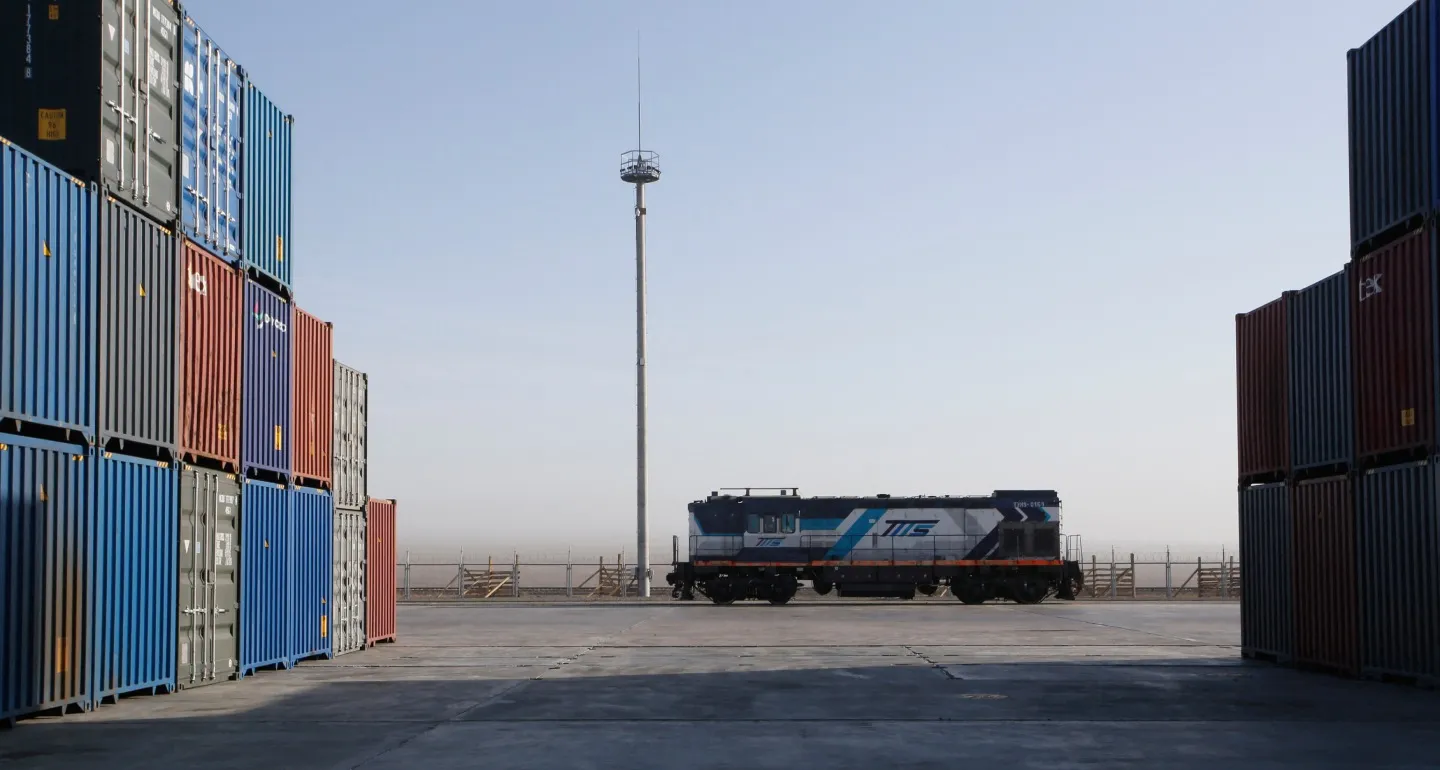
Central Asia’s pursuit of alternative trade routes has been systematically neutralized by concurrent conflicts in Iran, Afghanistan, and Pakistan, forcing a paradoxical return to Russian dependence while every alternative corridor simultaneously collapses under geopolitical siege.
The strategic irony devastating Central Asia’s trade calculus is that every alternative corridor designed to bypass an unpredictable Russia has now collapsed under the weight of its own regional conflicts, leaving Moscow’s war-torn Northern Corridor as the default lifeline. This complete inversion of diversification logic exposes how multiple wars are ruining Central Asia’s trade routes before they can mature, transforming geopolitical hedging into an impossible equation where every overland trade routes harbors existential risk and the only constant is the return to Russian dependence.
Trade Routes Collapse
Russia’s full-scale invasion of Ukraine forced the countries of Central Asia to finally attempt to reduce their dependence on Russia as the main transit route to international markets. It had become too dangerous to rely on such an unpredictable neighbor for their only window onto the outside world. Yet four years later, all the region’s efforts have come to nothing. The routes seen by Central Asia as alternatives—primarily Iran, but also Afghanistan and Pakistan—have been effectively closed by military conflicts that have broken out in all three countries. Paradoxically, the U.S. strikes on Iran mean that Russia—while still at war and subject to an avalanche of sanctions—once again looks like the safest option.
Historically, most of Central Asia’s trade routes to global markets have followed what is known as the Northern Corridor through Russia and Belarus to Europe. Before the 2022 invasion of Ukraine, over 80 percent of land traffic between Europe and China passed along this route, including most Kazakh exports of oil, uranium, metals, and grain; Uzbek cotton, gold, textiles, and fertilizers; Tajik precious metals and aluminum, and Kyrgyz gold. A significant proportion of the region’s agricultural produce also reaches international markets via this route.
The appeal of this transit route via Russia is enhanced by the fact that Russia itself is one of the main markets for Central Asian goods: from 12 to 26 percent of exports, depending on the country. In addition, the Northern Corridor has a high throughput capacity, customs procedures that function smoothly for the most part, and predictable tariffs.
Central Asia’s Trade Routes Dependency
Still, their dependence on a single route to access external markets had been a cause for concern among the countries of Central Asia ever since they gained independence from the Soviet Union. Those concerns only grew as, from the mid-2000s, the Kremlin increasingly used foreign trade as a tool to punish former Soviet countries for what it perceived as insufficient loyalty in their foreign policy. In 2016, in response to Kyiv signing the EU Association Agreement, Russia banned the transit of Ukrainian goods through its territory: a decision that also had swift repercussions for Central Asia, as Ukraine was among the region’s top ten biggest trade partners.
Whatever doubts there had been over alternative routes, Russia’s full-scale invasion of Ukraine elevated their development to a practical necessity. Transporting goods via Russia had become too difficult. The number of inspections increased, along with costs and unpredictability, and problems also arose with insuring cargo and processing payments. To top it off, Moscow continued to use the corridor as leverage, raising transit tariffs, introducing additional fees, and changing the system for paying VAT at the border—most likely in an attempt to offset the cost of the war in Ukraine.
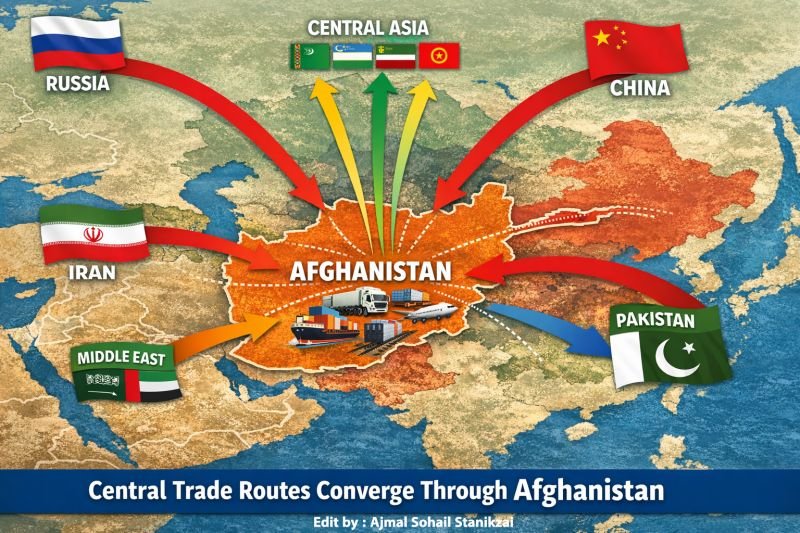
Central Asia’s biggest achievement in lessening its dependence on Russian transit was increasing its direct trade with China by building many miles of new railways, roads, and pipelines. Still, in their quest for unfettered access to international markets, the Central Asian nations also looked to the Southern Corridor through Afghanistan and Pakistan, as well as Iran, to develop their trade with Europe.
Obstacles to Trade Routes
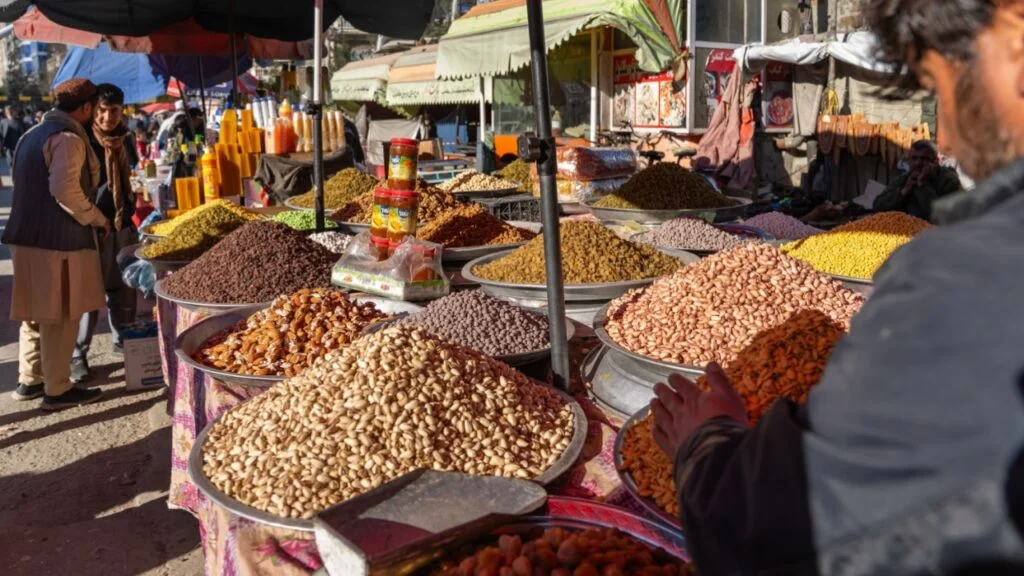
There is no shortage of obstacles along the Southern Corridor either. The route via Afghanistan to the Pakistani ports of Karachi and Gwadar is expensive and dangerous as a result of decades of war, poor infrastructure, and mountainous terrain. The route via Iran was easier, though still complicated by sanctions, which did not technically forbid the transit of goods, but did make financial transactions more difficult, which pushed up costs.
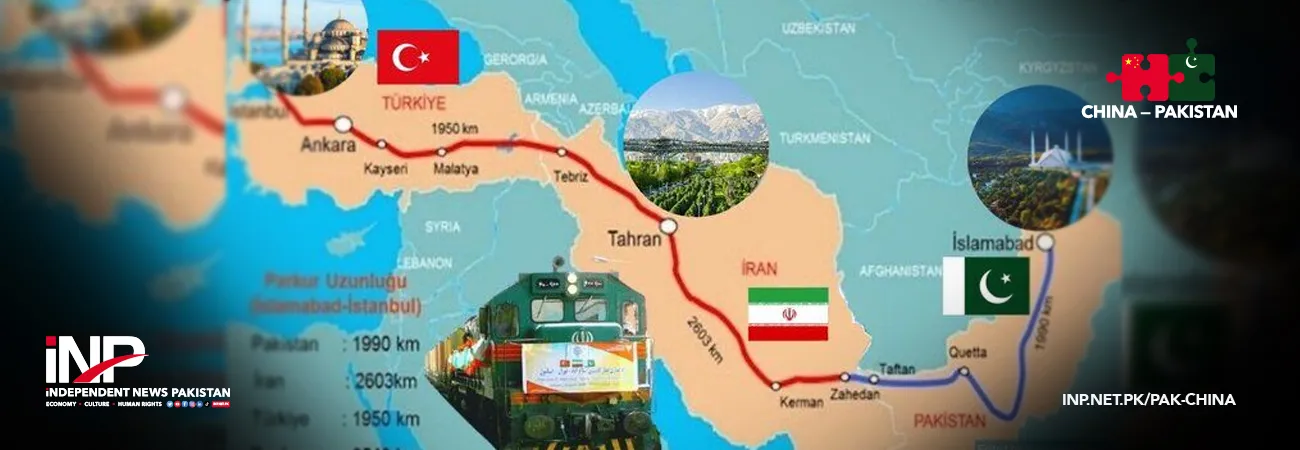
For many years, there were discussions of a Middle Corridor via the Caspian Sea and South Caucasus and onward to Europe via the Black Sea or Türkiye. The biggest hurdles along this route were the lack of coordination among countries and insufficient connectivity between the various parts of the route, including at national borders.
Russia’s invasion of Ukraine made the development of the Southern Corridor a priority, and routes via Iranian ports became more popular. After 2022, these routes were also used to transport goods that were subject to Western sanctions.
At the same time, the Central Asian nations began making use of the route via Afghanistan and Pakistan, whose governments were also keen to develop transit routes. Central Asia first sent cargo to India via Pakistani ports in 2022, but the route never really took off. There is not yet any unified data about volumes of cargo traffic along it, which is further evidence of the shipments’ fragmentation.
Trade Routes Surge
The route that has seen the biggest surge in support during the Ukraine war is the Trans-Caspian, or the Middle Corridor, for which the EU has allocated 12 billion euros. China has also included this route in its Belt and Road Initiative. The United States, despite its trade conflict with China and ambition to reduce its dependency on Chinese supply chains, also supports the development of the Middle Corridor, along with other routes bypassing Russia. Although the Middle Corridor’s share of cargo transit is still modest at about 6 percent of overall volumes, in 2022–2024 the volume of freight being transported along it tripled and continues to grow.
Recent events, however, threaten to ruin all these efforts. The route through Afghanistan and Pakistan has been blighted by the latest fighting between the two countries. Islamabad accuses the Taliban of sheltering radicals fleeing Pakistan, and has closed transport links.
Meanwhile, amid the war launched by the United States and Israel against Iran in March, Tehran has closed the Strait of Hormuz, while the United States has blockaded Iranian ports, including Bandar Abbas and Chabahar: the two most important ones for trade with Central Asia.
For now, the hostilities have stopped and the two sides say they have reached an agreement. But even if a deal is fully implemented, which is doubtful, it will not be possible to restore trade to its previous volumes anytime soon. Infrastructure has been destroyed, shipping costs have soared, and there will be fears for a long time to come that the war could start again at any moment.
Conflicts Ruin Trade Routes
The Middle Corridor has not escaped unscathed either. Retaliatory strikes by Iran damaged the airport in the Azerbaijani exclave of Nakhichevan, and infrastructure in the Caspian Sea has been targeted. There are also now questions about the planned transit route through Azerbaijan and Armenia, the southern part of which would pass just a few kilometers from the Iranian border.
As a result, all the alternative routes to transit through Russia are turning out to be no less risky for the countries of Central Asia. That only reinforces the inertia of the region’s elites, many of whom are still—even in the fifth year of the war in Ukraine—working on the basis that the fighting must surely end sometime soon, at which point sanctions will be eased and Russia will once again become more predictable in its dealings with other countries. Instead of looking for alternative routes, therefore, it’s easier to just wait until cargo transit along the Northern Corridor returns to its prewar volumes.