
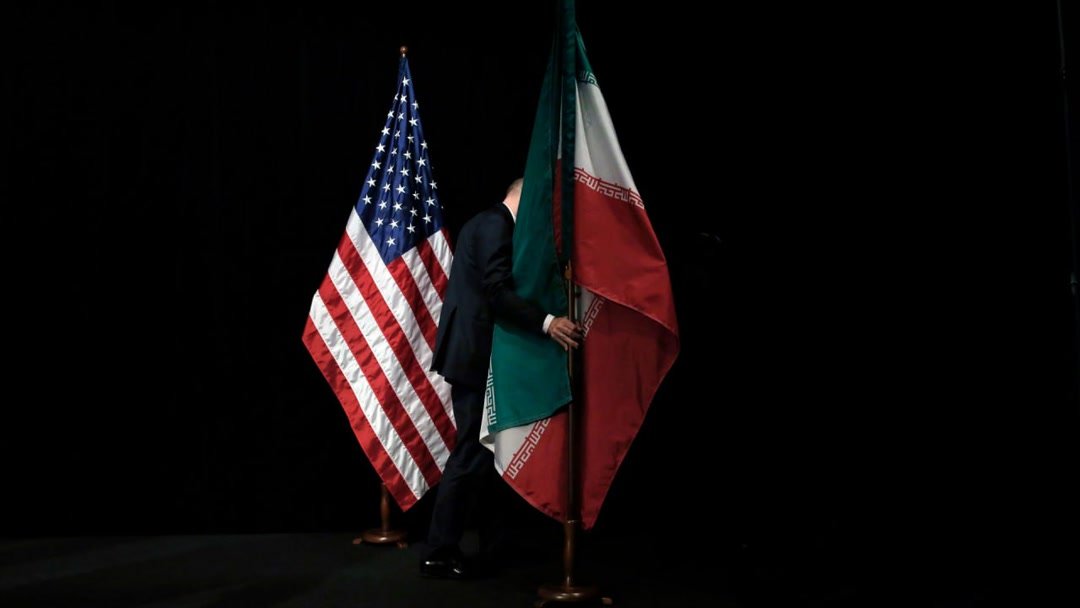
Executive non-compliance with statutory oversight on Iran agreements signals a profound institutional rupture, challenging Congressional authority and the rule of law by bypassing mandated reporting protocols and demanding immediate legislative scrutiny.
Executive non-compliance with statutory oversight on Iran agreements signals a profound institutional rupture, challenging Congressional authority and the rule of law. The Iran Nuclear Agreement Review Act mandates specific reporting, yet the administration’s MOU with Iran bypasses these Iran agreements protocols. This failure demands immediate legislative scrutiny to enforce statutory obligations and restore constitutional balance.
Iran agreements face first test
The Trump Administration has evidently decided that the Iran Nuclear Agreement Review Act (INARA) is not applicable to its Memorandum of Understanding (MOU) with Iran. Its immediate provision to Iran of relief from statutory sanctions appears inconsistent with INARA. Congress must both demand the White House explain its position and require INARA compliance as necessary.
The Iran Nuclear Agreement Review Act
Congress passed INARA in 2015 to strengthen oversight of President Obama’s Joint Comprehensive Plan of Action (JCPOA). INARA requires the President to submit any U.S. agreement on Iran’s nuclear program to Congress within five days. For 30 days after that submission, the President is prohibited from relieving statutory sanctions on Iran. The White House sent Congress the MOU on June 18. The Treasury Department’s June 22 license pausing sanctions on Iranian petroleum appears inconsistent with this prohibition.
The 30-day window was designed to provide Congress time to review the JCPOA, and potentially reject it, prior to its implementation under U.S. law. However, INARA does not have a sunset date; it remains the law of the land. Hence, it appears to be just as applicable to the Trump MOU as it was to Obama’s JCPOA.
INARA covers any “agreement related to the nuclear program of Iran” involving the U.S., “regardless of the form it takes, whether a political commitment or otherwise, and regardless of whether it is legally binding or not.” The MOU clearly relates to Iran’s nuclear program. In the MOU, Iran reaffirms that “it shall not procure or develop nuclear weapons,” and agrees with the Unted States on a framework to resolve the disposition of Iran’s stockpiled enriched material. Iran also agrees to “maintain the current status quo of its nuclear program” pending a final deal.
Compliance gap in Iran agreements
The Trump Administration’s June 18 transmittal of the MOU to Congress contradicts INARA in three ways. First, along with submitting the MOU itself, INARA requires submission of “any additional materials” including “annexes, appendixes, codicils, side agreements, implementing materials, documents, and guidance, technical or other understandings, and any related agreements…”
Vice President Vance has said the deal includes “gentlemen’s agreements,” some written and some oral. Special Envoy Steve Witkoff reportedly noted that a side letter exists in which Iran invites the International Atomic Energy Agency (IAEA) to inspect its nuclear sites and uncover Tehran’s enriched uranium locations. If INARA applies to the MOU, the Administration should have submitted these materials to Congress within five calendar days of the agreement being reached. The public record reveals no signs that it has done so.
Second, INARA requires submission within that same five days of a “verification assessment report” by the Secretary of State. Here too, there’s no evidence of Executive Branch compliance. The “verification assessment report” must include assessments of: (i) the Secretary of State’s capacity “to verify that Iran is complying with” the MOU; (ii) the adequacy of the MOU’s “safeguards and other control mechanisms and other assurances” to ensure Iranian activities will not further “any nuclear-related military or nuclear explosive purpose…”; and (iii) the IAEA’s capacity and capability to “effectively implement the verification regime required by or related to the agreement…”
The MOU includes Iran’s assurances that, “it shall not procure or develop nuclear weapons” and agreement, “to resolve the disposition of stockpile enriched material pursuant to a mechanism that will be mutually agreed upon… with the minimum methodology to be down blending on-site, under the supervision of the IAEA.”
The required “verification assessment report” must address whether the MOU provides, or the IAEA otherwise has, sufficient access to Iran to verify Iran’s implementation of these commitments. But the MOU does not contain any “safeguards” or “other control mechanisms,” let alone a “verification regime,” relating to these assurances (other than the vague reference to IAEA supervision of the down blending). It would be important for Congress to see how this gap is addressed by the required verification assessment report.
Third, INARA requires a presidential “certification,” including that “the President determines the agreement meets United States non-proliferation objectives, does not jeopardize the common defense and security, provides an adequate framework to ensure that Iran’s nuclear activities permitted thereunder will not be inimical to or constitute an unreasonable risk to the common defense and security.” The President has yet to submit such a certification.
Sanctions relief and Iran agreements
In addition, INARA specifies that during the 30-day period following a covered agreement’s transmittal to Congress, “the President may not waive, suspend, reduce, provide relief from, or otherwise limit the application of statutory sanctions with respect to Iran…or refrain from applying any such sanctions pursuant to” the covered agreement. Yet the MOU’s paragraph 10 specifies that “immediately” upon signing the MOU, “Treasury will issue waivers for the export of Iranian crude oil, petroleum products and derivatives, and all associated services…”
Former top attorneys from the George W. Bush and Barack Obama Administrations were quick to warn that INARA prohibited such waivers for the first 30 days following the MOU’s transmittal to Congress. Notwithstanding the 30-day hold period required by INARA, however, the Treasury license implemented Paragraph 10 on June 22, thereby reportedly providing Iran with billions of dollars in oil sanctions relief.
Iran agreements demand compliance now
Why hasn’t the Trump Administration complied with INARA? The Administration appears to be acting on the basis of a Justice Department opinion that some or all of INARA’s requirements do not apply to the MOU. But the Administration has not made this opinion, or its arguments, public. Congress should insist on a full explanation of this seemingly inexplicable opinion, so it can make its own judgment and take action accordingly.
The two of us have worked on treaties and non-proliferation law for decades. Our views differ on the right policy responses to dealing with Iran’s nuclear program. But we agree that the Executive Branch must comply with INARA’s terms or explain why it believes that INARA is inapplicable to the MOU. To date, the White House has done neither.