
This brief analyzes how NATO depends on Turkey for asymmetric deterrence. Evaluating domestic defense production, regional friction management, and naval platform exports, it illustrates how Ankara secures the alliance’s highly volatile southern flank.
As allied leaders gather for NATO’s Ankara Summit, Europe’s security architecture requires a modernized approach to defense partnerships. Transatlantic deterrence relies heavily on robust industrial capabilities along the Mediterranean flank. Recognizing the strategic reality of how NATO depends on Turkey to mitigate asymmetric threats is no longer optional; it is an absolute necessity for collective alliance defense.
NATO Depends on Turkey: Southern Flank Security
On June 20, at a ceremony held at the Istanbul Naval Shipyard Command, the ROMAN corvette, built in Turkey, was officially handed over to the Romanian Navy. This marked Turkey’s first-ever export of a warship to a country that is a member of both NATO and the European Union. The transaction is a profound strategic statement: while much of Europe is scrambling to revive its defense industry infrastructure, a country on the alliance’s southern flank can simultaneously equip both its own navy and an ally in the Black Sea—all with domestic engineering.
As allied leaders gather for NATO’s Ankara Summit, this delivery is also shattering an outdated paradigm. For decades, Western capitals viewed Turkey through the lens of the Cold War, seeing it merely as a geographical buffer zone with a large standing army that absorbed shocks from the East and the South. That era is now over.
Today, the alliance faces a far more complex landscape of low-threshold risks and asymmetric threats. As the Ankara Summit convenes, NATO must acknowledge a fundamental reality: Europe’s security architecture will remain incomplete unless Turkey’s autonomous defense industry capabilities are fully integrated into the alliance’s overall force structure and “burden-sharing” strategy. This new reality is also being felt in NATO’s highest echelons. Javier Colomina, NATO’s special representative for the southern neighborhood, recently emphasized that Turkey is a key actor for the alliance’s overall deterrence and the security of the Mediterranean.
Countering Hybrid Threats Because NATO Depends on Turkey
Although the alliance’s “360-degree security” vision sounds good in diplomatic texts, in practice NATO’s focus remains stuck on conventional Eastern European scenarios. Yet the real threat knocking on Europe’s door is not a large-scale conventional invasion, but rather hybrid and asymmetric threats—which are being felt not only in the east but also along the southern borders, shaped by non-state actors and terrorism.
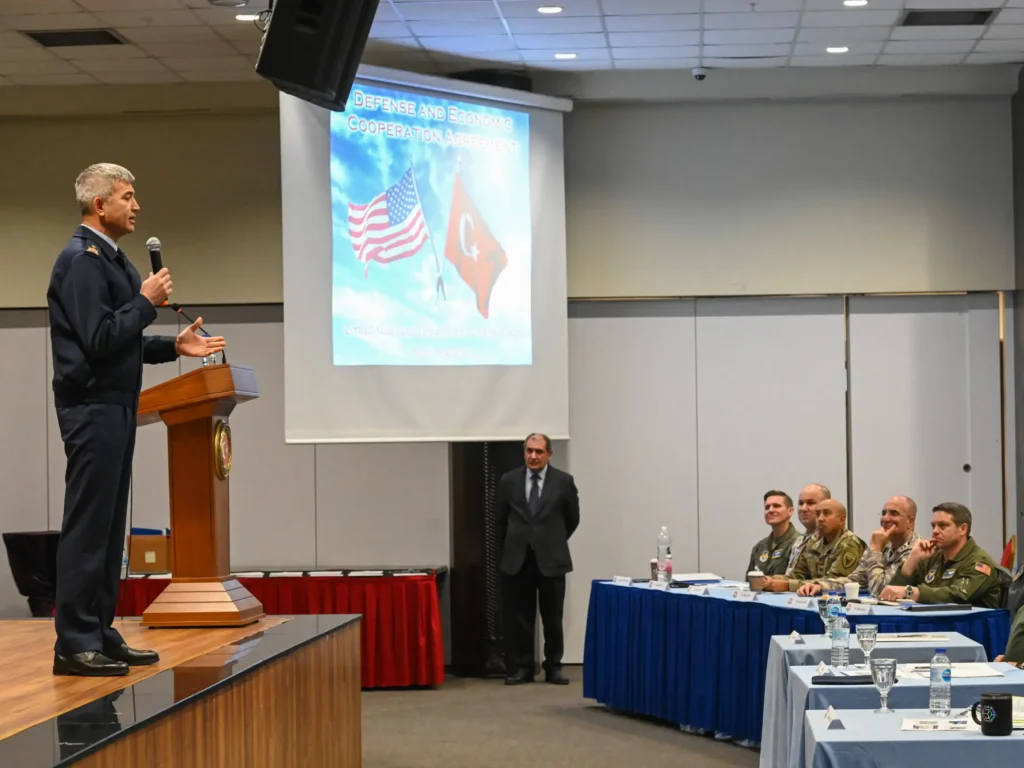
In March, when Iranian ballistic missiles entered Turkish airspace, NATO’s air and missile defense assets stationed in Turkey and the Mediterranean successfully intercepted them. NATO deployed an additional Patriot battery and the Italian SAMP-T air defense system.
As Rich Outzen, a retired US Army colonel and former State Department adviser, observed in an interview with the author, this operational synergy is vital for the alliance’s next decade. “These hybrid and low-level threats are a reality now and for the foreseeable future.” Outzen views NATO’s concrete actions in Anatolia as a blueprint: “NATO support to Turkish air defense was an important test case for Southern Flank and 360-degree concepts, and I think the results were rather positive.”
Regional Stability Underscored As NATO Depends on Turkey
With its active counterterrorism experience on the ground, Turkey serves as the first and most robust line of defense against these low-threshold threats, containing them before they reach the heart of Europe. For this reason, the concept of “burden-sharing” is no longer a sufficient framework on its own; the discourse is increasingly shifting toward “burden-shifting,” which envisions European allies assuming greater responsibility for conventional defense, and Turkey’s autonomous role in the south stands squarely at the center of this shift.
Translating this shifting burden into a cohesive policy, however, requires tackling deep-seated regional issues. Outzen points out that the biggest hurdle to NATO cohesion on the Southern Flank remains the “frictions among NATO members over air and sea space in the Aegean and [the] Eastern Med[iterranean].” To build mutual confidence, he suggests leveraging NATO exercises and consultations more effectively. The alliance should consider structural adaptations on its borders, such as “a NATO Training Mission in Syria similar to what has been done in Iraq and Afghanistan to implement a common approach to stabilizing and securing Syria—which shares a border with NATO as well as Turkey.”
This role is supported not only by possessing a large military force but also by building a self-sufficient defense ecosystem. While many allies in Europe are struggling to meet NATO’s 2 percent target, Turkey increased its 2026 defense and security budget to $27.3 billion, raising its defense and security spending-to-GDP ratio to 2.33 percent. However, assessing defense readiness solely through the traditional GDP percentage metric can be misleading.
NATO Depends on Turkey: Industrial Advancements
Associate professor of security studies at Istanbul Beykent University Kemal Olcar, a retired Turkish Army colonel, noted in an interview with the author that traditional metrics such as the 2 percent GDP target fail to capture true sovereign capacity, which is measured by domestic production rates and AI integration. This is precisely where Turkey’s strategic value lies: the defense industry’s rate of foreign dependence has fallen from approximately 80 percent in the early 2000s to less than 20 percent today.
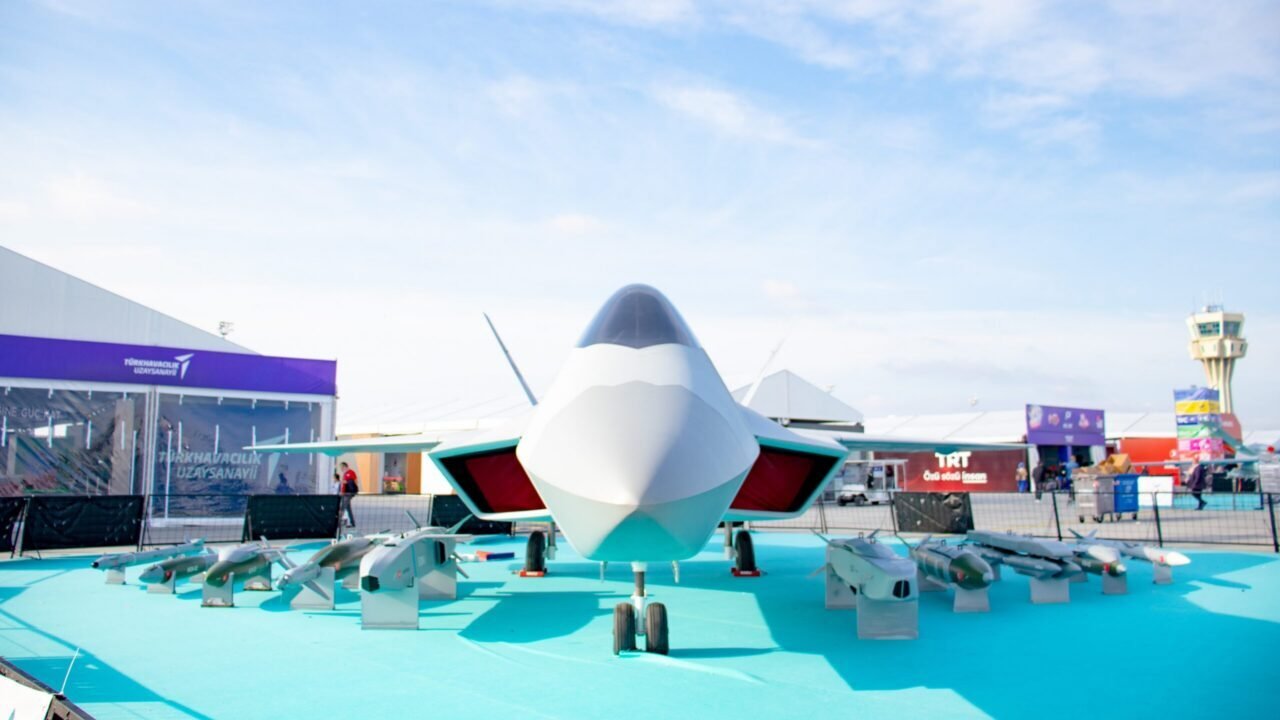
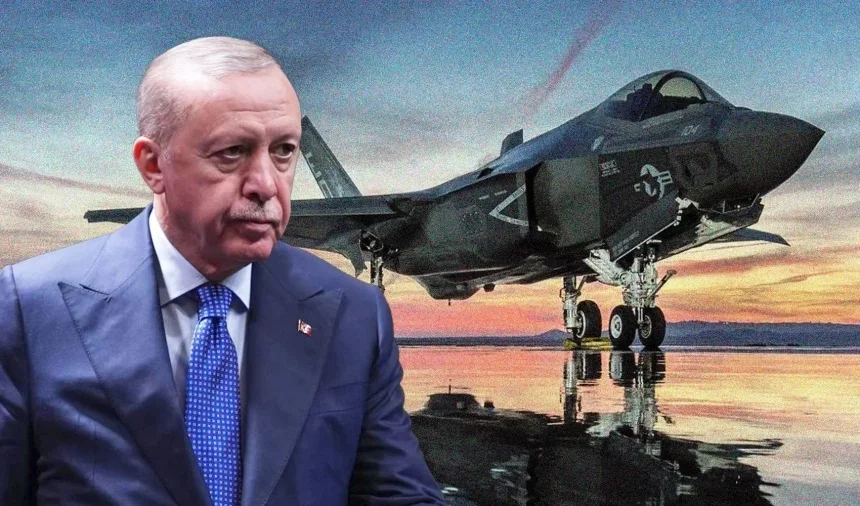
The figures confirm that this autonomy represents not a break from the alliance, but a guarantee of supply. Turkey’s defense and aerospace exports exceeded $10 billion for the first time in 2025; 56 percent of these exports were made directly to the European Union, NATO allies, and the United States. The first serial production order for the domestically developed fifth-generation fighter jet KAAN was signed by the Turkish Air Force; Indonesia joined the program with an order for 48 aircraft, while Spain has expressed interest in the KAAN after rejecting the F-35. ASELSAN’s $410 million sale of an electronic warfare system to a NATO member, Poland, was the first of its kind within the alliance.
Turkey’s defense industry is no longer merely a national counterterrorism tool; it has become a critical industrial pillar that meets Europe’s armament needs and fills gaps in the alliance’s asymmetric warfare capabilities. This technological capability goes beyond mere hardware; it addresses fundamental operational shortfalls within the alliance. “NATO has excellent plans on paper, but translating them into practical reality is not easy,” Olcar observed. He highlighted that while NATO currently lags in autonomous and unmanned systems, Turkey is actively bridging this gap.
From advanced Electronic Warfare (EW) systems like KORAL to emerging microwave and laser defense systems designed specifically to neutralize drone swarm attacks—Ankara is producing the capabilities necessary for next-generation combat. The upcoming KAAN fighter jet exemplifies this shift.
Overcoming Perceptions Demonstrating Why NATO Depends on Turkey
Despite these critical contributions, a perception gap remains. It is important to note that Turkey is already fully integrated into NATO’s formal military structure—meeting staffing requirements at alliance headquarters, participating in defense mobilizations, and hosting key institutions such as NATO LANDCOM. The challenge, therefore, is not military alignment but the conceptual integration of Turkey’s industrial output into the wider European defense ecosystem.
Outzen notes that while some European nations have forged close industrial ties with Ankara, broader European progress remains uneven: “Geography and military capabilities dictate that effective European defense and security cannot be achieved without integrating the Turks…The Ukrainians understood this early on, but some in Europe still see the Turks as an external factor rather than an organic part of European defense.”
Olcar views the ROMAN corvette delivery not merely as a commercial transaction but as a critical contribution to the security architecture of the Black Sea littoral states. “For one NATO member to acquire such a naval platform from another enhances cooperation in supply chains, training, and logistical maintenance,” he explained. More importantly, it establishes a mechanism for regional security without requiring direct intervention by third-party allies, thereby respecting regional frameworks such as the Montreux Convention while strengthening NATO’s collective maritime deterrence.
The Ankara Summit offers NATO allies a valuable opportunity to place Turkey’s evolving capabilities within a broader strategic framework. Turkey’s defense sector is prominently featured at the Industry Forum, which is held on the sidelines of the summit. NATO Secretary General Mark Rutte recently described Turkey’s defense industry as undergoing a “defense industrial revolution.” If the alliance seeks integrated European security, it must position Turkey’s technological and military capabilities in a far more integrated manner within NATO’s overall force structure, rather than viewing them merely as an external resource.