
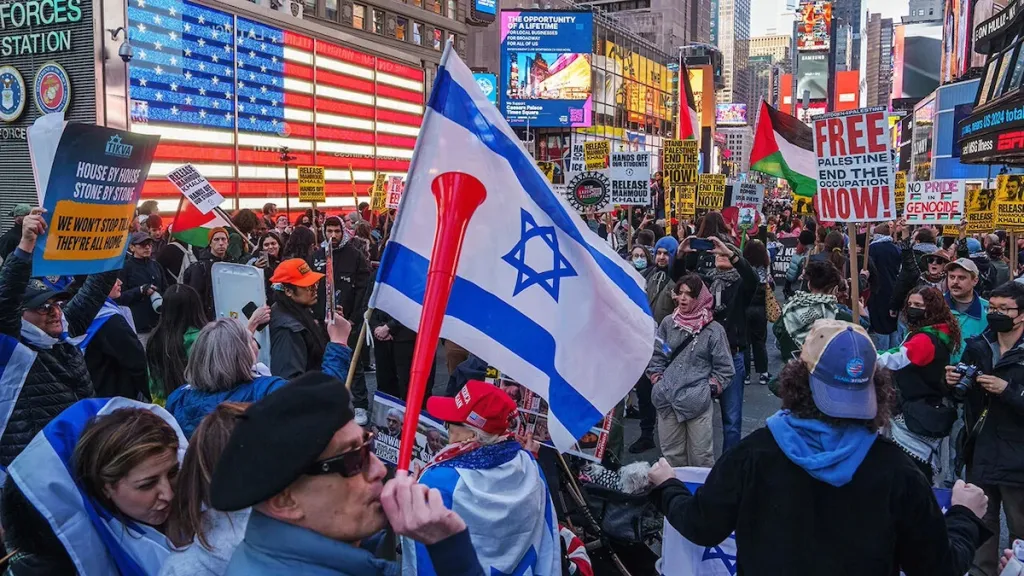
US Support for Israel rests on a structural premise now eroding through cohort replacement. The 56-point generation gap between Boomers and Gen Z makes backing conditional, contested, and renewable rather than permanent.
For eight decades, the Israeli political and security establishment has treated American backing as a structural fact, as fixed as the Mediterranean coastline. That premise is at risk. Not a battlefield reversal, not an Iranian breakout, but a demographic shift that has made US Support for Israel a contested political variable rather than an unquestioned condition of nature.
The 56-point generation gap between Baby Boomers (+34) and Gen Z (-22) on a pro-Israel index is the arithmetic of cohort replacement, not noise. Gallup’s 2026 survey shows that for the first time, Americans sympathize more with Palestinians than Israelis. Pew finds that 60 percent of US adults hold an unfavorable view of Israel, nearly double the figure from 2022. Among Democrats, unfavorable views have reached 80 percent. The erosion is concentrated among the young in both parties, shaped by Gaza rather than 1967.
Israeli planners long reliant on congressional majorities, public sympathy, and the annual aid package renewed on autopilot must confront a different reality. The $3.8 billion memorandum runs through 2028; the negotiation for what follows will be conducted by a Congress with more members who came of political age after October 7 than before it. US Support for Israel is not disappearing, but it is becoming conditional, contested, and renewable—and Israeli strategy can no longer assume otherwise.
A Premise Treated as Fact
For eight decades, the Israeli political and security establishment has operated on a premise so deeply embedded that it is rarely stated as a premise at all: that American support is not a policy but a condition of nature, as fixed as the Mediterranean coastline.
Administrations would come and go, presidents would hector and cajole, but the underlying architecture, congressional majorities, public sympathy, the annual aid package renewed on autopilot, would hold.
This was never quite true even in 1973, when Washington resupplied a faltering Israel Defense Force only after extracting, in the following months, a set of diplomatic concessions Jerusalem did not want to make.
But it was true enough, for long enough, that Israeli planners could treat American backing as a structural fact rather than a political variable.
That premise is now the thing actually at risk. Not a battlefield reversal, not an Iranian breakout, not even the next round with Hezbollah. The worst case Israel is facing is demographic, and it is already visible in the numbers.

Gallup and Pew Confirm Erosion
Start with Gallup, which has tracked American sympathies in the Israeli-Palestinian conflict since 2001. Every year of that survey, Israelis led — often by margins above 40 points. In 2026, for the first time, they did not: 41% of Americans now sympathize more with Palestinians, 36% with Israelis, a gap inside the margin of error.
Pew’s numbers tell the same story from a different angle: 60% of U.S. adults now hold an unfavorable view of Israel, up from 42% in 2022, nearly a doubling in four years, and 59% lack confidence in Netanyahu on world affairs. Among Democrats, unfavorable views of Israel have reached 80%.
The good news, if there is any, is that this is not yet a bipartisan collapse. Republicans still favor Israelis over Palestinians 70 to 13. The bad news for Israel is where the erosion is concentrated: among the young, in both parties.
Gallup’s 18-to-34 cohort now sympathizes with Palestinians by a majority, 53%, a record. Pew finds Republicans under 30 offer only 52% confidence in Trump’s handling of US-Israel relations, against 93% among Republicans over 65.
US Support for Israel Faces Erosion
A Yale youth survey last year measured the generational gap directly and found it larger than any other divide in American political life: Baby Boomers score +34 on a composite pro-Israel index; Gen Z scores -22.
A 56-point swing in one generation is not noise. It is not correctable by a better hasbara campaign, a slicker influencer strategy,or another congressional delegation trip to the Golan. It is what happens when one generation’s formative memory is the Six-Day War and the next generation’s formative memory is a live-streamed war in Gaza.
Here the Israeli establishment tends to reach for a familiar analogy, Pearl Harbor, or October 1973 itself, the idea that a shock reliably produces a rally effect, and that opinion, having drifted, will snap back. October 7 was tested against exactly this expectation, and it did not hold beyond a matter of months.
The reason is structural, not sentimental: American sympathy for Israel was never a free-floating cultural attachment. It was underwritten by a specific set of postwar and Cold War circumstances, Holocaust memory in living generational reach, a Soviet-backed Arab bloc, an Israel that read, to American eyes, as embattled and democratic rather than as the regional power with the fourth-strongest air force on earth.
Those circumstances are not returning. Cohort replacement does not reverse; it accumulates. Every year, an electorate slightly more shaped by Gaza and slightly less shaped by 1967 replaces one slightly more shaped by 1967.
When US Support for Israel Expires
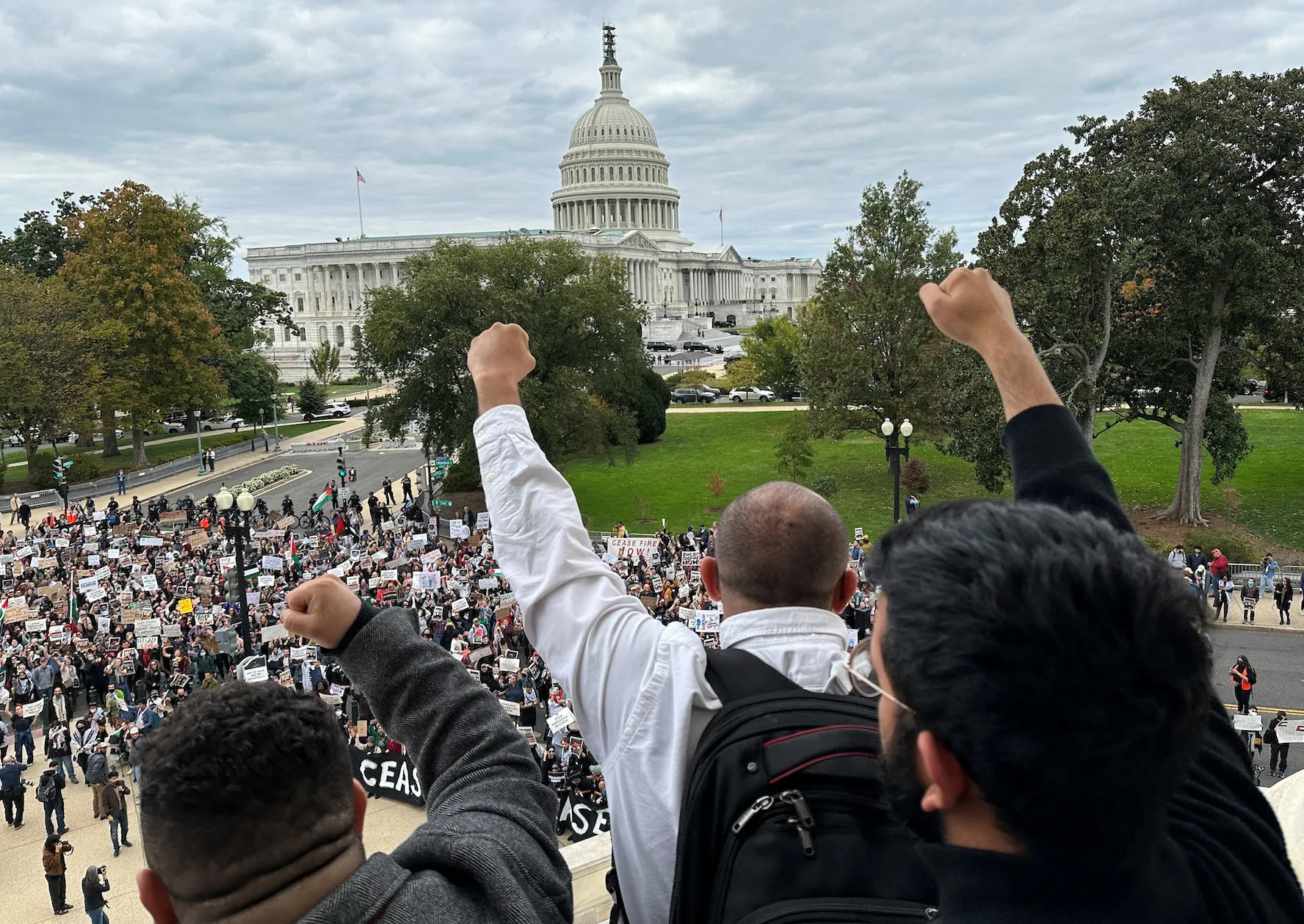
Run the arithmetic forward and the worst case is not hard to sketch. The $3.8 billion annual military aid package under the current memorandum runs through 2028; the negotiation for what follows it will be conducted by a Congress with more members who came of political age after October 7 than before it.
Automatic UN Security Council cover, unconditional arms sales, the reflexive “ironclad” language recited by every administration since Bill Clinton – these are not laws of physics.
They are political outputs, sustained by an electoral coalition that is visibly aging out of the electorate on one side and, on the other, being replaced by voters for whom “ironclad” is not a description but a demand awaiting justification.
Within a decade, on current trend, the debate in Washington will not be whether to support Israel but on what terms, and Israeli governments accustomed to treating American backing as unconditional will find themselves negotiating from a position they have never had to occupy before.
The Path Forward Remains Contingent
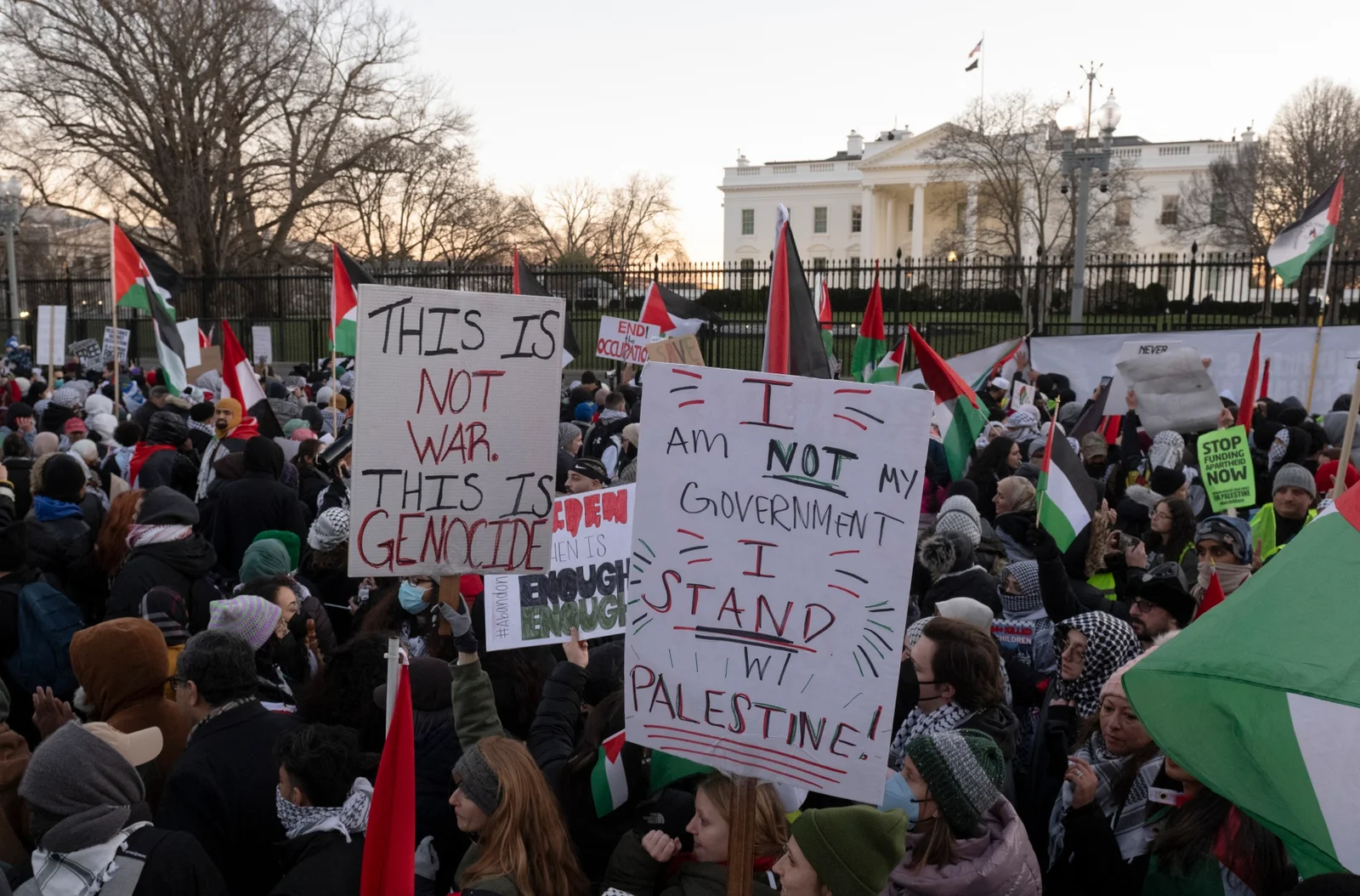
None of this is fate. Public opinion is not a glacier; it responds to events, and a genuine diplomatic settlement, a change in Israeli governance or a shift in the character of the next crisis could all bend the curve.
But the assumption that time itself is on Israel’s side with the American public, that the relationship is a fixed asset rather than a renewable and increasingly contested, political arrangement — is the one assumption Israeli strategy can no longer afford to make.