
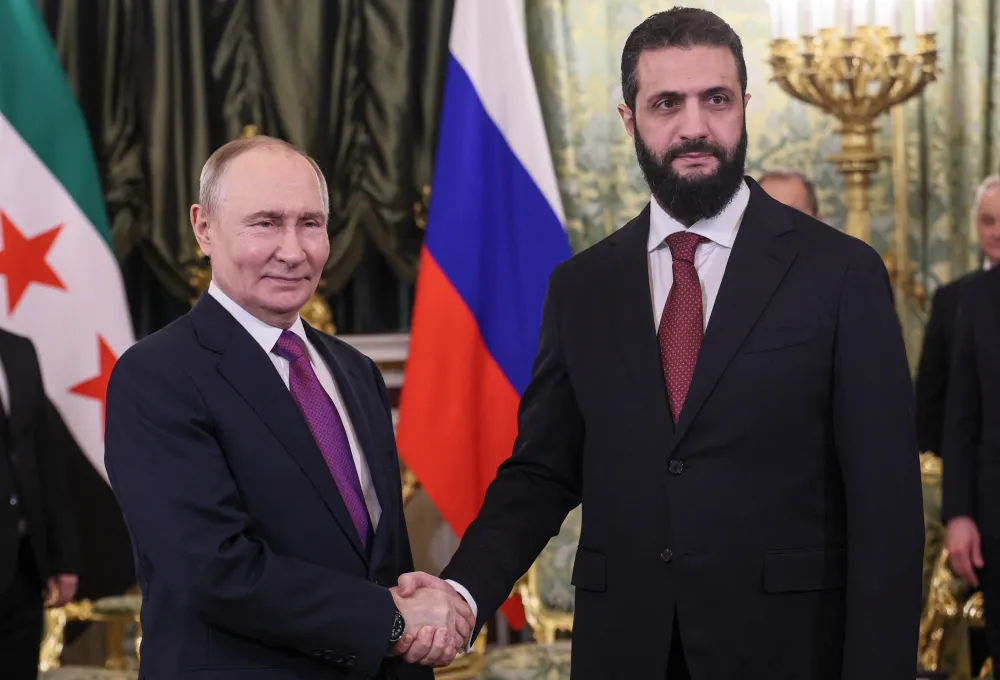
Russia is expanding its Syrian presence under Ahmed al-Sharaa by supplying 85% of Damascus’s wheat, 60,000 daily crude barrels, and converting Tartus port into a commercial logistics hub handling 250,000 monthly tons to bypass Western influence.
Moscow is quietly securing economic and military footholds across Damascus, directly threatening to undermine the broader US Syria strategy in the Levant. As Washington works to bring the new Syrian leadership into the Western fold, Russian grain shipments, energy supplies, and security offers are embedding Kremlin influence deep inside Syria’s recovery infrastructure. This aggressive play exposes critical vulnerabilities in the current US Syria strategy, proving that Assad’s downfall was not the strategic dead end for Russia that Western planners anticipated.
US Syria strategy under threat
For much of the past two years, conventional wisdom has held that Russia would be one of the biggest losers of the collapse of Bashar al-Assad’s regime in Syria. After investing heavily for decades in military, political and economic terms in order to preserve Assad’s hold on power, the Kremlin seemed destined to see that influence evaporate when former Al-Qaeda affiliate Hayat Tahrir al-Sham swept to power in Damascus in December 2024.
The corresponding assumption in many Western capitals was that Russia would gradually be forced to relinquish the strategic foothold it had painstakingly built in the Levant over the previous decade. That assumption, however, increasingly looks to have been misplaced.
Earlier this year, a study by the Institute for National Security Studies, Israel’s premier think tank, detailed that Moscow was tightening ties to Damascus—and meeting with some notable successes in doing so.
Rethinking US Syria strategy now
The new warmth is the product of systematic—and successful—Russian diplomacy. “Confidence-building steps were taken from the early months of [Ahmed] al-Sharaa’s rule, including shipments of wheat and fuel; diplomatic outreach and high-level delegations (including a senior delegation from the Foreign Ministry, letters, and phone calls from President Vladimir Putin),” the INSS study noted. “These overtures included proposals for economic and humanitarian cooperation, such as rehabilitating Syrian energy infrastructure, increasing material and food assistance, and even the idea of turning Khmeimim and Tartus into humanitarian aid ‘hubs.'”
Most significantly, it laid out, Russia has positioned itself “to offer Damascus solutions to its military distress.” These range from “support services” for Syria’s army, such as training and arms procurement, to the potential for limited military deployments to serve as a backstop for Syrian forces—much like the role that Moscow played for years for the Assad regime.
Now, Russia’s efforts are becoming more ambitious still. Reports indicate the Kremlin is preparing to establish a major commercial logistics hub at the Russian-leased port facilities in Tartus, transforming what has long served primarily as a military asset into the centerpiece of a broader economic strategy. According to Syrian officials, Moscow intends to move roughly 250,000 tons of Russian goods through the port each month, beginning with substantial grain shipments and eventually linking Tartus directly to the Russian Black Sea port of Novorossiysk.
Testing the US Syria strategy
The plan is ambitious—and significant. Rather than merely preserving its naval presence in the eastern Mediterranean, Moscow appears to be building the infrastructure for a long-term commercial corridor intended to bind Syria’s economy ever more closely to its own.
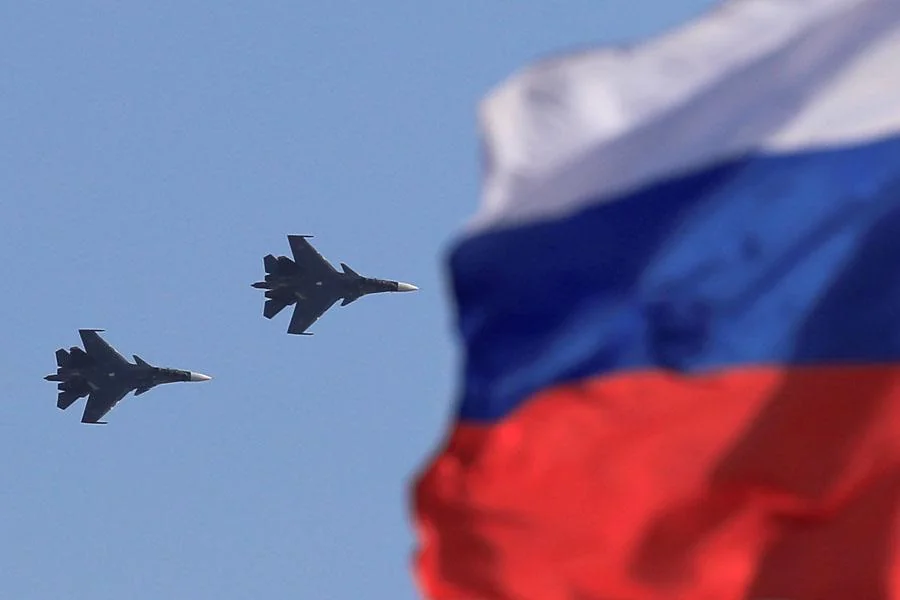
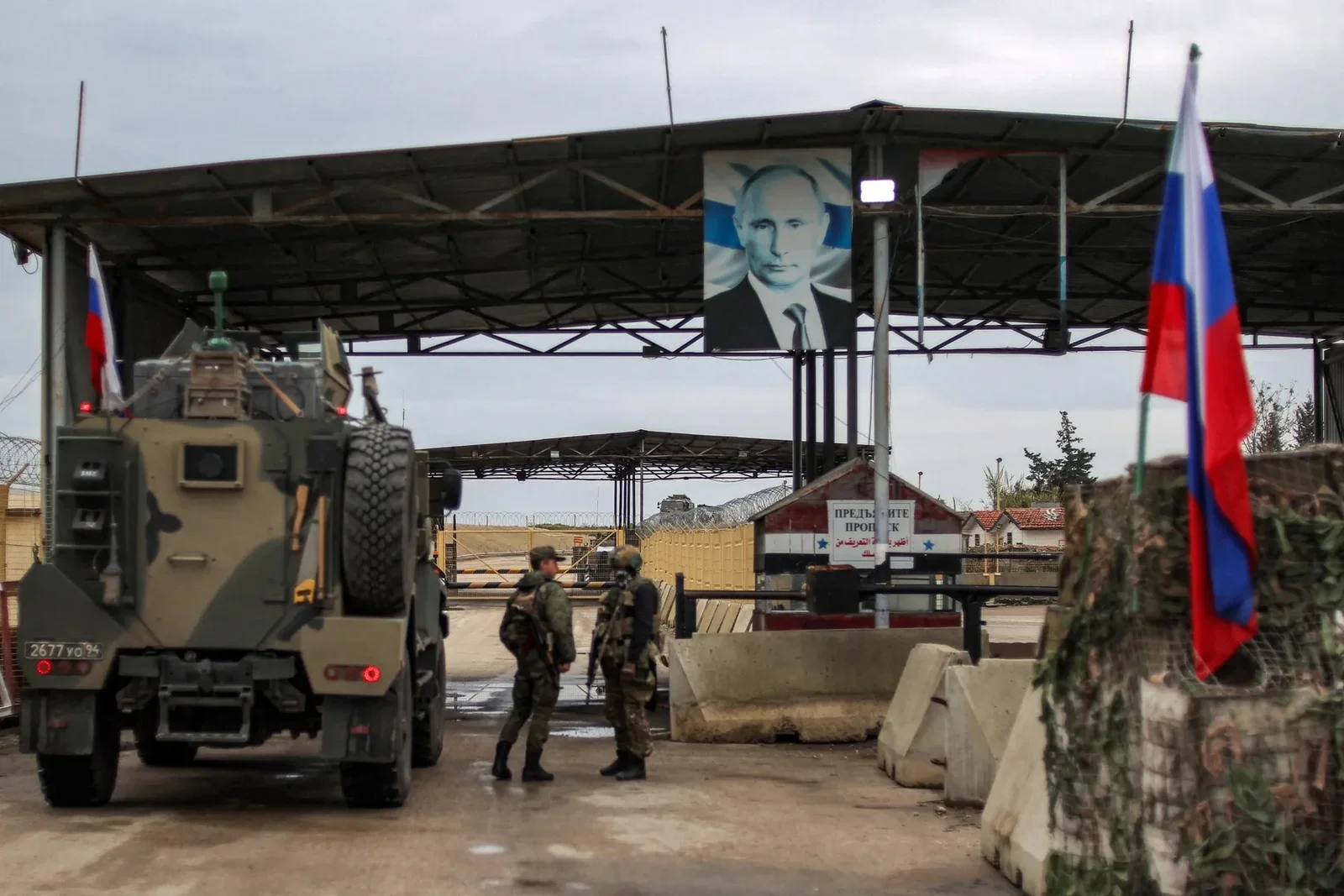
This represents an evolution in Russia’s regional strategy. For years, Russian influence in (and over) Syria rested overwhelmingly on military assistance. Russian airpower helped save the Assad regime from collapse back in 2015, while its naval facilities at Tartus and air base at Khmeimim gave Moscow its first sustained military presence in the Mediterranean since the Cold War. Those assets were valuable, but they were also vulnerable—because their viability depended upon the survival of a single regime.
US Syria strategy meets resistance
The current approach is markedly different. By inserting itself as a key player in Syria’s larger economic recovery, Russia is creating relationships that are likely to endure regardless of who happens to be in charge in Damascus.
That new strategy is already paying dividends. Syria now imports approximately 85 percent of its wheat from Russia, giving Moscow significant leverage over one of the country’s most basic staples. Its energy dependence is growing as well, with Damascus vastly increasing imports of Russian crude in the wake of Assad’s ouster. (When tallied in May, Russia—which replaced Iran as Syria’s main oil supplier after the fall of Assad—was providing the new regime in Damascus with some 60,000 barrels per day, roughly half its total energy consumption.)
The planned logistics hub would institutionalize these dependencies by making Russian goods the backbone of Syria’s reconstruction and commercial activity.
How US Syria strategy shifts
For the United States and its allies, the implications are potentially significant. Over the past year, the Trump administration has made a major effort to bring Syria’s new leader, Ahmed al-Sharaa, in from the diplomatic cold. Congress has followed suit, removing key sanctions (like the 2019 Caesar Act) in order to enable Sharaa to better consolidate power and stabilize the war-torn state. All these overtures are underpinned by the desire to nudge Syria’s new order in a Western-oriented direction, and thereby make it a reliable strategic partner for the United States.
Russia, however, clearly has other ideas. By making itself a key player in Syria’s reconstruction, food security, energy supplies, and commerce, Moscow is positioning itself to shape Syria’s future according to its own preferences. If history is any judge, chances are high those won’t end up being at all what Washington has in mind.