
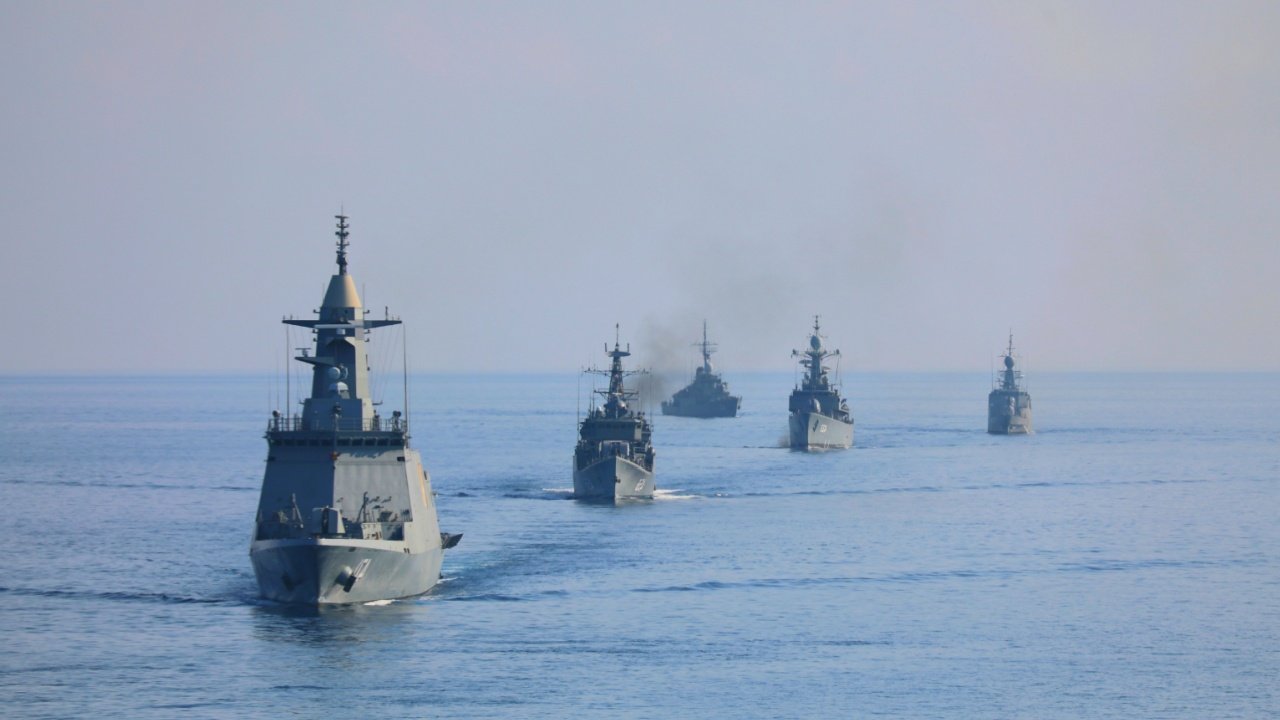
The IRGC’s surviving small-boat fleet and mine-laying capacity enable sustained disruption of commercial shipping despite degradation of Iran’s conventional navy. This asymmetric strategy targets US public opinion and political will, exploiting historical vulnerability to prolonged, low-intensity conflict. The blockade amplifies strategic overreach rather than coercing Tehran.
Iran’s IRGC does not need much to keep shipping out of the Strait of Hormuz.
President Donald Trump didn’t bother to consult with or get approval from Congress for his war with Iran. He declared war on it, in effect, by ordering air and missile strikes on the country on February 28. After a month of extended waffling about the nature of US war aims, whether the United States was in a state of hostilities with Iran, or whether the United States had indeed already won, Trump announced that the US Navy would begin blockading Iranian ports this week, including those in the Strait of Hormuz.
The Trump administration believes that the US Navy will prevent Iran from earning revenue from oil exports, while allowing other nations’ shipments to pass through the strait, thus resuming the transport of oil, gas, fertilizer, and other important items for global markets. This surgical outcome, however, may be harder to achieve than it looks.
The Trump administration crows that it has destroyed the Iranian Navy, which is true. But that navy was for longer-range missions—that is, mainly for show. The real navy that matters in and around the confined waters of the Persian Gulf is that of the Islamic Revolutionary Guard Corps’ (IRGC) naval force. Iran formed the service branch during the “Tanker War” of the 1980s, which occurred alongside the Iran-Iraq War.
The IRGC organized its navy around a meticulously planned asymmetric model—that is, like guerrilla fighters on land, it employs hit-and-run tactics against commercial shipping using small, fast attack boats and missile boats. More than 60 percent of the fast attack boats have survived US and Israeli air strikes. These smaller boats emerge from concealed underground pens or from hiding places among civilian boats, making them difficult for satellite reconnaissance to detect.
Also, the boats can lay sea mines much faster than the slow, dangerous process of finding and neutralizing them. Iran is reputed to have large stockpiles of contact, bottom, and rocket mines, and the US Navy has curiously never put a high priority on these unglamorous operations.
Also, even if the United States destroys the IRGC’s elusive surface fleet, the Iranians still can make commercial ships wary of using the narrow (21-mile) strait by lobbing missiles, aerial drone swarms, or underwater Azhdar drones at vessels traversing the waterway.
Surface warships have been vulnerable since World War II: note the British and Argentinian ship losses in the Falklands War and, more recently, the Russian Navy’s disastrous performance against Ukraine in the Black Sea. Chances are that if Iran were to sink even one US warship, it might be enough to force Trump to abandon the blockade.
After all, in asymmetric warfare, the center of gravity often lies in public support. In US military history, the Vietnam, Iraq, and Afghanistan Wars all began with high levels of public support, but ended as a result of popular dissatisfaction. However, Trump’s war of choice began with an abysmal approval rating of about 40 percent, and it is hard to see the war gaining popularity as gas prices and US casualties increase.
While Trump and commentators across the political spectrum crow about US military prowess, the problem with the American military juggernaut has never been its capabilities but its strategy. The United States has lost multiple asymmetric wars to opponents who know that all they need to do is hang on long enough for the American people to eventually tire of the conflict and put pressure on their politicians to end it.
In the post-World War II era, the tenacious North Vietnamese and Viet Cong, who lost most battles of the war, hung on long enough to gain a strategic victory. The Taliban did the same in Afghanistan. In Iraq, the United States, after many years, was able to reduce violence enough to obtain conditions favorable to a withdrawal by 2011. Iran’s resilience after a month of fighting and leadership decapitation strikes greatly resembles that of the Vietnamese and the Taliban.
Therefore, President Trump would be better off declaring victory and cutting his losses while he still can, rather than continuing escalation with a naval blockade. The US military is on the cusp of repeating the familiar mistake of underestimating the resolve of its foes—this time at sea. Turning around will prevent what Trump has always claimed he wanted to avoid, “another stupid war.”