
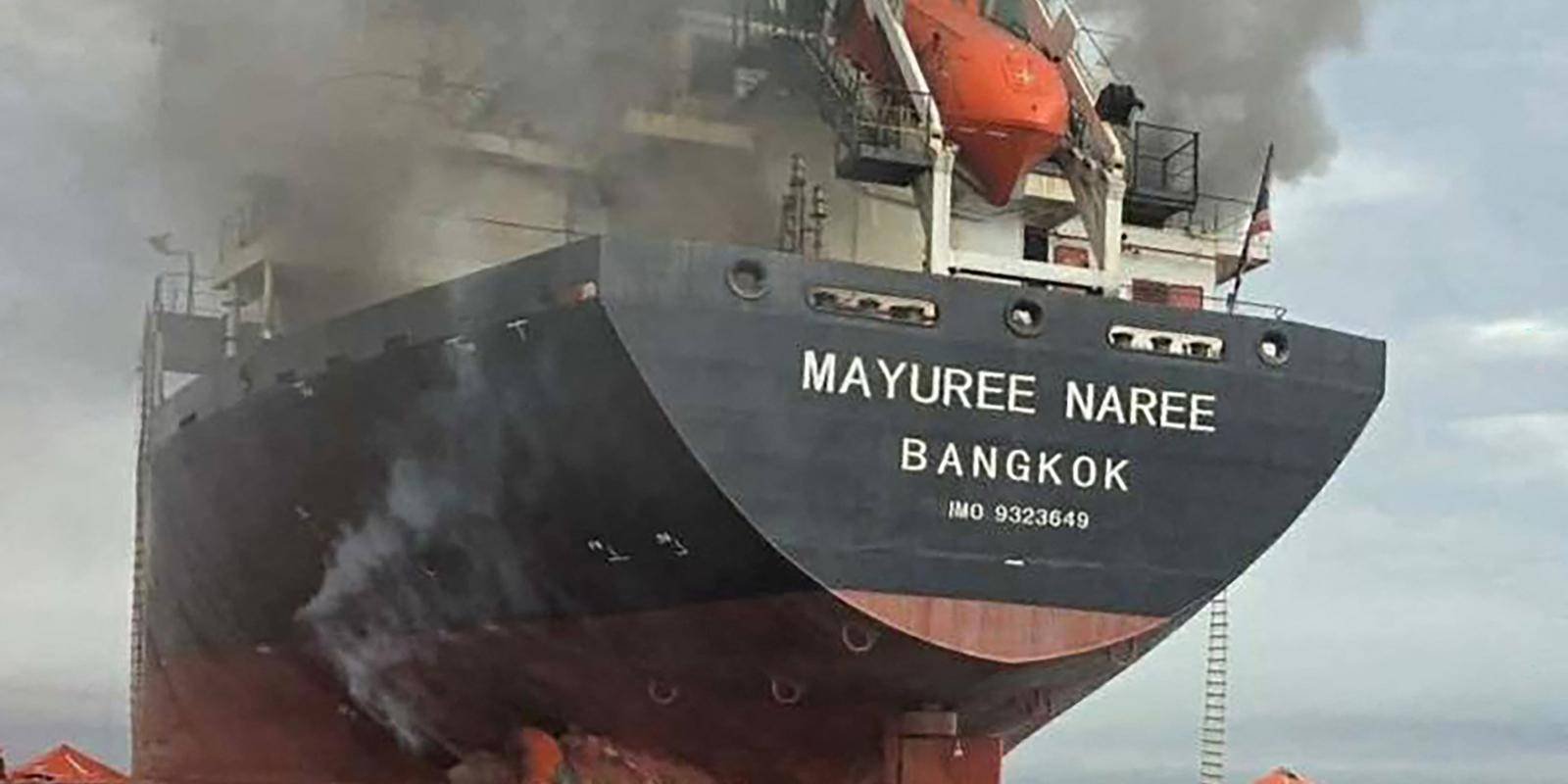
The effective blockade of the strait during the US-Israeli war with Iran has increased the chance of accidents and forced ships into alternative routes with their own risks.
The US-Israeli war with Iran has turned the Indian Ocean into a theatre for major maritime confrontations.
On 2 March, in response to US-Israeli strikes, Iran announced it was closing the Strait of Hormuz, the vital maritime chokepoint that connects Gulf waters and the wider Indian Ocean beyond. On 4 March, a US submarine sunk the Iranian frigate IRIS Dena off the coast of Sri Lanka. Since the outbreak of the conflict, at least 18 vessels have been attacked in Gulf waters.
The US now claims Iran’s navy is destroyed. Despite this, the Strait of Hormuz remains functionally closed.
While some analysts argue that Iran lacks the power to fully control the strait, Iran’s strategy does not depend on naval control. If Iran can launch missile or drone attacks from its coast, it can impose enough risk to disrupt shipping. The recent experience in the Red Sea illustrates this dynamic: a relatively small number of Houthi missile and drone attacks caused container traffic in the region to fall by roughly 90 per cent in 2024.
Iran’s ability to essentially close the strait will have a knock-on effect on wider maritime traffic, creating new security risks as ships seek alternative routes. While Iran has vowed to disrupt international trade to inflict pressure on US President Donald Trump, the US may seek to intercept ships bound for Iran, creating dangerous conditions for escalation in the increasingly crowded Indian Ocean and beyond.
Heightened risks of accidents and US seizures
The current conflict has created a de facto blockade in which the US seeks to deny maritime transit or access to Iran, while Tehran simultaneously seeks to stop all movement through the Strait.
These competing strategies have created a highly uncertain operating environment for commercial vessels in the Gulf. According to a briefing from Lloyd’s List Intelligence, more than 40 ships disabled their Automatic Identification System (AIS) signals at the start of the conflict – a practice known as ‘going dark.’ Ships typically disable AIS to conceal illicit activity. Many of these vessels are part of Iran’s sanctioned shadow fleet. The number of dark vessels is likely to increase.
At the same time, several Gulf countries have begun employing GPS jamming to interfere with guided missiles. While intended as a defensive measure, this jamming also disrupts navigation systems used by civilian ships. AIS signals can become scrambled or unreliable, making it more difficult for vessels to communicate with each other and avoid collisions. With maritime search and rescue capabilities already constrained by the conflict, such interference significantly increases the risk of accidents.
Amid this chaos, Iran announced that it would permit Chinese ships to transit through the Strait. In response, some ships are attempting to use their transponders to identify as Chinese. For example, a Liberian-flagged bulk carrier ship called SinoOcean broadcast its destination signal as ‘CHINA OWNER_ALL CREW’ to transit the Strait of Hormuz.
While these operations are not necessarily aimed at illicit activity, they do represent a newer category of false flag operations in shipping, which involve the deliberate misrepresentation of a vessel’s flag state to evade oversight. This tactic is most often used by shadow fleet vessels moving sanctioned commodities. Under the UN Convention on the Law of the Sea, both false flags and changing a ship’s flag during a voyage are considered illegal.
Taken together, GPS jamming, dark vessels, and false flag signals create significant uncertainty about the identity and activities of ships in the region. This ambiguity complicates attribution for maritime incidents and increases the likelihood that naval forces will misinterpret commercial behaviour.
In response, it is possible that the US will pursue more ships seizures across the Indian Ocean, especially under the pretext of the ongoing conflict. On 24 February, before the attack on Iran, the US seized an oil tanker allegedly linked to Venezuela’s illicit oil trade off the coast of Sri Lanka. Back in November, the US also seized a cargo ship going from China to Iran across the Indian Ocean.
Alternative routes in a crowded ocean
The blocking of the Strait of Hormuz will redirect shipping into other routes that pose their own risks. Since 2 March, the volume of traffic around Hormuz has dropped precipitously. Many ships have also decided to avoid the Suez Canal as a precautionary measure.
This will increase traffic through the Mozambique Channel and Cape of Good Hope as ships attempt to take the long way around Africa. Due to the slowdown, rising costs, and uncertainty about the duration of conflict, many ships may also remain at ports along the Indian Ocean.
These shifts in maritime traffic will create new security risks. Congested or poorly patrolled routes often attract piracy and other illicit activities. For example, pirates operating from Somalia have historically attacked ships off the coast of Africa in the western Indian Ocean, and piracy is on the rise again.
Historically, navies have responded by increasing patrols or providing escorts in high-risk waters. For example, the European Union’s Naval Force Operation Atalanta has been providing protection to vessels in the northwestern Indian Ocean since 2008. The EU has extended its Operation Aspides maritime security mission, launched in 2024 to safeguard shipping against Houthi attacks, to protect freedom of navigation through the Strait of Hormuz and Arabian Sea.
In the Mozambique Channel, the South African, Indian and French navies have often conducted anti-piracy patrols. Likewise, China has been involved in antipiracy operations in the Gulf of Aden, deploying the 48th naval escort task group in 2025.
However, the convergence of these various naval forces means that even minor incidents could escalate rapidly. A ship seizure by the US, for example, could provoke a response from Chinese naval escorts if Chinese-linked vessels are involved. With multiple powers operating in close proximity in contested and congested waters, the potential for confrontation and escalation increases dramatically.
Options for conflict prevention
To reduce these risks, states operating in the region should pursue practical de-escalation mechanisms modelled on existing maritime safety agreements. During the Cold War, the US and the Soviet Union established ‘Incidents at Sea’ protocols to prevent accidental naval confrontations. Similar mechanisms exist today in the South China Sea through Collision Regulations and Codes for Unplanned Encounters.
In the current crisis, governments may not have time to negotiate comprehensive treaties. However, regional organizations such as the Indian Ocean Commission, or informal frameworks such as the Quad, could establish temporary operational guidelines. Even voluntary standards for communication, identification and navigation could serve as short-term confidence-building measures and eventually evolve into more formal rules.
Another option would be the creation of limited humanitarian maritime corridors, similar to the Black Sea Grain Initiative, which was established in response to Russia’s invasion of Ukraine. While most discussions of the Strait of Hormuz closure focus on its impact on global oil markets, the humanitarian implications for Gulf states are equally significant. Countries such as Kuwait, Bahrain, Qatar and Iraq rely heavily on seaborne imports for essential supplies. For these states, there is no immediate alternative to compensate for prolonged disruption in the Strait of Hormuz.
Establishing shared safety practices and limited transit arrangements could therefore reduce both humanitarian risks and the likelihood of accidental escalation. In an increasingly crowded and contested maritime environment, even temporary norms of conduct may help prevent localized confrontations from escalating into wider conflicts in the Indian Ocean and beyond.