
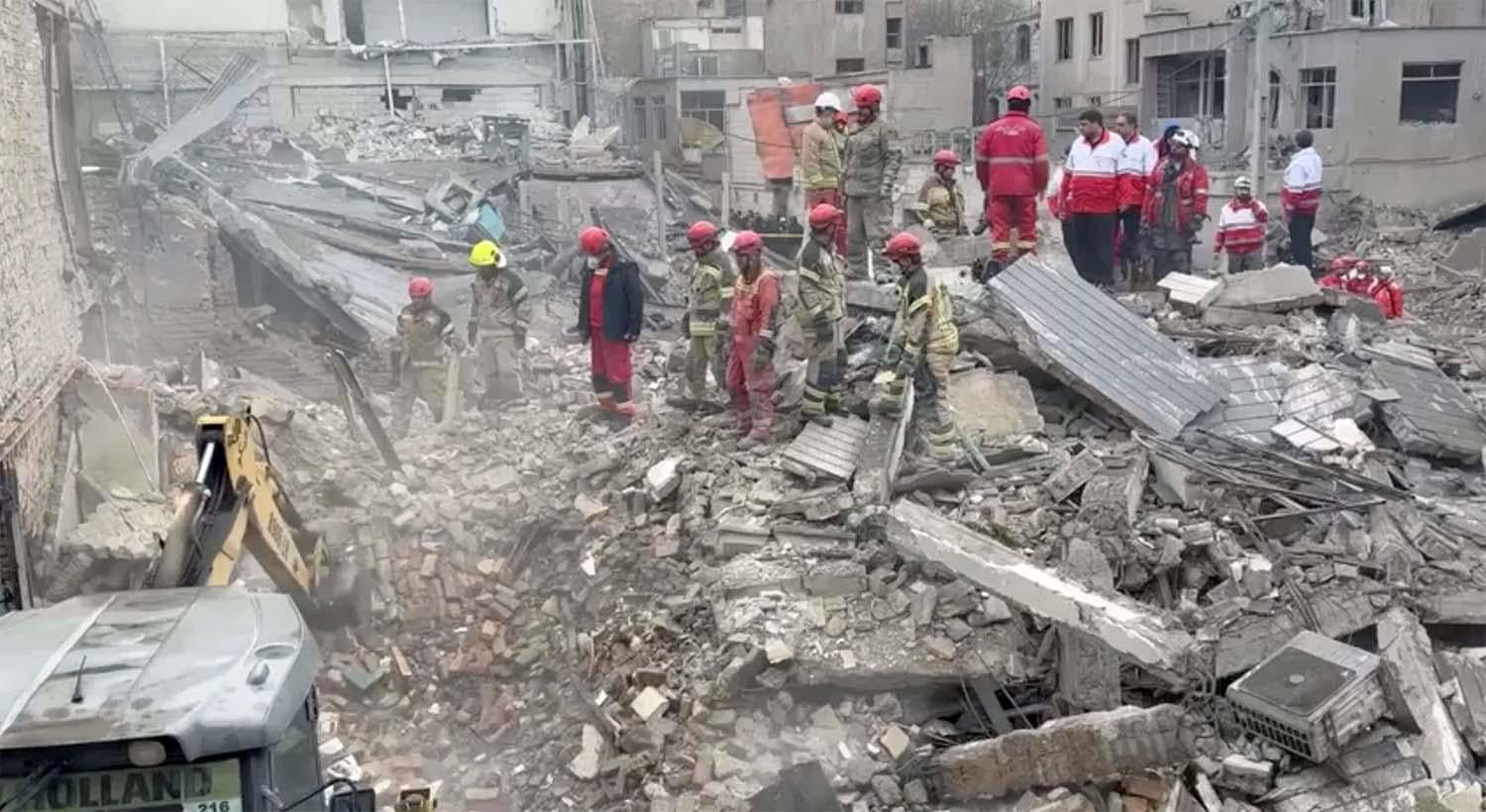
Despite President Donald Trump’s repeated assertions on several occasions that the war on Iran would be a “short-term mission,” fears remain that it could drag on.
Despite President Donald Trump’s repeated assertions on several occasions that the war on Iran would be a “short-term mission,” fears remain that it could drag on. Starting a war is far easier than stopping one.
Since the end of World War II in 1945, the world has witnessed many conflicts; as soon as one ends, another is born. The Vietnam War, which lasted twenty years, remains one of the most difficult and brutal. There was also the Six-Day War in 1967 between the Arabs and Israel, and the October 1973 War between Egypt and Syria on one side and Israel on the other, which lasted 19 days. As for the Iran-Iraq War, it is considered one of the longest conventional wars of the 20th century, lasting eight years.
Then came the Gulf War, which lasted seven months following the Iraqi army’s invasion of Kuwait on August 2, 1990, ending with the liberation of Kuwait in February 1991. The war in Afghanistan remains among the longest, spanning nearly twenty years, beginning after the September 11, 2001 attacks in New York. This was followed by the US-led invasion of Iraq in 2003. We must also not forget the Soviet-Afghan War (1979–1989). Today, the Russia-Ukraine war continues after its spark was lit on February 24, 2022. Civil wars, meanwhile, hold the “lion’s share” of this endless human violence—too many to mention in this limited space.
Today, the war on Iran enters its thirteenth day. President Trump said a few days ago in an interview with the American network CBS that he believes this war is “largely over.” He cited indicators of this end, saying: “They have no navy, no communications, no air force. Their missiles are scattered, and their drones are being destroyed everywhere.” He went on to say: “Even in their factories, if you look, you won’t find anything. They have nothing left in a military sense.”
There is an important point Trump mentioned that warrants a pause: military operations are moving faster than the expected timetable. Despite this, the world is living in a state of uncertainty regarding the resolution of ending the war, especially with Tehran’s insistence on fighting to the last breath and moving forward with attacking Arab Gulf states in a desperate attempt to persuade Trump to retreat.
Trump has gone far in responding to Tehran, threatening to strike them twenty times harder than what they have received so far. He has made the prevention of oil flow through the Strait of Hormuz—through which nearly a fifth of global oil shipments pass—a red line. While the language of defiance prevails in this rampant war, the outcome may be the ruin of the region due to the possibility of Iran adopting a “scorched earth policy.”
The German philosopher Immanuel Kant (1724–1804) rejected the idea of permanent war and called for establishing perpetual peace between nations through international law. In his book Toward Perpetual Peace, he argued that humanity must move toward a global system that prevents war. However, the concept of war has changed just as its mechanisms have evolved; Kant’s time is not Trump’s time. The former looked at a dream world free of wars, while the latter wages war and views it as a means to achieve a situation serving the “America First” slogan. Furthermore, in Kant’s time, there were no nuclear weapons, stealth aircraft, Iron Domes, or other lethal armaments.
The American war on Iran may seem justified; there is no doubt that Tehran has worked since the fall of the Shah’s regime in 1979 to ruin and destabilize the region. Simultaneously—perhaps unwittingly—it served American and Israeli strategy through its greed in expanding influence across the region, from Lebanon to Yemen, passing through Iraq and Syria.
War emerges here as a tool for political practice through violence; it is a “continuation of politics by other means,” in the words of the Prussian military thinker Carl von Clausewitz. This means it is not just a random act, but a means nations resort to when diplomatic efforts fail. Wars can sometimes be, as the German philosopher Hegel said, part of the movement of history and the development of nations, as they reveal the strength of states and reshape the international order. However, they undoubtedly remain a human tragedy.
If the war on Iran is an urgent necessity due to the madness and political recklessness prevailing in the region, it is not surprising that voices are rising to criticize the war from a purely moral standpoint that ignores the consequences of that recklessness.
There is a conviction that in wars, everyone loses, even if there is a victor and a vanquished. The return of combatants to the “normal status” preceding the outbreak of war may require long decades to achieve recovery from its bitter repercussions. But in the case of the current war, Iran remains the biggest loser.