
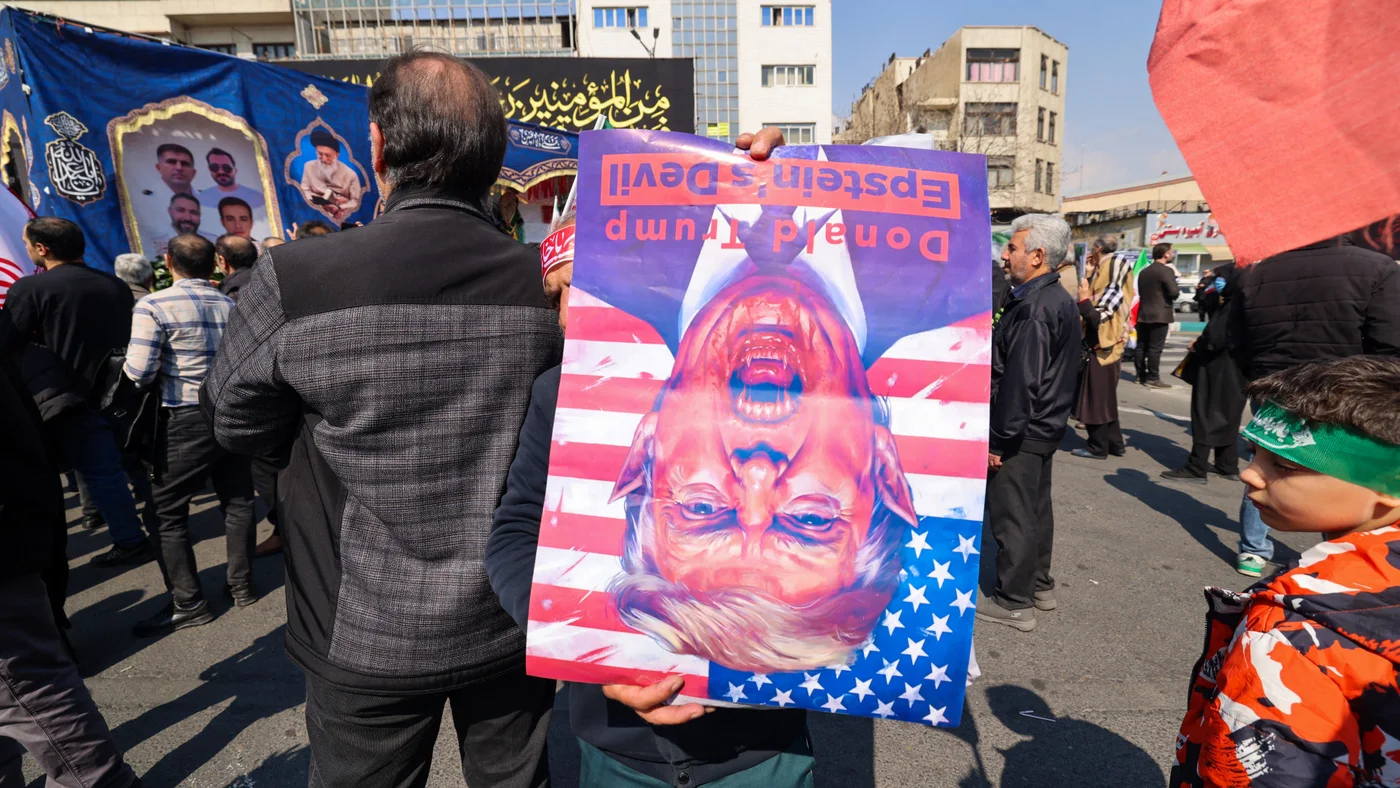
The US-Israel war on Iran is failing. Washington and Tel Aviv seek regime change; Iran needs only to survive. While US airpower dominates, Iran expands the battlefield horizontally—targeting Gulf states, energy markets, and shipping—raising costs. Tactical victories don’t translate into strategic success. Asymmetric war: the simpler objective wins.
With incompatible war aims, no definition of victory, and a battlefield that keeps expanding, the US-Israel onslaught is doomed – and Iran only needs to survive to prevail.
The aggression launched by the United States and Israel against Iran has produced a striking strategic paradox. While the American-Zionist axis relies on brute technological force and indiscriminate fire, it remains blind to the historical and sociopolitical realities of the region.
Thousands of targets across Iranian territory, including military facilities, infrastructure and command structures, have been struck and may have suffered significant damage. The US maintains air dominance, while the Zionist regime continues to expand its campaign with unceasing strikes.
Yet these tactical gains have not translated into political success. The central objectives of the aggression remain out of reach, leaving the US and the Zionist regime winning battlefield engagements while steadily losing the strategic contest.
In asymmetric confrontations, victory is measured by whether military force can compel the adversary to accept the political outcome sought by the attacking power. By that standard, the American-Zionist campaign is already encountering serious limitations.
The war across the region, now in its third week, is characterised by a profound strategic deadlock. The US, Israel and Iran each hold fundamentally incompatible visions of how this onslaught should end.
Iran has made its position unmistakably clear. Tehran refuses to surrender as demanded by the US president and rejects negotiations while under attack. It insists that the aggression must first end before any diplomatic process can begin. Any settlement, Iranian officials have indicated, would also require sanctions relief, war reparations, recognition of Iran’s rights and firm international guarantees against future strikes.
Iran has also signalled that it is prepared for a prolonged confrontation and is willing to absorb the costs necessary to defend the country.
Israel has adopted a maximalist posture. Israeli officials have declared that the campaign will continue without a time limit until all objectives are achieved – objectives that include neutralising Iran’s power and potentially forcing structural change within the Iranian state itself.
Meanwhile, the US has adopted an ambiguous position, reflecting the absence of a coherent strategy. Secretary of State Marco Rubio’s admission that Washington knowingly allowed itself to be dragged into a confrontation dictated by Israeli desires underscores the subservience of American policy to Zionist interests.
The Trump administration’s incoherent approach – alternating between hollow demands for surrender, calls for internal unrest in Iran, and appeals for negotiations – reveals a profound misunderstanding of Iranian political culture. More importantly, Washington has failed to articulate a coherent definition of victory. Without a clear political end state, the aggression risks drifting into prolonged escalation without strategic resolution.
An unwinnable war
Central to the failure of the US-Israeli aggression is the irreconcilable asymmetry in war aims. The two countries are pursuing ambitious and overreaching objectives. Their strategy seeks to remove Iran as the central pillar of resistance to Zionist hegemony in the Middle East. This goal would require either the collapse of the Iranian political system or the neutralisation of its ability to project influence across the region.
Iran’s objective, by contrast, is far simpler. Iran does not need to defeat the US militarily. Nor does it need, at this stage, to eliminate Israel’s military capabilities or overthrow its government.
Iran needs only to survive.
If the Iranian state remains intact, if its leadership maintains political control, and if its regional alliances continue to function, then the primary political objective of the aggression will have failed. In confrontations defined by such asymmetry, the side with the simpler objective often holds the strategic advantage.
The war has also exposed a stark contrast between the military strategies employed by each side. The American-Zionist axis relies on vertical escalation – or escalation dominance. This approach emphasises the overwhelming use of firepower, including air dominance, precision strikes, decapitation operations, and attacks against strategic infrastructure. This doctrine assumes that sufficient destruction will force the adversary into political submission.
Iran has adopted the opposite approach: horizontal escalation. Instead of confronting American air power directly, Iran has sought to expand the battlefield geographically.
Missile attacks against cities and infrastructure within the Israeli state, pressure on American military bases and interests across the region, threats to maritime routes and disruptions to energy markets are all designed to transform the confrontation into a broader regional crisis.
By widening the theatre of aggression, Iran increases the economic and political costs for the American-Israeli axis. This strategy exposes a fundamental limitation of American military power: while the US can dominate the skies over Iran, it cannot control the broader strategic geography of the region.
Gaza and the limits of force
The ongoing low-intensity aggression in Gaza, following a two-year genocidal campaign, continues to shape the political environment of the broader confrontation. For many across the region, the confrontation with Iran cannot be separated from the unresolved Palestinian question. The Zionist regime’s ongoing campaign in Gaza reinforces the view that the regional struggle is rooted in historical injustice rather than isolated geopolitical rivalry.Palestinian resistance continues to impose constraints on Israel’s military planning. As long as Gaza remains an active front, it cannot concentrate its full military capacity elsewhere. Gaza, therefore, functions not only as a battlefield but as a central political symbol that continues to mobilise regional and global opinion.