
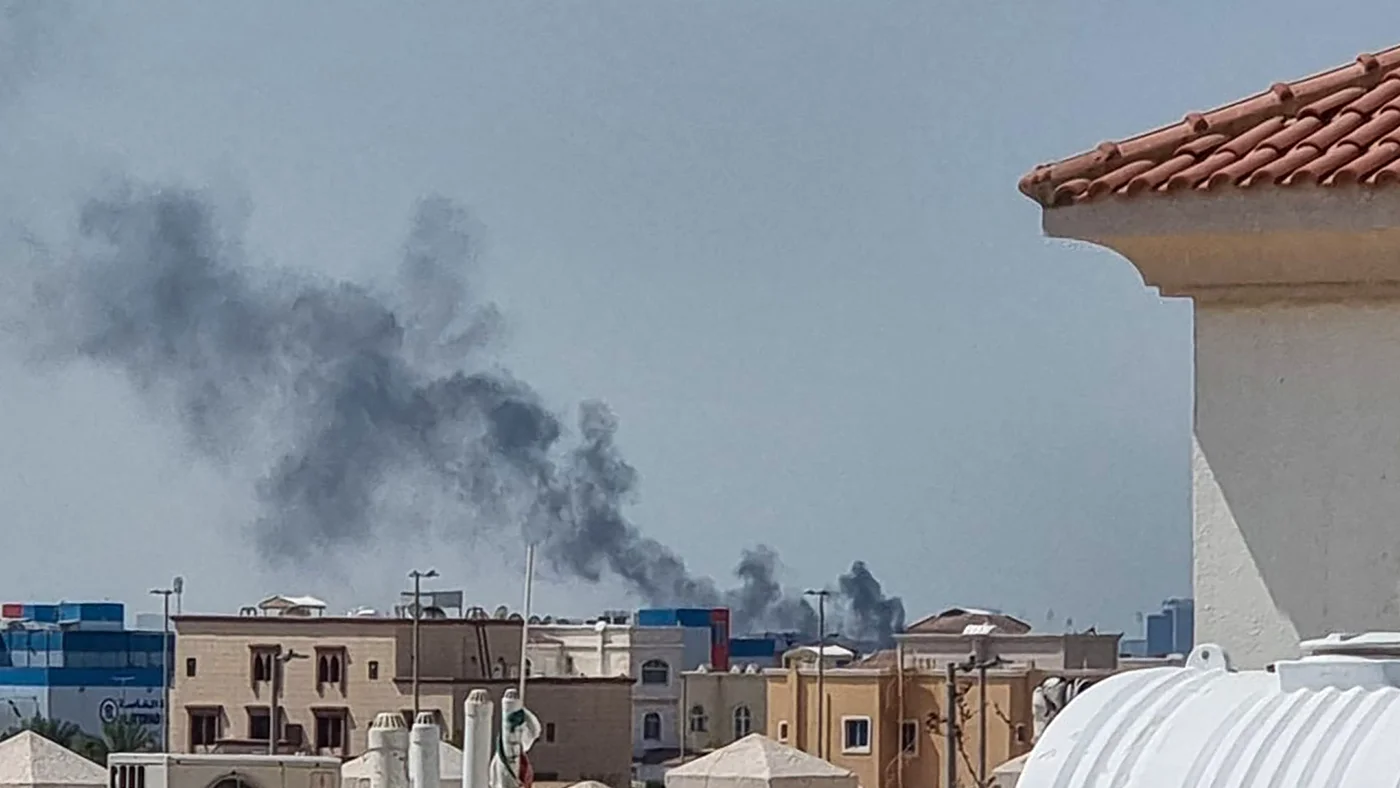
From Addis Ababa’s rapid infrastructure to RSF promises of a Singaporean Khartoum, authoritarian leaders use the Singapore myth to justify control over democracy. In Gaza, “could have been Singapore” blames victims of blockade. But Iranian drones over the UAE prove that compliance does not purchase geopolitical immunity.
The Singapore myth promises nations stability and prosperity, yet Iranian missiles over the Gulf have exposed the limits of political submission as a guarantee of safety.
Iarrived in Addis Ababa for a three-day conference after a direct flight from Oslo on Ethiopian Airlines. As an African, I felt proud. As a Sudanese, I felt nostalgic.
The airline reminded me of the final chapters of Sudan Airways, once one of the earliest carriers on the continent, later dismantled through decades of US sanctions, corruption and mismanagement under former president Omar al-Bashir. Recently, it returned briefly to headlines for a symbolic return flight after more than 1,000 days of war – a gesture of return to a city still largely destroyed.
Addis greeted me with a glowing skyline. Highways stretched outward in clean, confident lines, signalling an arrival into a city determined to present itself as “modern”. If not for the proud Ethiopians on giant billboards, I could have mistaken it for Singapore or Dubai two decades ago.
When I arrived at my hotel, the road outside had been freshly dug up. By the time I left three days later, it had been rebuilt and reopened. Each night, construction crews disappeared before midnight and reappeared before sunrise. Men in reflective jackets and flip-flops worked beside older women in straw hats while Chinese bulldozers towered over them, dust and diesel smoke forming the soundtrack of my weekend.
In conversations over meals and coffee, the refrain was the same: despite ongoing rebellions in parts of the country, the capital was being deliberately and rapidly reshaped. Infrastructure appeared overnight. Entire neighbourhoods were cleared and reorganised. Some spoke of rising taxation; others of foreign financing arriving without public explanation. Security hovered over everything, its message implicit: agreement was optional, compliance was not. A day after I left Ethiopia, Reuters reported the development of a UAE-financed military base inside the country.
Among African colleagues at the conference, Addis was frequently compared to Rwanda, which had long been described in international media as Africa’s Singapore.
Many believed Ethiopia had already surpassed it in spectacle. Two aspiring Singapores on the same continent – both driven by leaders who position themselves as founders tasked with securing stability and consolidating power first, with political freedoms negotiated later, if at all.
Coming from Sudan, this rhetoric was familiar. Different authoritarian regimes each promised their own version of modernisation, their own imagined Singapores that justified control. This Singapore was the latest.
Familiar claims
I heard the same language a year earlier in Nairobi, at a conference where Sudan’s Rapid Support Forces announced what they described as a transitional political project. I was there assisting an Italian journalist with translation and reporting, moving between militia politicians and their social media war influencers, watching them rehearse the vocabulary of governance.
During a lunch break on the terrace of the Kenyatta International Convention Centre, we found ourselves next to Algoney Dagalo, sanctioned by the European Union for running networks that arm the RSF, and the younger brother of RSF leader Mohamed Hamdan Dagalo, known as Hemedti.
He was surrounded by Kenyan bodyguards in suits and RSF soldiers in desert camouflage. He refused translation, frowning at me while smiling at the European journalist who was with me. He pointed to the Nairobi skyline – traffic jams, cranes marking constant expansion.
“This is nothing,” he said. “We will make Khartoum like Singapore.”
The statement was delivered without hesitation, as if violence were simply a necessary step towards stability. Democracy is not what militias built around family power structures are meant to produce, nor what Sudanese civilians who have lost everything are being given space to imagine.
Singapore’s founding leadership openly argued that liberal democratic freedoms could destabilise fragile postcolonial societies. Political restraint was presented as responsibility, and many citizens accepted the arrangement, prioritising safety, growth, and predictability over pluralism.
The result was extraordinary economic success and a powerful global narrative: modernisation as discipline, sustained by geopolitical tolerance.
An enduring mythology
Admiration for the Singapore model of controlled modernisation is not new. I first heard it invoked in the mid-2000s while studying in the United Arab Emirates, when Dubai was positioning itself as an emerging global capital of trade and entertainment.
The Dubai of that moment looked much like Addis today: ambitious skyline, aggressive infrastructure, and an emphasis on international trade within a tense regional environment. An apolitical posture was part of the growth strategy. When I eventually visited Singapore, I was not particularly surprised – except perhaps by the ban on chewing gum. I suppose that meant the model had already succeeded.
The language of becoming “Singapore” has also appeared in debates about Palestine. In recent years, US politicians have repeated variations of “Gaza could have been Singapore”, framing the territory as a failed opportunity caused by militant governance and aid misuse. Similar visions surface in reconstruction proposals that imagine Gaza as a luxury coastal hub or regional trade zone. But this comparison did not begin there.
As early as 1988, a New York Times opinion letter argued that a democratic Gaza could become “a Singapore of the Middle East”. The idea resurfaced in the mid-1990s following the Oslo Accords and PLO chairman Yasser Arafat’s return to Gaza.
In Palestine’s case, as with many other countries labelled anti-western, “could have been Singapore” functions less as an economic comparison and more as a moral explanation. It implies that prosperity was available but refused, and that suffering is framed as the result of political choice rather than blockade, occupation, or war.
The idea that some places can remain permanently insulated from politics is also being tested in real time. The current war with Iran has brought drones and missiles over the UAE itself – a country often presented as the region’s most successful model of controlled prosperity. Interceptions over Dubai and Abu Dhabi have reminded the world that even the most carefully engineered versions of stability exist inside a geopolitical system they do not fully control.
Singapore, in these conversations, is rarely about Singapore. It is about who is permitted stability, and on whose terms. “They could have been Singapore” is another way of saying: they chose not to comply.