

The targeting of water supply is being normalised by cognitive warfare. More must be done to reverse this.
The strategic manipulation of public perception regarding vital civilian infrastructure has entered a dangerous new phase, explicitly defined by the nexus of Water and Cognitive Warfare.
This orchestrated form of conflict aims to systematically erode the normative prohibitions against targeting critical life-support systems, neutralizing global outcry before kinetic operations even begin. By treating the human mind as the primary battlespace, state actors exploit Water and Cognitive Warfare to pre-condition international audiences into accepting the destruction of essential resources as an inevitable consequence of modern geopolitical friction.
Water and Cognitive Warfare Normalized
On 7 March 2026, Iran’s Foreign Minister Abbas Araghchi began the enabling information operation to set conditions for future offensive action against what should be an inviolable target – water desalination – posting on X that the US had struck a desalination plant on Qeshm Island, followed by the key framing narrative for events to follow: ‘The US set this precedent, not Iran.’
Both the US and Israel denied any strike on Qeshm. No satellite imagery, photographs or independent corroboration of the alleged attack has been published. The Qeshm claim remains, two months later, a single-source Iranian government assertion.
The following day, an Iranian drone struck a desalination plant in Bahrain, in what was a clear Strategic Communications (STRATCOM) signal. There were no fatalities, and backup capacity held, but the demonstration of force was clear. This tactical action was the force multiplier that Iran’s information operation needed to amplify the strategic message. In the space of 48 hours, Iran brought into scope for kinetic targeting a strategic vulnerability of the Gulf states, signalling its intent, opportunity and capability to do so. It established a narrative framework in which attacking Gulf desalination infrastructure was recast from a prohibited act under Additional Protocol I, Article 54 to a justified, proportionate, retaliatory response to an American first strike.
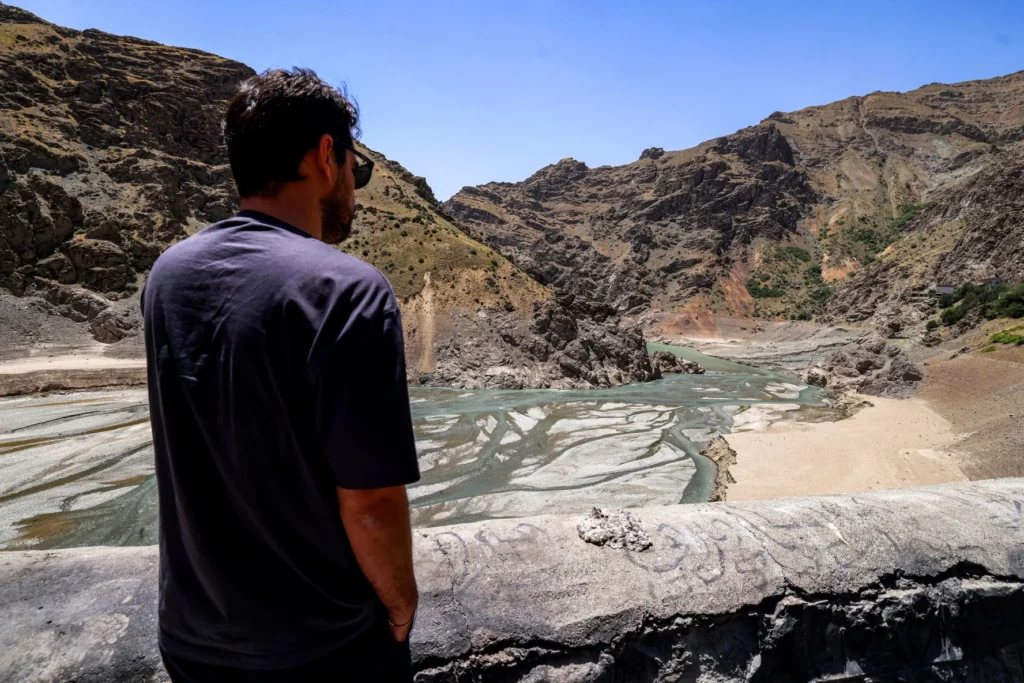
Reshaping Perceptions With Water and Cognitive Warfare Tactics
The Bahrain strike did not arrive in a vacuum. It is part of a growing and problematic trend of water infrastructure being deliberately targeted. The normative prohibition on targeting civilian water infrastructure has been systematically dismantled through information operations running in parallel with kinetic campaigns. Below are three recent examples conducted by a state actor (ISIS’ campaign has been discounted due to their non pretence of operating within international norms).
Russia: the false-flag template. In October 2022, the Institute for the Study of War reported that Russia was likely ‘setting information conditions’ for a false-flag attack on the Kakhovka Dam, with the Russian military publicly warning that Ukraine intended to strike the facility. President Zelenskyy called for an international observation mission precisely to forestall this.
Eight months later, Russia destroyed the dam from inside its own machine room. A German Marshall Fund study found that in the week following the destruction, Russian diplomatic and media accounts posted on the social media site Twitter about the dam over 1,300 times, earning nearly 200,000 retweets. The volume exceeded Russian information output on both Bucha and Nord Stream. Ukraine’s foreign minister criticised international media for initially presenting Russian and Ukrainian claims as equally credible, arguing this ‘put facts and propaganda on equal footing.’
The Kakhovka template was textbook: pre-position the counter-narrative before the strike, execute the strike, then flood the information environment with blame-deflection at a volume that overwhelms forensic analysis timelines. This created the space within the cognitive domain to enable the effects within the physical domain to take hold: namely the destruction of Ukrainian sovereign critical national infrastructure and the creation of a physical barrier to hinder manoeuvre ahead of Ukraine’s counterattack towards Crimea.
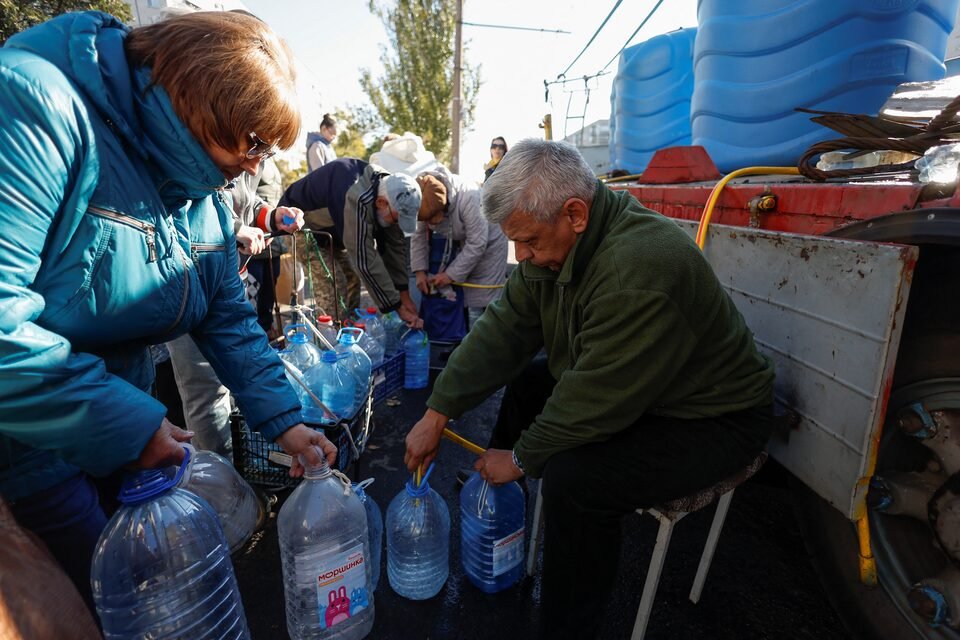
Strategic Saturation Erases Water and Cognitive Warfare
Israel/Palestine: normalisation through volume. By February 2026, roughly 90% of Gaza’s desalination and water-treatment infrastructure had been damaged or destroyed. Human Rights Watch’s December 2024 report described the destruction as deliberate. In Lebanon, Oxfam documented damage to more than 45 water networks. The ICC issued arrest warrants citing water deprivation. South Africa’s ICJ application explicitly referenced water-infrastructure destruction.
Yet media coverage of successive incidents diminished rather than grew. A study of CNN and MSNBC coverage found that during the first 100 days of each conflict, each Ukrainian child death generated 16.1 mentions on air; each Gazan child death, 0.36. The information effect is not deception but saturation: when water infrastructure destruction becomes a daily occurrence, it ceases to be news. Normalisation of what is by morality and law a clear war crime sits very much within the cognitive domain of modern warfare.
Water and Cognitive Warfare Precedents
Iran: the manufactured precedent. Araghchi’s Qeshm narrative sought to both deflect blame and normalise destruction, manufacturing a precedent for retaliation. The claim that the US struck first reframes Iranian targeting of Gulf desalination as reciprocal, proportionate and legitimate under the laws of armed conflict. Whether or not the Qeshm strike occurred, the narrative exists.
It has been reported by major international outlets. It has been quoted by the Bulletin of the Atomic Scientists, Foreign Policy and CSIS. But critically, it has shaped the cognitive framing of the Gulf State’s security considerations: water infrastructure has always been a known vulnerability to a water distressed region, but now an adversary with the intent, opportunity and capability to strike at that critical vulnerability has launched a clear strategic communications campaign signalling exactly that, giving pause to thought for how the Gulf partners with the US.

Dissecting Mechanisms Behind Water and Cognitive Warfare
These three campaigns share a common information architecture. Each follows a four-stage sequence.
Pre-positioning: the actor establishes a narrative framework for its intended audience before the kinetic action occurs. Russia warned of Ukrainian intent to strike Kakhovka months before destroying it. Iran’s Qeshm claim preceded the Bahrain strike by less than 24 hours.