
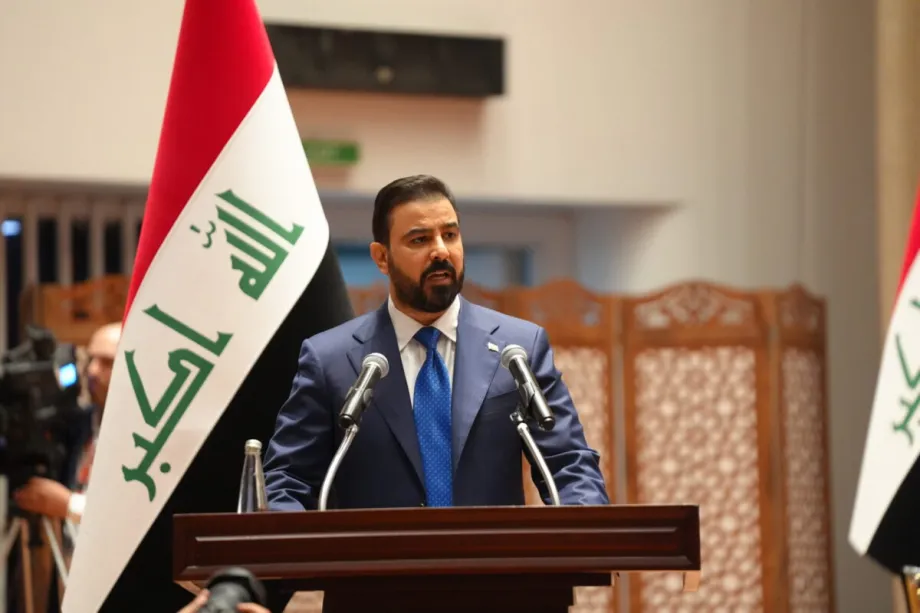
Trump’s financial pressure forced Iraq’s Coordination Framework to select banker Ali al-Zaidi as prime minister in 25 minutes. The U.S. leverages oil revenues to demand militia dismantlement, testing whether a technocratic outsider can survive Baghdad’s patronage system.
The recent transition of power in Iraq has unfolded with unprecedented speed, catching international diplomatic circles completely by surprise. This structural transition of power in Iraq reveals how shifting external pressures can fundamentally alter long-standing internal legislative alliances. Analysts note that the sudden transition of power in Iraq reflects a desperate effort by regional factions to avoid severe economic collapse. Ultimately, this rapid transition of power in Iraq establishes a brand-new playbook for diplomatic maneuvering throughout the Middle East.
How Financial Ultimatums Accelerated the Transition of Power in Iraq
The transition of power in Iraq usually moves with the glacial, agonizing pace of a desert sandstorm, choked by the competing interests of Tehran and Washington. But when the Coordination Framework—the coalition of Iran-aligned Shiite parties—finally settled on Iraq’s next prime minister, the process took exactly twenty-five minutes.
The result was Ali al-Zaidi, a 40-year-old banker with no political pedigree and a “blank slate” resume. To some in Baghdad, he is a compromise; to Washington, he is the byproduct of a high-stakes financial and diplomatic squeeze that has redefined American leverage in the post-U.S.-Israeli war landscape. The ascent of al-Zaidi marks a sharp pivot in President Trump’s Middle East strategy, one where the U.S. Treasury is deployed as aggressively as the Pentagon.
For the Coordination Framework, al-Maliki was the veteran choice, a known quantity with deep ties to Iran. For the Trump administration, he was a “red line.” The White House did not merely suggest an alternative; it issued an ultimatum. To ensure the Framework “blinked,” Washington moved to sever the Iraqi state’s carotid artery: the flow of oil revenues held at the Federal Reserve Bank of New York. Treasury Secretary Scott Bessent signaled that the era of strategic ambiguity regarding militia funding was over, warning that anyone enabling “militia violence” would be held personally accountable.
The Collapse of the Old Guard During the Transition of Power in Iraq
Under this wall of pressure, the old guard crumbled. Al-Maliki withdrew his candidacy, leaving the incumbent, Mohammed Shia al-Sudani, without a path to a second term. The Framework, realizing that an ideological confrontation with a second-term Trump would be a suicide mission, reached for a technocrat. On May 1, 2026, Trump claimed the scalp.
“With our help, he won,” the President told reporters, confirming an invitation for al-Zaidi to visit the White House. On Truth Social, the President was more expansive, wishing for a government “free from terrorism.” But the choice of al-Zaidi—the chairman of Al-Janoob Islamic Bank—is a calculated gamble by Baghdad. Paradoxically, al-Zaidi’s lack of a paper trail is his greatest asset. While the Central Bank of Iraq previously flagged his bank during a 2024 crackdown on dollar smuggling to Iran, neither the bank nor the man is currently under U.S. sanctions. This provides a “clean” foundation for engagement, even if the shadow of past Iranian transactions looms in the background.
Heavy Conditions Imposed on the Transition of Power in Iraq
However, the “Trump Blessing” comes with a heavy price tag. Behind the cordiality of the congratulatory phone calls lies a set of conditions that would test any Iraqi leader. A senior State Department official has made it clear that the resumption of financial shipments and security aid is contingent on “concrete actions.” This is no small request in a country where the line between the state and the militia is often non-existent. Since the outbreak of the U.S.-Israeli war against Iran in late February, U.S. facilities in Iraq have weathered over 600 attacks. Though a shaky ceasefire between Washington and Tehran took hold on April 8, the infrastructure of the “resistance” remains embedded in the Iraqi bureaucracy.
Constitutional Deadlines and the Transition of Power in Iraq
Al-Zaidi now has a constitutional thirty-day window to assemble a cabinet and secure 167 votes in parliament. His rhetoric so far has been predictably guarded, promising a “balanced country, regionally and internationally.” It is the language of a man trying to survive two masters.
Long-Term Stability Beyond the Immediate Transition of Power in Iraq
The central question of al-Zaidi’s premiership is whether a man selected in twenty-five minutes can endure the years of friction that follow. He is an outsider in a system built on insider patronage, a banker tasked with dismantling the very militias that, however reluctantly, signed off on his promotion. In the new Middle East, Washington has proven it can pick the player; now, it remains to be seen if it can actually control the game.