
Ali al-Zaidi inherits a fractured Iraq where militia disarmament pits Washington against Tehran. His survival depends on threading the US-Iran needle without losing either capital. Business credentials and political inexperience make this high-wire act exceptionally dangerous.
Ali al-Zaidi inherits a prime ministership built on delay, not resolution. The central test—whether he can thread the US-Iran needle—will determine if his government survives its first year, as competing demands on militia disarmament leave virtually no middle ground. To thread the US-Iran needle, Zaidi must reconcile Washington’s maximalist disarmament demands with Tehran’s push to institutionalize the very militias the US wants eliminated.
US-Iran Needle First Test: Militias
The question of what to do about Iran-backed militias in Iraq threatens to derail the new government of Prime Minister Ali al-Zaidi before it has time to get its feet under it.
Zaidi squeaked a partial cabinet through parliament on May 14, six months after the country’s parliamentary elections, with 14 of the 23 cabinet ministers approved and the remaining ministries operating under acting heads until a candidate is approved by parliament. Officially, the new prime minister’s next challenge is filling the nine empty ministerial seats, which he and his supporters hope to accomplish by mid-June.
However, Zaidi has a more urgent problem that will set the stage for his government’s success and, ultimately, Iraq’s political stability. Iran-backed Iraqi militias and US, Iraqi, and Iranian officials are pushing for the new government to address the issue of disarming militias first. And unfortunately for the new prime minister, the interested parties are seeking vastly different outcomes.
Navigating the US-Iran Needle
After months of political haggling, the Coordination Framework, the dominant Shia parliamentary bloc closely aligned with Tehran, nominated Zaidi, a businessman with no political experience, for the top job on April 27. He quickly received the blessings of both Tehran and Washington, but ongoing support from the two capitals may hinge on how he navigates their competing interests.
Just by forming a government, he cleared a hurdle that some thought insurmountable. However, Zaidi didn’t do so by resolving major issues; instead, he and his backers kicked the can down the road on several unavoidable disagreements between both foreign and domestic actors—particularly the question of militias.
Tehran, Washington, and US-Iran Needle
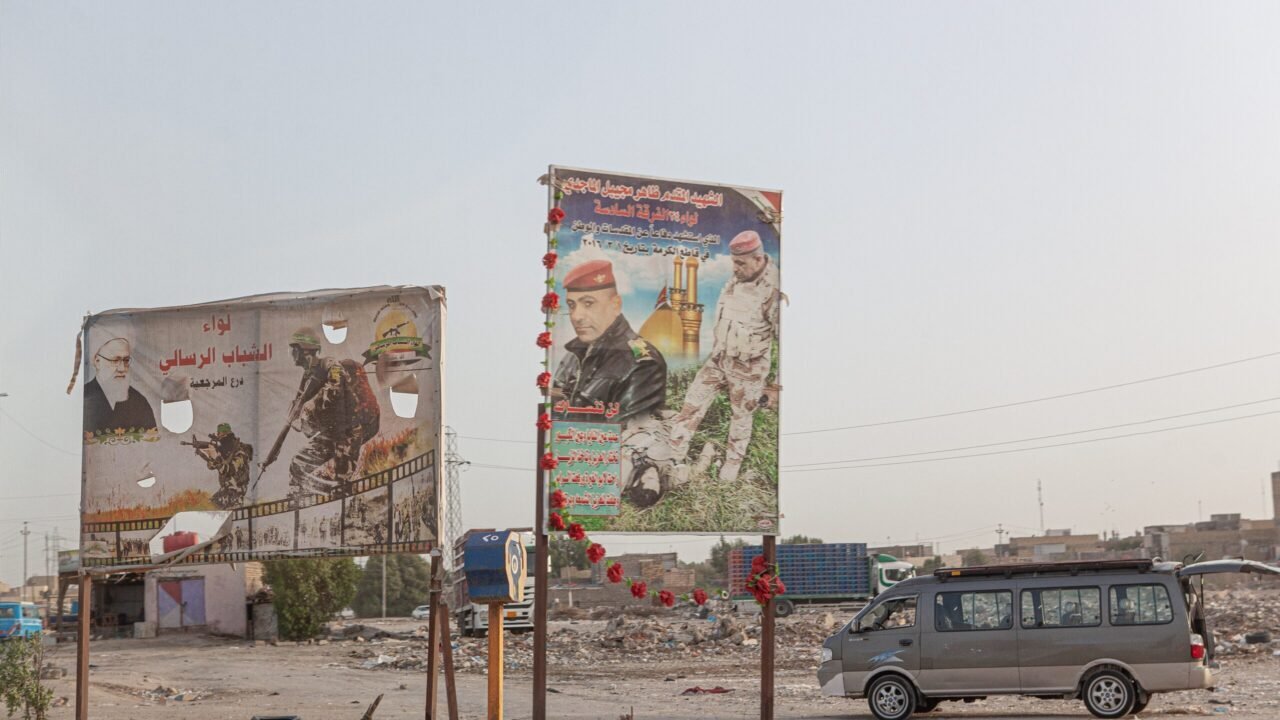
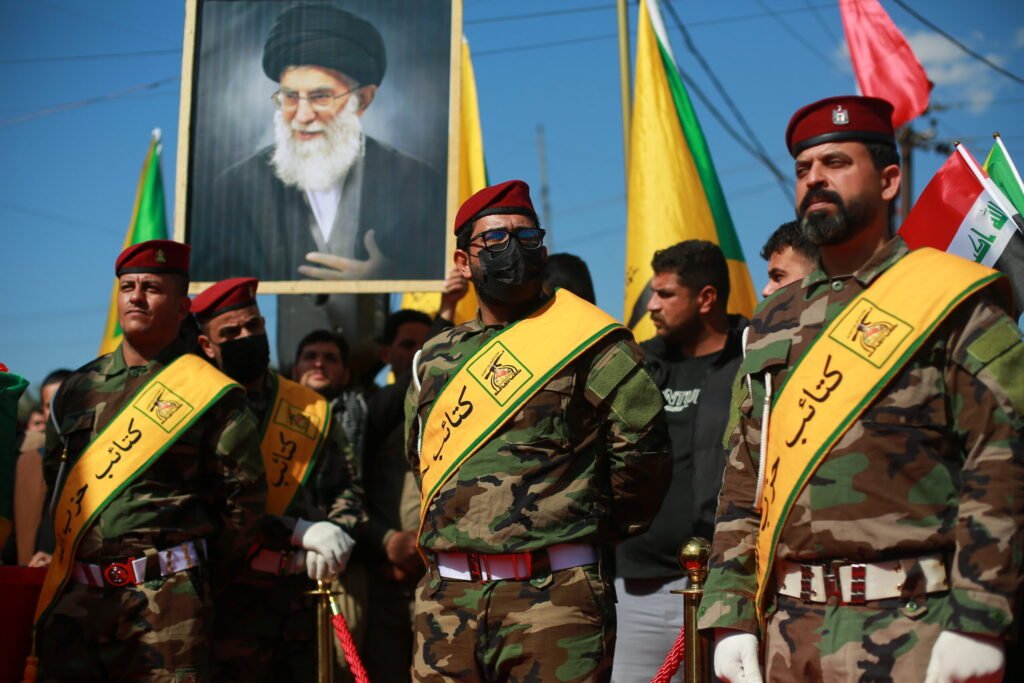
The first hurdle that Zaidi sidestepped instead of clearing was an American prohibition on cabinet membership for affiliates of six Iran-backed militias that the United States has designated as Foreign Terrorist Organizations (FTOs). These groups have political arms that are integral to the Coordination Framework, and they seek powerful political positions in Iraq.
By leaving nine ministries—including several wanted by the militias—empty, Zaidi left this problem for another day. Asaib Ahl al-Haq (AAH), a major militia, a Coordination Framework member, and an FTO, is waiting, with Iranian approval, to decide whether it will participate in the government until the issue of militia disarmament is resolved. If AAH sticks to this position, Iraq’s next government likely will not be complete until some resolution is found on the question of militias.
US-Iran Needle Sharpens in Baghdad
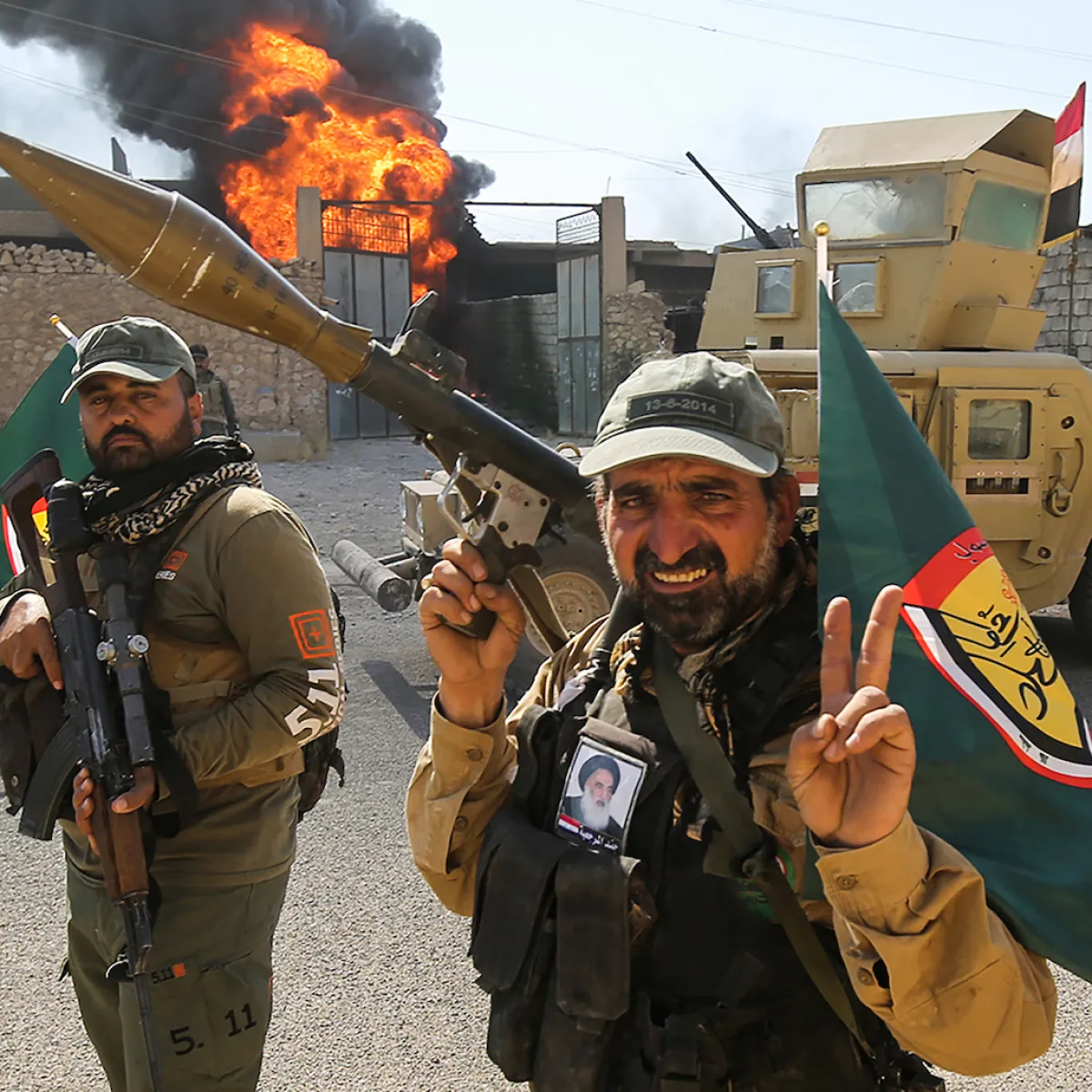
The United States has been insisting that Iran-backed militias be “fully disarmed, dismantled, and disempowered” since President Donald Trump took office in January 2025. Since then, the militias have launched hundreds of attacks during the recent US conflict with Iran, including repeated strikes on the US Embassy in Baghdad, only hardening Washington’s position against them.
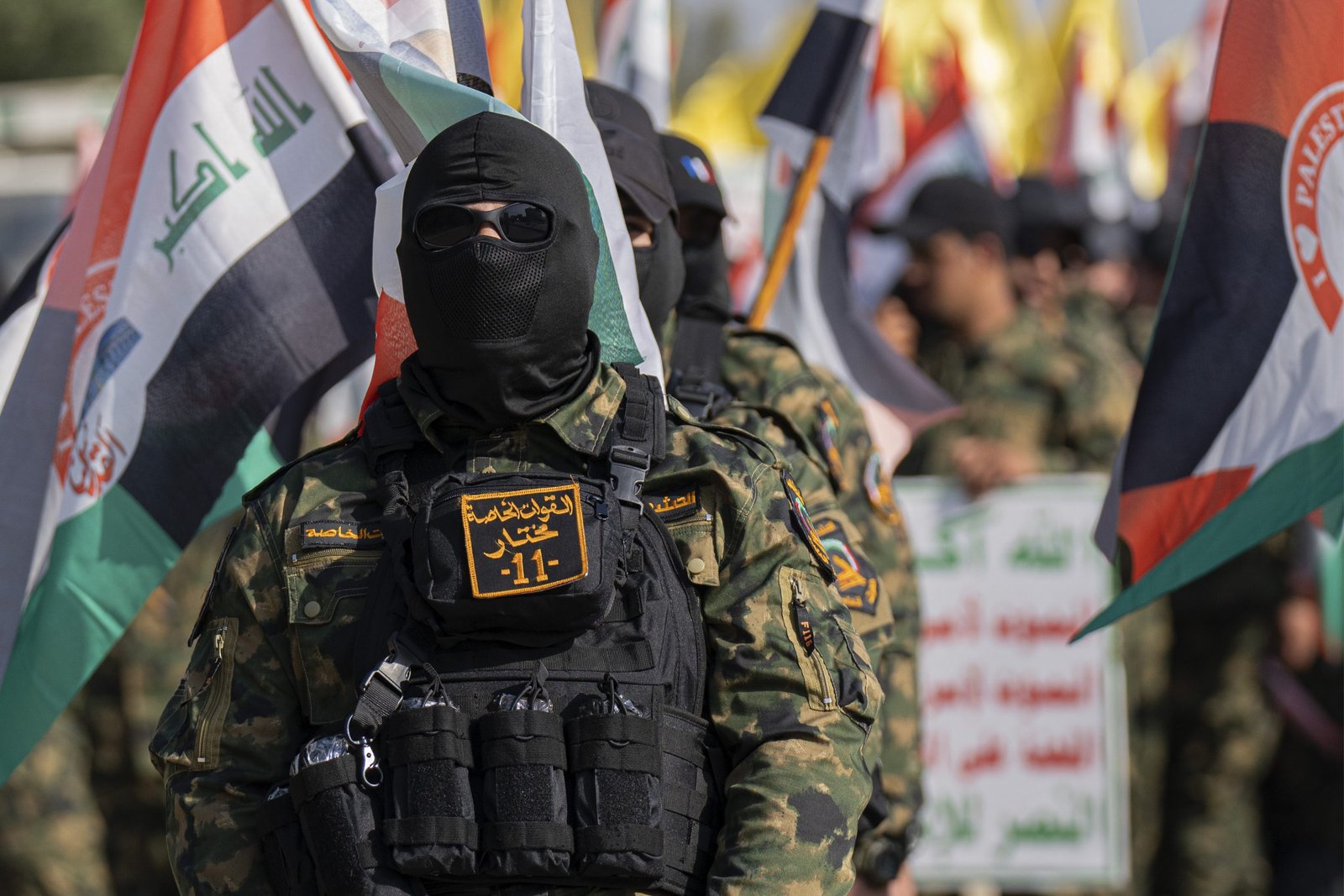
Meanwhile, Tehran and the Iranian regime’s partners in Iraq are hoping to institutionalize and protect the militias by strengthening the Popular Mobilization Forces (PMF), an official Iraqi security organization primarily comprised of Iran-backed militias, including all six FTOs. The PMF was formed in 2014 to fight ISIS, and its current legal basis is only a brief authorizing law from 2016.
Iran’s partners and other advocates of the PMF repeatedly attempted to pass robust legislation in 2025 to enshrine the organization and its funding, but the efforts failed. In its current form, the PMF’s bare-bones authorization leaves the door open to changes by a reform-minded prime minister without parliamentary approval.
US Secretary of State Marco Rubio “reiterated serious US concerns” over the most recent iteration of the PMF legislation in July 2025, a month before it was pulled from parliamentary consideration. Washington’s reported counterproposal for the PMF would instead integrate it, alongside other security bodies, into a new ministry that reports to the prime minister.
While the PMF currently nominally also reports to the prime minister, it frequently conducts operations outside of Iraqi political dictates, including the recent wave of attacks against US interests and partners. In 2015, Akram al-Kaabi, the leader of the Iran-backed FTO Harakat Hezbollah al-Nujaba (HHN), even said that he considers Iran’s supreme leader to be the group’s “source of leadership” and indicated that the PMF could engage in a coup if “a religious authority makes a decision to change the rule in Iraq.”
“With [our weapons], we have protected Iraq from the defilement of ISIS and their American handlers,” al-Kaabi said in response to reports in early May of this year about America’s calls for disarming the militias. “[The weapons] will not be surrendered as long as we have breath, nor will they be taken even if lives are sacrificed.”
Some militias, like HHN, have opposed integration into the state. Others, such as AAH, are open to such a path because the resulting influence is crucial to the economic and political success that protects and legitimizes their weapons. Coordination Framework member and Minister of Health Abdul Hussein al-Moussawisaid that some factions would hand their weapons over to the state under the right conditions.
Shia leaders in Baghdad reportedly formed a three-man committee to address the disarmament issue around the time of Zaidi’s selection as prime minister at the end of April. The committee includes Zaidi, outgoing Prime Minister Mohammad Shia al-Sudani, and Hadi al-Ameri, the head of the Badr Organization, a large, undesignated Iran-backed militia with a political arm, which was included to ease concerns among other militia leaders.
While the details of the committee’s proposal have not been disclosed, available information indicates that it strengthens—not eliminates—the PMF. Iraqi officials, particularly those from or indebted to militias, are likely seeking to repeat past attempts that amounted to window dressing. They would offer cosmetic changes that nominally bring militias in line with official Iraqi security institutions and dictates without actually severing ties with Tehran.
The challenge for Zaidi will be to bring all actors onto the same page, including the Iran-backed militias and officials in Baghdad, Tehran, and Washington. Nearly all parties involved agree in principle to “state control of weapons.” Yet, there is no consensus on what that would look like in practice.
Zaidi’s Weak Hand on US-Iran Needle
Unfortunately for Zaidi, he likely won’t have the luxury of time before confronting this issue. And while Washington has expressed confidence that he is the man for the job, his lack of political experience leaves his effectiveness in question. Little is known about Zaidi aside from his prominent roles across Iraq’s business sectors, which certainly helped his selection. His tenure as chairman of Al-Janoob Islamic Bank for Investment and Finance has gained the most attention.
In February 2024, the Central Bank of Iraq (CBI) banned Al-Janoob from participating in the daily dollar auction, the primary means by which Iraqi financial institutions received US dollars until the auction’s termination in early 2025. Al-Janoob was one of eight Iraqi banks that were proscribed to “reduce fraud, money laundering and other illegal uses of US currency,” part of a longstanding US focus on preventing Iranian access to dollars. Regardless, Zaidi’s apparent ties to illicit finance were not enough to prompt American objections to his selection as prime minister—despite the Trump administration’s continuing policy of countering Iran’s funding schemes through Iraq.
Zaidi emerged as a compromise solution to the five-month deadlock in forming a government, as the Coordination Framework struggled to navigate infighting and the competition between Washington and Tehran for influence. The prime minister’s lack of political experience or a popular support base satisfied Tehran and the Coordination Framework, as Zaidi is more likely to be a malleable leader. The bloc seeks to retain decision-making authority and use the prime minister as its executor.
Simultaneously, Zaidi’s business background may have appealed to President Trump, and Washington has previously had to work with other “less-bad” actors in Iraq, where Tehran-aligned Shias are the dominant political bloc. Thus, the new prime minister’s history and associations are likely less concerning to the United States than if Iraqi leaders had appointed someone with direct ties to the militias and Iran.
Nevertheless, Zaidi’s background and relationships, both inside and outside Baghdad, don’t indicate a clear path for the new leader through the muddy issue of militia disarmament, which will likely define the remainder of his tenure. If the new prime minister somehow manages to thread the needle on this issue, it won’t be smooth sailing afterward. Tehran’s partners in Iraq won’t settle for a loss of weapons and political influence, likely impacting his choices for the remaining cabinet positions.
Zaidi will have to navigate the fallout of hard decisions as well as America’s desire to counter Iranian illicit finance in Iraq, and Washington will certainly watch his performance closely, given al-Janoob’s history. Simultaneously, Iraq is facing an impending budget crisis as its oil exports, which account for 90 percent of the country’s revenue, are curtailed by the closure of the Strait of Hormuz. This will only compound the existing budgetary challenges posed by Iraq’s bloated public sector.
To say that Zaidi has his work cut out for him is an understatement. Iran’s partners in Iraq, particularly their political leadership in the Coordination Framework, do not want an independent leader who will accede to Washington’s demands. Meanwhile, the United States has expressed a seemingly implacable position on Iranian influence and the fate of Tehran-backed leaders and militias.
If Zaidi proves unable to strike the right balance between the two countries, he will either lose crucial domestic political support or Washington’s initially warm reception will turn cool. And in an era where the Trump administration is increasingly willing to use the stick instead of the carrot, there could be grave consequences for Iraq.