
Israel’s ongoing military campaign in Lebanon fundamentally challenges the US-Iran ceasefire framework, driven by a strategic need for physical border buffers over diplomatic assurances, creating a volatile decoupling that threatens regional stability.
While the US-Iran ceasefire framework de-escalates the Persian Gulf, Israel’s ongoing military operations in Lebanon expose a fundamental strategic decoupling, driven by a security paradigm that prioritizes physical buffer zones over diplomatic guarantees. This calculated divergence risks unraveling the broader truce, as Israel’s war in Lebanon proceeds with a distinct logic of terraforming the battlefield. The core tension lies not in the ceasefire itself, but in whether Israel’s physical campaign can coexist with a political agreement it never signed, making the war in Lebanon the single greatest variable in the region’s fragile stability.
War in Lebanon: Northern Buffer Strategy
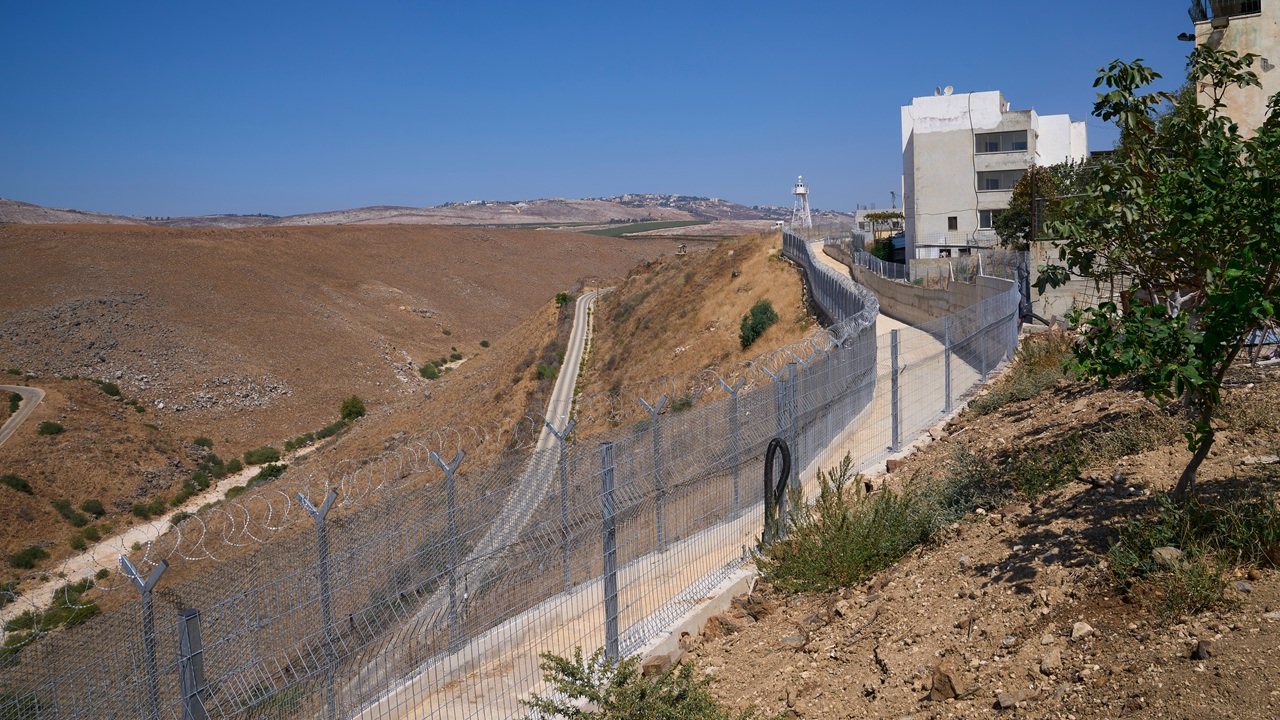
The Israeli objective is not simply about punishing Hezbollah, Iran’s allied proxy militia in Lebanon and a long-running thorn in Jerusalem’s side. Israeli military planners appear focused on creating a long-term security buffer along Israel’s northern border. Hezbollah spent years building rocket launch sites, tunnel networks, observation posts, and weapons storage facilities throughout southern Lebanon. Israeli officials increasingly argue that diplomatic arrangements have failed to prevent Hezbollah’s military buildup, so physical security is required. Therefore, the Israel Defense Forces (IDF) is attempting to physically reshape the battle space rather than rely on diplomatic arrangements.
The current ground campaign in Lebanon is focused on the city of Nabatieh, border villages, and former Hezbollah logistics corridors. The campaign is not an armored blitz; instead, it has been methodical and engineering-heavy. Israel’s typical sequence has been to isolate an area, clear any local Hezbollah resistance, search for and destroy tunnels and military infrastructure, establish observation and fire-control positions, and move on. The goal of the campaign is to deny Hezbollah the terrain it previously used for concealment and launching sites against Israel.
Terraforming and the War in Lebanon
The strategy is understandably heavy on engineering. Israeli forces are reportedly conducting tunnel demolition, road destruction, tree-line clearing, bunker removal, and terrain modification. In Lebanon, as elsewhere, guerrilla warfare depends heavily on concealment. Israel believes that if the terrain of southern Lebanon becomes less usable for insurgent activities, future attacks are less likely. In essence, the IDF is creating a buffer zone in the south, making it harder for Hezbollah to launch additional attacks.
The Diplomatic Spoiler War in Lebanon
The campaign has had some success. Hezbollah has reportedly reduced large-scale attacks, perhaps to allow for diplomacy to proceed or to rebuild damaged networks. However, Hezbollah has not accepted Israel’s security vision for the region—meaning that a long-term conflict is still in the cards.
War in Lebanon: Independent Military Calculus
This is potentially a problem because Israel is not a direct signatory of the US-Iran agreement; Israel’s operations in Lebanon are independent. A major Israeli strike could trigger Iran pressure or proxy retaliation or the collapse of broader diplomatic relations. Similarly, a major Hezbollah attack could force an Israeli escalation, even if Washington and Tehran want calm. The US-Iran ceasefire deal is not scheduled to be signed until Friday, and the Israel-Lebanon situation could yet spoil it.
Israel has taken significant flak for its ongoing operations. International criticism is high, as is the diplomatic pressure on Jerusalem to stop. Simultaneously, the Israeli military is enduring wear and tear and prolonged deployments. So the costs for proceeding are significant.
Why Proceed with the War in Lebanon
Yet Israel proceeds. Why? Because Israelis perceive the risk of allowing Hezbollah to rebuild along the Lebanon-Israel border as more pronounced than continuing military operations. The underlying belief is that security must be physically built, not just negotiated. Whether the Israeli assumption proves correct is debatable and will take time to prove. Regardless, Israel plans to proceed without concern for the broader diplomatic framework taking place in the region. The military logic is focused on terraforming to create a security buffer against future attacks.