
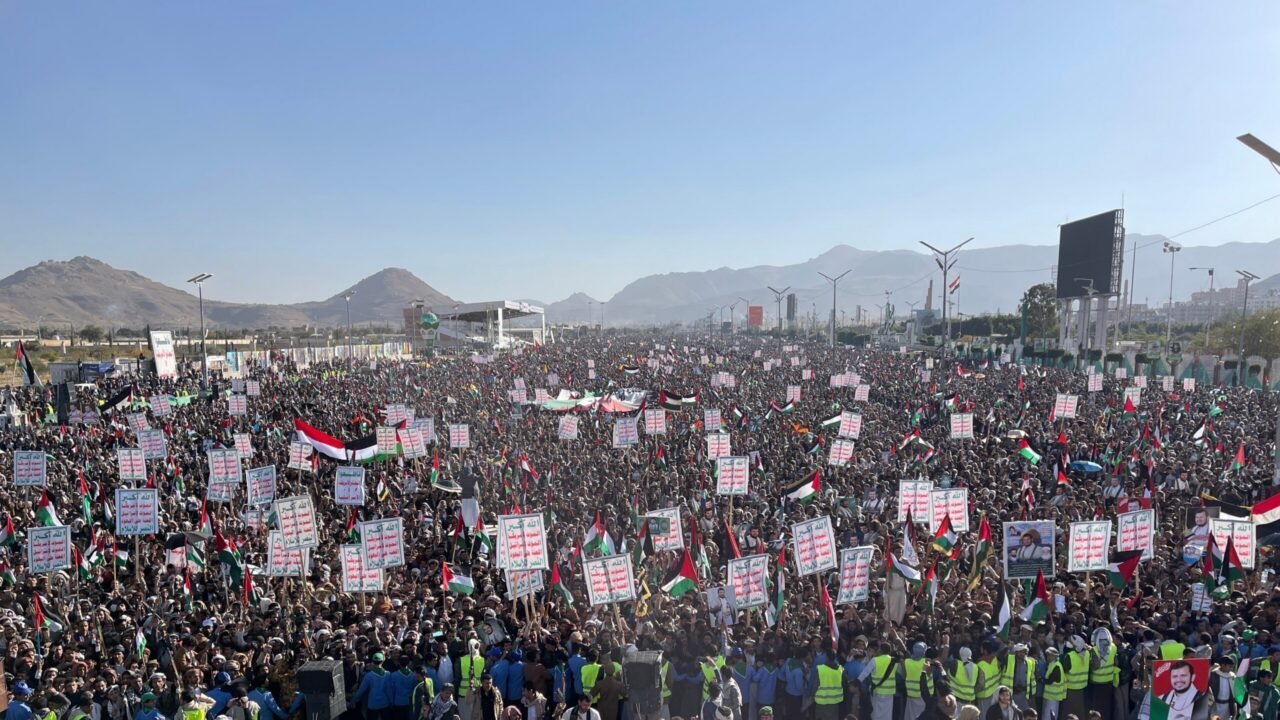
Yemen’s Houthis have survived heavy airstrikes, closed the Bab el-Mandeb, hit Ben Gurion Airport with a hypersonic missile, and now function as Iran’s most capable remaining partner in the Axis of Resistance.
The evolving security environment in the Red Sea has exposed a dangerous analytical error in Western capitals. Ansar Allah, widely called the Houthis, is not a loose collection of maritime raiders; the group operates as a hardened, politically organized military force with access to advanced missile systems and a demonstrated capacity to disrupt global trade.
The Houthis threat is therefore not peripheral piracy but a structural challenge to freedom of navigation through one of the world’s most critical chokepoints. Yemen’s prolonged collapse has concealed the consolidation of a well-supplied combatant whose missile inventories cannot originate from an economy of only $471 per capita. Such capabilities imply direct external support and a high degree of strategic coordination with Iran’s resistance network, even as other partners have suffered severe attrition.
That distinction matters for policy. A response calibrated for sporadic banditry will fail against a group that can close the Bab el-Mandeb, strike distant targets, and absorb sustained air campaigns. The Houthis threat grows precisely because Western analysis still reaches for familiar categories—pirates, raiders, insurgents—rather than recognizing a capable state-aligned actor in control of strategic geography.
A Failed State Armed With Missiles
Yemen is one of the world’s prime examples of a failed state, with Yemeni GDP per capita now estimated to be only $471 after over a decade of brutal civil war. Sophistication is not therefore a quality which springs to mind when we conjure an image of Ansar Allah, commonly known as the Houthis.
One might instead be tempted to envision the Houthis’ threats to international shipping in the region as a group akin to Somali Pirates, who have long troubled the waters near Yemen through their opportunistic buccaneering. Or one might think of the Tusken Raiders as one Navy pilot did: desert-dwelling nomads prone to aggression in the Star Wars franchise. Such images underestimate both the Houthis’ strength and the geopolitical risk they pose to the West.
Why the Houthis threat persists
The Iranian-led “Axis of Resistance” has been greatly weakened over the past three years. Israel has seriously degraded the capabilities of both Hamas and Hezbollah since the beginning of the 2023 war; the demise of the Assad regime in Syria has ended Iranian ambitions of a corridor to the Mediterranean; and, whilst the full results of the air campaigns remain unclear, the core strength of the alliance—Iranian military might—has also been subjected to heavy attack.
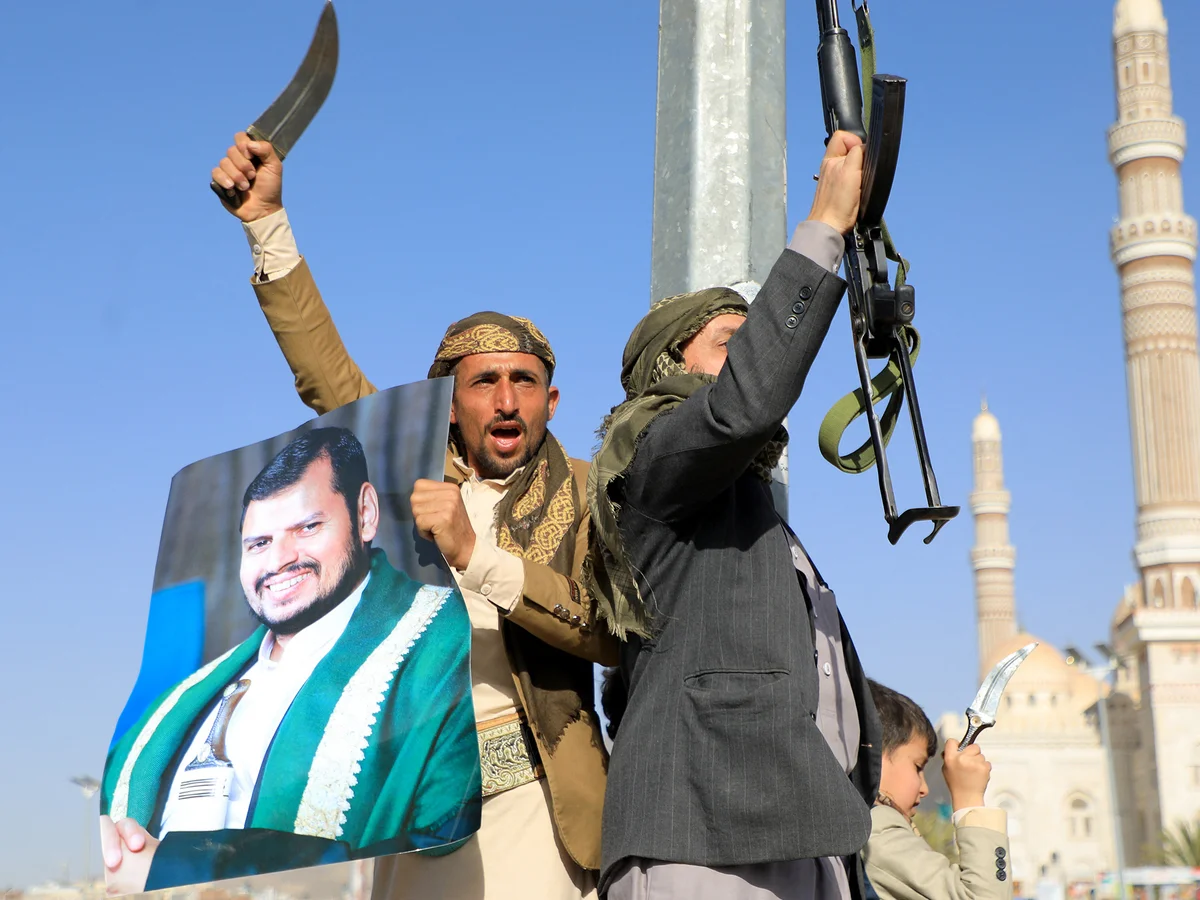
Compared with their bedmates, the Houthis have emerged comparatively unscathed. Should the Islamic Republic continue its struggle against the West after the current war ends—as seems likely, insofar as the regime is still standing—the Houthis will likely be Iran’s most effective partner.
Controlling the Bab el-Mandeb Strait
Houthi expansion over Western Yemen since the beginning of the country’s civil war has given the group prime access to one of the most important chokepoints in world trade: the Bab el-Mandeb Strait. This passage, which connects the Red Sea to the Gulf of Aden, carries around 14 percent of all global maritime trade under normal conditions. The Houthis’ leverage lies in their ability to close the strait and reroute all traffic around the Cape of Good Hope. As with the Strait of Hormuz, the waterway can be quickly closed if maritime insurance firms deem the risk of insuring ships too high—the Houthis do not need to attack all ships passing through.
How Shipping Routes Came Under Fire
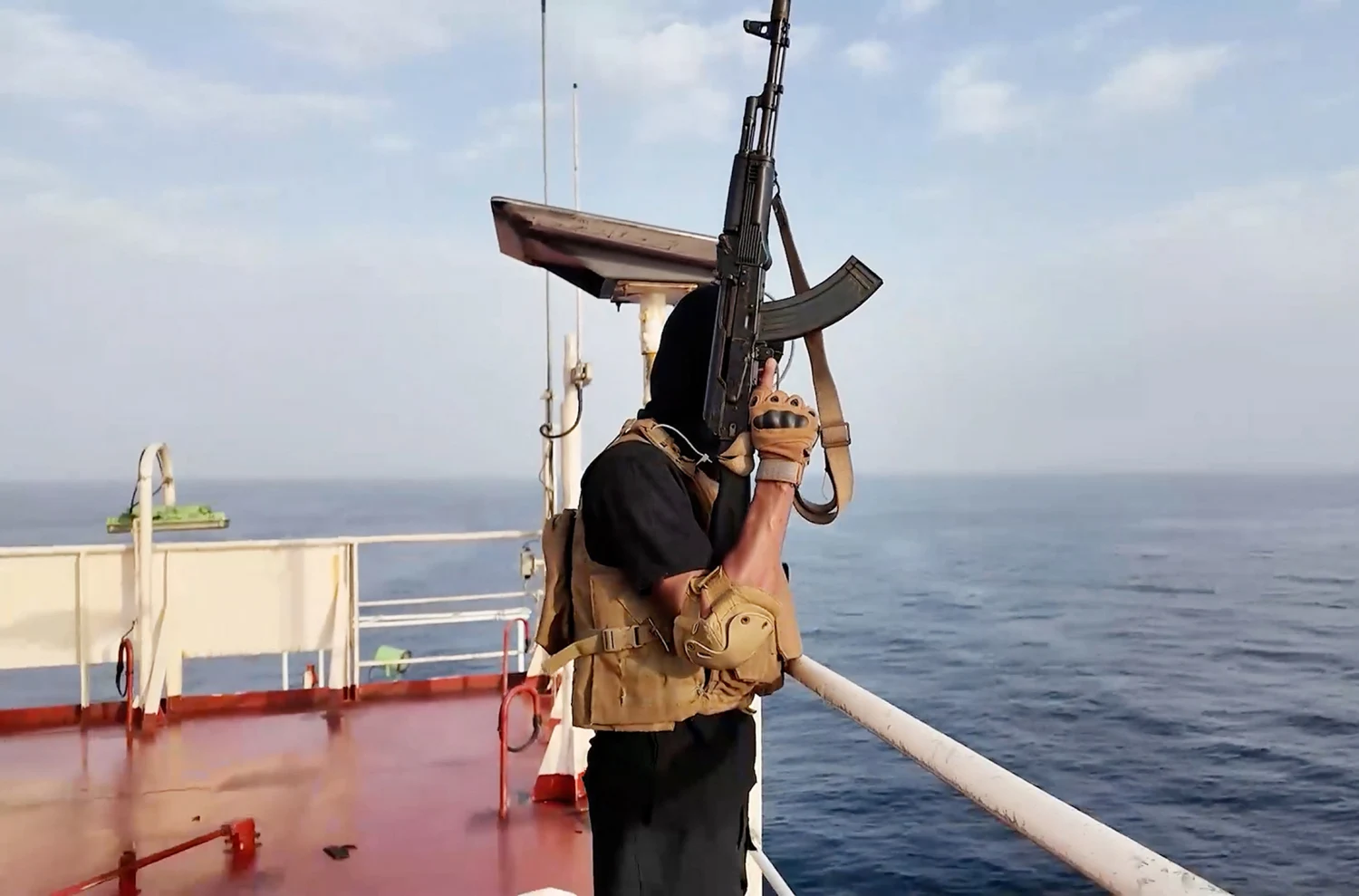
The closing of the strait was, of course, precisely what the Houthis attempted towards the end of 2023. As a supposed show of solidarity with the Palestinians, the Houthis targeted ships routed to the Israeli Port of Eilat, which already had a marked effect on Israeli shipping by the end of the year. By January of 2024, some insurance firms stopped insuring ships with any Israeli connections. The Houthis also began to attack Western ships without such associations (whilst providing safe passage to the Chinese and Russians), and it was this escalation which led to the US-UK retaliatory strikes.
Can Air Power Alone Stop Them?
By the end of the first year of the campaign, Biden’s Operation Poseidon Archer had seen over 270 airstrikes into Yemen. Following a brief respite alongside the January 2025 ceasefire in Gaza, Trump initiated Operation Rough Rider in March, sending well over 1,000 further airstrikes towards the Houthis in the space of a month and a half.
As the ongoing Iran War has also shown, air power alone cannot drive the Houthis from their rugged, mountainous territory. In any case, the Iranians still used the threat of the Houthis closing the Bab el-Mandeb earlier this year in response to the Israeli-American attacks. The recent Houthi attacks on Saudi Arabia demonstrate their ability to hurt American allies in the Middle East.
The Houthis threat beyond piracy
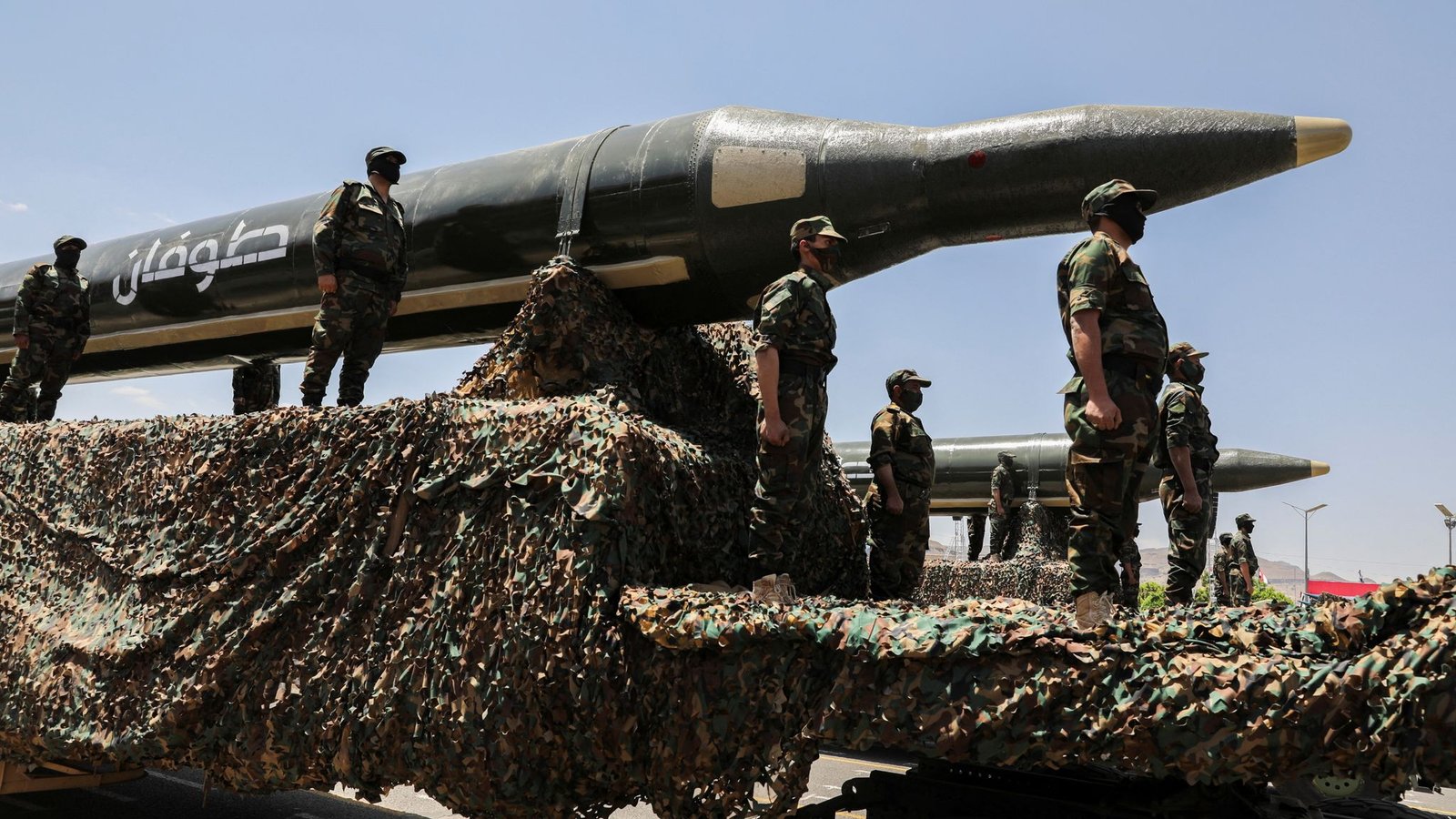
Perhaps most worryingly of all, the United States and the United Kingdom failed to substantially degrade the Houthis’ more technologically advanced stockpiles—their longer-range ballistic missiles. Two days before Trump ended Operation Rough Rider, a hypersonic Houthi ballistic missile managed to bypass Israel’s air defenses and strike Ben Gurion Airport; several other such missiles have been fired in the past year towards Israel (the IDF has been more successful in intercepting them since).
Besides Hezbollah, the Houthis are the only non-state actors in the world who possess ballistic missiles, and the only ones who have fired missiles on commercial shipping, including against Saudi Arabia this past week. Of course, an economy as impoverished as that of Yemen does not produce advanced ballistic missiles—their strength is intimately tied with that of Iran, and its ability to produce these weapons.
What the West Keeps Getting Wrong
The Houthis have long been regarded as acting more independently than the other members of Iran’s resistance network. Still, as pressure mounts on both, and as Iran’s other proxies have been weakened, mutual trust and coordination will only increase. They should therefore be viewed as they are—not as aggressive, volatile pirates, but as strongly armed partners of the Islamic Republic.