
Baghdad is reviving northern and cross-country pipeline proposals after renewed Strait of Hormuz disruptions, but financing gaps, security threats, and infrastructure constraints keep southern crude dependent on Gulf terminals and vulnerable to prolonged export risk.
Iraq Oil Exports remain structurally tied to the Strait of Hormuz even as Baghdad revives long-stalled pipeline proposals aimed at Turkey, Syria, and Jordan. The country’s fiscal base remains dangerously exposed: hydrocarbons supply roughly 90% of state revenue, while pre-war southern loadings exceeded 3 million barrels per day.
The absence of a functioning cross-country pipeline network forces Basrah crude onto very large crude carriers that must transit waters now under Iranian navigational pressure. Baghdad’s recent one-year renewal of the Iraq-Turkey Pipeline agreement signals a desire to shift volumes toward Ceyhan, yet infrastructure constraints, drone attacks on northern fields, and weak investment capacity leave such plans far from operational. Historical evidence reinforces this caution.
The Strategic Pipeline, commissioned in 1975, was intended to move southern crude to Mediterranean terminals, but wars and political failure repeatedly disabled Iraq’s export alternatives. Current workarounds, including trucking high-sulfur fuel oil to Baniyas and ADNOC shuttle arrangements across the Gulf of Oman, remain limited and logistically fragile. Consequently, Iraq Oil Exports continue to depend on the Hormuz passage, a chokepoint where two-way tanker traffic has resumed but remains volatile.
Iraq Oil Exports Face Hormuz Limits
Amid the protracted crisis in the Strait of Hormuz, Iraq has been racing to find new outlets and methods to export its crude and petroleum products. The economy of OPEC’s second-largest oil producer after Saudi Arabia is heavily dependent on oil revenues, which make up about 90% of its budget. The majority of Iraq’s crude oil exports, which exceeded 3 million barrels per day (bpd) prior to the Iran war, relied on the Strait of Hormuz, in addition to oil products such as high sulfur straight run fuel oil (HSSRFO). The country’s three top oil customers over the past two years have been in Asia, Iraq’s key market: China, India, and South Korea, data from Kpler shows.
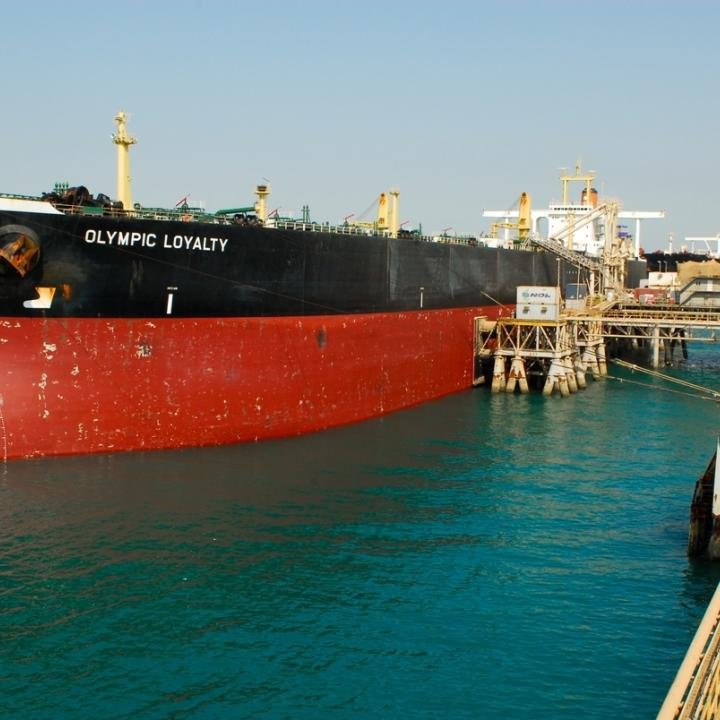
While Iraq has major oilfields in both the northern and southern regions, it is the latter that account for the bulk of Iraq’s crude exports. These are shipped from offshore Gulf terminals in Iraqi waters, including the Al Basrah Oil Terminal (ABOT), which allow very large crude carriers (VLCCs) to load there.
For these exports, the Strait of Hormuz remains critical due to the absence of an effective pipeline system that would allow substantial volumes of Basrah crude oil produced in the southern region to be transported north and from there exported via an existing pipeline to Turkey’s Mediterranean port of Ceyhan. Over the past years, Iraq has on several occasions spoken of plans to build new pipelines. However, several factors, ranging from domestic politics, conflicts and geopolitics to bureaucracy, corruption, security risks, and finances, have impeded these plans.
Now, as Iran has established a new navigational order in the Strait while keeping risks very high for commercial vessels, Iraq is trying to revive some of these pipeline plans as it relies on expanding some workarounds to keep its oil flowing to global markets.
Northern Pipeline Expansion Stalls Again
Past experience shows that Baghdad has failed to implement some pipeline projects. While the current critical circumstances resulting from the Iran war may increase the urgency to get those pipelines in place, the resumption of two-way tanker traffic in the Strait of Hormuz will remain key to Iraq’s crude oil exports, specifically to giant Asian oil consumers, namely India and China.
How Iraq wants to expand its northern export system
Public statements by Iraqi officials affiliated with the oil ministry and the State Oil Marketing Organization (SOMO) indicate that Baghdad wants to expand its northern pipeline export system to Turkey’s port of Ceyhan. To that end, Baghdad and Ankara signed recently a new and one-year agreement that would allow the existing Iraq-Turkey Pipeline (ITP) to continue operating following the expiration of a treaty between the two sides that governs the use of the ITP and which expired on July 26, according to statements by Mr. Ali Nazar Faeq al-Shatari, the director-general of SOMO, during an interview with Dijlah, an Iraqi TV channel. The ITP treaty was signed in 1973 and renewed at different times in the past.
This pipeline has a maximum capacity of 1.5 million bpd, but it is not fully utilized. The capacity being discussed now under the new agreement, is a minimum of 750,000 bpd. Yet even this is unlikely to be achieved, at least in the near term, due to infrastructure constraints, including crude availability, as well as the security situation in general.
During the Iran war, oilfields in the Kurdistan Regional Government ( KRG) in northern Iraq experienced drone attacks blamed on Iran-aligned Iraqi armed groups, forcing production to be either shut down or reduced. Based on available information ( here and here), the maximum amount that can be exported from northern Iraq – from both Kirkuk fields managed by the federal government in Baghdad, and those managed by the KRG – could reach, under optimal conditions, between 320,000-430,000 bpd, and if infrastructure and security challenges are overcome.
Can Basrah-Haditha Reach Three Ports?
In addition to these new plans, Iraq wants to build a new pipeline that links southern Iraq with the north, moving Iraqi Basrah crude from the southern region to be exported in the future via the pipeline system with Turkey, and if possible via a branch linked to Syria’s Baniyas port on the Mediterranean, in addition to a pipeline to Jordan’s Red Sea port of Aqaba- although the benefits of this line are debatable, and Iraq failed to implement it in the past.
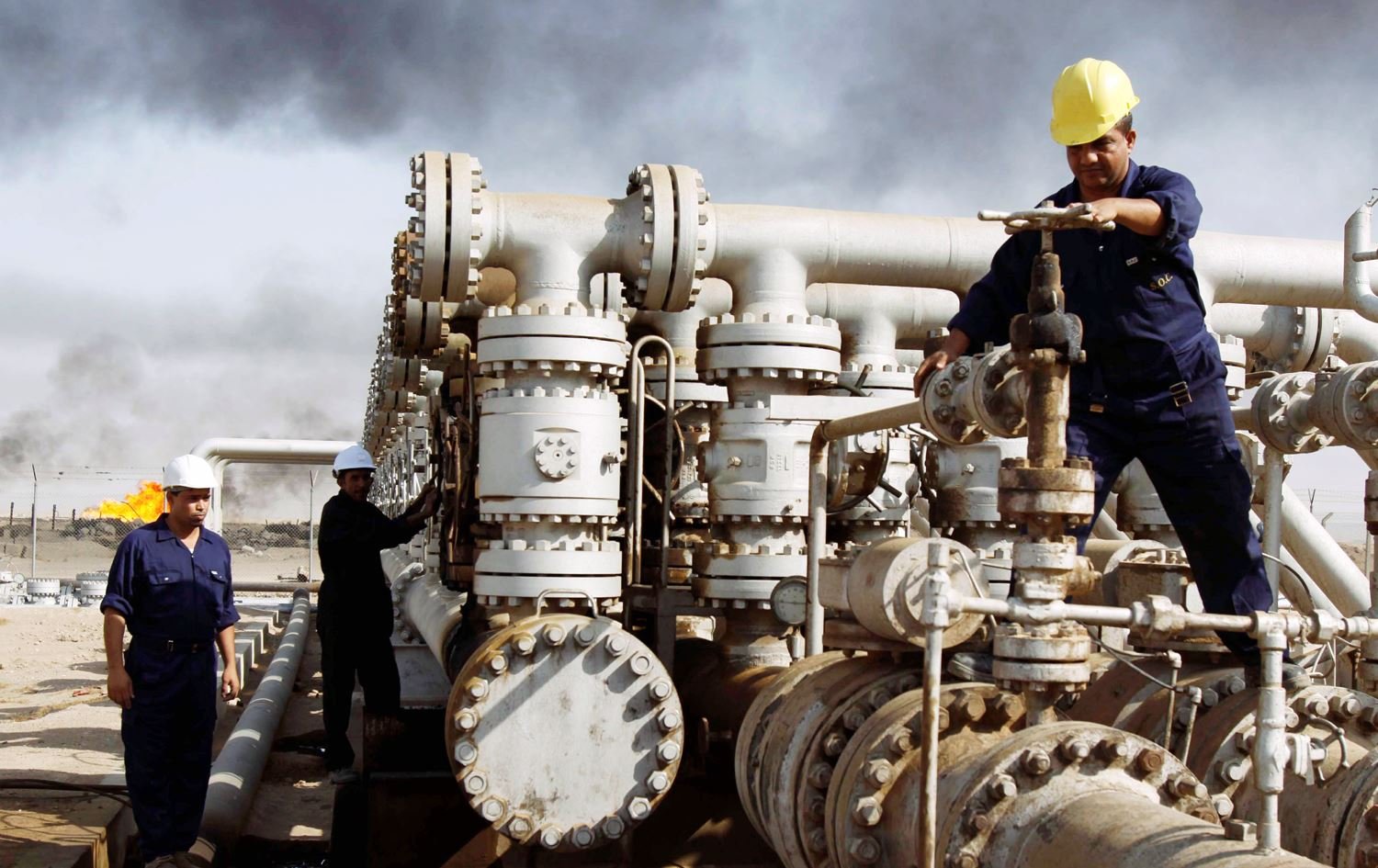
To realize these new export outlets, Iraq will have to construct a pipeline from Basrah to Haditha in the Anbar province in western Iraq.
“The Basrah- Haditha oil pipeline project will have a capacity of around 2.5 million barrels per day, and [it will be used] to export oil in three directions: to Baniyas in Syria, Ceyhan in Turkey, and Aqaba in Jordan. It will also pass through all the refineries located along its route in the southern, central, and northern provinces,” a spokesperson from the oil ministry said in a statement carried by the Iraqi News Agency in May.
However, this is not the first time that Baghdad has announced intentions to build this pipeline. In December 2024, Iraq’s cabinet (under former Prime Minister Mohammed Shia’ al-Sudani) approved a Basrah-Haditha crude oil pipeline to reportedly replace an old pipeline constructed in the 1970s, discussed in more detail below.
Finance Gap Blocks Southern Pipeline
However, Iraq is in no position to finance this new pipeline system. For this reason, Baghdad is seeking investments from foreign oil companies, including U.S. firms. Based on remarks by Iraqi officials, Baghdad has signed an agreement with a consortium of three companies, Chevron, Capital TI – an American firm, and UCC, a Qatari company, to construct the pipeline linking the south with the north.
Iraq used to have a pipeline network and in the previous century the country had a twin pipeline that extended from the Kirkuk oilfields in northern Iraq to Tripoli (in northern Lebanon), and Haifa (before the Arab-Israeli War) and which was completed in 1934. It also had a pipeline that reached the Syrian port of Baniyas and which was completed in 1952. None of these pipelines are operational anymore due to various conflicts in the region since the past century.
Old Strategic Lines Offer No Rescue
Another pipeline project Iraq built at that time was one called the Strategic Pipeline which was inaugurated in December 1975. Available records reveal that Iraqi officials back then viewed this line as vital to market southern oil through Mediterranean terminals and northern oil through Gulf terminals in Iraqi waters (Iraq Today magazine, Vol 1, No 8, published in January 15, 1976. The record was reviewed by the author).
Iraq also had a pipeline through Saudi Arabia (c) that was commissioned in 1988 and which extended from southern Iraq to the Saudi port of Muajjiz on the Red Sea. This did not last long due to Saddam Hussein’s invasion of Kuwait in 1990. The following decades saw wars that gravely affected Iraq’s energy sector and export infrastructure.
Iraq Oil Exports Still Need Hormuz
In July, Iraq exported around 35.5 million barrels (per month) from the southern region, where giant oilfields are located, according to comments by SOMO’s director general Mr. al-Shatari on August 4. However, this was well below the volumes Baghdad was exporting prior to the shipping crisis in the Strait of Hormuz, which stood at about 105 million barrels per month (equivalent to around 3.5 million bpd).
Amid the ramifications of the Iran war, Iraq has had to curtail production due to disruptions in loadings at its southern terminals (at ABOT and single point moorings), and storage limitations, and rely instead on workarounds. These have included trucking high sulfur fuel oil to Syria to be exported on tankers from Baniyas, and which is logistically challenging. By June 2026, around 1,000 trucks were reportedly making their way from Iraq to Syria per day, each carrying about 220 barrels, according to Syrian Petroleum Company CEO Youssef Qablawi during remarks at the Atlantic Council’s Global Energy Forum in Washington, DC in June, and which was attended by the author.
While some oil tankers have been able to load at Iraq’s Gulf terminals and leave via the Strait during the war, these movements have been very volatile due to uncertainties surrounding talks between Iran and the U.S, and Tehran’s insistence on having a new arrangement for governing this critical waterway. This stalemate has forced new ways of trading in the region.
A recent report by Bloomberg revealed that the Abu Dhabi National Oil Company’s (ADNOC) trading arm has “offered” to shuttle Iraqi Basrah crude for export to Asian markets via a method that involves moving oil cargoes from within the Gulf region and transferring them to other vessels waiting in the Gulf of Oman and which are not navigating the high-risk Strait.
This is one way through which the UAE has been reportedly keeping its own oil flowing via the Strait, using the U.S.-facilitated route that hugs the Omani coast, and despite ongoing Iranian threats and attacks. However, ADNOC affiliated vessels have also become a major target for Iran with at least 18 tankers and bulkers reportedly struck in the Strait since the beginning of the conflict.
Security Risks Outweigh Pipeline Promises
As it plans future pipeline projects, the Strait of Hormuz should be expected to remain a key outlet for Iraq’s crude oil exports. Iraq’s Oil Minister, Mr. Bassim Mohammed Khudair, said in a recent press conference that Baghdad has been in talks with Iran over “arrangements” to allow Iraqi oil exports via the Strait. However, this issue has not yet been definitively resolved, the minister noted.
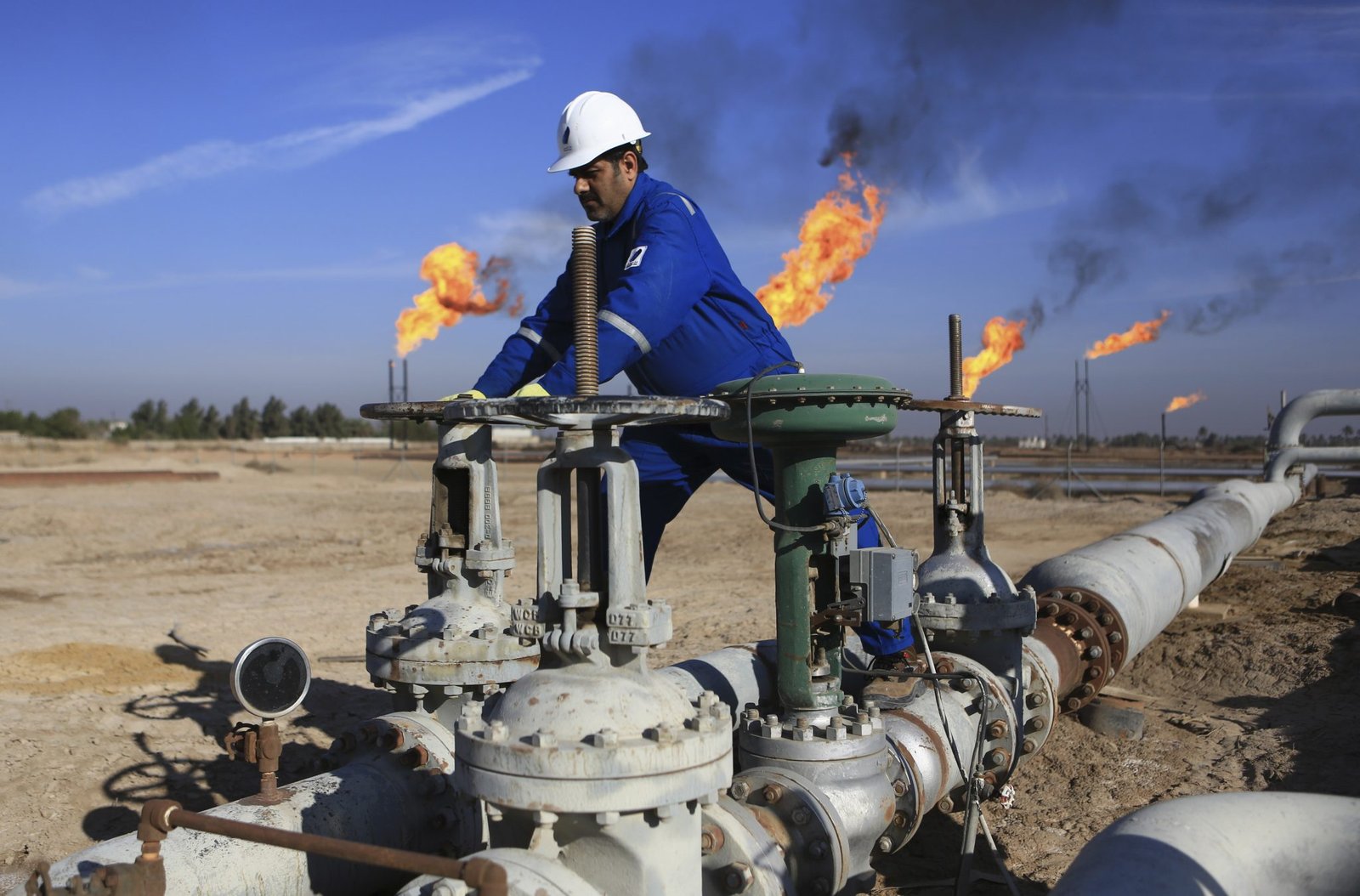
Pipeline projects in Iraq, and based on past experiences, are likely to face barriers, including changing governments that usually return some projects to the drawing board, in addition to security challenges.