
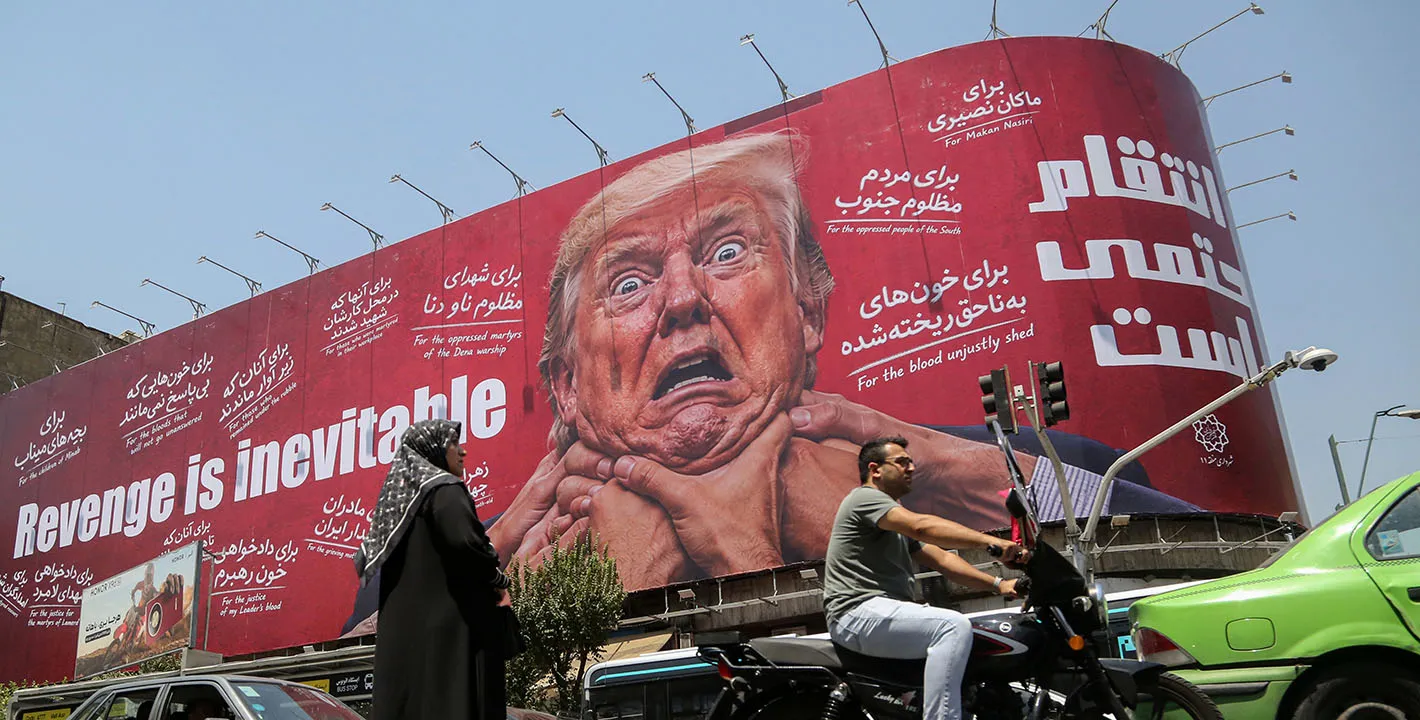
Three ruptures—moral, strategic, and institutional—are ending Pax Americana in the Middle East. Gaza’s destruction, Saudi Arabia’s hedging, and the Mecca Pact reveal Washington’s rapidly declining ability to shape regional outcomes.
The American-led order in the Middle East is collapsing under the weight of three simultaneous ruptures that have accelerated since the war in Gaza and the US-Israeli campaign against Iran. Pax Americana in the Middle East was built on security arrangements, unilateralism, and regional hegemony. That foundation is now cracking. The first rupture is moral: Israel’s slaughter in Gaza, armed and abetted by Washington, has convinced many in the region that the US order rests on Israeli scaffolding while Palestinian lives are deemed unworthy of protection.
The second is strategic: Saudi Arabia’s 2023 Beijing Agreement with Iran signaled that Riyadh would no longer place all its chips on a US security umbrella. The third is institutional: regional powers refuse to become secondary actors in a script written by Washington and Israel. The Mecca Joint Defense Agreement between Saudi Arabia, Türkiye, and Pakistan reflects this refusal. Whether this new architecture succeeds remains uncertain, but the region has moved beyond relying on Washington to guarantee a durable order. Pax Americana will not return.
Three Ruptures Accelerate Regional Shift
As the United States flounders in its conflict with Iran, as the master illusionist Donald Trump pursues his efforts to convince the American public (and others) that his shipwreck of a military operation conceals ultimate victory, the good news is that all this is accelerating movement away from Pax Americana in the Middle East.
The U.S. order in the region has been built on a foundation of purported security arrangements, reinforced after the end of the Cold War by U.S. unilateralism and regional hegemony. Yet this order is collapsing before our very eyes, and the situation has reached this point because of three major ruptures visible since the beginning of the conflict in Gaza and the U.S. and Israeli focus on bringing about regime-change in Iran.
Moral Rupture Erodes Pax Americana
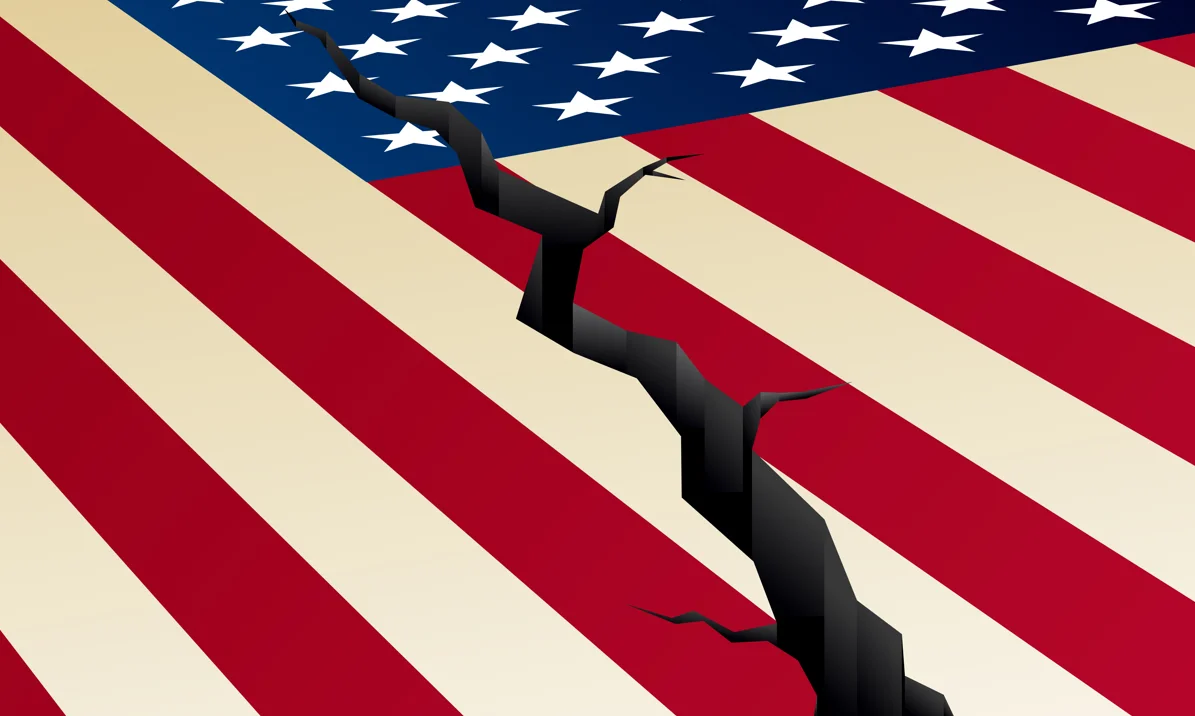
The first rupture is a moral one. Israeli’s continuing slaughter of the population in Gaza, which has been armed and abetted by the United States and several of its allies, has led many people in the Middle East to conclude, rightfully, that the U.S. order is built mainly on Israeli scaffolding, in which the wellbeing of those in the region, Palestinians in particular, is secondary. It was the Indian writer Pankaj Mishra who described the horror of Gaza as a “final rupture in the moral history of the world since the ground zero of 1945”; and it was Mishra, too, who recalled that George Orwell had written that Palestine was a “color issue.”
To many Arabs, Gaza remains a color issue. It is clear to many people that Palestinians do not appear to have the right skin color to enjoy the universal human rights afforded to others whom Western countries, or rather their elites, identify as worthy—whether Israelis on October 7 or Ukrainians in their war with Russia. Israel’s intention to ethnically cleanse the Palestinian population of Gaza is reiterated daily by Israeli officials, with the defense minister, Israel Katz (himself a verbal depository of Israeli war crimes and crimes against humanity), stating again earlier this month that his government was “organized and prepared to get [the Palestinians] out—by sea, by air, by every way possible.”
On what basis can the United States establish a durable security order in the Middle East if it provides no security, as the ongoing war with Iran has proven, while at the same time showing utter disinterest in the people of the region and their aspirations? That is why there is and always was an inherent fragility in Pax Americana.
Saudi Arabia Hedges Against Washington
Saudi Arabia sensed this in September 2019, when Iran bombed the Abqaiq-Khurais Aramco oil facility, and the United States did nothing in response. This led to a realization among the Saudis that they had to fend for themselves—a message the latest war with Iran has only hardened, as Tehran continues to bomb countries throughout the Gulf. One outcome of this insight came in March 2023, when Saudi Arabia and Iran signed the Beijing Agreement, seeking détente in their relationship. In doing so, the Saudis did not reject the United States, but showed they would no longer place all their chips on a U.S. security umbrella.
The Beijing agreement also represented implicit recognition by the Saudis that a policy to isolate and overthrow the Iranian regime was not feasible, despite the fact that the United States had spent decades trying to do so. Therefore, the moral rupture mentioned earlier was now accompanied by what we might call a strategic rupture, albeit a somewhat ambiguous one initially, because the Saudis still tried to secure a more solid U.S. commitment to their security. However, in recent months, Iran’s destruction of the large network of military bases upon which the U.S. military presence had depended has doubtless confirmed Saudi doubts.
After Beijing, the Saudis did not immediately give up hope that the Americans could provide them with security guarantees. Two main items on the Saudi list of conditions for signing a peace agreement with Israel was that Washington and Riyadh conclude a mutual defense pact, as well as U.S. assistance on a civilian Saudi nuclear program. Israel’s pitiless bombing of Gaza put the whole process on hold as the Saudis sensed they could not easily contain the domestic discontent of agreeing to peace with an Israel that many Arabs regard as genocidal.
Abraham Accords Lose Their Political Spine
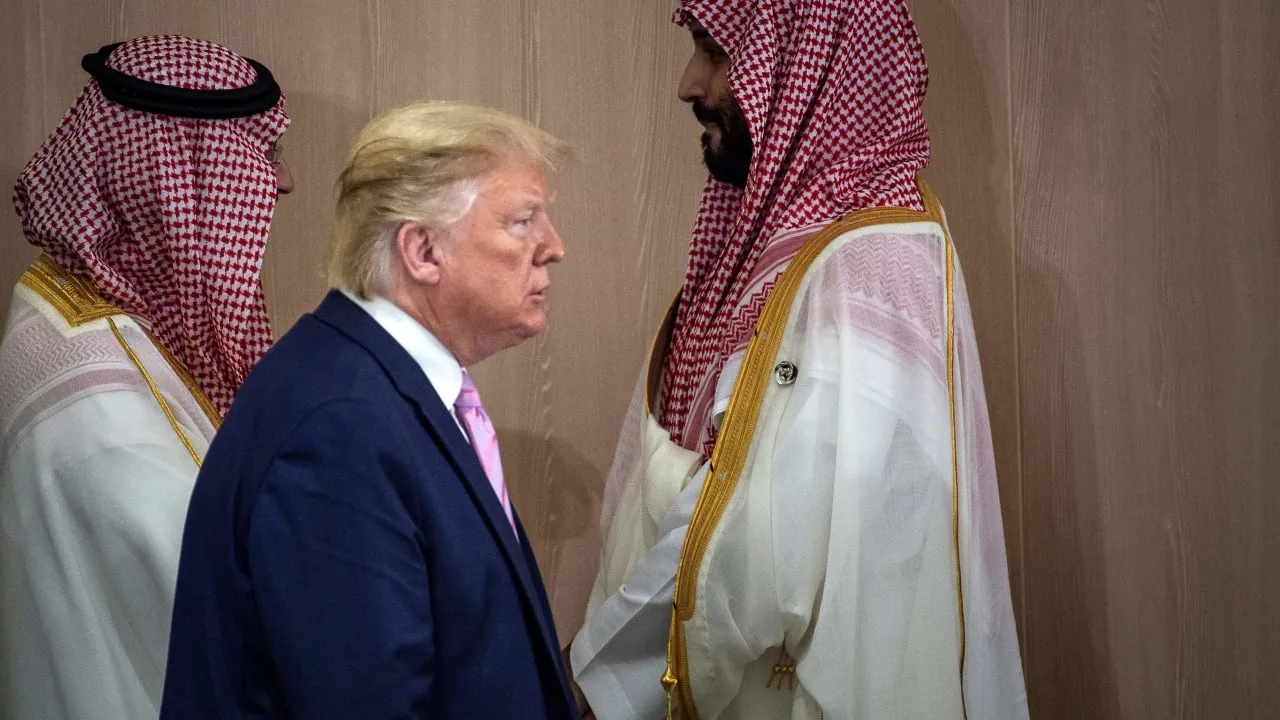
It was evident early on what the United States sought to achieve by bringing the Saudis into the so-called Abraham Accords. While several Arab countries had signed peace agreements with Israel, with the Saudis on board, the project would have taken an altogether more consequential turn. For Washington, Arab-Israeli reconciliation served as the political spine of an imagined post-American order in the Middle East, which was to be anchored in an Israeli military spine. This new dispensation would allow the United States to disengage its armed forces from the region while simultaneously maintaining significant regional influence—to counter China.
Israel’s Regional Ambitions Backfire
With the Gaza war and Benjamin Netanyahu’s hubristic comments on the emergence of a new Middle East shaped by Israel, many countries in the region that understood the import of the Abraham Accords, suddenly didn’t like what they saw. The Israelis reoccupied Gaza and now want to expel its population. In 2025, they sought to marginalize Qatar by striking a Hamas office in Doha. They occupy parts of southern Syria and have pushed for the country’s fragmentation.
They recognized Somaliland to build a strategic presence at the mouth of the Red Sea, one of Saudi Arabia’s vital maritime passageways. They invaded Lebanon and are now trying to impose a permanent Israeli presence in the country, an advantageous peace deal, civil conflict, or all the above. They pushed the United States into a war with Iran, hoping they could be rid of the current regime, only to see their plans thwarted.
Mecca Pact Challenges Pax Americana
The major countries in the Middle East have zero interest in becoming secondary actors in a movie written by the United States and Israel, nor do they want to place their security in Israeli hands. This constitutes the third rupture with the American order, namely with a notion prevailing since the end of the Cold War that desirable outcomes in the region have to pass through frameworks imposed by the United States—frameworks that are ultimately aimed at upholding U.S. power.
A result of this refusal was the Mecca Joint Defense Agreement signed by Saudi Arabia, Türkiye, and Pakistan last August 7. The accord was mistakenly seen as being directed against specific countries and a declaration of independence from the United States. In reality, it appeared to be the cornerstone of a new regional security architecture aimed at preventing the emergence of a hegemonic regional power while also putting in place the foundations of a new order to replace Pax Americana. At its heart is a mechanism of balance that generates stability, not an Israel-centered contraption promoted by the United States that will only generate systemic instability.
A New Order Emerges Without Washington
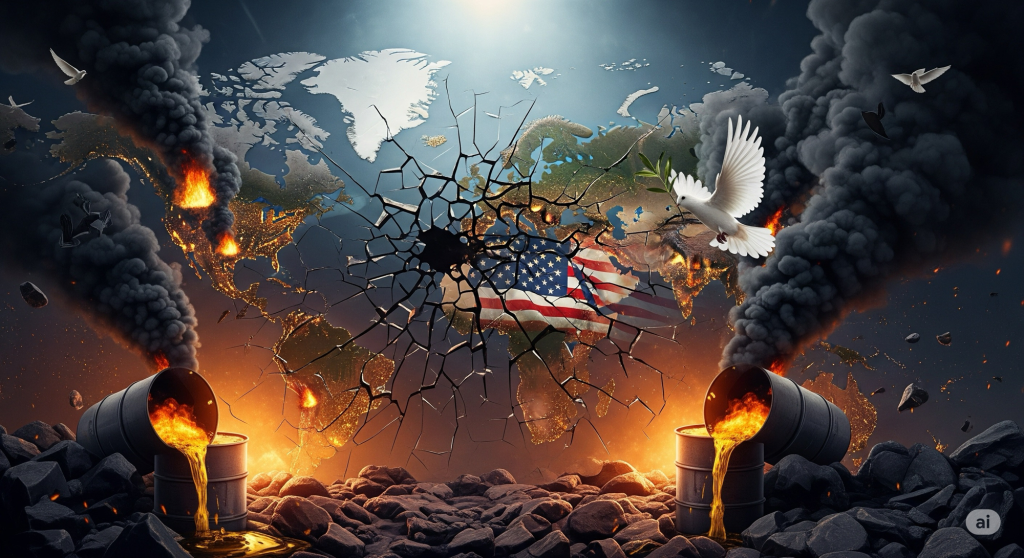
Will it work? Only time will tell, but the region has moved beyond relying on the United States to safeguard a durable regional order that guarantees equilibrium and security for all states. We have Netanyahu to thank for that. The Israeli prime minister encouraged the Americans to embark on an allegedly transformative war with Iran, and Trump, more willing to believe the Israelis than his own advisers, followed him into a brick wall.
The result is that Netanyahu’s dream of using U.S. intervention to assert Israeli regional predominance was shattered by Iran, which many countries in the region view as no less of a menace than they do Israel. This fiasco will go on, as Trump scrambles to save himself. But having seen that the president cannot swim, are regional countries really so keen to prevent him from drowning?