
This analysis concludes US-Israeli strikes plunged the Middle East into wider war with no winners. Trump seeks quick exit; Iran fights for survival; Israel faces attrition. Gulf states caught in crossfire, Europe dragged in, Russia gains short-term but risks losing ally.
US and Israeli strikes on Iran have plunged the Middle East into wider war. Retaliation, regional entanglements and disrupted trade make one outcome clear: no side will achieve an easy victory.
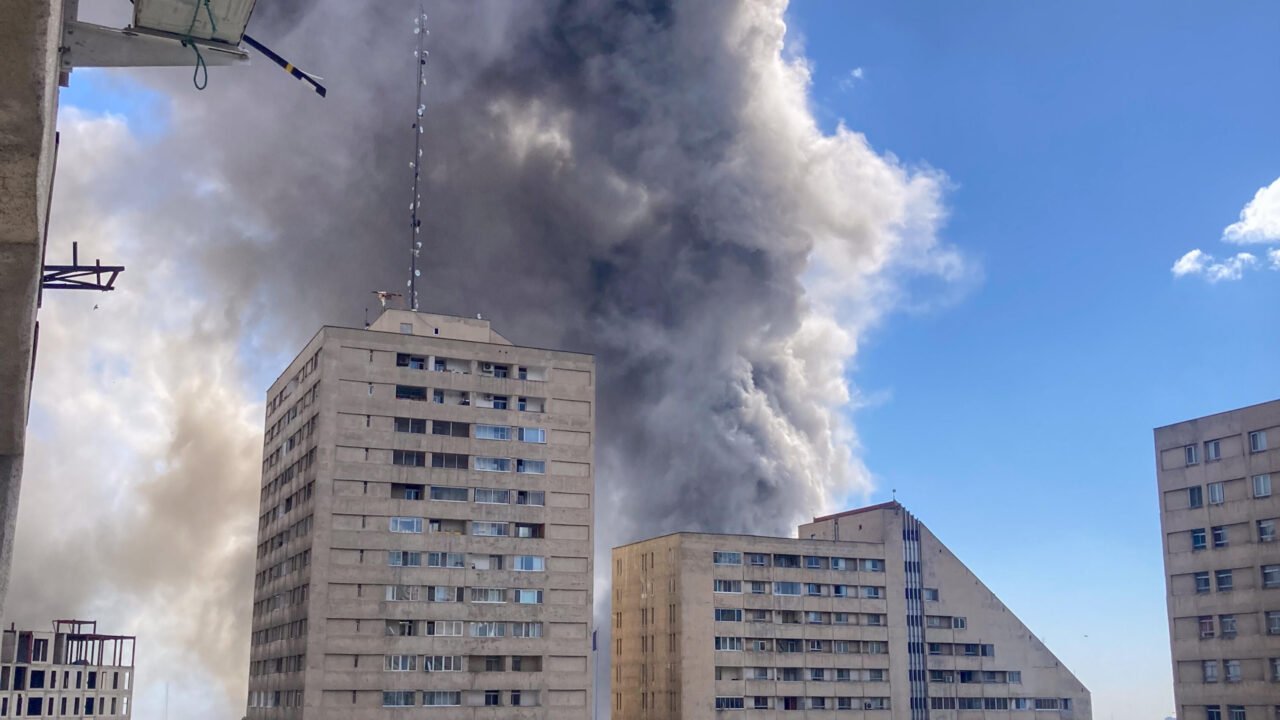
In the early hours of Saturday morning, joint American and Israeli strikes fell on Iran. By daybreak, the Middle East had erupted into a new war. Iran was swift to launch retaliatory strikes, attacking Israel and US bases and non-military targets in the Gulf. The conflict has already killed Iran’s supreme leader, Ali Khamenei, top military officials and hundreds of civilians. Lebanon and Iraq have been pulled into the fighting. Shipping routes in the Strait of Hormuz and the Red Sea are severely disrupted and Iran is now targeting airports and energy infrastructure in the Gulf. Even European countries have been drawn in: a French base in the UAE and a British base in Cyprus were impacted by Iranian drones and missiles, not to mention the hundreds of thousands of European citizens stuck in the region.
The list of casualties—human, strategic and economic—lengthens by the hour. As the war widens, it is clear there will be no real victors, but some will suffer heavier losses than others. In this collective piece, ECFR’s experts give a 360-degree assessment of how key actors are positioning themselves, what may come next, and just how much each stands to forfeit.
America first?
US president Donald Trump’s objective in Iran is unclear, with competing justifications for the US attacks ranging from denying Iran nuclear weapons and ballistic missiles to helping the Iranian people and supporting all-out regime change. However, this will likely be reined in by Trump’s tendency to pursue quick and visible “wins” rather than grand strategic transformations.
The president’s rhetoric encouraging Iranians to “take back” their country requires a degree of commitment which he has shown no appetite for. Even with the Iranian leader dead, complete regime change would require sustained military pressure. With this comes the risk of a wider escalation with political, military and financial costs Trump is unlikely to take on.
Domestic politics also matters. While there is a hawkish camp around the president with strong pro-Israeli leanings, there is little public support for a war with Iran and Trump may not want to let the fighting drag on in a midterm election year. Trump’s foreign policy revolution was centred around promises to end Iraq-style forever wars and regime change operations in the Middle East. Prominent MAGA influencers have publicly criticised this operation, including the costs of interception for Israeli air defences. Even restrainers (who want security to focus on the homeland) and prioritisers (who want an Indo-Pacific focus) in Vice President J.D Vance’s inner circle are likely not thrilled by the president’s direction. More broadly, Trump’s decision to bomb Iran in the middle of talks has further undermined America’s credibility.
The uncertain logic of war hangs over Trump’s positioning. Iranian retaliation, the need to protect US forces, or Israeli pressure to finish the job by securing regime change could force prolonged American involvement. But if Trump’s track record is anything to judge by—including the speed at which he claimed victory in the 12-day war with Iran in June 2025, the decision to suspend operations against the Houthis once costs mounted, as well as the operation in Venezuela—his instinct will be to get out quickly. Khamenei’s assassination is the type of dramatic blow to the Iranian regime that could give Washington a quick “win” and a way out of prolonged war. Following this takedown, and the deaths of US personnel announced on Sunday, Trump said he has “agreed to talk” to Iran.
In that sense, despite Trump’s rhetoric alluding to wider goals, the most plausible endgame is for him to claim that the principal source of Iranian threat and thus regional instability is gone, that deterrence has been reestablished and to avoid the project of remaking Iran’s political order. Whether events on the ground, and the Israeli position in particular, will allow such restraint is another matter.
Iran in survival mode
US strikes pose an existential threat to the Iranian regime. Those in power believe they have no choice but to escalate in return—making this as bloody as possible, as quickly as possible—to ensure its survival. Iran is outgunned and outmatched by the US and Israel both nuclear armed states with superior military and intelligence capabilities. But “victory” in Iran’s eyes means regime survival and resisting its adversaries to the point of exhaustion.
Iran’s security establishment, although weakened, is unwilling to surrender to US demands. They have pivoted to a quick retaliatory response to demonstrate the system has unity, command and control (although using de-centralised system for wartime conditions) and an ability to absorb US bombing. The aim is to impose enough pain on the region—and US casualties, with three soldiers already killed—to force Trump to stand down. This has led to a surge of ballistic missile attacks on Israel, putting Israel’s population on high alert and closing down the country, despite only causing limited damage on the ground. More impactful is Iran’s targeting of US military bases and wider state facilities across the Gulf, including energy infrastructure, which is already sending energy prices surging. Even though this will undo Iran’s delicate regional rapprochement of recent years, Tehran likely sees it as necessary to push the region’s pain threshold to force a ceasefire while the regime is still standing.
The shadow of negotiations will lengthen as the fighting drags on. Yet whether Iran’s new leadership will show pragmatism to make further concessions to try and end the conflict (mirroring the Venezuela outcome) remains unclear. Tehran believes it made significant concessions in recent Oman mediated talks and Trump’s rejection shows he is intent on Iran’s complete capitulation. If there is a prospect of a ceasefire, Iran could make more concessions on the nuclear file, but this war will reinforce its belief that it cannot give up its missile capabilities.
Even as Iran’s leadership looks outwards, it will also be focused on internal dynamics—especially in light of the supreme leader’s succession. Tehran will be wary of the war fuelling domestic discontent and provoking more unrest and attempts to unseat the regime following its brutal crackdown that left thousands dead in January. The regime is likely to continue prioritising tools of domestic control, where it can fall back on the Islamic Revolutionary Guard Corps (IRGC) and security services whose ideological commitment will likely remain strong.
Israeli hubris
While the attack was led by the US, the blueprint was Israeli. Since 1992, prime minister Benyamin Netanyahu has long called for an “international front headed by the US to uproot Iran”, selling US-led intervention as a way to unlock “enormous positive reverberations on the region”. While Israeli security officials are uncertain about what will come after Khamenei, many view any alternative—including an IRGC take-over or domestic collapse—as better than the current regime.[1] Domestic political calculations are likely playing a large role in Netanyahu’s decision making too, as he looks to bolster his security credentials ahead of this year’s election.
Israel’s quest to become the undisputed regional power carries risks. Retaliatory Iranian missile strikes can cause considerable damage and casualties. Israel’s aggression has also wounded its regional relationships. Its September 2025 strikes on Doha alienated its neighbours, already angered by its war on Gaza, further fraying ties Israel has long sought to strengthen. However Israel could use escalating Iranian attacks against Saudi oil infrastructure to draw Saudi Arabia into closer military cooperation against Iran—a long-standing Israeli ambition.
For now, there is strong bipartisan support in Israel for the military campaign, especially with the US taking part. But Israel will likely prefer a short, sharp war given its finite military capabilities, especially its limited stock of defensive missile interceptors, and the mounting economic cost of conflict. For all its confidence, it is embarking on a potentially far longer and very uncertain campaign of attrition against Iran. Any US decision to unexpectedly end the conflict without achieving Israeli ambitions of regime change would probably have to be accepted by Israel given its military and political dependence on Washington.
The Gulf in code red
The Arab Gulf monarchies strongly opposed a regime change war against Iran, fearful of Iran targeting them in retaliation. These states have poured significant political capital into a détente with Iran over recent years. After Iranian-backed groups struck Saudi oil facilities in 2019, governments in the region learnt they could not depend on US security guarantees and sought to draw Iran into a new cooperative relationship.
For the Gulf, the US-Israeli campaign is a nightmare scenario. Iran’s coordinated missile and drone attacks has targeted both US military bases and broader Gulf civilian infrastructure, including airports and luxury hotels, AI centres and even oil installations. This directly undermines the Arab Gulf’s identity as safe global cities open to business, tourism and connectivity, as well as their economic lifeline as energy exporters. The disruption in the Strait of Hormuz by the Iranian navy also effectively seals off a major route for crucial exports and imports. They will now be fearful that oil and gas production sites and export channels could be caught in the crossfire.
Tehran appears to be wagering that widening the battleground will force Arab Gulf states to pressure Trump to halt the campaign. But this increasingly looks like it will backfire for Iran. These states may conclude that they have no choice but to join the US military campaign to block Iran’s ability to launch further strikes. They have already joined forces with European partners in defensive offensive operations. The next step might be retaliation against Iranian energy assets.
None of the plausible trajectories offer these states comfort. The end of the regime in Tehran could provoke state collapse and more instability. Having a failed state the size of Iran on their doorstep, with all of the security and migration implications, is a catastrophic scenario for the Arab Gulf. States like Oman could still try to facilitate new negotiations with Tehran to avert this, but the window for this is closing fast. Iran’s possible fall will also entrench another undesirable outcome: Israel’s aggressive hegemony in the region. With its major rival crippled, the US might disengage even further as a regional security guarantor, leaving the Arab Gulf states to deal with an emboldened Israel on their own.
An existential “axis of resistance”
Iran’s regional “axis of resistance”, notably Hizbullah in Lebanon, Shia armed groups in Iraq such as Kataib Hizbullah, and the Houthis in Yemen, have all pledged to join the fight. All of these groups see existential danger if their patron Iran collapses. They have lived off Iranian support, technical know-how and military transfers, as well as wider economic largesse, and used this backing to establish deep roots in their respective countries.
The fight with Iran is thus a fight for their own survival, too. In Lebanon, Hizbullah has already launched new missile strikes on Israel, prompting an even larger Israeli response with a new bombing campaign in the country’s south and Beirut. The group’s retaliation is likely to have been pushed by Iran’s greater control over Hizbullah since its leader Hassan Nasrallah’s death.[2] Similarly, Iraqi militias could launch missile strikes on both Israel and American bases in the country. They are already claiming responsibility for drone strikes on a US base near Baghdad airport. In Yemen, the Houthis have said they will begin a new campaign to close off the Red Sea and the group may also attempt new missile strikes on Israel. Coordinated action by these armed groups, such as a surge of missiles to try and overwhelm Israel´s Iron Dome system, would force Israel and America to focus increased resources on their defences, including the use of limited interceptor missiles.
But the “axis of resistance” does not have enough capabilities to significantly weaken Israel and America, and they could pay a high price for attempting to show even symbolic solidarity with Iran—one that could also further devastate their home countries, as Lebanon is already witnessing. A decision to escalate in support of Iran will also weaken the groups´ domestic legitimacy at a moment when they are already on the backfoot with strong efforts by local governments to disarm them. The Lebanese government has already responded to Hizbullah attacks by banning the group’s entire military activities.
Turkey’s dilemma
President Recep Tayyip Erdogan has clearly outlined Turkish opposition to the war, blamed Netanyahu for triggering it, and called on all sides to return to negotiations. While Turkey has long distrusted Iran’s nuclear and regional ambitions, Ankara has worked to prevent war by pushing regional powers to coordinate and by lobbying Washington to give diplomacy a chance.
Ankara’s calculation is not rooted in sympathy for Tehran but in the belief that war could produce something even more dangerous. Turkish officials fear the familiar risks of regional conflict: refugee flows, economic disruption, spillover violence and the possibility that instability in Iran could create new space for PKK-linked Kurdish militancy or autonomy on Turkey’s border. In response, Ankara could establish border controls to block refuges or get involved militarily to prevent self-rule for PKK-linked Kurdish groups inside Iran.
But Ankara’s deeper concern is geopolitical. What alarms the Turkish government most is not simply Iranian weakness, but the possibility of a post-war order shaped on Israeli terms. In Turkish eyes, there is an important difference between American and Israeli aims. Ankara sees Trump as a transactional actor: one who had been reluctant to go to war and may still settle for a short campaign, declare victory, and return to nuclear bargaining later this year. Israel, by contrast, is largely viewed as pursuing broader regional transformation to consolidate itself as the dominant regional power.
A fragile win for Russia
The Kremlin may benefit from this conflict in the short term. The attacks play into Russia’s oft-repeated litany of Western double-standards. The killing of the supreme leader and Trump’s call on the Iranians to topple the regime reinforces Moscow’s narrative that America is a power that seeks to change governments. This will boost Putin’s narrative that his war in Ukraine is an act of self-defence against Western attempts to weaken Russia by using Kyiv as a proxy.
Russia will also benefit from America’s fixation on Iran. The concentration of US air defence interceptors (such as Patriots) in the Middle East means less are available for Ukraine. Kyiv welcomed the strikes on Iranian military targets, after its drones, arms and equipment have been used by Russia on the frontlines in Ukraine. But Russia no longer relies on these supplies much. Finally, the jump in oil prices will help fill Moscow’s war chest: every dollar gained by higher oil sales can go to more Russian military spending.
But this is where the good news ends for the Kremlin. In Iran, Russia risks losing yet another ally. And while loudly denouncing America and Israel, Moscow did little to help Iran, exposing its limited influence. Russia’s foothold in the Middle East has long relied on pragmatic ties. These could diminish if America’s campaign forges deeper links with Arab Gulf states. Instability in Iran will also have security and migration ripple effects in Russia’s own unsettled southern underbelly, the North and South Caucasus.
China’s calculated distance
Meanwhile, Iran’s other eastern partner, China, has so far confined its response to condemning the attacks and warning against further escalation. Beijing has provided modest assistance to help Iran rebuild its missile capabilities and air defences, and is unlikely to boost these in the near term, especially given Tehran’s targeting of other states in the region. China’s approach to Iran, as with many other political partners, has been to provide it with economic, political and military-industrial support while avoiding the risks that come with commitments when they are in trouble. The current situation reinforces the rationale for that model: Beijing can afford to stay out of this. And as with Venezuela, it can also comfortably absorb short-term hits to its oil supplies.
This does not mean that Beijing is at ease. The most benign outcome for China would be America tied down in another regional conflict, depleting munitions that it could have used in Asia and allowing Beijing to reap the geopolitical benefits of global unease over US power. But there is no guarantee of this, especially if the conflict is over quickly. Moreover, regime change in Iran would mean the loss of the most politically like-minded government to China in the Middle East. Washington’s actions in recent weeks have also reinforced a major US-China power asymmetry: for all of Beijing’s economic heft, when America launches military strikes and decapitates the political leadership of Chinese partners across the globe, Beijing is largely impotent.
The state of play is fluid, fast moving, and unpredictable. Each power involved will leave the war with less than it entered, but the damage will be felt unevenly. What is clear, though, is that the Middle East and beyond is embroiled in new violent upheaval and wider escalation could lie just around the corner.
European actors, even those not taking a principled stand against this war, must recognise the pragmatic self-interested reasons to contain this conflict. The spiral of violence risks dragging European interests into the fray.
Europeans cannot afford to wait and see if this operation succeeds in forcing substantial new Iranian concessions or regime change. A transition away from Iran’s authoritarian rule would be welcome, but it is not enough to just sit and hope that this will occur amid the countervailing dangerous possibilities of state collapse and wider war. European governments need to be engaged in shaping a realistic de-escalatory path now. This needs to prioritise intensified partnership with the Arab Gulf states and reaching out to both Washington and Tehran to push the two sides back to the negotiating table. Britain, France and Germany have stated that they are willing to conduct strikes inside Iran as part of defensive operations. They need to ensure this does not become a slippery slope that drags them into yet another dangerous American regime change operation.