
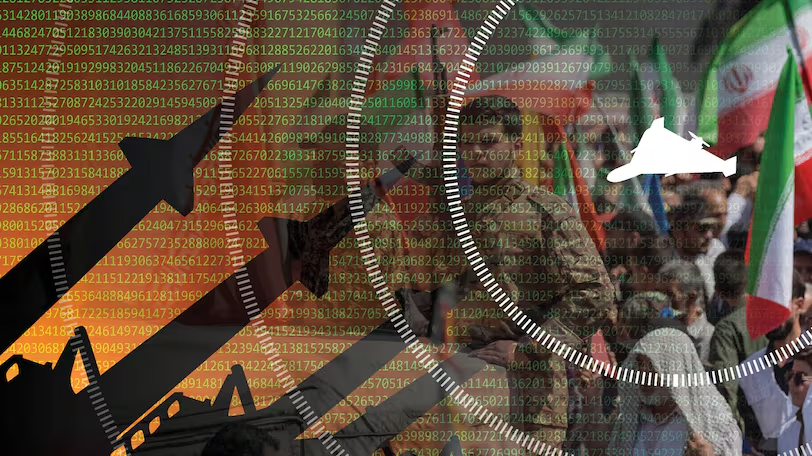
Asymmetric War lets Iran trap Washington by exploiting resolve asymmetry. Technological superiority breeds overreach; the Lippmann gap widens when objectives exceed resources, repeating historical patterns in warfare from Vietnam and Afghanistan.
The United States possesses the most powerful military in history, yet it repeatedly finds itself trapped in wars it cannot win. Iran’s Asymmetric War is the latest example of this paradox. Washington’s technological superiority allows it to devastate adversaries from afar, but it also breeds a dangerous illusion: that wars can be won quickly, cheaply, and without ground troops.
This illusion ignores a fundamental truth. In asymmetric conflicts, resolve matters more than firepower. The asymmetry of resolve often runs opposite to the asymmetry of power. The stronger party may have more mass, but if it is unwilling to commit that mass fully, its coercive power shrinks.
The weaker party, facing existential threat, can mobilize everything it has and simply refuse to yield. Iran demonstrated this by absorbing punishment and responding with cheap drones against costly interceptors. The result is a Lippmann gap: objectives exceed the resources devoted to them.
The United States sought regime change in weeks, but it committed only a fraction of its power. The trap is not that America is weak. It is that America’s strength encourages overreach. This is the trap that awaits any advanced military that mistakes capability for will. Until Washington understands that resolve, not technology, decides the fate of Iran’s Asymmetric War, it will continue to walk into traps of its own making.
Asymmetric War Creates Avoidable Trap
On March 1, one day after the US-Israeli war with Iran began, President Donald Trump declared that the conflict would last about four weeks and end with regime change in Tehran. This was to be a “shock and awe” war, fought at distance and relying on technological superiority to deliver a transformative goal within an ambitious timeline.
America’s qualitative military edge soon delivered results as precision strikes devastated Iran’s armed forces and decapitated its political leadership. This was achieved without ground troops. Nor did the US rely solely on its network of bases in the Middle East – its operations were supported from locations as far afield as Europe and the American mainland.
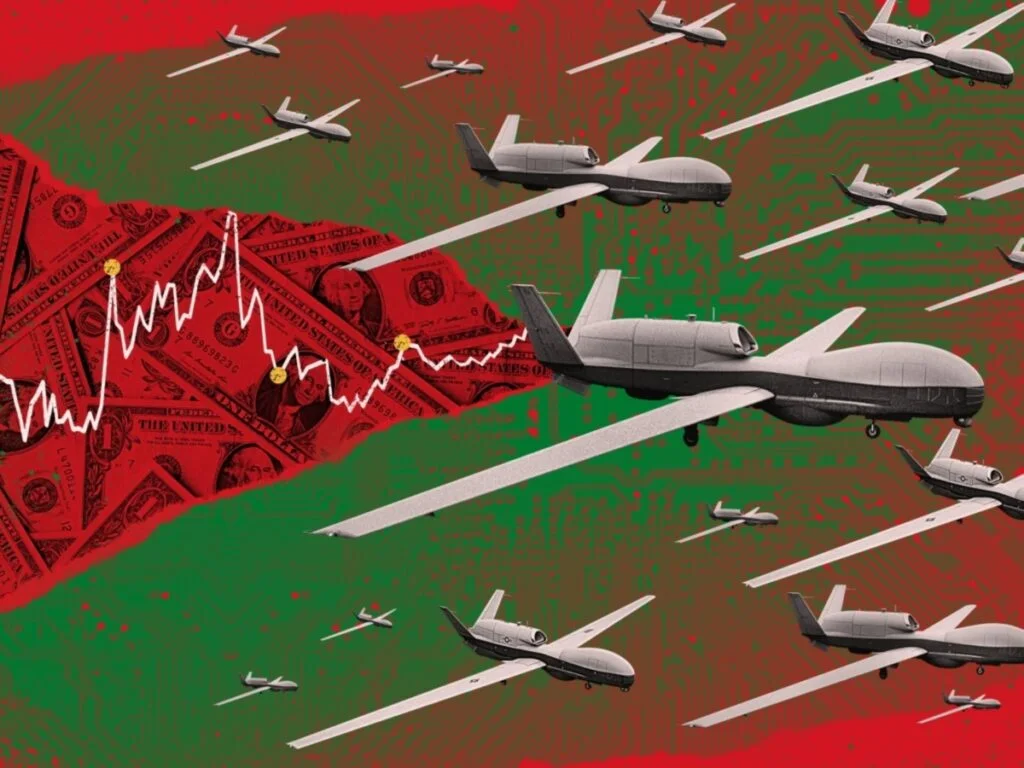
Resolve Determines Who Survives
Yet in retrospect, Washington walked into an avoidable trap. It sought to achieve more, in a short time, from far away. This reveals a vulnerability of advanced militaries in so-called asymmetric conflicts – technology and distance make it easier to start wars but they do not necessarily make them easier to win. The Iran war is but the latest example of an advanced military power falsely perceiving that technological superiority and an unparalleled ability to cause damage from afar can substitute for resolve. The results were as predictable as they are likely to repeat themselves.
Commentators often measure asymmetry in warfare through crude comparisons: who has more and better firepower, aircraft, ships and artillery on paper? However, this heuristic ignores the asymmetry of resolve, which often manifests in the opposite direction. What seems like a far-flung intervention for the stronger party can constitute an existential struggle for the weaker one.
If the stronger party is willing only to use a small fraction of its fighting power for a short time, its coercive power is significantly mitigated. The result is that the ostensibly weaker party can win or at least survive by demonstrating more staying power. Each party’s level of resolve, therefore, determines how much mass – the quantity and concentration of combat assets and firepower – they are willing to mobilise and sustain to achieve victory.
Absorbing Pain Matters More
Resolve is also as much about the ability to absorb pain as it is the ability to deliver it. If a stronger party practises “shock and awe”, but their adversary refuses to yield, the stronger party often flounders. American journalist Walter Lippmann famously warned that states face failure when their objectives exceed the resources they devote to them. Technological superiority can obscure this mismatch by allowing states to pursue expansive political objectives, whilst committing only a fraction of the resources those objectives require. Worse still, it can also exacerbate it, by feeding a false hope that wars can be fought and won quickly and from far away, with little need for sacrifice.
Iran Modernizes Human-Wave Logic
All the above characteristics manifested in the recent US-led war against Iran. Israeli Prime Minister Benjamin Netanyahu allegedly sold Mr Trump a quick, cheap and easy victory. By combining US and Israeli firepower, the Islamic Republic was supposed to fall without the need for ground troops. Iran would not close the Strait of Hormuz, nor would it be able to cause significant damage to the global economy or America’s regional allies.
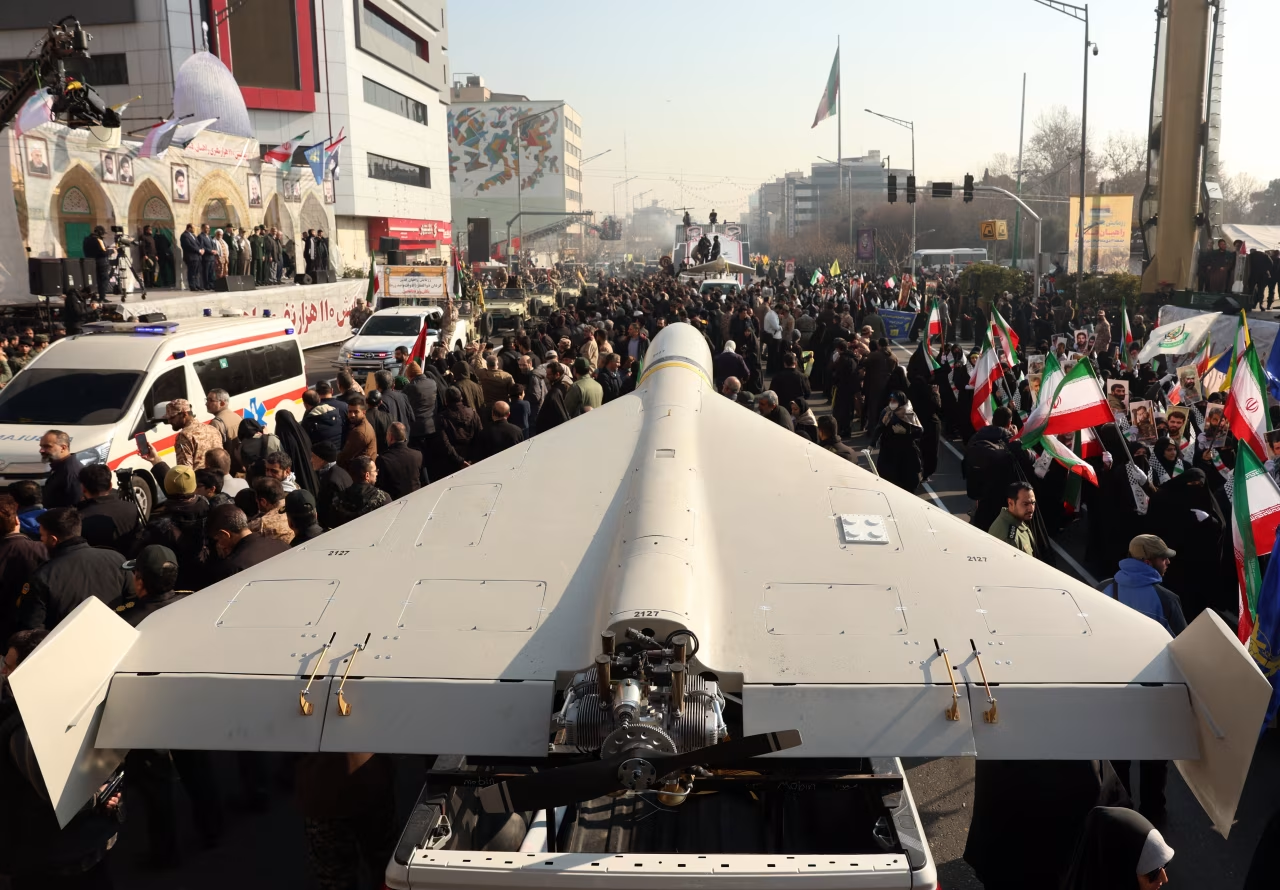
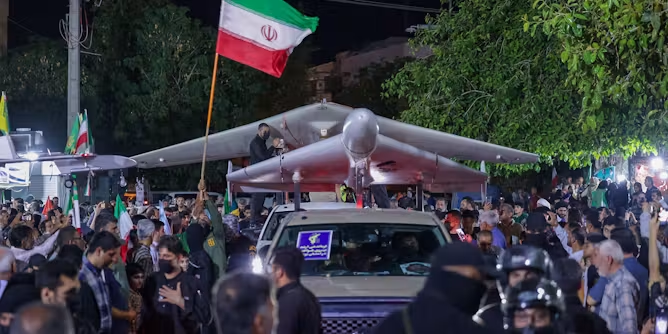
Tehran, of course, saw it differently. Faced with the threat of regime collapse, it engaged in an existential struggle. With resolve came mass. During the Iran-Iraq war of 1980-1988, Iran employed human-wave assaults, sending thousands of conscripts on a one-way journey to overwhelm enemy positions. In 2026, it modernised the same logic, sending waves of cheap Shahed drones up against cutting-edge interceptors that cost much more to operate. That most of the drones were shot down did not matter – Iran had demonstrated its ability to fight a prolonged struggle. This example also demonstrates that technological innovation is not limited to the so-called stronger party.
Asymmetric War Traps Repeat Themselves
This dynamic is far from unique to the recent Iran conflict. During the Vietnam War, the US dropped more than 7.5 million tonnes of munitions, over three times more than it used throughout the entire Second World War. This did not, however, deliver victory. Later, in Afghanistan, a remarkably small US footprint and overwhelming qualitative superiority quickly toppled the Taliban regime. However, the US then sank into “mission creep”, increasing its troop presence in the country while adopting the overly ambitious goal of turning Afghanistan into a liberal democracy. This in turn widened the Lippmann Gap – despite more boots on the ground, the US never committed sufficient troops to win a counterinsurgency campaign, let alone achieve societal transformation.