
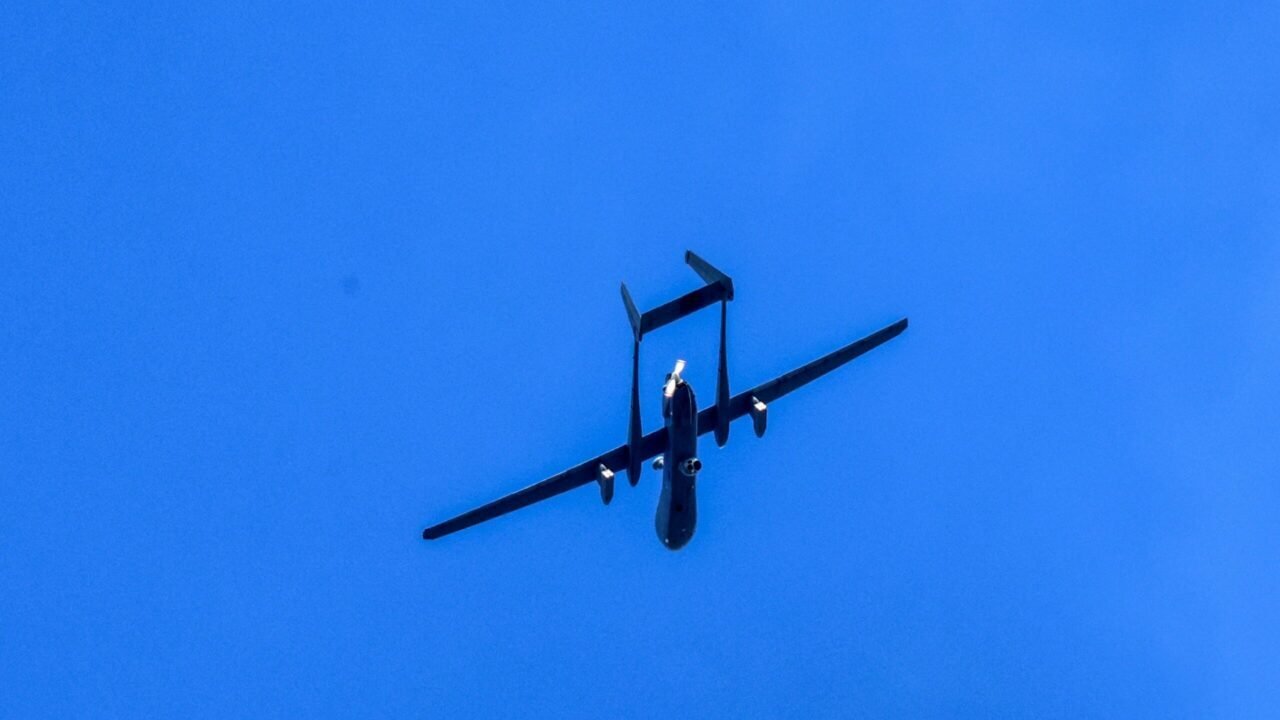
A unified drone defense strategy linking US, Ukrainian, and Israeli efforts against Iranian systems is strategically imperative. Ukraine’s battlefield expertise, Russian-Iranian cooperation, and a formalized US-led mechanism to distribute counter-drone capabilities globally are analyzed.
A cohesive drone defense strategy now binds Washington, Kyiv, and Jerusalem against a shared Iranian unmanned threat that endangers both European flanks and Gulf waterways. While diplomatic interactions between Presidents Zelensky and Netanyahu remain sporadic, the tactical reality demands an integrated response, as Tehran’s drone warfare has evolved simultaneously across both theaters over eighteen months, exploiting gaps in regional air coverage and testing existing interceptors to their limits.
Ukraine’s extensive battlefield experience offers a critical repository of hard-won knowledge against Shahed and fiber-optic systems, yet the current geopolitical architecture lacks the mechanism to translate this tactical acumen into a unified deterrent for regional partners. An effective drone defense strategy must transcend ad-hoc crisis support and formalize intelligence-sharing protocols to counter jet-powered variants and coordinated missile-drone salvos, while also addressing the economic asymmetry of using million-dollar interceptors against thousand-dollar drones.
Any viable approach requires the United States to act as central coordinator, utilizing its NATO, CENTCOM, and Pacific positions to distribute Ukrainian-derived countermeasures efficiently and bridge doctrinal gaps between allies. The failure to synchronize these efforts now risks replicating costly interceptor-versus-drone attrition, ultimately undermining regional stability and emboldening adversarial proliferation across multiple fronts.
Washington’s missed diplomatic link
Ukrainian President Volodymyr Zelensky and Israeli Prime Minister Benjamin Netanyahu were both in Washington last week, a missed opportunity to collaborate against Iranian drones targeting both their countries. The two leaders spoke only briefly on July 28 at Senator Lindsey Graham’s funeral, their first conversation since January 2025 and their first in-person meeting since September 2023.
Iran’s drone and missile barrages
When the war with Iran began earlier this year, the majority of counter-drone expertise against Iranian systems was in Ukraine, not the Middle East. Kyiv had spent four years fighting those systems and rushed more than 200 specialists to the Gulf once the fighting started. With Iran continuing to threaten shipping and Gulf nations, the United States should establish a drone defense mechanism to channel systems and expertise among US forces and partners for the next fight.
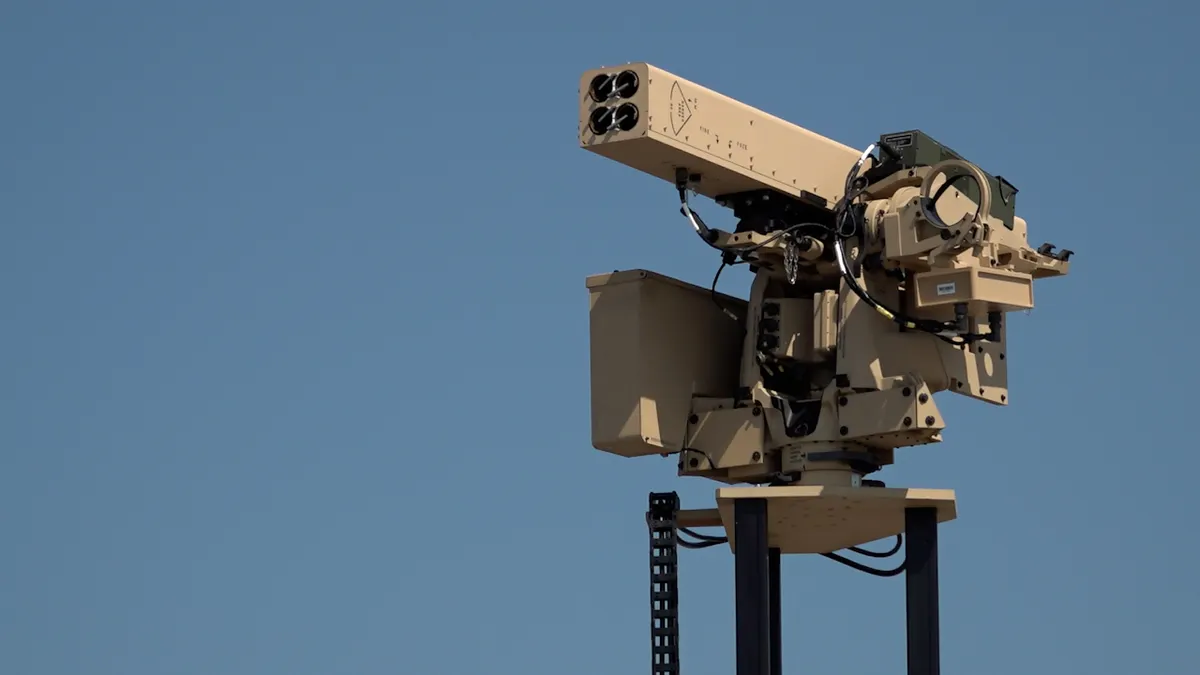
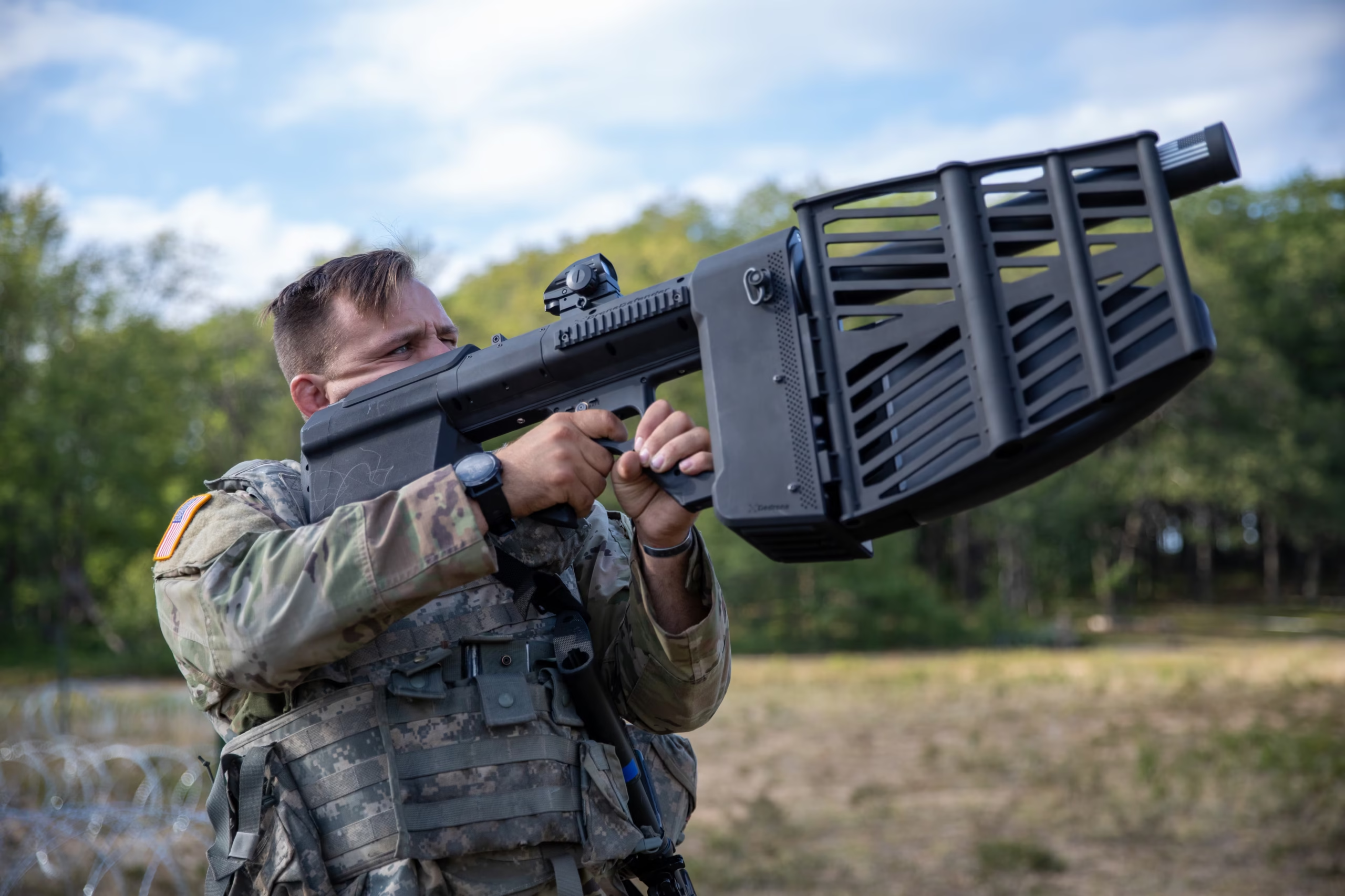
Since the Iran War began on February 28, Iran and its proxies have launched roughly 5,600 drones alongside over 2,500 ballistic and cruise missiles across the Middle East, according to data from the Jewish Institute for National Security of America (JINSA). Iran fired Shahed one-way-attack drones, including a jet-engine-powered variant, while its proxies used first-person-view (FPV) drones for precision strikes and fiber-optic drones, whose cables make them immune to electronic jamming. Israel has faced these threats from Hezbollah since April, prompting rapid development of portable lasers, new radar, and emergency funding for improvised defenses (even fishing nets).
Flipping the cost curve in war
The war with Iran this year and the operations in 2024 and 2025 to defend Israel showed that multinational cooperation can blunt Iranian attacks. However, defenders still expended costly interceptors against cheap projectiles. Russia has fired Iranian-designed Shaheds at Ukraine since 2022 and developed the jet-powered and fiber-optic variants that appeared in the Gulf, forcing Ukraine to build an integrated drone architecture that flips the cost curve toward the defender.
Ukraine’s frontline drone defense strategy
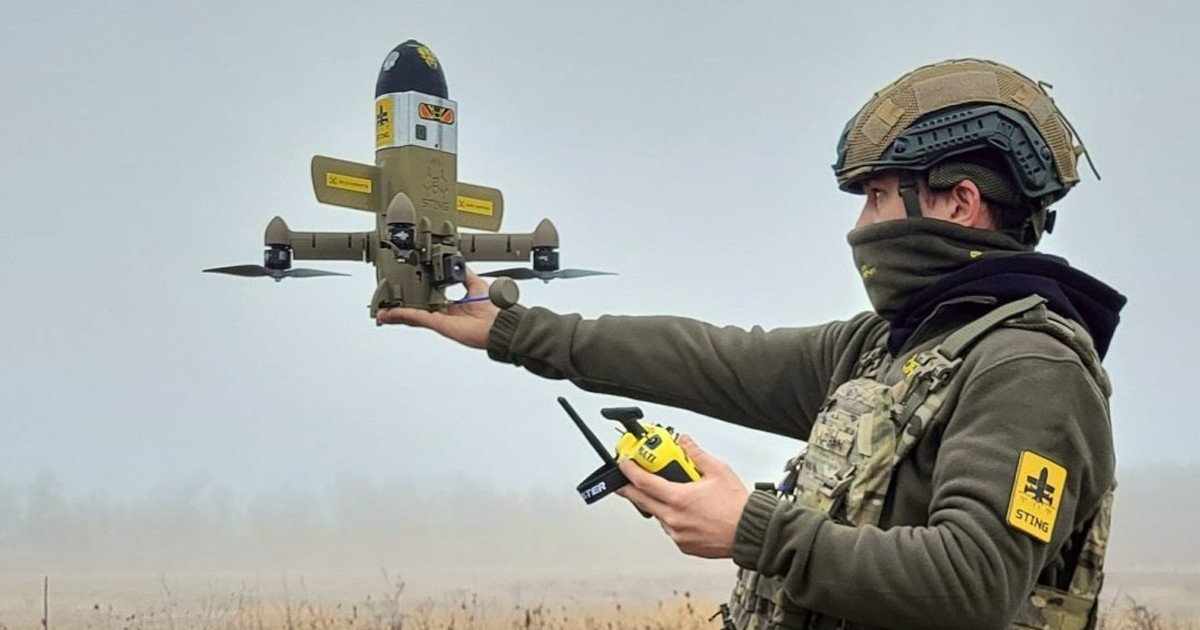
Zelensky has separately claimed Russia is now returning the favor, feeding Iran satellite targeting data against US forces and Gulf targets. Ukraine’s surveillance network combines acoustic sensors, mobile intercept teams, electronic warfare, cheap interceptor and strike drones, and AI tools that ingest millions of hours of footage to update tactics within days. To counter fiber-optic FPVs, which are unaffected by jamming, Ukrainian forces added netting to vehicles and deployed net-launching interceptors.
Crisis-driven help versus formal pacts
No nation matches Ukraine’s expertise in drone offense, defense, production, and adaptation. Ukraine has consistently shared lessons, including through the recent launch of its TrophyLab platform, which provides technical details from captured Russian weapons, including Iranian drones.
Facing a counter-drone shortage in the Middle East, Ukraine sent specialists and capabilities to the Gulf during the war. Israel has accepted Ukrainian help in limited ways, but these have been crisis-induced changes, not the more formal exchanges that must be developed. Washington and Kyiv signed a framework drone cooperation agreement in July that sets conditions for improved Ukraine-US collaboration on joint production ventures, speeding weapons to warfighters.
Extending lessons to the Pacific
The United States has the relationships to coordinate Ukrainian systems and expertise to support our Middle East and Pacific partners at scale. The US-led Security Assistance Group-Ukraine (SAG-U) and NATO Security Assistance and Training for Ukraine (NSATU)—both led by the same three-star US general—have spent more than three years coordinating training and learning with Ukraine, giving Washington direct access to relevant technology, tactics, and procedures.
NSATU has over 30 partner nations supporting Ukraine against Russian attacks, including several Pacific allies who could extend these hard-earned lessons to the Pacific. US Pacific Command (PACOM) and regional allies should draw on these lessons and integrate them now into our marquee exercises to reinforce deterrence against China.
Building a joint drone defense strategy hub
The United States could repurpose and expand the senior-level Israel-EUCOM-CENTCOM (ICE) dialogue to form a drone defense center of excellence within the Air Warfare Center in the United Arab Emirates, which already brings Gulf air forces together. The hub would help Kyiv exchange cutting-edge classified data beyond its open-source TrophyLab project, improving tactics for fiber-optic-guided systems, combined missile-drone salvos, long-range strike routes, decoys, and attacks on drones before their launch.
While the Iran War tested US, Israeli, and Gulf defenses against the Iranian systems Ukraine has fought for years, none has matched the counter-drone expertise Kyiv built under fire. Washington should help our partners gain that edge before the next fight starts.