
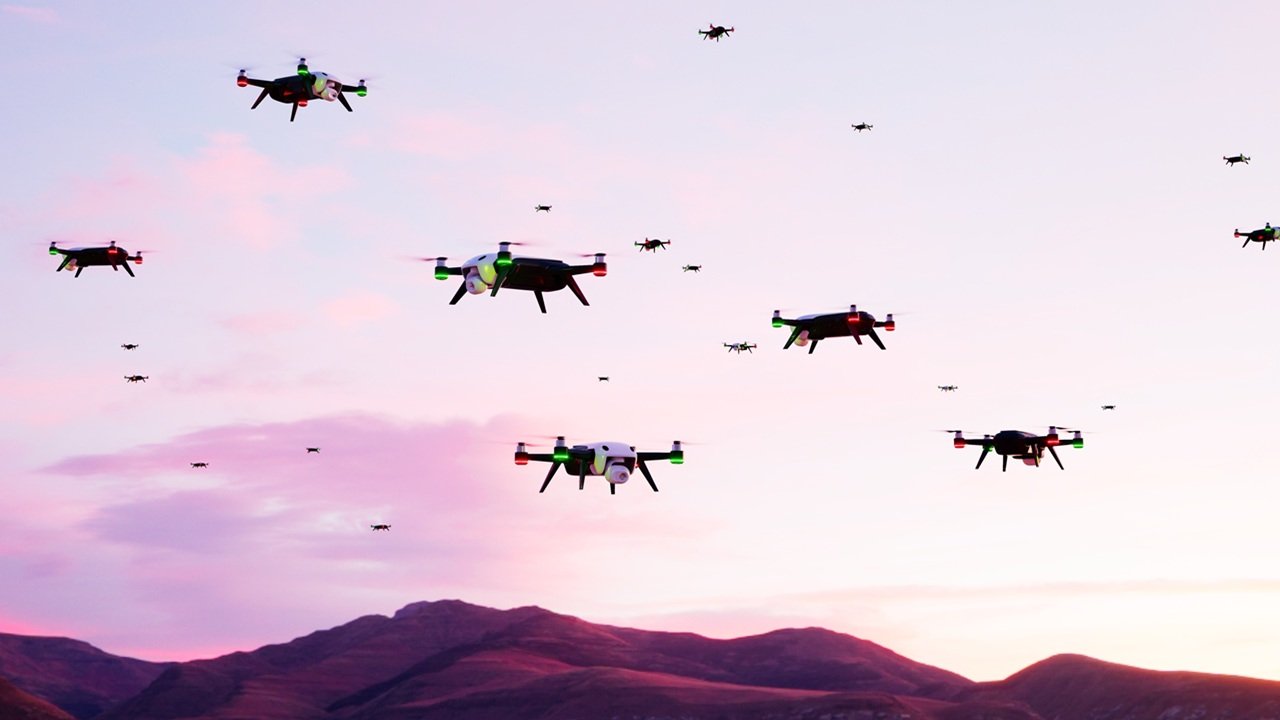
The reported downing of a US F-15E over Iran may mark the first combat use of Jellyfish Drone Swarms. This tactical shift challenges manned air superiority, exposing vulnerabilities that transform aerial minefields from theory into a terrifying, adaptive reality.
The downing of a US F-15E Strike Eagle over Iran on April 3 has shifted from a simple air-defense kill to a potential watershed in asymmetric warfare, with reports of Jellyfish Drone Swarms redefining aerial threats. While initial speculation pointed to MANPADS, the pilot’s sighting of coordinated unmanned systems suggests Iran may have leapfrogged conventional tactics. If confirmed, this Jellyfish Drone Swarms capability would not only expose vulnerabilities in manned aviation but also validate long-held fears that drone swarms can function as intelligent, adaptive minefields, turning contested airspace into a lethal calculus of numbers over technology.
Jellyfish Drone Swarms: The First Line
On April 3, a United States Air Force F-15E Strike Eagle was shot down over Iran, the first of a manned US aircraft to enemy fire in the conflict. Both the pilot and the weapons system officer (WSO) were rescued, but the incident raised concerns about the capabilities of Iran’s air defenses.
The aircraft, with the call sign “Dude 44,” was operating over the southwestern part of the Islamic Republic. Initial reports at the time claimed that the twin-engine multirole fighter had been shot down by a Chinese-made shoulder-fired Man-Portable Air Defense System (MANPADS), although China denied that it had provided any such systems to Iran.
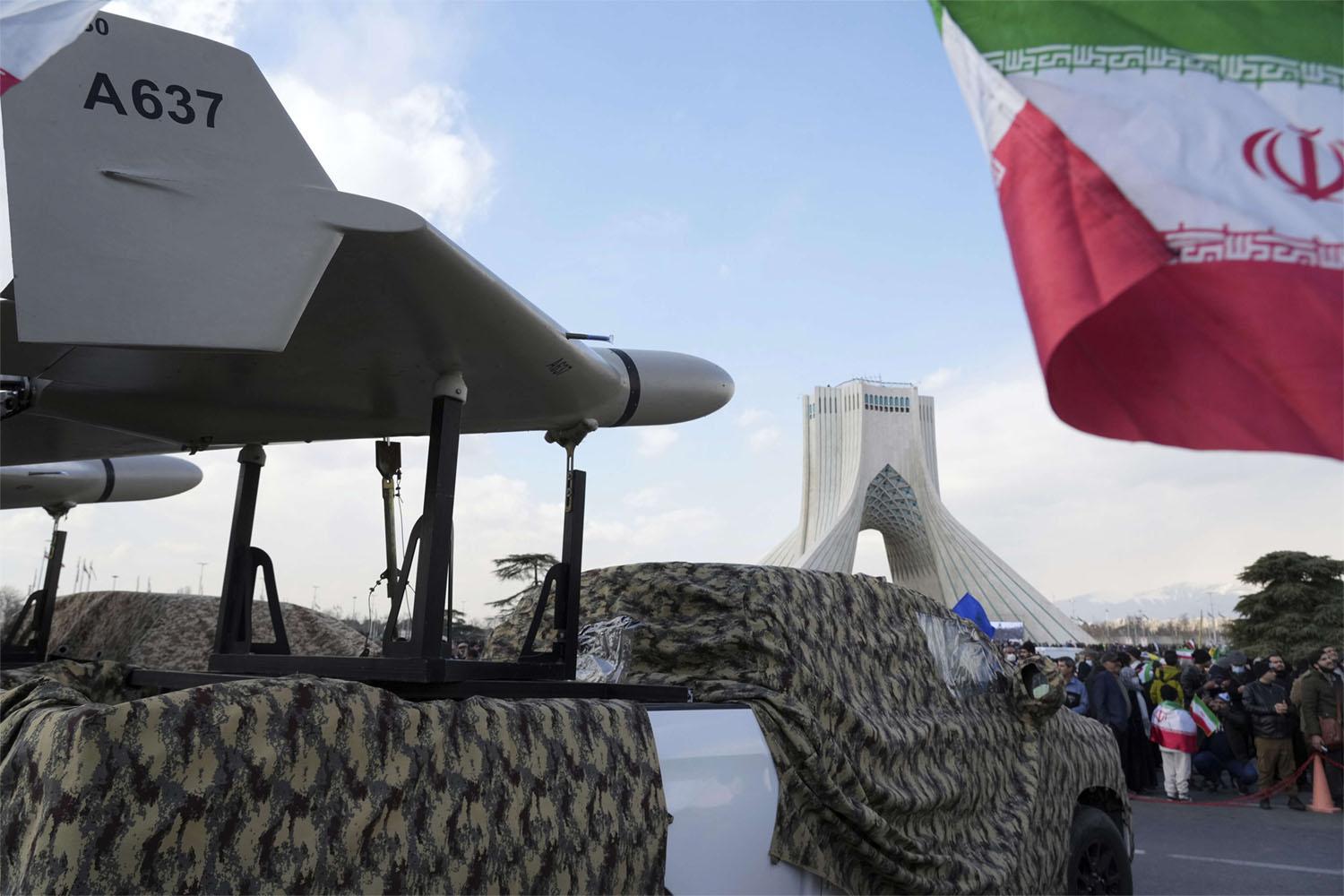
The story became more complicated this week, after reports circulated that the pilot of the F-15E Strike Eagle claimed to have seen “multiple Iranian drones hovering in the air, moving as one, in a formation that resembled a jellyfish,” according to CNN. That observation “set off a firestorm of debate with the US intelligence community.”
Swarms That Resemble Jellyfish Drone Swarms
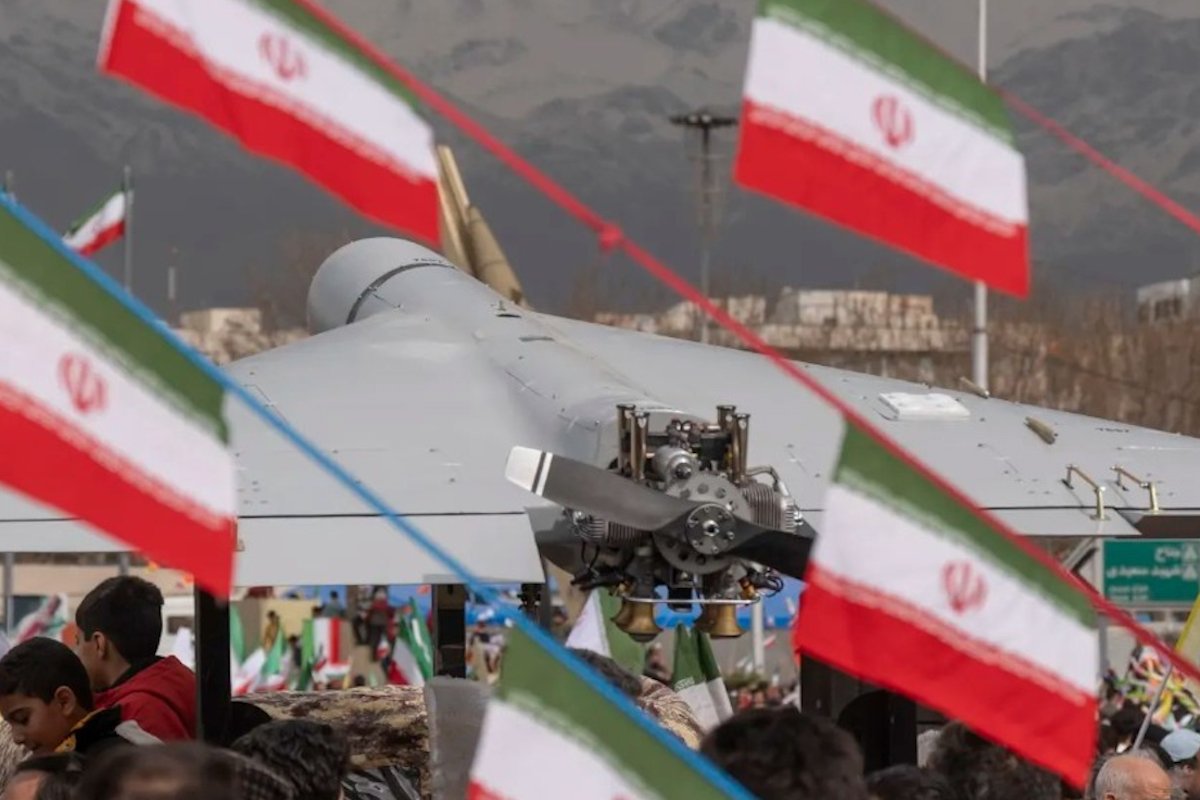
Exactly what may have brought down the US fighter jet remains unresolved, but the appearance of a drone swarm would signal that Iran’s capabilities are more advanced than suspected. It could also indicate that Tehran has received assistance in developing its drones from Beijing and Moscow, as both China and Russia have sought to increase the capabilities of their respective unmanned aircraft.
Drone Swarms Could Become a Minefield in the Sky
Another source within the US military told CNN that the use of such a swarm could be akin to a “minefield of drones.” Such uses of drones haven’t been seen in practice, but there has been speculation of how they could be used to effectively act as an “aerial minefield.”
Manned Fighters Versus Jellyfish Drone Swarms
Drones laden with explosives could be employed to hover or patrol, and detonate near approaching aircraft. Unlike ground mines that are static in nature, intelligent aerial drone swarms could communicate with one another and shift their positions to adapt to the movements of enemy targets and to evade countermeasures.
The aerial minefield could also employ non-kinetic interception of manned aircraft. The drones could be used to conduct electronic warfare (EW), jamming the radar or communications of approaching aircraft. They could also be equipped with directed-energy devices to blind a manned fighter, or even employ relatively low-tech systems such as entanglement nets.
The technology has been long in coming. In the fall of 2024, tech entrepreneur Elon Musk praised the capabilities of a Chinese drone swarm—and explicitly criticized the development of manned fighters, calling military planners at the Department of Defense “idiots” for investing in manned platforms such as the F-35 Lightning II.
In response, analysts at the time painted a more balanced picture of air warfare, suggesting that there were still some functions that humans outperformed drones at and that manned and unmanned aircraft could complement one another. But the recent news that Iran may have employed a drone swarm shows that the manned fighters have a new threat.
Jellyfish Drone Swarms: Mass Battles in the Sky
Mass Drone Battles in the Sky: The Terrifying Future of Warfare
The effectiveness of aerial minefields could be addressed, at least in part, by other drones—namely, the “loyal wingmen” that operate alongside the manned fighters.
Such efforts are already underway. The United States Air Force recently awarded contracts to two companies, Anduril Industries and General Atomics Aeronautical Systems (GA-ASI), under the Collaborative Combat Aircraft (CCA) program Increment 1. The two companies are respectively developing the FQ-44 “Fury” and FQ-42 Dark Merlin drones. Another drone systems under consideration is Boeing’s YFQ-48a “Talon Blue,” currently under development in Australia.
Countering the Threat with Jellyfish Drone Swarms
The Air Force has indicated that future increments could call for the development of additional unmanned aerial systems (UAS). The CCA drones are being developed to support existing fifth-generation and sixth-generation manned fighters and other aircraft, including the US Air Force’s upcoming B-21 Raider, where autonomous drones could fly alongside the bomber to expand sensor reach and act as defensive escorts. That could include the clearing of the aerial minefields.
The US Air Force has indicated it could acquire 1,000 drones or more to support its fleet of manned aircraft.