
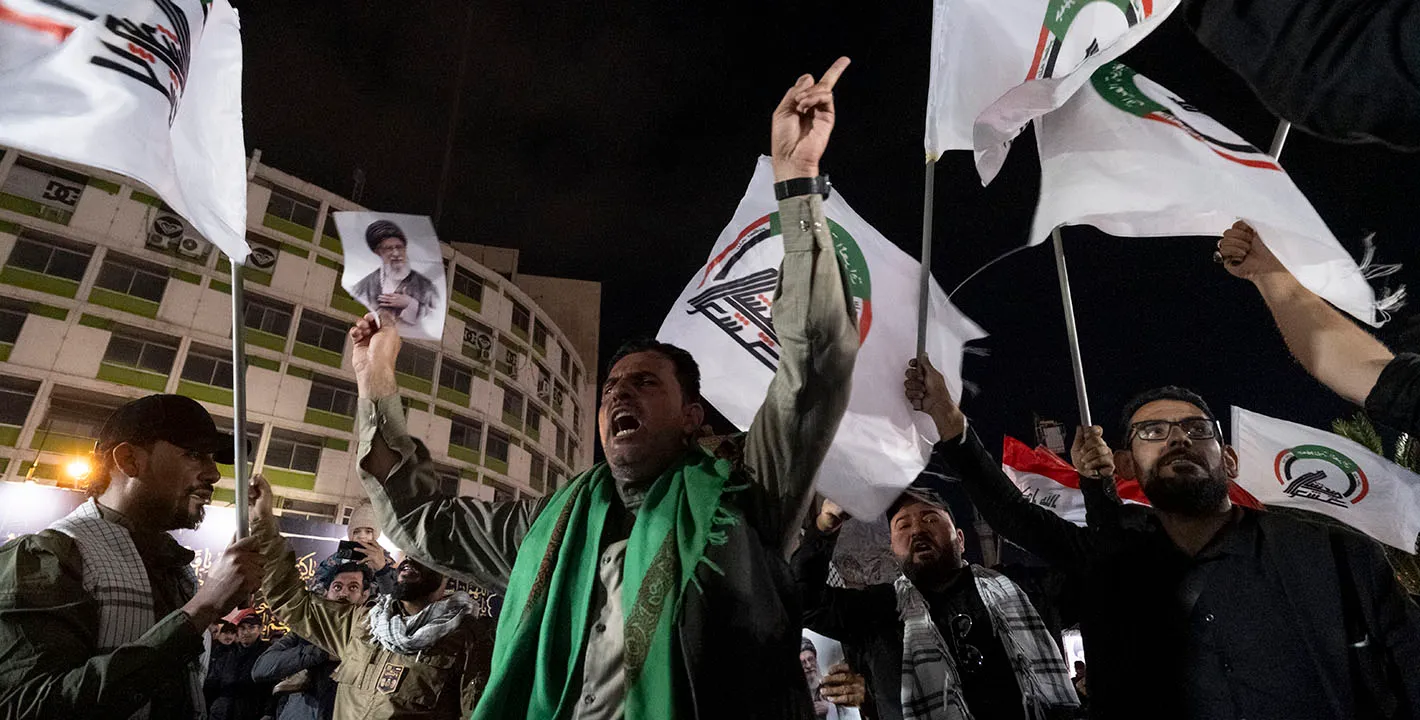
The September 30 deadline for coalition withdrawal has lost meaning as Kataeb Hezbollah, Harakat Hezbollah al-Nujaba, and Kataeb Sayyid al-Shuhada reject disarmament, conditioning compliance on U.S. withdrawal. U.S.-Saudi strikes killed 20 PMF members.
The September 30 deadline for coalition withdrawal has exposed a gap between Baghdad’s formal demands and the realities that constrain Iraqi PMF reform. Prime Minister Ali al-Zaidi pledged to bring arms under state control, requiring factions to hand over arsenals and integrate into the Popular Mobilization Forces under a revised legal framework. Several factions complied, including Saraya al-Salam, Asaib Ahl al-Haq, and Kataeb al-Imam Ali, but the leading Islamic Resistance factions—Kataeb Hezbollah, Harakat Hezbollah al-Nujaba, and Kataeb Sayyid al-Shuhada—refused, conditioning disarmament on total U.S. withdrawal and federal control over airspace. Their calculus shifted after the Islamabad Memorandum of Understanding collapsed and hostilities resumed.
Iraqi PMF reform cannot succeed while Tehran treats the Resistance Axis as integral to its national defense and factions see political integration as a demotion. The blurred boundary between resistance factions and the PMF as a state institution poses the central danger. U.S. and Saudi strikes have killed PMF members and hit logistics sites, while sanctions target a PMF-linked company, demonstrating how conflation exposes Iraqi state bodies to attack. Rather than chasing disarmament that Baghdad cannot deliver, the government should prioritize legislative revisions that strengthen the prime minister’s authority, impose auditing, and separate the PMF from autonomous armed actors. This approach offers a realistic path toward Iraqi PMF reform that endures beyond any single deadline.
Iraqi PMF reform faces real test
The looming September 30 deadline for the withdrawal of U.S.-led Coalition forces from Iraq carries with it considerable uncertainty over how the United States will respond if Iraqi resistance factions choose not to lay down their weapons. Iraq’s newly-elected government had previously insisted that all armed factions operating outside of state control would be required to integrate into formal structures by September 30. But Baghdad’s position has shifted in recent weeks. It now insists, instead, that the date will mark the beginning of concerted efforts to conclude the demobilization process.
When Iraq’s new prime minister Ali al-Zaidi was sworn into office in May this year, he pledged to pursue what is commonly referred to as “bringing arms under state control.” The intent is to ensure that the government is the sole authority to decide on matters of war and peace by requiring all armed actors in the country to fall under the military chain of command in Baghdad.
The mechanism outlined by the Zaidi government requires factions to hand over their independent arsenals to the Popular Mobilization Forces (PMF), within the context of a legislative bill that would revise the institutional framework of the PMF. Personnel affiliated with these factions would be redistributed among the PMF’s formations so that individual brigades could no longer function effectively as extensions of particular factions.
Two weeks after Zaidi took office, Muqtada al-Sadr’s armed faction, Saraya al-Salam, which is not part of the so-called Resistance Axis, announced it would disband and fully integrate into the PMF, creating much-needed momentum for Zaidi. Qais al-Khazaali’s Asaib Ahl al-Haq and Shibl al-Zaydi’s Kataeb al-Imam Ali quickly followed suit, announcing their intention to comply with the integration process.
Meanwhile, other leading armed factions within the Islamic Resistance in Iraq umbrella that coordinate and claim attacks under a shared banner, namely Kataeb Hezbollah, Harakat Hezbollah al-Nujaba, and Kataeb Sayyid al-Shuhada, held off on taking a decision while negotiations with the government continued. Then, in late June, the government’s spokesperson announced that September 30 would be the deadline for the remaining factions to comply.
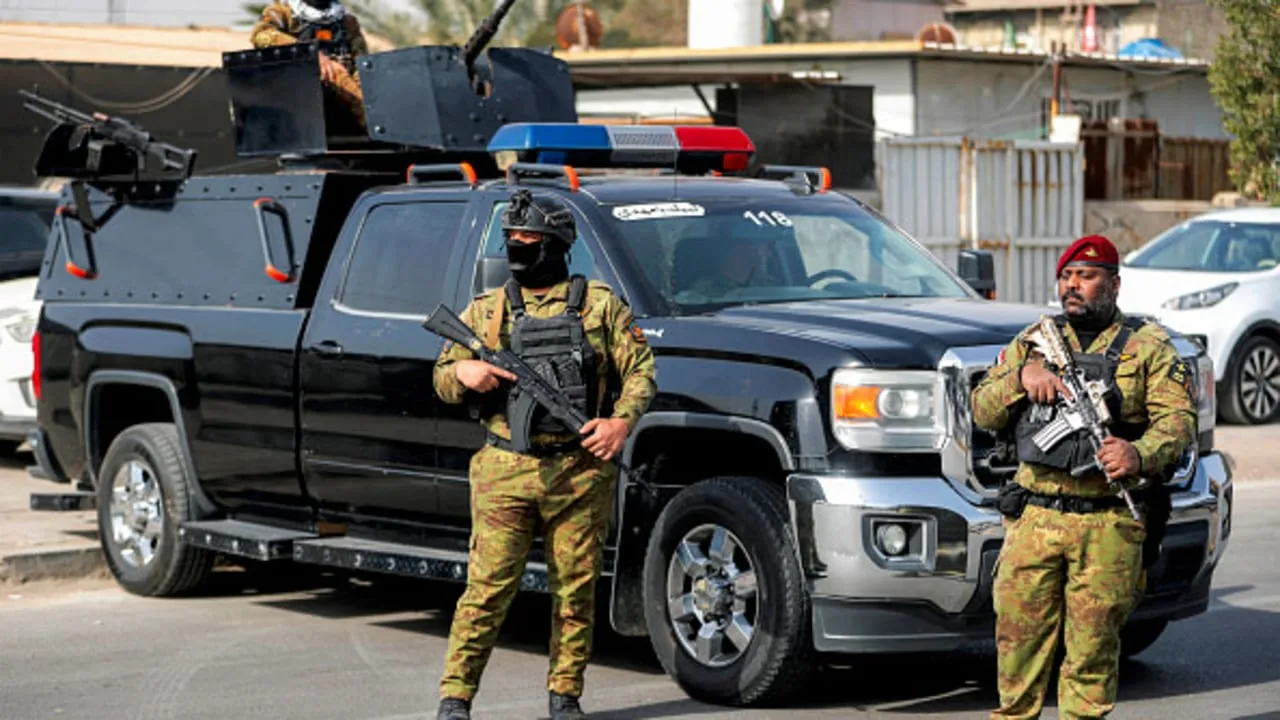
What happens after September 30
Crucially, however, the government’s deadline was announced after the United States and Iran had agreed to the Islamabad Memorandum of Understanding, when their conflict appeared to be on a deescalatory path. But with the ceasefire breaking down and hostilities resuming in early July, the leading resistance factions in Iraq now have little incentive to comply with the September 30 deadline.
Why factions refuse to disarm
Understanding what motivates these factions and how they might be incentivized to stand down requires going beyond caricaturing them as simply Iranian proxies. One lens through which to understand them is as Iraqi political actors that wield considerable power and have their own ideological outlook, including a vision of state identity in Iraq that they seek to shape, and in many cases substantial economic interests of their own.
Another lens is to view them as an extension of Iran’s national security architecture and part of the broader Resistance Axis, which provides a form of forward defense for the Islamic Republic. But these two lenses are not mutually exclusive. Factions can pursue their own domestic political and commercial interests while also regarding their role in Iran’s national defense as a strategic imperative.
For the likes of Kataeb al-Imam Ali’s Shibl al-Zaydi, the tradeoff between relinquishing armed resistance in exchange for a more prominent political role makes sense. Zaydi’s decision to comply has secured him a seat in the Coordination Framework, the umbrella group of leading Shiite political factions that underpin the government. Zaydi launched his own political alliance ahead of last year’s national elections, winning nine seats in parliament. He now gets to sit alongside Iraq’s heavyweight Shiite party leaders on a weekly basis and take part in important political decisions.
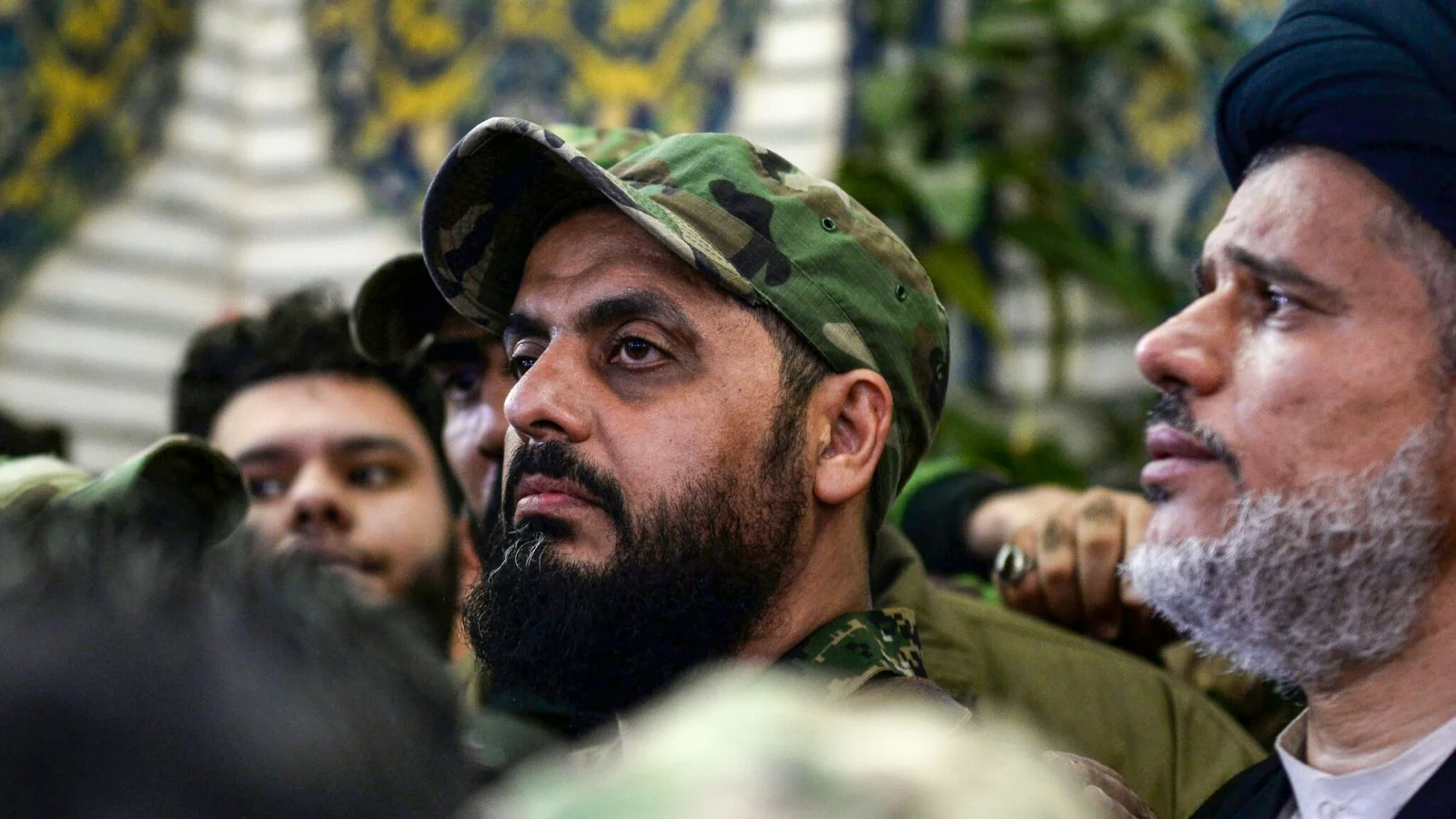
Two lenses on armed factions
In contrast, the lure of such a role for more senior factions of the Islamic Resistance in Iraq, namely Kataeb Hezbollah and Harakat Hezbollah al-Nujaba, holds little appeal. Their leaders see themselves as above politics, and as defenders of the Shiite realm. They can play a far more consequential role as resistance leaders than as merely one among many politicians. Furthermore, Kataeb Hezbollah previously dabbled in politics, launching a parallel electoral list in 2021 known as the Huquq Movement, which performed poorly in the last two rounds of parliamentary elections in 2021 and 2025, winning just six seats in those of last November.
More importantly, the lack of incentive to transition to party politics is further compounded by the fact that the U.S.-Iran conflict is by no means over. Iran continues to view the Resistance Axis as a core component of its national defense and has no intention of calling on its members to disband. Indeed, Iraq’s leading resistance factions have all explicitly rejected the September 30 deadline to disarm, instead framing their continued presence as necessary to defend Iraq’s sovereignty.
In an August 29 statement, Kataeb Sayyid al-Shuhada conditioned disarmament not only on a full U.S. withdrawal from Iraq, but complete federal security control over Iraqi territory, including airspace—effectively creating conditions to retain its weapons indefinitely. In this climate, Prime Minister Zaidi and even the Coordination Framework have little leverage to entice these groups to comply. Ultimately, their willingness to disarm will depend far more on the trajectory of the war taking place in the region than on political inducements Baghdad can offer.
Political seats fail to lure
Instead of trying to persuade these groups with a carrot-and-stick approach, the Zaidi government should focus on what it can do to establish a clearer institutional boundary between them and the PMF. The objective should be to limit the ability of resistance factions from exploiting their presence within the PMF to draw on state salaries, weapons, and institutional protection while continuing to operate autonomously outside the government’s chain of command.
The urgency of doing so has been underscored by recent events. In July, joint U.S.-Saudi strikes in response to attacks on Saudi oil infrastructure targeted weapons and logistics sites associated with PMF bases across Iraq. At least 20 PMF members were killed and 32 wounded. Last year, the United States also sanctioned the Muhendis General Company, a state-owned company established under the PMF, over its alleged links to Kataeb Hezbollah and the Islamic Revolutionary Guard Corps’ Quds Force.
Since 2018, successive Iraqi governments, beginning under Adil Abdul Mahdi, have allowed the distinction between resistance factions and the PMF to become increasingly blurred. The dangerous consequences of that conflation are now becoming clear as military strikes and sanctions directed against resistance factions risk targeting Iraqi state institutions. Undertaking root and branch reform of the PMF is, in the first instance, about insulating the Iraqi state from the consequences of activities undertaken by resistance factions operating outside its command structure.
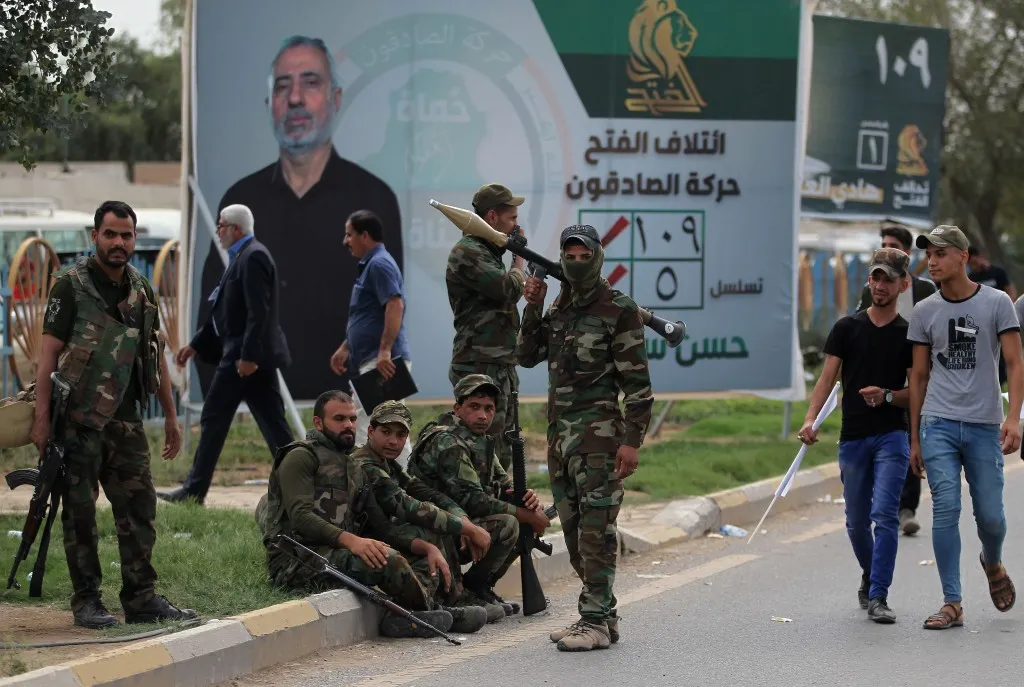
Insulating state from militia power
In early September, the Coordination Framework confirmed its intention to back a government bill to revise legislation that established the legal basis for the PMF as a state security institution in 2016. Last year, the government of Mohammed Shia al-Sudani proposed a revised PMF bill that outlined a series of detailed structural revisions, including a clearer command structure, new senior leadership positions, and the reorganization of the PMF’s administrative and operational structures. The bill went through a first reading in parliament and was reviewed by the relevant parliamentary committee, but was ultimately put on hold following U.S. pressure over concerns about some of its provisions.
If a similar version of last year’s draft bill is considered by parliament, it could provide an important vehicle for reforming the PMF. The bill would potentially strengthen the prime minister’s authority over its senior leadership by giving him the power to directly appoint the five deputies to the chief of staff.
Other important provisions require greater cooperation with the Ministries of Defense and Interior and introduce stronger administrative and financial oversight, including mandatory auditing by Iraq’s federal audit authority. Collectively, these measures could help dilute the influence of individual factions, shift the balance of power toward a less politicized leadership, and tackle widespread corruption within the institution. More fundamentally, the bill could help reinforce the distinction between the PMF as a state security institution and the resistance factions that have increasingly operated through its structures.
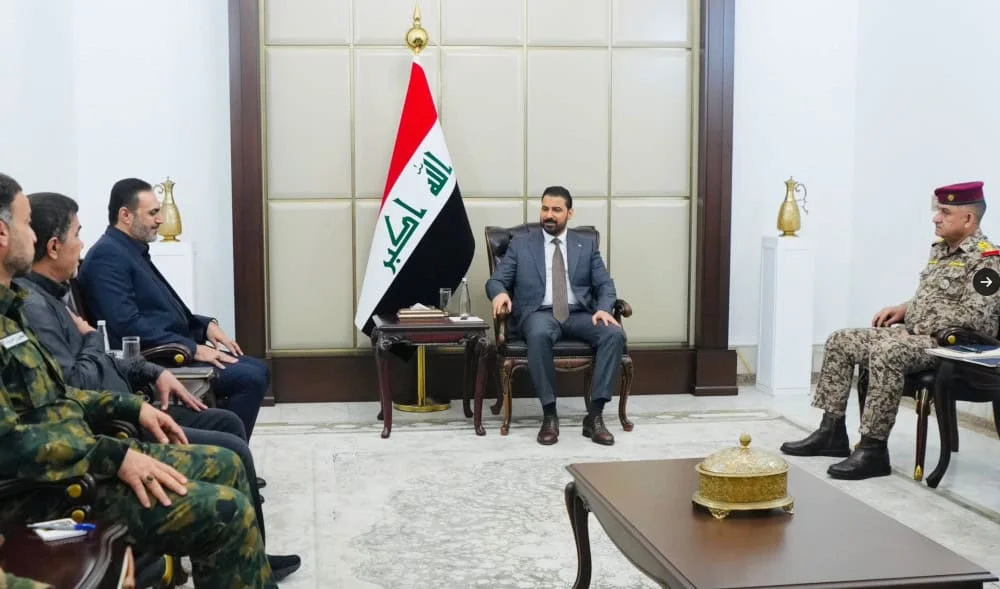
Iraqi PMF reform must come first
Further revisions to last year’s version of the PMF bill could also make it more politically viable and address some of the concerns that prevented its passage. This could include removing the provision that establishes a legal basis for the Muhandis General Company.
When the parliamentary Security and Defense Committee reviewed the bill in 2025, it also questioned the need to establish a separate PMF academy that would award graduates a Bachelor’s degree in military sciences, noting that Iraq’s military college under the Ministry of Defense already performs that function. More broadly, the legislative review provides an opportunity to introduce new provisions restricting the PMF’s ability to adopt political positions independently of the government, further reinforcing its status as a state security institution rather than an autonomous political actor.
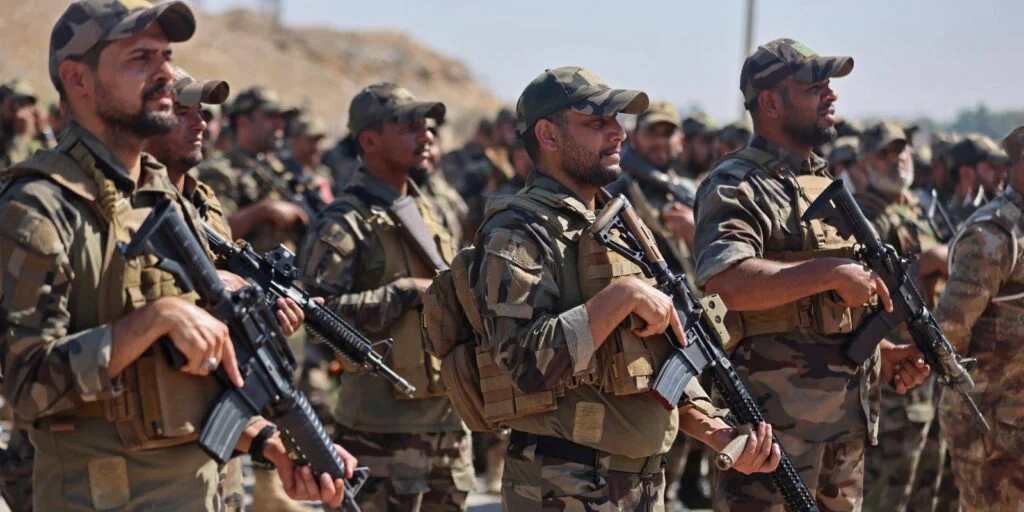
Ultimately, the government’s ability to assert its will over Iraq’s resistance factions is constrained by forces that extend well beyond Baghdad’s reach. As long as the U.S.-Iran confrontation continues and Tehran regards the Resistance Axis as integral to its security, attempts to rein in Iraq’s most powerful factions are unlikely to succeed. A better use of the government’s political capital would therefore be to address the increasingly ambiguous boundary between these factions and the PMF.
The Zaidi government cannot determine the trajectory of the regional conflict, but it can shape the extent to which resistance factions are permitted to embed themselves within state institutions. Rather than prioritizing its efforts to bring arms under state control, Baghdad should focus on bringing the PMF, as a state institution, more firmly under state control.