
Iran’s Mafia State operates as a criminal enterprise confusing organizational survival with national security. Tehran respects only leverage, not law. This analysis demonstrates why Iran’s Mafia State responds exclusively to power-backed consequences, not diplomacy without enforcement
The Islamic Republic’s conduct in the Gulf reveals a governing entity operating less as a nation-state and more as a criminal enterprise whose survival depends on coercion, not consent. Iran’s Mafia State demonstrates through its missile strikes on Kuwait and Bahrain that it respects only leverage, and confronting Iran’s Mafia State requires abandoning the illusion that diplomacy without consequences will produce compliance.
Iran’s Mafia State Exposes Brutal Logic
A passenger terminal is not a battlefield. An airport is not a military front. A civilian killed in Kuwait is not a statistic. It is a warning.
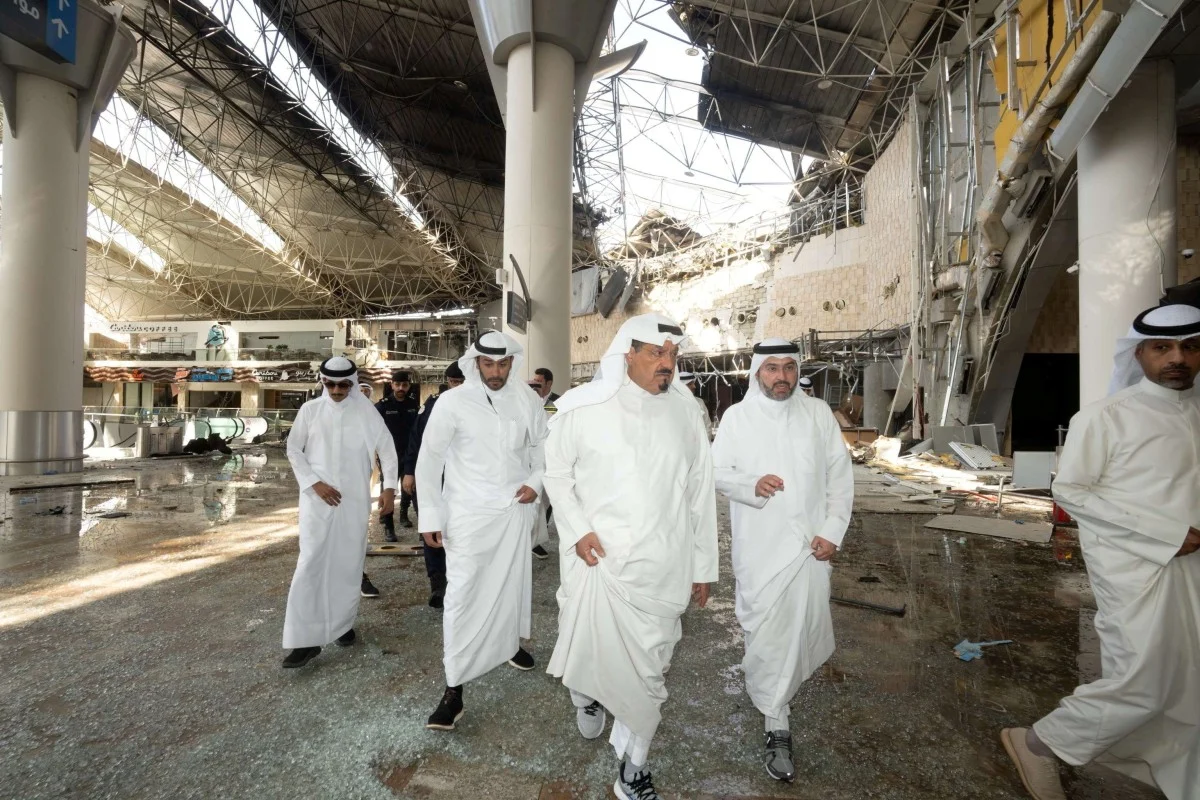
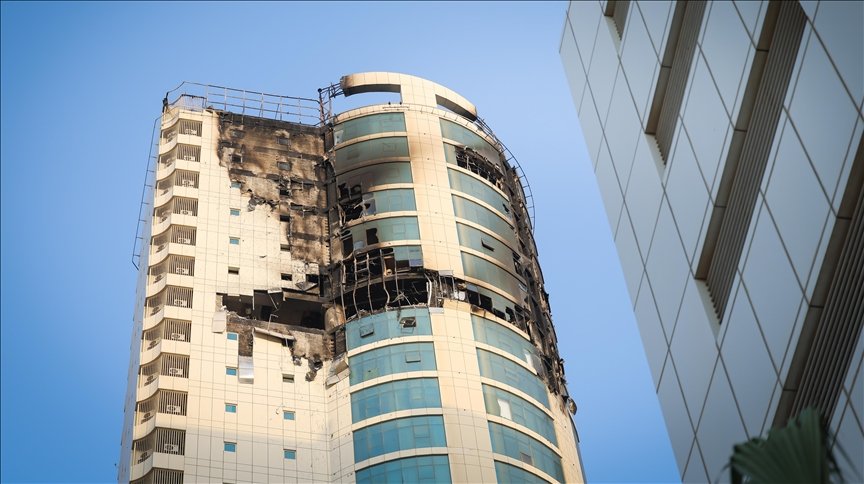
Iran’s strike on facilities in Kuwait, including Kuwait International Airport, and its missile launches toward Bahrain—intercepted by US and Bahraini forces—must be understood in context. They came while President Donald Trump was still giving Tehran an opportunity to step back from escalation and return to the framework of international law. The regime’s answer was not compromise, but escalation.
Undermining Iran’s Mafia State
The Kuwait and Bahrain Strikes Underscore Iranian Duplicity
This is not a normal state pursuing normal interests. It is a mafia state hiding its aggression behind ideology, proxies, negotiations, and delay. It respects neither international law nor the sovereignty of its neighbors—not even the Gulf states that tried to preserve “mediation” channels.
The moniker of “mafia state” is not rhetorical excess. The Islamic Revolutionary Guard Corps (IRGC) is no longer merely the guardian of doctrine; it has become the armed protector of an economic empire. Through energy contracts, shadow finance, oil sales, ports, and sanctions-evasion networks, the regime’s military elite has tied its survival to power and wealth. Its struggle is no longer only ideological. It is personal. The men who command repression at home and escalation abroad are defending privileges and fortunes accumulated over decades. Like every mafia, they confuse the survival of the organization with the survival of the nation.
Confronting Iran’s Mafia State
The regime now threatens the Gulf, Israel, American forces, maritime commerce, and the principle that civilian life must never become leverage. When drones and missiles are launched toward Kuwait and Bahrain, when Hormuz becomes an arena of coercion, and when Hezbollah’s survival is folded into Tehran’s bargaining position, the world is witnessing Iran’s architecture of intimidation.
America and Its Allies Must Stay United
Tehran’s maneuver is transparent: it is trying to shift attention from the central danger—its nuclear program—toward a parallel crisis over Hormuz. By multiplying fronts and threatening energy markets, Tehran believes it can confuse Washington, divide allies, and buy time.
The United States is not a reactive power shaped by a single news cycle. It is a democratic nation with enduring institutions, intelligence capabilities, military reach, diplomatic alliances, and economic leverage. Tehran may hide behind proxies, denials, and manufactured crises, but Washington can see the pattern clearly: nuclear coercion, regional destabilization, terrorist sponsorship, and maritime extortion.
Yet too much commentary has drifted toward a secondary drama: a reportedly heated exchange between Trump and Prime Minister Benjamin Netanyahu. But gossip about personalities will not protect Kuwait’s civilians, reopen Hormuz, disarm Hezbollah, or reassure America’s allies.
Alliances have tensions. Leaders disagree. But no one should confuse a moment of frustration with the depth of the American-Israeli relationship. That bond is stronger than any single president, prime minister, or political season. Fairness also requires clarity about Trump: warm, direct, sometimes harsh, but undeniably important to Israel through Jerusalem, the US embassy, the Golan Heights, and the Abraham Accords.
Tehran is linking regional de-escalation to the survival of its terrorist infrastructure. It is telling the world: if Israel acts against Hezbollah, Iran will escalate elsewhere. That is not diplomacy. That is blackmail. Hezbollah is not simply a Lebanese faction; it is an armed ideological instrument tied to Iran’s regional strategy. To let Tehran connect a ceasefire with protection for Hezbollah is to accept that a terrorist organization can veto regional order.
Iran’s Mafia State Faces the Stick
Trump’s foreign policy instinct is rooted in realism: avoid endless wars, demand burden-sharing, protect American interests, and reject naïve illusions. But realism begins with reality. The Iranian regime does not respect weakness, ambiguity, or endless negotiation. It respects cost.
Trump has been patient. He gave this regime many chances to return to international law and order. Each time, Tehran lied, delayed, manipulated, and escalated. The men who govern Iran believed they could deceive America forever. They were wrong.
What they failed to understand is the Trump doctrine: realism, leverage, strength, and consequences. Trump prefers deals to wars. But a deal requires a counterpart that understands the cost of betrayal. Tehran has mistaken patience for weakness and diplomacy for surrender.
That mistake must now end. This does not mean reckless war. It means diplomacy protected by power, and international law enforced by consequence.
Washington should make several principles clear. Attacks on civilian infrastructure must impose direct costs on the regime’s military and financial architecture. Freedom of navigation in Hormuz is not negotiable. America should accelerate regional defense linking the Gulf states, Israel, and US capabilities. Washington must refuse the false separation between Iran and its proxies.
One more principle can no longer be avoided: the Iranian people are not the Iranian regime. The United States should speak directly to the people of Iran and help them confront the mafia that governs them. This does not mean imposing a future from outside. It means moral, diplomatic, technological, and informational support for a courageous people. America’s quarrel is not with Iran as a civilization, but with the mafia state that has taken that civilization hostage.
This is the moment for American leadership: calm, disciplined, unmistakable. The United States should not seek war. But it must end the era in which Iran can attack civilians, intimidate allies, arm terrorists, threaten commerce, divert attention from its nuclear program, and then demand rewards for stopping the violence it started.
International law without enforcement is an appeal. International law backed by power is order.
And in the Gulf today, order must be restored.