
Military escalations in the Strait of Hormuz reveal deep structural flaws in the U.S.-Iran pact. Armed strikes have replaced active diplomacy as both Washington and Tehran deploy targeted violence to forcibly dictate terms, threatening a return to full regional conflict.
White House strategists face a stark reality as the fragile June Iran Memorandum rapidly unrolls under the pressure of renewed Gulf missile strikes. The illusion of a quick diplomatic fix has shattered against the hard truth that tactical ceasefires cannot survive deep systemic hostility. Washington and Tehran remain trapped in a dangerous cycle where both nations treat this new Memorandum as an extension of conflict by other means, using targeted military violence to force concessions at the negotiating table and pushing the entire region closer to open warfare.
Iran Memorandum Dictates Maritime Realities
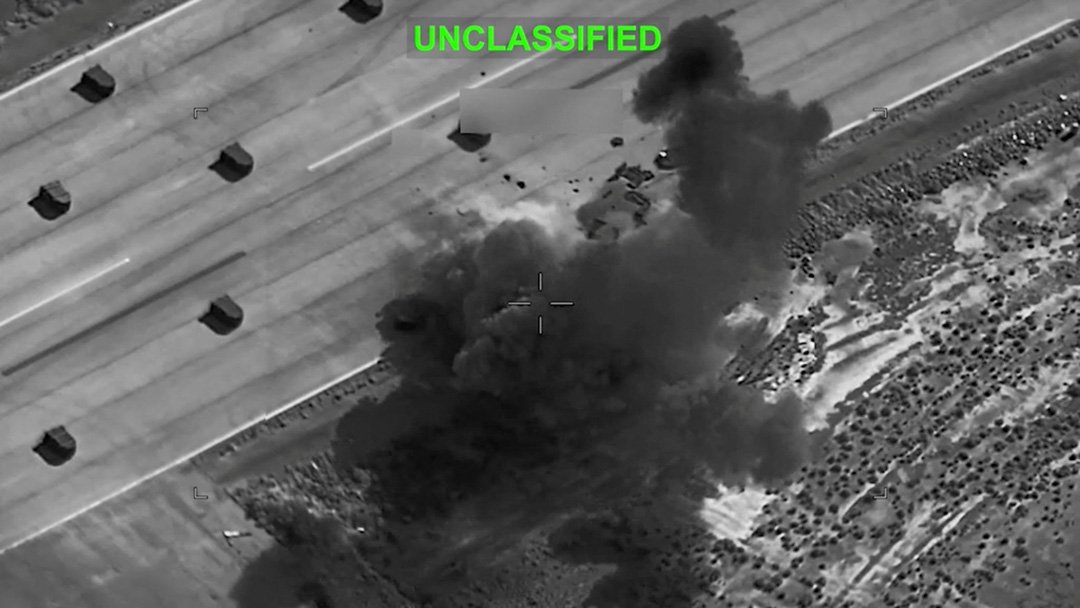
It is always risky to take anything President Trump says at face value, but events in the three weeks since the U.S. and Iran signed a memorandum of understanding that was to end the hostilities between them have underscored its inherent vulnerabilities. His comments came after Iran attacked three commercial vessels in the Strait of Hormuz and the U.S. responded by revoking a temporary licence that had allowed Iran to sell its oil as well as conducting strikes on Iranian targets. These exchanges were sharper than those that had already punctured the ceasefire in place since 8 April. Iran, in turn, attacked U.S. military positions in Bahrain and Kuwait.
Later on 8 July, the U.S. launched strikes for a second successive night, with Trump citing Iran’s earlier attacks to warn that “if it happens again, it will get much worse”. Iran retaliated by launching missiles and drones at U.S. military bases in the region.
Precarious as it is, the situation is not entirely clear-cut. Even as he appeared to bury the 17 June memorandum and cast doubt on whether further talks would achieve anything, Trump said U.S. representatives could continue discussions with Iran. The two sides are left in a perilous grey zone: the political framework that was supposed to prevent escalation is not doing the job, but the diplomatic channels built around it have not formally closed (though they had already been paused as the Islamic Republic holds multi-day funeral services for Ali Khamenei, the late Supreme Leader who was killed on the first day of U.S.-Israeli bombing in February).
Trump’s apparent dispatch of the memorandum may reflect frustration, a desire to restore deterrence after attacks on shipping or an effort to increase pressure on Tehran in the run-up to negotiations. Though there is a difference between coercion to force capitulation and coercion to strengthen a negotiating position, the distinction tends to vanish once missiles start flying.
Ambiguity Corrodes the Iran Memorandum Implementation
One problem lies in the memorandum’s inherent ambiguity: its language, which was purposely hedged to enable an agreement, is too vague to ensure seamless implementation. Alongside the parties’ competing interpretations of its terms and the repeated breaches on both sides, the deal has a deeper problem. Washington and Tehran have come to treat the agreement not as a bridge from war to diplomacy, but as an extension of war by other means. Meant to contain military confrontation, it is caught in a near-fatal contradiction: armed escalation has become the instrument by which both sides seek to impose their preferred understanding of the deal.
Why was the agreement so vulnerable from the outset? Because it stopped the war without settling the contest that produced it. That it deferred the most challenging issues – notably Iran’s nuclear program – is one thing. More disturbingly, it also left burning matters that it had purportedly addressed essentially unresolved, including the future management of the Strait of Hormuz, the relationship between the Iranian and Lebanese theatres, and the conditions under which Iran might have access to its frozen assets.
At first, those ambiguities were of some benefit, as they allowed both sides to stop fighting and achieve a degree of economic relief without acknowledging defeat or relinquishing basic claims. But such constructive ambiguity can quickly become destructive when the vagueness affects the core bargain of the deal, and when both parties retain the means and inclination to forcibly impose their preferred interpretation, especially given the utter lack of trust between them.
The two sides also entered the post-signing period with fundamentally different ideas about the purpose of the 60 days of negotiations contemplated in the memorandum’s text, a reflection of their divergent views of who had prevailed and who had a stronger hand. Washington appears to have viewed the interval as an opportunity to stabilise energy markets, reopen the Strait of Hormuz to shipping, constrain Iran’s regional activities and reduce uncertainty around its nuclear program before Tehran had to make major concessions. Iran, by contrast, saw it as a chance to convert the leverage it acquired during the war into durable political and economic gains. These visions were bound to collide.
The Strait of Hormuz is the theatre where that collision has been starkest. Washington insisted on keeping traffic in the strait unfettered and outside Iran’s reach, viewing these measures as a way to mitigate risks; Tehran increasingly saw the U.S. stance as an attempt to strip away its main source of strength and deterrence. For Iran, maintaining control of the strait is a way to preserve the balance of power that makes diplomacy possible. Conversely, Washington views Iran’s actions as further evidence of its bullying.
Waterway Control Shields Iran Memorandum
Why has the Strait of Hormuz become the main flashpoint? Precisely because Hormuz is where Iran’s greatest wartime leverage intersects most directly with Washington’s greatest vulnerability. The war demonstrated that Iran could severely disrupt one of the world’s most important economic arteries.
For Tehran, the lesson was not necessarily that the strait should remain closed indefinitely, but that its reopening should reflect a new political reality – one in which Iran’s security interests are recognised and its control of maritime traffic stays intact. That is why Iran has been adamant about maintaining a central role in governing the waterway. It is also why it never ceased mooting the possibility of imposing tolls or fees on vessels as a reflection of that authority and an income generator. Since signing the memorandum of understanding, the Trump administration has made weakening Iran’s partial hold on the strait a priority.
Here again, the memorandum’s vagueness is at fault. Article 5 states that, “Upon the signing of this MoU, the Islamic Republic of Iran will make arrangements using its best efforts for the safe passage of commercial vessels, with no charge for 60 days only, from the Persian Gulf to the Sea of Oman, and vice versa”. Iran, focusing on its right to “make arrangements”, reads this clause as confirming its authority over the strait; the U.S., by contrast, zeroes in on the right of safe passage and the absence of fees.
At bottom, the Islamic Republic’s leadership believes that every vessel transiting safely in waters beyond the supervision of an Iranian authority diminishes the leverage it acquired during the war. Hence its decision to strike vessels bypassing its own channels. When the U.S. mission to the UN negotiated an arrangement with the International Maritime Organisation to release trapped vessels in the Gulf through Oman’s territorial waters, Tehran denounced it as a violation of the deal.
A similar pattern of the U.S. seeking alternative arrangements – and of Iran refusing to cede ground – is visible in Lebanon. Iran sees Article 1 of the memorandum as establishing its central role in ensuring both an end to Israel’s military campaign and Israeli withdrawal from Lebanese territory. By subsequently mediating a framework agreement between Israel and the Lebanese government that implicitly allows the former to continue occupying southern Lebanon, the U.S. has, in Iran’s eyes, breached the memorandum.
Iran Memorandum Masking Broad Confrontation
Should the various disagreements – over Lebanon, the frozen assets and Hormuz – be viewed as separate? Not in Tehran’s eyes. Iranian decision-makers increasingly appear to view them as different fronts in a single battle over whether the material gains it made during the war will survive negotiations. The same pattern recurs in all three. Iran sought to tie the wider ceasefire to developments in Lebanon because it feared that a narrow U.S.-Iran arrangement would leave its ally Hizbollah exposed to a separate Israeli campaign.
It insists on reaping quick economic benefits from the memorandum of understanding because it fears that Washington will drag its feet, allowing Tehran only delayed and limited access to its frozen assets. It is determined, furthermore, to assert its control of the strait because it worries that the U.S. is trying to bring commerce back to normal without recognition of Iran’s role.
Seen individually, each dispute may have its own logic. Taken together, the disagreements have fed an Iranian fear that the memorandum is being implemented asymmetrically: Iran is expected to surrender its sources of leverage early on, while U.S. commitments are postponed, qualified or made contingent on additional concessions.
Washington, of course, sees much of the same picture in reverse. It is reluctant to deliver large-scale economic relief while Iran retains uncertainty around its nuclear assets, coercive power in the strait and a capacity to intervene in Middle East conflicts. That creates a classic sequencing dispute, but with an unusually dangerous twist. Both sides believe they can improve the sequence in their favour. Both also have military instruments at hand for doing so: U.S. strikes that severely damage Iran’s infrastructure, on one hand, Iranian strikes that constrict passage through the strait and target U.S. regional allies, on the other.
Total Failure Threatens Iran Memorandum Stability
What are the principal risks if the mid-June deal truly collapses? The first is a rapid return to war, albeit not necessarily an exact replay of the previous hostilities. A renewed conflict would begin from a different baseline because both sides have learned from the last round. The U.S. has more information about Iranian capabilities and vulnerabilities; Iran has a clearer sense of where it can impose the greatest economic and regional costs.
A second bout of war could therefore be fiercer and costlier, even if it is shorter. Iran may conclude that, beyond disrupting transit through the Strait of Hormuz, it should press or persuade its Houthi partners in Yemen to disrupt transit through the Bab al-Mandab (the strait connecting the Gulf of Oman to the Red Sea) in order to intensify the strains on the global economy.
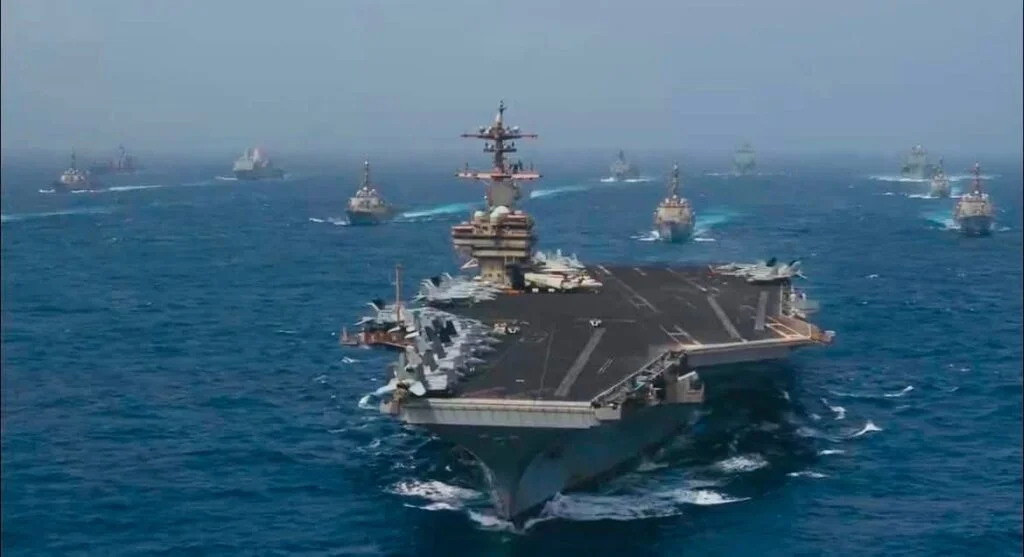
Washington, meanwhile, is likely to view renewed attacks on shipping as requiring a robust military response, potentially including a return to its naval blockade of Iranian ports. The current exchange has already shown how quickly a maritime incident can lead to U.S. strikes inside Iran and Iranian horizontal escalation through attacks on U.S. positions across the Gulf.
Secondly, failure would empower hardliners on both sides who were dissatisfied with the memorandum of understanding from the start. In Tehran, opponents of compromise could argue that the U.S. used negotiations to end hostilities even as it prepared for the next phase of pressure; they will say a few more weeks of economic disruption would bring the U.S. to its knees. In Washington, more bellicose voices could argue that Iranian attacks on shipping and U.S. facilities prove once again that Tehran responds only to overwhelming force. They will claim that a few more weeks of devastating military blows would make Iran come to its senses.
What is needed to prevent renewed conflict? First, Washington and Tehran should stop trying to enforce their competing interpretations of the memorandum by military means. Secondly, the mediators who helped make the mid-June deal (ie, Pakistan and Qatar) should seek an immediate standstill arrangement around the strait. Iran would have to halt attacks on commercial shipping; the U.S., in return, would suspend efforts to develop alternative transit routes through the strait. The purpose would not be to immediately settle the question of Hormuz’s future governance, but to prevent that dispute from undermining the wider process.
The irony is that both sides still confront the same reality that gave rise to the memorandum of understanding in the first place. The U.S. can inflict enormous damage on Iran but cannot compel it to capitulate at an acceptable price. Iran can impose severe costs on Washington, its regional partners and the global economy, but cannot force the U.S. to accept its preferred outcome. If the memorandum dies without being replaced, the two countries will not have resolved that contradiction. They will simply return to testing it with weapons – at greater cost and with far less room for error.