
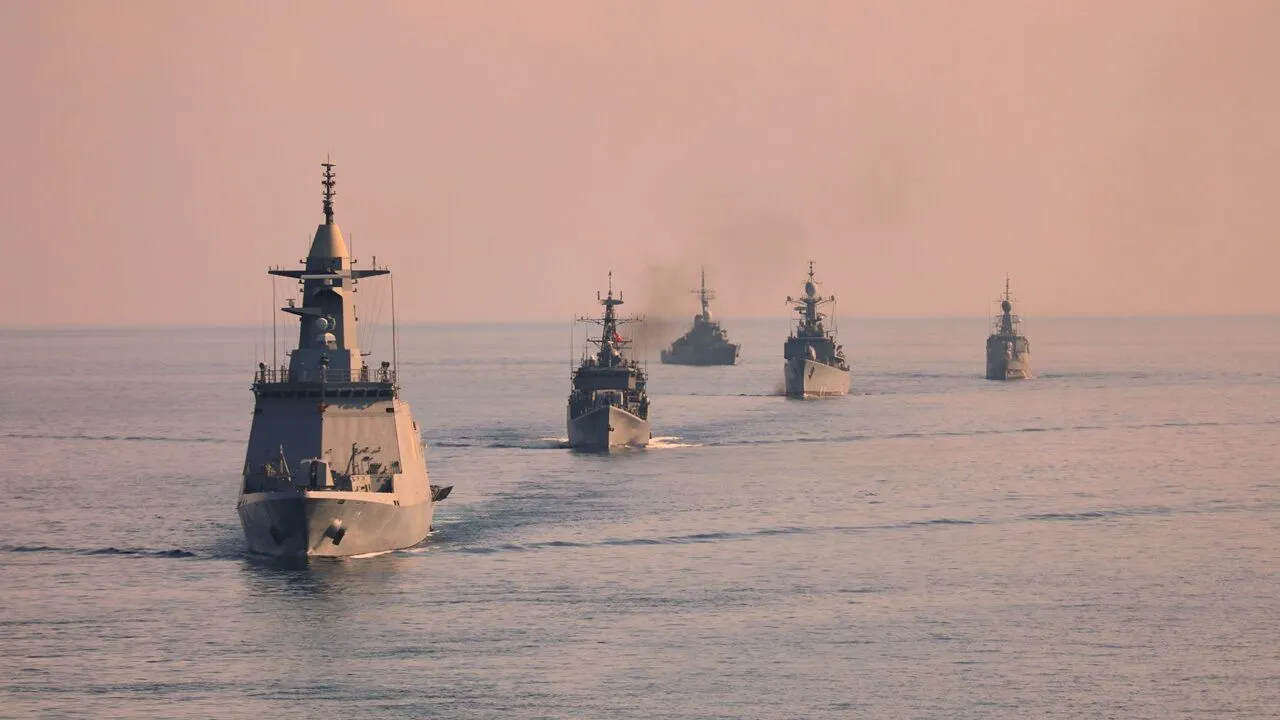
Low-cost shore missiles and tactical drones allow minor states to disrupt traditional ocean control, directly challenging the U.S Navy. Asymmetric tech alters global access denial strategies from Europe to the Middle East.
A critical tactical transformation is altering modern maritime conflict. Coastal combatants and substate actors no longer need massive surface fleets to challenge the U.S Navy across vital strategic corridors. Cheap, shore-based missile arrays and uncrewed aerial networks are allowing smaller forces to effectively disrupt traditional high-seas dominance. This trend creates a profound asymmetric advantage for lesser states, proving that access denial strategies can effectively check the U.S Navy in contested littoral zones worldwide.
U.S Navy Faces New Threats
We inhabit a strange age of naval warfare. Nowadays a coastal state—or even a substate belligerent—doesn’t need a navy to perform naval functions, sometimes to heavy-hitting effect. Such a combatant merely needs to equip itself lavishly enough with cheap, shore-based anti-ship missiles and drones of various types to stymie or even vanquish a great navy.
Exhibit A: Ukraine’s defeat of the Russian Black Sea Fleet. In April 2022, less than two months after the beginning of the war, Ukrainian shore defenders deployed an artful combination of drones and missiles to sink the Russian cruiser Moskva, the Black Sea Fleet flagship. The rest of the Black Sea Fleet stood off from Ukrainian shores.
But high-seas battle is not everything. A contender like Ukraine can also harry commercial shipping within missile and drone range, mounting a sort of non-naval blockade to pinch its foe economically or demographically. Ukraine has been doing just that in the waters circling the Russian-occupied Crimean Peninsula—in the Sea of Azov in particular.
Contesting the U.S Navy Strategy
The Sea of Azov is the body of water to the peninsula’s immediate east. It connects Crimea to Russia by water. Reuters is all over the story of how the Ukrainian armed forces deployed drones to attack dozens of Russian “shadow fleet” tankers trying to run oil into beleaguered Crimea via Azov—11 alone since the start of the week.
The Atlantic Council defines a shadow fleet, a.k.a. “dark fleet” or “ghost fleet,” as “a large and growing group of ships that sail outside the official shipping system” to evade international sanctions. The council adds that shadow-fleet ships transport illicit cargo, operate under opaque ownership, typically sail without insurance, and try to disguise their movements through deceptive measures such as deactivating their automatic identification systems, or radio transponders.
In this case, the Russian shadow fleet was trying to elude a martial antagonist during a hot war. In effect, Ukraine has besieged the Crimean Peninsula, striking at energy infrastructure as well as logistical lines such as roads used to resupply Crimea’s Russian populace.
Attacks on Russian tankers manifest the seaborne component of the siege. Deprived of the basics of life, much of the Crimean populace has taken flight. Residents have been fleeing for Russia across the Kerch Bridge, which spans the strait joining the Sea of Azov to the broader Black Sea, in search of refuge. The economic and demographic impact of the Ukrainian blockade has been huge. It is an ironic twist of fortune for Russia, which outmatches Ukraine by virtually every index of national power.
The International Maritime Order Is Breaking Down While Ukraine’s successes are cause for good cheer, its attacks on Russian tankers furnish a fresh reminder of macro-trends at work in the nautical realm.
One, the international maritime legal order is under dire stress from unexpected quarters. Shadow fleets are only one symptom. Iran’s recent attempts to control traffic through an international corridor, the Strait of Hormuz, are blatantly unlawful under the law of the sea. Yet Tehran is asserting the right not just to grant or withhold permission for ships to transit the strait, but also the right to levy tolls, or “fees,” or whatever the latest euphemism might be for charging shipmasters for the right to use an international waterway.
Elsewhere in the world, Somali piracy is making a comeback in the western Indian Ocean. And, of course, Chinese offenses on international maritime law are legion and precedent-setting. China has mounted a sustained assault on freedom of the sea for years now through its nine-dashed line map of the South China Sea and its supporting gray-zone offensive. Beijing is now trying to extend its sway into the Western Pacific to Taiwan’s east.
There was a time not long ago when maritime experts proclaimed that good order at sea was self-enforcing. Uh, no. Good order at sea has to be enforced—or forfeited.
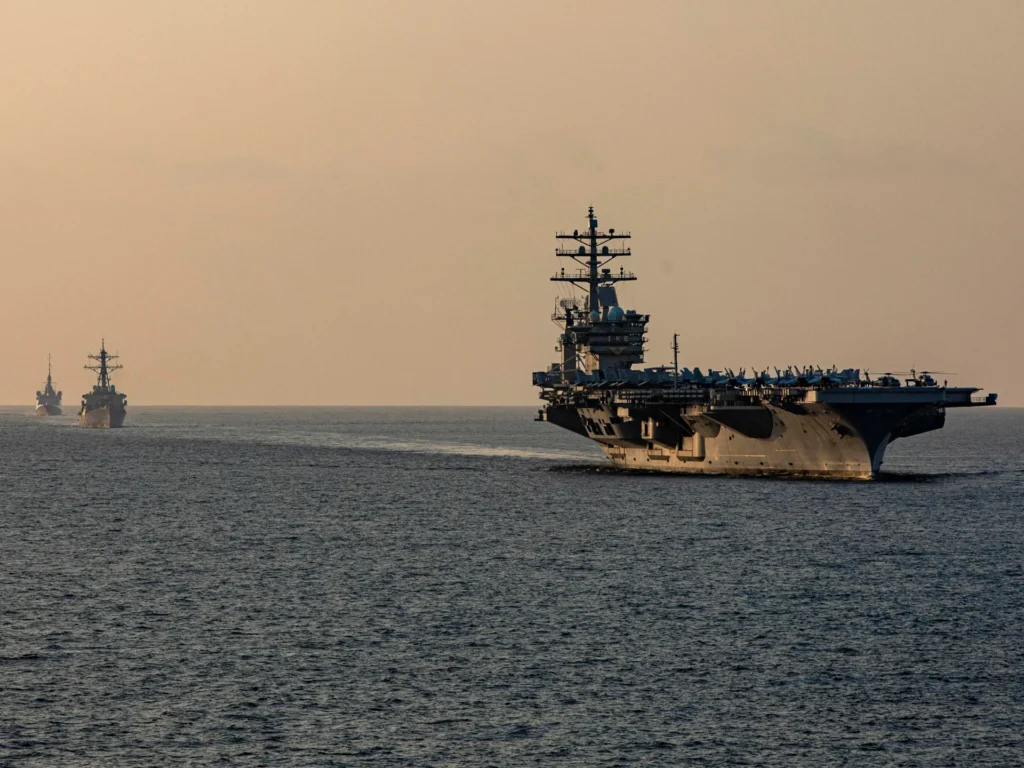
Asymmetric Weapons vs U.S Navy
Two, access and area denial is the order of the day. China-watchers tend to think of access denial as a Chinese thing, simply because we branded it that way long ago. But novel and inexpensive technology—autonomy and AI, along with more traditional weaponry such as missiles—has superempowered lesser combatants like Ukraine, Iran, or even the Houthi militants in Yemen. Unless and until navies devise effective countermeasures against swarming drones and missiles, shore-based defenders will hold the upper hand over fleets prowling offshore. Guarding against coastal combatants may involve fielding inexpensive interceptor missiles, counter-drone drones, or directed-energy weapons as they mature.
U.S Navy Access Denial Challenges
Bottom line: defense appears dominant in this brave new world of access denial. That’s a good and a bad thing from the United States’ vantage point. It’s a good thing because America is on the strategic defensive on the whole. It wants to preserve what is—the world order over which it presides. That remains true even as the White House clamors for allies, partners, and friends to assume a greater share of the burden of defense—taking their station as fellow keepers of the existing order. It’s good that weaker powers like Ukraine can defy baleful stronger powers like Russia. It’s likewise good that Taiwan or Japan can defy a domineering China with a reasonable prospect of success.
Status quo! is not an especially inspiring rallying cry. But it does accurately convey American and allied purposes. Gee-whiz technology helps. Weak Countries Can Fight Strong Ones Now—for Better and Worse That defense is dominant is a bad thing because it endangers America’s more offensively-minded strategic purposes, as set forth in directives like the National Security Strategy and National Defense Strategy.
The two documents set US regional priorities—putting the accent on managing events in the Western Hemisphere, then countering China, then supporting European defense, then managing events in the Middle East. (The rest of the world is etc.) To do all of that, the US armed forces need access to the offshore waters across much of the globe, including not just Eurasia but the Americas. They can no longer take that access for granted.
The greats foresaw this problem. Writing in the 1940s, geopolitics maven Nicholas Spykman made a simple yet incontestable point. If an ocean-spanning hegemon wants to project influence into the “rimlands” of Eurasia, especially Western Europe and East Asia, its navy has to be able to get to the rimlands by water. A hegemonic navy has to be able to wrest command of “marginal seas” ringing the Eurasian periphery, such as the South China Sea or Baltic Sea, from local contestants. If held at bay, its fleet remains too far from embattled seacoasts to radiate power inland more than intermittently.
Littoral Threats Defy U.S Navy
But what happens to a rimlands strategy in the age of drones and AI if the United States, the current hegemon, cannot command the marginal seas? Its influence shrivels. Worse still, what if Western Hemisphere powers set themselves against the United States? Coastal states—or potentially even narcotics cartels or terrorist groups—could field weaponry able to threaten the US Navy and joint force.
Think about it. Would US forces have been able to snatch Nicolás Maduro from his palace in Caracas this year had Venezuela possessed an anti-access arsenal comparable to Iran’s? Would US forces be able to dispatch drug-running boats in the Gulf of Mexico and Caribbean Sea or the Eastern Pacific if the cartels boasted an arsenal comparable to the Houthis’? Would Washington be able to levy unbearable pressure on Cuba if the communist regime fielded such an arsenal?
Maybe. But you can bet such audacity would be harder, more complex, and riskier. Ukraine’s assault on the Russian shadow fleet has given us much to think about—even in our own hemisphere.