
Saudi digital economy platforms unlock idle assets—cars, space, expertise—to boost utilization and entrepreneurship. This access model reduces capital needs, enhances trust via digital identity, and supports Vision 2030 diversification beyond oil.
For much of the 20th century, economic progress was synonymous with accumulation—building roads, factories, and housing stocks to expand productive capacity. Today, the Saudi digital economy is challenging this orthodoxy by revealing how latent value can be extracted from existing assets. Digital platforms are converting dormant cars, unused commercial space, and underutilized professional time into productive economic inputs, shifting the focus from new capital formation to the utilization rate of what is already owned.
The Saudi digital economy represents a structural move from an ownership-based model to an access-driven structure, where trust infrastructure, digital identity, and integrated payments lower transaction costs and broaden participation. For a rentier state pursuing Vision 2030, this reconfiguration offers a capital-light diversification pathway that complements large-scale industrial megaprojects.
It shifts the policy focus from gross fixed capital formation alone to the efficiency of asset allocation, allowing growth to be decoupled from resource intensity. This analytical shift has profound implications for how policymakers measure economic health, moving beyond GDP-additive metrics to capture enhanced asset productivity. In this context, idle capacity becomes a strategic reservoir of value, and the institutional enablers that facilitate peer-to-peer commerce act as productivity multipliers, reshaping the relationship between ownership, entrepreneurship, and national economic resilience.
Can Saudi Digital Economy Unlock Idle Wealth?
For decades, economic growth has largely been measured by the creation of new assets. Governments invested in infrastructure, businesses expanded production capacity and consumers accumulated ownership. Increasingly, however, the digital economy is challenging that model by asking a different question: how much economic value already exists but remains unused?
Saudi Arabia is beginning to answer that question through the rapid emergence of digital platforms that allow individuals and businesses to monetise underutilised assets, services and space. The shift reflects more than another wave of technology startups. It represents the development of an access economy, where digital infrastructure improves the productivity of existing resources while creating entirely new income opportunities.
For a country seeking to diversify its economy beyond hydrocarbons, this model offers an attractive proposition. Instead of relying solely on capital-intensive investment, economic growth can increasingly come from extracting greater value from assets that households and businesses already own.
How Platforms Turn Idle Capital Productive
Every economy contains significant amounts of dormant capital.
Vehicles spend much of their time parked. Equipment sits unused between projects. Commercial space remains vacant during off-peak periods. Professional expertise is often available beyond traditional working hours. Even household items represent untapped economic value.
Digital platforms are making these resources more visible and easier to exchange, transforming idle assets into productive ones.
The implications extend beyond individual income generation. Greater asset utilisation improves overall economic efficiency by reducing the need for duplicate investment while lowering barriers for consumers and small businesses seeking affordable access to goods and services.
Rather than encouraging continuous ownership, the model promotes shared access supported by technology, verification systems and digital payments.
Trust as economic infrastructure
Despite the commercial potential of peer-to-peer marketplaces, one obstacle has historically limited their expansion: trust.
Users need confidence that transactions will be secure, identities verified and agreements enforceable. Without that confidence, digital marketplaces struggle to scale beyond niche communities.
Saudi Arabia’s investment in digital government infrastructure is helping address this challenge.
National digital identity systems, integrated payment platforms and expanding digital public services are creating the institutional foundations that allow individuals to transact with greater confidence online. These systems reduce fraud, improve accountability and lower transaction costs, making platform-based commerce more attractive for both consumers and entrepreneurs.
In many respects, digital trust is becoming as important to modern commerce as physical infrastructure was to previous generations of economic development.
Supporting entrepreneurship without heavy capital investment
One of the most significant features of the access economy is its relatively low capital requirements.
Traditional businesses often require substantial upfront investment in property, inventory or equipment. Platform-based models, by contrast, allow entrepreneurs to generate income using assets they already possess.
This broadens participation in the economy, particularly among young entrepreneurs, freelancers and small businesses that may have limited access to financing.
The model also complements Saudi Arabia’s wider efforts to expand the SME sector, encourage innovation and increase private sector participation under Vision 2030.
As digital marketplaces mature, they can create new opportunities across sectors ranging from tourism and hospitality to logistics, professional services and consumer goods.
Sustainability through smarter utilisation
The access economy also aligns with broader sustainability objectives.
Making better use of existing assets reduces unnecessary production, extends product lifecycles and encourages more efficient resource allocation. Instead of manufacturing additional equipment or consumer goods, higher utilisation rates allow existing assets to serve more users over longer periods.
This approach supports circular economy principles that are becoming increasingly important across the GCC as governments seek to balance economic expansion with environmental objectives.
For policymakers, improved asset efficiency represents another pathway towards more sustainable economic growth without sacrificing productivity.
Digital platforms as economic multipliers
The success of platform businesses should not be measured solely by their own revenues.
Their broader contribution lies in enabling thousands of individuals and small enterprises to participate more actively in the economy.
Every successful transaction generates additional economic activity through payments, logistics, insurance, maintenance and complementary services. As these ecosystems expand, they create multiplier effects that extend well beyond the platforms themselves.
The result is a more dynamic digital economy where technology serves as an enabler of broader commercial participation rather than simply a marketplace.
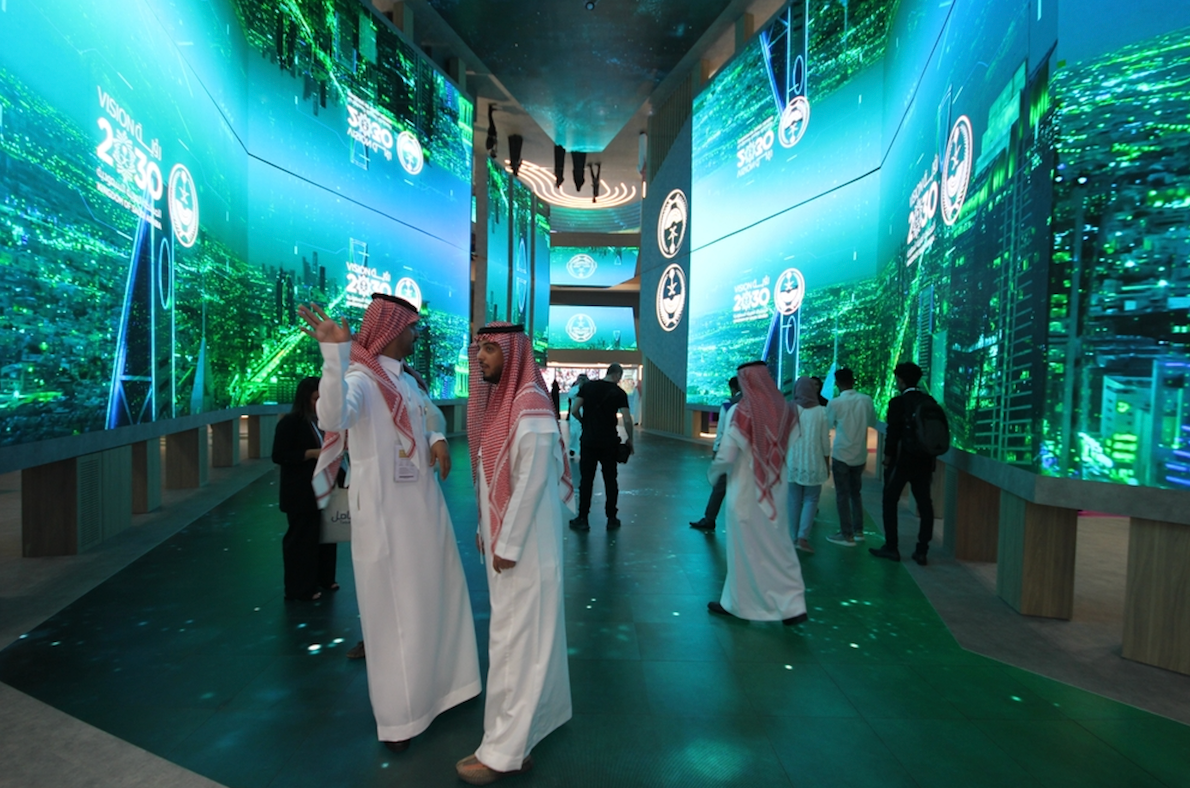
Saudi Digital Economy Redefines Diversification
Saudi Arabia’s economic transformation is often associated with megaprojects, industrial investment and infrastructure development. Those initiatives remain central to long-term diversification, but they represent only one side of the equation.
The emergence of the access economy illustrates a quieter but equally important shift: creating growth through better allocation of existing resources rather than solely through new investment.
As digital identity, fintech and platform technologies continue to evolve, the Kingdom has an opportunity to become a regional leader in trusted peer-to-peer commerce and digital marketplaces.
In that sense, the next phase of diversification may depend not only on building more assets, but also on ensuring that the assets already present in the economy work harder, generate more value and create broader opportunities for businesses and households alike.