
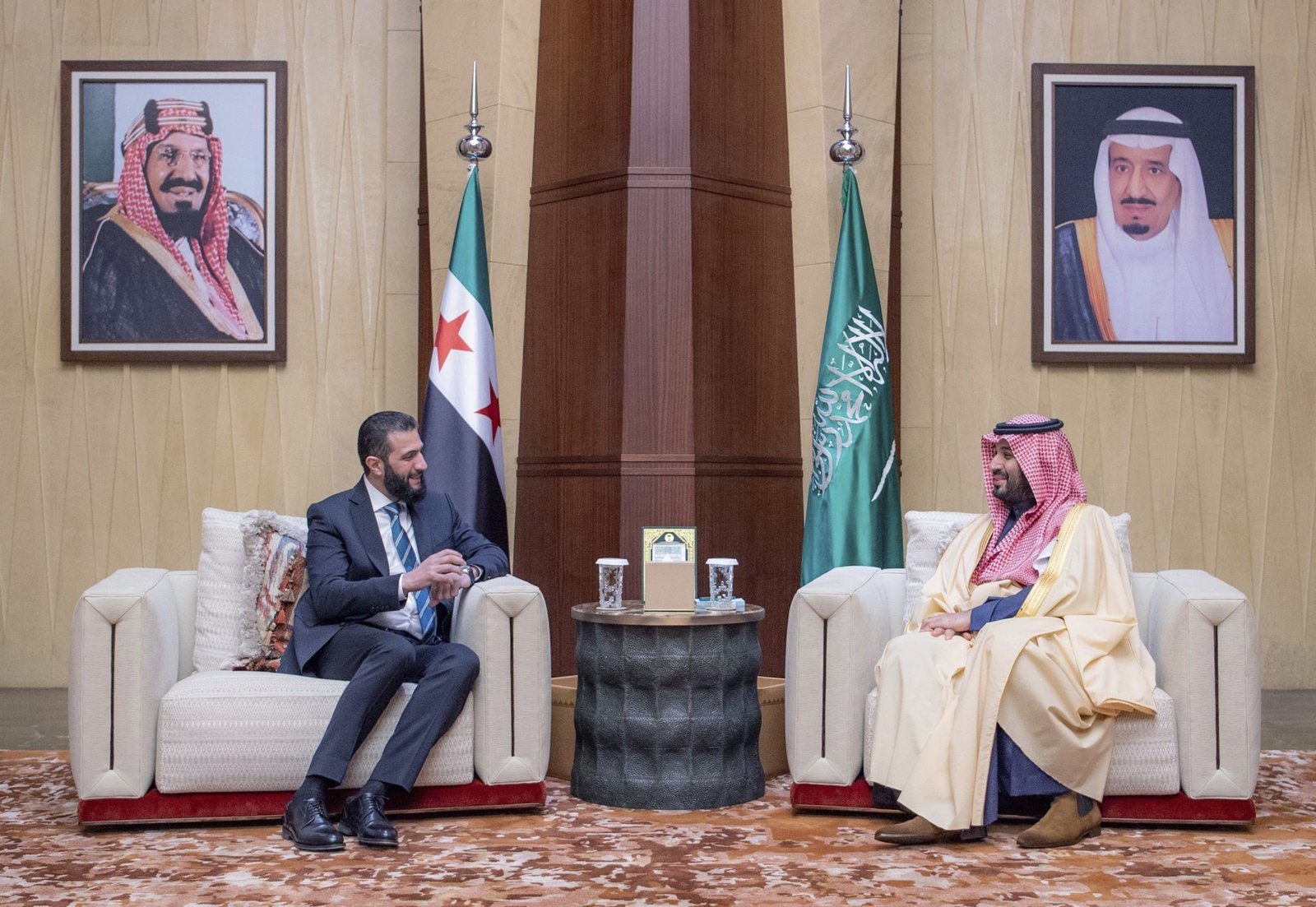
Washington’s removal of Syria from the state sponsors of terrorism list signals a strategic pivot, challenging Iran’s proxy model and advancing a Gulf-led vision of institutional recovery, economic integration, and regional connectivity.
The removal of Syria from the U.S. list of state sponsors of terrorism marks far more than a policy revision. It signals a fundamental recalibration of the Middle East’s strategic architecture, one where a Strong Syria emerges as a pillar of regional order rather than a battlefield for proxy wars. For over a decade, Syria’s fragmentation served as the operational theater for Iran’s militia networks, Russia’s power projection, and Turkey’s security doctrines.
Western indecision compounded the vacuum, leaving state institutions hollow and external influence unchecked. That era is now drawing to a close. The logic of permanent isolation has given way to a recognition that chronic weakness invites intervention, while institutional recovery can stabilize entire subregions. A Strong Syria challenges Iran’s long-cultivated model of influence-through-chaos, which relied on hollowed-out governments and non-state armed groups.
In its place, a competing vision takes shape: one driven by sovereign institutions, economic integration, and infrastructure connectivity linking the Gulf to the Mediterranean. This shift does not merely end Syria’s pariah status; it rewires the region’s geopolitical circuitry, making economic partnerships more decisive than militia capacities. The path forward is uncertain, but the premise is clear. The Middle East is rediscovering that durable political order flows from capable states, not from the absence of them. For the first time in a generation, Syria’s future will be measured not by its capacity to project conflict, but by its ability to attract investment and anchor connectivity.
Why a Strong Syria Changes Everything
There are moments in international politics when a legal or administrative decision reveals a much deeper geopolitical transformation. Washington’s recent decision to remove Syria from its list of state sponsors of terrorism represents one such moment. This move is not merely the reversal of a decades-old designation; it reflects a growing recognition that many of the assumptions underpinning Western policy toward Syria have begun to collapse.
For more than a decade, from mid-2011 until the fall from power of Bashar al-Assad in 2024, Syria ceased to function as a fully sovereign actor and instead became the epicenter of competing regional and international projects. Iran viewed the country as an indispensable bridge connecting Tehran to the Mediterranean. Russia saw it as a strategic gateway to the Middle East. Turkey treated northern Syria as a vital security buffer. Israel regarded the fragmentation of the Syrian state as an opportunity to reshape its immediate security environment, consolidating control over the Golan Heights and strengthening ties with the Syrian Druze. Meanwhile, Western powers oscillated between sanctions, isolation, and limited engagement without articulating a coherent political endgame.
Amid these pressures, Syria’s institutions weakened: external actors accumulated influence within the country, while the central state steadily lost its capacity to govern. Today, that trend is beginning to reverse.
The Limits of Isolation
Removing Syria from the terrorism list—the latest step undertaken by the Trump administration in bringing the country in from the cold, following widespread sanctions relief in early 2025 and the repeal of the Caesar Act later that year—is far more than a mere clerical step. It eliminates one of the most significant structural barriers preventing the country from reconnecting with the international financial system.
For years, sanctions and terrorism-related restrictions subjected Syria to near-total financial quarantine. International banks avoided Syrian transactions, investors remained reluctant to enter the market regardless of potential opportunities, and multilateral development institutions were effectively prevented from operating in the country. The consequences were predictable: the collapse of formal economic institutions strengthened informal markets, empowered armed networks operating outside of traditional banking channels, encouraged illicit drug trafficking, and deepened Syria’s dependence on foreign actors. Syria’s isolation effectively institutionalized regional instability.
Washington now appears to recognize that permanent economic isolation rarely produces political moderation, a conclusion many regional governments have reached in recent years. Far more often, isolation weakens governance, expands the influence of non-state actors, and creates opportunities for rival powers to consolidate their presence.
Iran Wanted Chaos in Syria
Perhaps the most consequential implication of Syria’s reintegration concerns Iran. Although Iran maintained close ties to the Assad regime, it benefited less from a strong ally in Damascus than from the chaos Syria radiated across the region. Iran’s regional doctrine has flourished where national institutions have weakened: in Iraq after 2003, in Lebanon through Hezbollah, in Yemen through the Houthis, and in Syria during the civil war.
Iranian strategic depth was never built primarily through conventional military alliances. Although Tehran accepted those where it could find them, a far more useful condition was an institutional vacuum, in which non-state actors with access to Iranian weapons, funds, and Quds Force overseers could flourish.
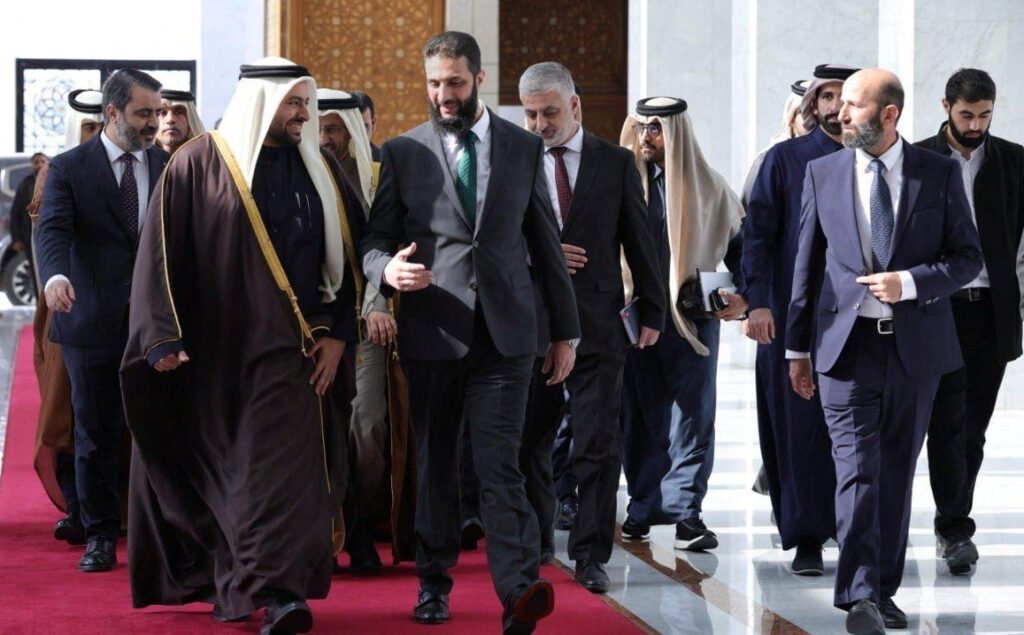
Syria’s return to Arab diplomacy, gradual though it may be, represents far more than symbolic normalization; it directly challenges the geopolitical architecture that Iran spent decades constructing. A Syria integrated into Arab economic networks, Gulf investment frameworks, and regional infrastructure projects will become far less dependent on external military patrons. Such a transition could fundamentally alter the balance of influence within the country. For the first time in years, influence in Syria may increasingly be determined not by militia capabilities but by economic partnerships, reconstruction financing, technological cooperation, and regional connectivity.

The Gulf’s Alternative Vision
The Gulf states’ positive response to Washington’s decision reflects a broader transformation across the Arab world. Unlike in previous decades, contemporary Gulf strategy is primarily focused on regional stability, economic development, and state resilience rather than ideological competition.
This shift is often misunderstood. The Gulf states are not necessarily seeking to replace one sphere of influence with another. Rather, they are advancing a fundamentally different model of regional order. Iran’s approach has relied heavily on proxy networks, armed groups, and revolutionary expansion. By contrast, the Gulf states increasingly emphasize sovereign institutions, economic integration, infrastructure development, investment, and state capacity.
These are not merely different sets of policy instruments; they represent competing visions for the future of the Middle East. One model perpetuates confrontation. The other seeks to make stability economically valuable and politically sustainable. This distinction is likely to shape regional politics throughout the coming decade.
Israel’s Strategic Dilemma
Israel also faces a changing strategic environment. For years, Syrian weakness provided Israel with tactical military advantages. Fragmented sovereignty enabled repeated operations inside Syrian territory with comparatively limited political costs. Indeed, at the end of 2024, Syria was powerless to respond when Israel launched a massive bombing campaign against Syrian armories and arsenals, effectively flattening what remained of Assad’s weapons stockpiles before the new government could take possession of them.
However, even Israel may come to see the value of a strong Syrian state. History suggests that chronically weak neighboring states rarely generate lasting security. As state institutions collapse, other armed and political actors inevitably move to expand their influence. Paradoxically, the long-term security interests of the region, including those of Israel, may ultimately depend less on Syria’s weakness than on its institutional recovery. Stable states tend to produce more predictable behavior than fragmented ones.
A Peaceful Syria Will Stabilize the Middle East
The emerging regional order is increasingly being shaped not only by military alliances but also by economic corridors and infrastructure networks. The Gulf possesses significant investment capital. Turkey offers industrial capacity and logistical infrastructure. Syria occupies one of the region’s most strategically valuable geographic positions, connecting the Gulf, the Levant, and the Mediterranean.
If political stabilization continues, Syria could evolve from one of the world’s principal geopolitical fault lines into one of the Middle East’s most valuable connectivity hubs. Railways, energy corridors, and trade routes could become increasingly central to Syria’s regional role, replacing conflict as the country’s primary strategic significance. Such developments would represent a profound transformation in how power is exercised across the region.
The broader lesson extends well beyond Syria. The post-2011 Middle East witnessed the rise of non-state actors as major geopolitical forces. Militias, proxy networks, transnational ideological movements, and fragmented sovereignty became defining features of regional politics.
That era may now be approaching its end. Though armed groups continue to operate in pockets of the Middle East, these pockets are shrinking. Over time, the region is rediscovering an enduring geopolitical reality: the state remains the only durable organizer of political order.
A Strong Syria Must Prove Itself
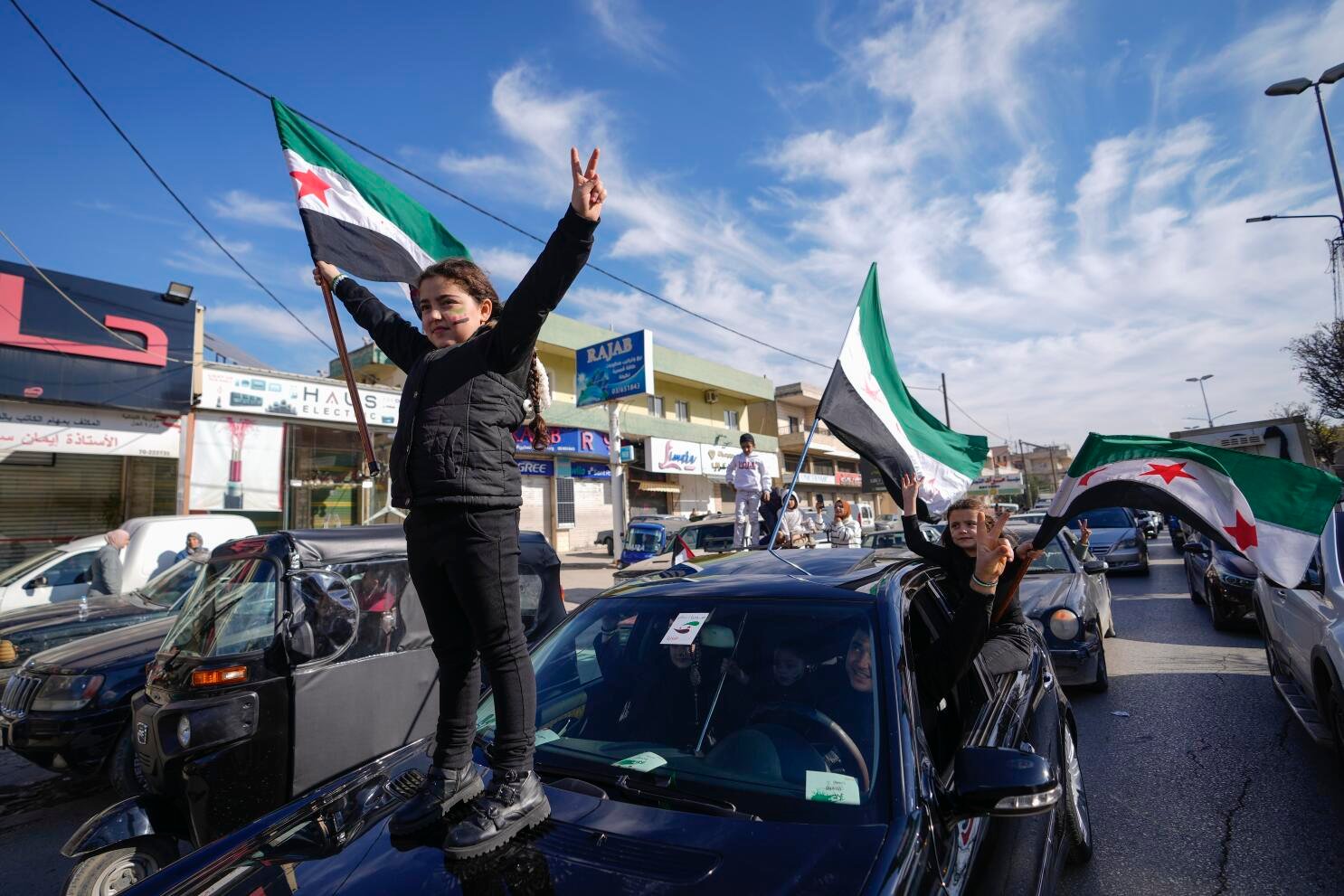
Removing Syria from Washington’s terrorism list does not guarantee a successful transition, but it does create an opportunity. The decisive question is no longer whether Syria can rejoin the international community as a member in good standing, but whether Damascus is prepared to function as a normal, sovereign, and accountable state within its own borders again. Doing so will require rebuilding institutions, attracting productive investment, strengthening national sovereignty, and emphasizing political legitimacy through effective governance and transparency.
Syria’s next chapter matters far beyond Damascus. The Middle East is entering a new strategic phase in which geography may once again become an asset rather than a source of conflict. The real significance of Washington’s decision, therefore, is not that it ends Syria’s isolation, but that it acknowledges a broader regional reality that the Middle East’s future will be shaped by states capable of generating stability and prosperity. After a decade of chaos, Syria now has a pathway to order. It must not waste it.