
Maritime closures and member exits revealed severe infrastructure disparities across Middle Eastern oil exporters. Diverging national priorities, rising American production, and quota disputes now threaten long-term collective market control.
The severe geopolitical shock triggered by recent regional warfare has exposed deep structural fissures within the international energy architecture, calling into question the long-term viability of coordinated production controls. For decades, sovereign export quotas relied on shared economic incentives and uniform exposure to logistical choke points. However, asymmetric infrastructure investments, unilateral diplomatic exits, and severe maritime blockades have shattered this foundational cohesion.
As key Gulf producers establish independent bypass corridors around vulnerable supply routes, the central thesis underpinning the OPEC Future faces an existential challenge. When sovereign nations achieve distinct levels of export security, the incentive to maintain collective output restrictions diminishes rapidly, replaced by zero-sum competition for global market share. Additionally, the rapid expansion of non-cartel supplies has permanently eroded traditional market management mechanics. Strategic bargaining now operates against a backdrop of divergence, where national fiscal preservation overrides collective discipline. Consequently, any analysis regarding the OPEC Future must center on the widening divide between individual sovereign autonomy and centralized supply coordination, as internal political compromises reach their operational limits.
OPEC Future Tested by Hormuz Closure
Something more consequential than another oil market disruption is underway. The Iran war has exposed and accelerated an institutional weakness within OPEC that had been building for years. The closure of the Strait of Hormuz, the UAE’s departure, Iraq’s brief flirtation with exit, and the continued rise of U.S. oil production all point to a deeper question about the cartel’s durability. The issue has shifted from OPEC’s ability to manage crises toward whether its model of collective discipline can withstand mounting structural strain.
OPEC’s influence rests on a straightforward bargain. A relatively small group of producers with low production costs, abundant reserves, and substantial spare capacity collectively restrain output in exchange for higher prices than competitive markets would otherwise sustain. Membership carries costs through quota discipline and constraints on national autonomy, although those costs have historically been outweighed by the gains from coordination.
The Iran war has exposed new strains within that bargain. Oil production in Kuwait, Iraq, Saudi Arabia, and the UAE fell by more than 10 million barrels per day after the closure of the Strait of Hormuz stranded exports that could not be rerouted. OPEC+ has announced higher production targets, while Saudi Arabia’s quota has exceeded 10 million barrels per day, compared with actual production near 7.8 million. The episode highlights a basic operational reality: spare capacity holds limited value when export routes are inaccessible.
Export Asymmetry Threatens OPEC Future
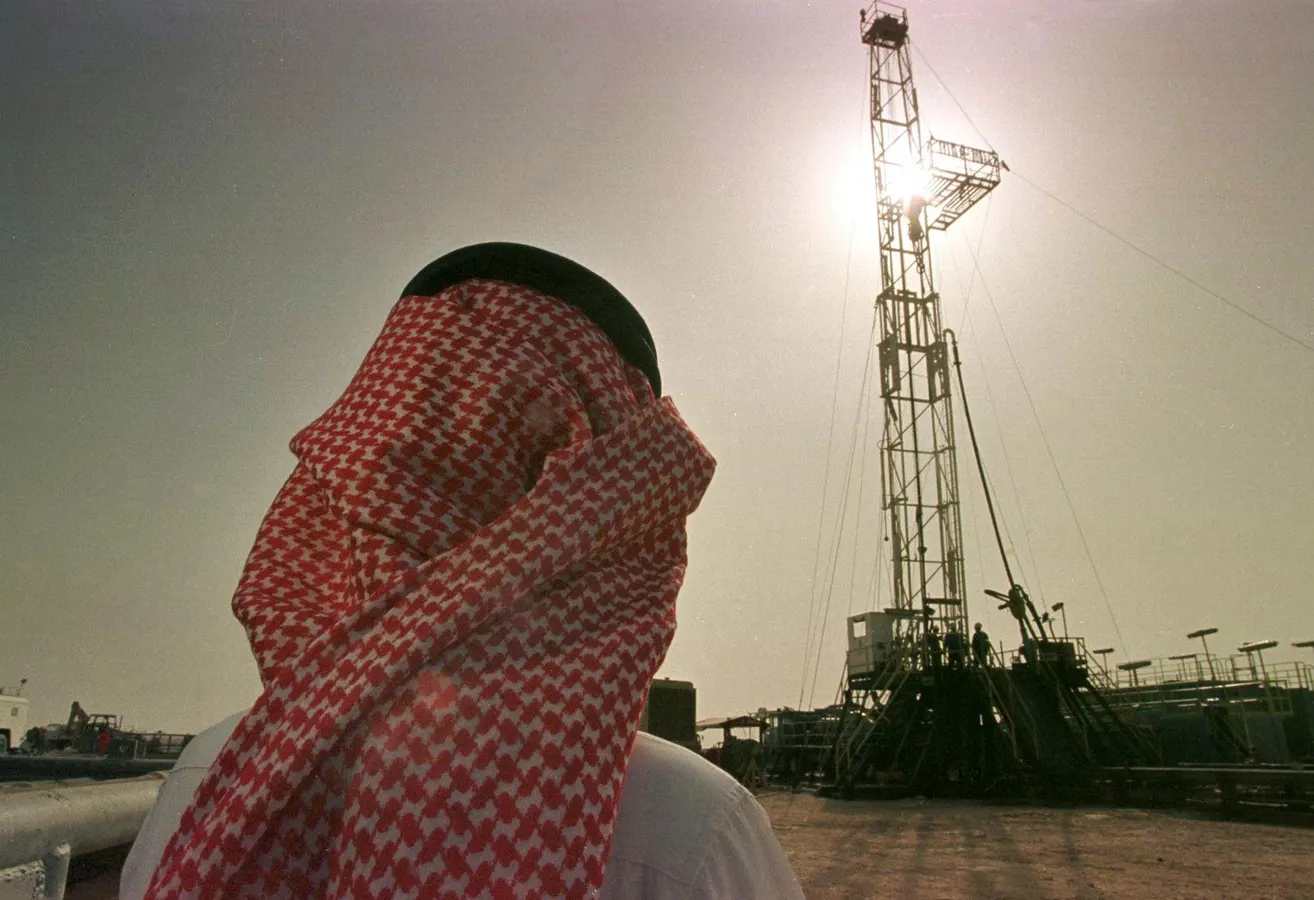
A more durable consequence has emerged from uneven resilience across members. Saudi Arabia and the UAE had invested in export infrastructure that bypasses Hormuz, allowing continued access to global markets while other producers face sustained disruption. The result is a widening divide between members able to sustain exports and those whose exports remain disrupted. That divergence reflects long-term differences in strategic preparation and proves difficult to reverse.
The UAE’s withdrawal carried significance beyond the loss of another OPEC member. It signaled how investment in export infrastructure, diversified revenue sources, and greater production flexibility had reduced the value of collective restraint for one of the cartel’s most capable producers.
Why UAE Exit Signals a Changing OPEC Future
Ambassador Yousef Al Otaiba’s Financial Times essay framed the decision within a broader economic strategy rather than short-term market considerations. Abu Dhabi increasingly positions itself as a reliable supplier with direct access to global markets, a trajectory reflecting years of intentional investment. The UAE produced roughly 3.4 million barrels per day in 2025 while maintaining a production capacity of nearly 4.2 million barrels per day, much of which remained constrained under quota arrangements. Planned expansion of pipeline capacity to Fujairah reinforces this direction. Infrastructure investment and reduced dependence on OPEC reflect the same strategic logic: expanded market access lowers the value of collective restraint.
Abu Dhabi’s departure also reflects shifting geopolitical dynamics within the Gulf. Saudi Arabia and the UAE have increasingly diverged in their approaches to regional conflicts, most notably in Sudan and Yemen. The Iran war has sharpened those differences as Abu Dhabi has coordinated closely with Israel in responding to Iranian attacks. The erosion of Saudi–Emirati alignment extends beyond OPEC and reinforces broader shifts in Gulf politics. Earlier exits by Qatar in 2019, Ecuador in 2020, and Angola in 2024 carried far less geopolitical weight than the UAE’s departure, given the difference in production scale and influence.
Iraq’s Demands Redefine OPEC Future
More revealing than Iraq’s threat to withdraw from OPEC was the speed of its reversal. Reuters reported that Iraqi officials considered leaving OPEC unless Baghdad received a significantly higher production quota, arguing that the fiscal consequences of the Iran war required a reassessment of allocation. The announcement briefly pushed oil prices lower before Iraq reversed course within roughly 48 hours. Government officials reaffirmed Iraq’s commitment to OPEC, while the organization launched a review of member production capacity and gradually restored Iraq’s voluntary production cuts. The episode demonstrates OPEC’s institutional flexibility, as it has absorbed dissent through procedural adjustment and bargaining.
At the same time, Iraq’s position carried an internal contradiction. Baghdad had repeatedly exceeded its assigned quota before the war while arguing that its formal ceiling no longer reflected production realities. Members could reasonably interpret its demand as an effort to align formal quotas with historical overproduction. Iraq therefore entered negotiations while balancing fiscal pressure against an uneven compliance record.
What ultimately mattered was OPEC’s capacity to convert confrontation into process. Iraq secured recognition of its grievances, a technical review of production capacity, and the prospect of higher future baselines. The episode underscored OPEC’s role as a political institution that manages competing national interests through negotiated production limits, with quotas providing the formal mechanism and political accommodation sustaining the system.
How Post-Conflict Pressures Reshape OPEC Future
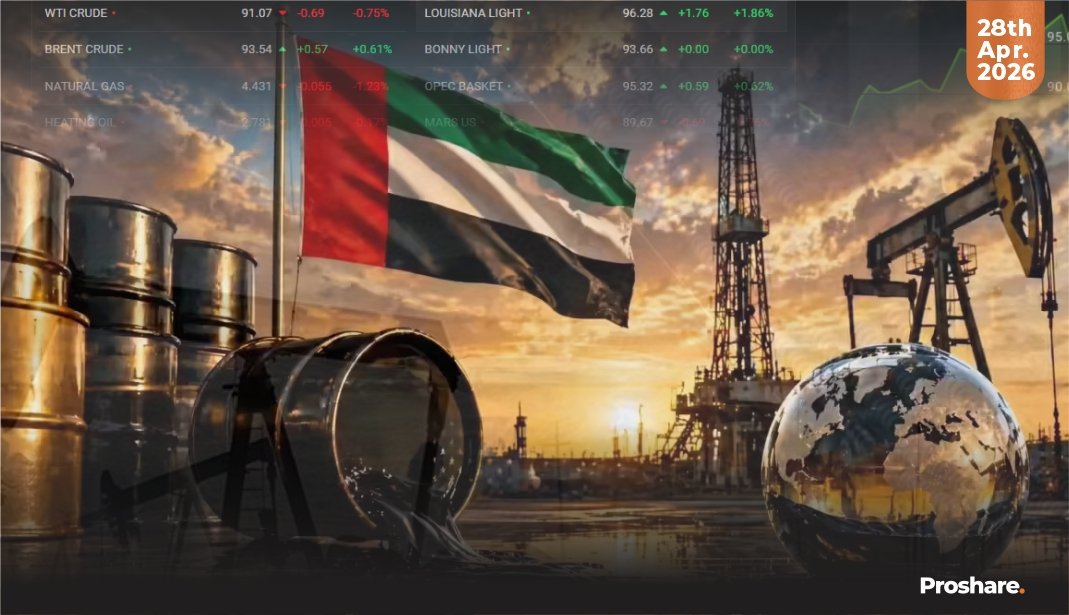
The greatest test of cartel cohesion will arrive once the crisis cycle finally ends. While the Strait of Hormuz has remained closed, OPEC has exercised limited influence over supply disruptions shaped by external forces. Once the Strait reopens, pressure will shift back onto the organization itself. Producers facing fiscal strain will increase their efforts to maximize exports, while buyers rebuilding inventories will reward rapid supply. Those incentives place quota discipline under heightened stress.
Saudi Arabia faces a particularly delicate adjustment. During the crisis, it has continued exporting through the East–West Pipeline while Iraq and Kuwait have remained largely trapped behind Hormuz. Riyadh therefore benefits from investments that many partners have not made. That asymmetry will complicate future restraint, as members that bear greater losses press stronger claims for market share recovery. Viewed in this context, Iraq’s negotiated accommodation reflects a broader political compromise in which cohesion required recognition of uneven crisis costs.
OPEC Future Shifted by American Shale
The Iran war has also accelerated a longer-term structural shift in global oil markets. During the conflict, the United States has effectively performed the role traditionally associated with OPEC’s swing producer. That development has reshaped price dynamics, as an increasing share of flexible global supply now sits outside OPEC’s coordination framework.
This trend has developed over more than a decade. U.S. shale production reshaped global competition after 2014 and matured into a responsive production base capable of rapid expansion during price increases. OPEC’s share of global production has declined from its historical peak, reducing its influence through supply restraint. The balance of flexibility has shifted beyond the cartel’s reach.
Iraq’s retreat reveals both the strengths and limits of OPEC’s institutional model. The organization continues to manage acute political stress through negotiation, procedural flexibility, and calibrated concessions, and the Iraq episode demonstrated the durability of these tools. OPEC absorbed a credible withdrawal threat from one of its largest producers while maintaining its institutional framework.
Can Core Autonomy Destroy OPEC Future
At the same time, the episode established a precedent that other members will closely observe. In generating procedural concessions through credible threats, Iraq has expanded the incentives for testing the system. As fiscal pressure intensifies, production ambitions rise, and export infrastructure reduces dependence on coordination, bargaining becomes a more constrained institutional resource.
A future contest over market share involving Saudi Arabia, the UAE, and potentially Iraq has also become more plausible. Iran’s role will depend heavily on how quickly it recovers once the conflict subsides. The defining feature of this emerging phase lies in the concentration of pressure within OPEC’s core producers rather than its periphery. These states possess reserves, infrastructure, and strategic autonomy that enable more independent production strategies than earlier members.
The Iran war therefore has not pushed OPEC toward collapse. It has revealed a slower structural transformation already underway and clarified the forces shaping the cartel’s trajectory. The emerging constraint on OPEC lies in the widening gap between national autonomy and collective coordination. That gap is likely to define the organization’s evolution in the period ahead.