
Islamabad’s mediation role stems from a “doctrine of studied neutrality” and the successful personal ingratiation of military leadership with the White House. By managing domestic Shia unrest while securing Washington’s trust, Pakistan has bypassed regional rivals to become the central convening power for global energy and security stabilization.
Pakistan has spent the last year or so carefully building Washington’s confidence while maintaining a functional relationship with Tehran.
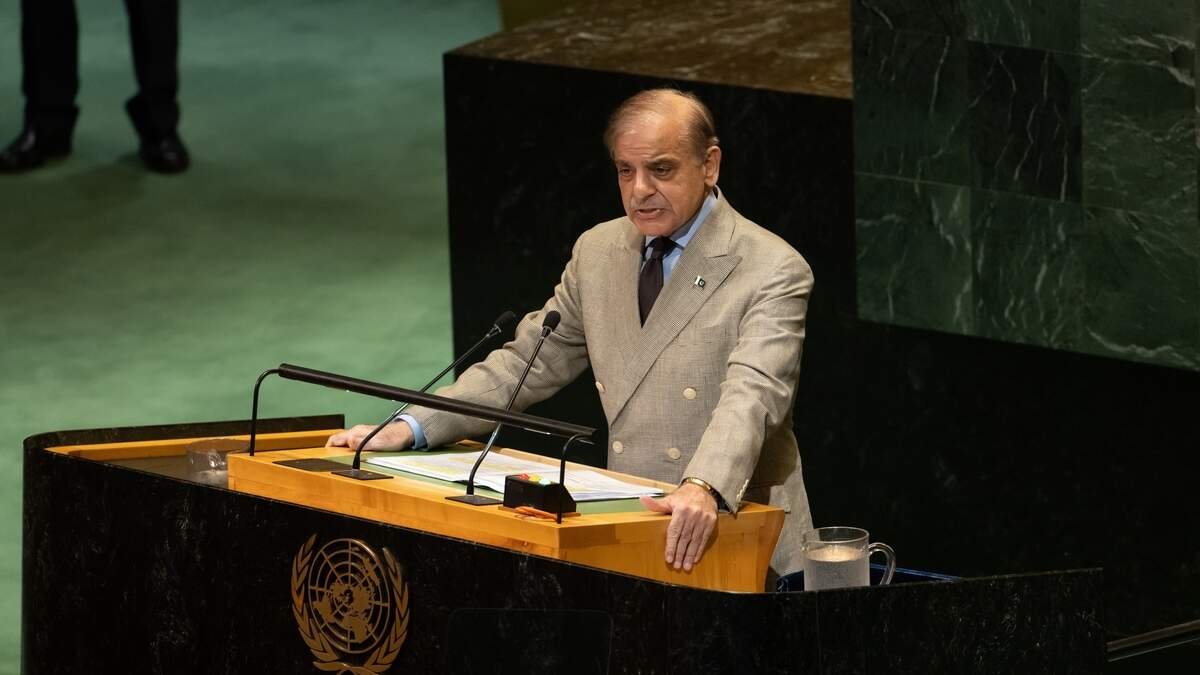
On April 7, Pakistani Prime Minister Shehbaz Sharif announced that a ceasefire between the United States and Iran had been reached. “Both parties have displayed remarkable wisdom and understanding,” he posted on X, extending an invitation to both delegations to convene in Islamabad the following weekend.
Pakistan did not stumble into this mediation role. It arrived here through a combination of geographic necessity, deliberate positioning, and diplomatic restraint. What follows is the story of how Islamabad became the only broker that Washington and Tehran could both trust, and what it stands to gain from the moment it spent years preparing for.
Iran and Pakistan’s Close Proximity
Pakistan’s foreign policy toward Iran has never been fully voluntary. It is shaped and constrained by their proximity. The two countries share a 900-kilometer (565-mile) border. For Pakistan, Iran is a transit corridor, an energy supplier, and a potential source of instability that arrives most acutely in Balochistan, where cross-border militancy has long tested the bilateral relationship. That geographic reality has conditioned Islamabad’s doctrine of studied neutrality toward Tehran, which predates the current government and will certainly outlast it.
The clearest historical expression of that doctrine came during the Iran-Iraq War of the 1980s, one of the most destructive conflicts of the 20th century. Despite intense pressure—from Washington, which was tacitly backing Baghdad, and some Arab states financing Saddam Hussein’s war machine—Pakistan refused to take sides. President Muhammad Zia-ul-Haq maintained official neutrality throughout, preserving functional relations with Tehran even as much of the Sunni world tilted towards Iraq.
Iran’s Islamic Revolution of 1979 had already demonstrated that instability across that border does not stay there. Pakistan, with no buffer and a significant Shia population of its own, had to learn that lesson early.
That calculation has only grown more urgent since Pakistan watched India deepen its ties with Iran through the Chabahar port project—a deliberate effort to build an alternative trade corridor to Central Asia that bypasses Pakistan. It watched Tehran become a variable in Afghan politics, Baloch militancy, and sectarian tensions within Pakistan itself.
In 2024, both countries launched limited strikes across the border against militant positions, triggering a brief diplomatic rupture that neither side could afford to sustain. Fences mended quickly. Each episode reinforced the same conclusion: for Pakistan, managing the relationship with Iran is not just a foreign policy choice but a structural imperative.
When Ayatollah Ali Khamenei was killed in US-Israeli strikes on February 28, 2026, the reaction in Pakistan was immediate and visceral. Protests erupted in Karachi, Lahore, Islamabad, and Peshawar, led largely by members of Pakistan’s Shia Muslim community, which accounts for roughly 15 to 20 percent of the population. In Karachi, hundreds of protesters charged the US consulate, breaching the outer gate before security forces intervened. At least 20 people were killed nationwide.
The government condemned the strikes while simultaneously urging calm. Islamabad could not be seen as Washington’s instrument in a war that had just killed a figure its own citizens mourned as a spiritual leader. Still, it could not afford to rupture its relationship with Washington. That tension, managed carefully over the weeks that followed, became the foundation of Pakistan’s credibility as a mediator. A country that had to balance domestic grief with a functioning relationship in Washington was, by definition, a country neither side could dismiss as captured by the other. The absence of viable alternatives further reinforced that credibility.
Russia, preoccupied with its war in Ukraine, was in no position to take on a mediation role. China, despite its economic leverage over Tehran, was too closely aligned with Iranian interests to be trusted by Washington as an honest broker. The Gulf states, whose infrastructure had been struck and whose economies were also hit by the Strait of Hormuz closure, were effectively combatants. Turkey had credibility from the Gaza negotiations and had been in contact with both sides, but lacked the direct access to Washington that Pakistan had built since President Donald Trump returned to office in January 2025.
Pakistan was also Iran’s preference. Diplomatic sources confirmed as much. Tehran calculated that Islamabad’s geographic exposure and domestic constraints made it structurally incapable of serving as Washington’s instrument. That calculation was one-half of the equation. The other half was Washington itself.
Pakistan’s Cultivation of Donald Trump
If geography explains why Iran accepted Pakistan as a mediator, the Trump relationship explains why the United States did so, and that relationship is a new one.
When Trump returned to the White House in January 2025, Pakistan moved quickly. Prime Minister Sharif was among the first to accept Trump’s invitation to join the Board of Peace, a controversial framework for regional stabilization, signaling an early and visible alignment with Washington at a time when many Western governments were still hesitant.
Earlier, in May 2025, following a brief military exchange between India and Pakistan that ended in a ceasefire, Trump publicly claimed credit for brokering the ceasefire, and Islamabad nominated him for the Nobel Peace Prize. The gesture drew ridicule in Western capitals. Still, the nomination sent a signal to Washington: that Islamabad was willing to do whatever it took to ingratiate itself with the administration.
The more consequential relationship, however, was the one between President Trump and Army Chief Field Marshal Asim Munir. In meetings throughout 2025, Trump praised Munir with striking enthusiasm: “a great fighter,” “a very important guy,” “an exceptional human being.” The White House also hosted Munir for a state visit, a gesture that underscored the personal rapport between the two men. Trump said publicly that Pakistan “knows Iran very well, better than most.” Consequently, when Islamabad offered its mediation services to end the Iran War, it was received by a president who already trusted the messenger.
The behind-the-scenes architecture of the ceasefire reflected this dynamic. According to Reuters, Munir was in contact “all night long” with Vice President JD Vance, Special Envoy Steve Witkoff, and Iranian Foreign Minister Abbas Araghchi as the deal took shape on April 6.
What the US and Iran Want and What Pakistan Needs
The gap between Washington’s stated objectives and Tehran’s formal demands is vast. Trump has insisted that Iran’s nuclear stockpile would be “taken care of” in any final agreement, while Tehran’s 10-point framework explicitly calls for recognition of its enrichment program. Iran wants US forces withdrawn from regional bases, all sanctions lifted, frozen assets released, and compensation for war damages. Washington has not publicly acknowledged most of these demands, and Trump told Sky News that the points Iran has “formally leaked” differ from those actually under negotiation.
Bridging that gap requires a mediator willing to absorb the political costs of telling each side what the other will not say publicly. That is where Pakistan’s own exposure becomes relevant.
Pakistan has a direct stake in the outcome. The Strait of Hormuz closure created an oil price shock. Pakistan imports the overwhelming majority of its energy, and a sustained disruption to Hormuz transit means supply shortages and import bill explosions that a country managing persistent macroeconomic fragility can ill afford.
That skin-in-the-game quality is, counterintuitively, what makes Pakistan credible to both sides. Islamabad is not a disinterested party serving as a neutral host. It has visible incentives to see a deal, and those incentives are known to Washington and Tehran alike. A mediator with nothing at stake has no leverage.
Why Pakistan Has Little to Lose from US-Iran Negotiations
It is worth observing that Pakistan has already won something significant, regardless of what happens in Islamabad this weekend.
For years, India has pursued a diplomatic strategy of marginalizing Pakistan: isolating it on the question of cross-border terrorism, keeping it off multilateral platforms, and framing it as a destabilizing actor rather than a responsible state. That strategy had achieved partial success. Pakistan was often on the defensive in international forums, managing perceptions rather than shaping agendas.
The mediation has inverted that dynamic. Pakistan is now the convening power in a negotiation between the world’s largest economy and one of the Middle East’s most consequential states. The optics of hosting the talks—whatever their outcome—places Pakistan on the map of serious diplomatic actors in a way that no communiqué or bilateral summit could have achieved.
If the talks collapse under the weight of the two parties’ differences, Pakistan still walks away with enhanced credibility and stronger relationships with both Washington and Tehran. If the talks succeed and Islamabad can broker a durable framework between the two parties, who have been in open conflict for months, the diplomatic dividend would be significant. It would rank among the most consequential conflict mediations by a South Asian state in recent memory. It would meaningfully strengthen Pakistan’s international standing at a moment when Islamabad has actively sought to rehabilitate it.
Pakistan arrived at this role because the alternatives had been exhausted and because its positioning made it the only broker both sides could agree to work with. When both Washington and Tehran answered Islamabad’s call, it was proof that Pakistan’s patient diplomacy had found its moment.