
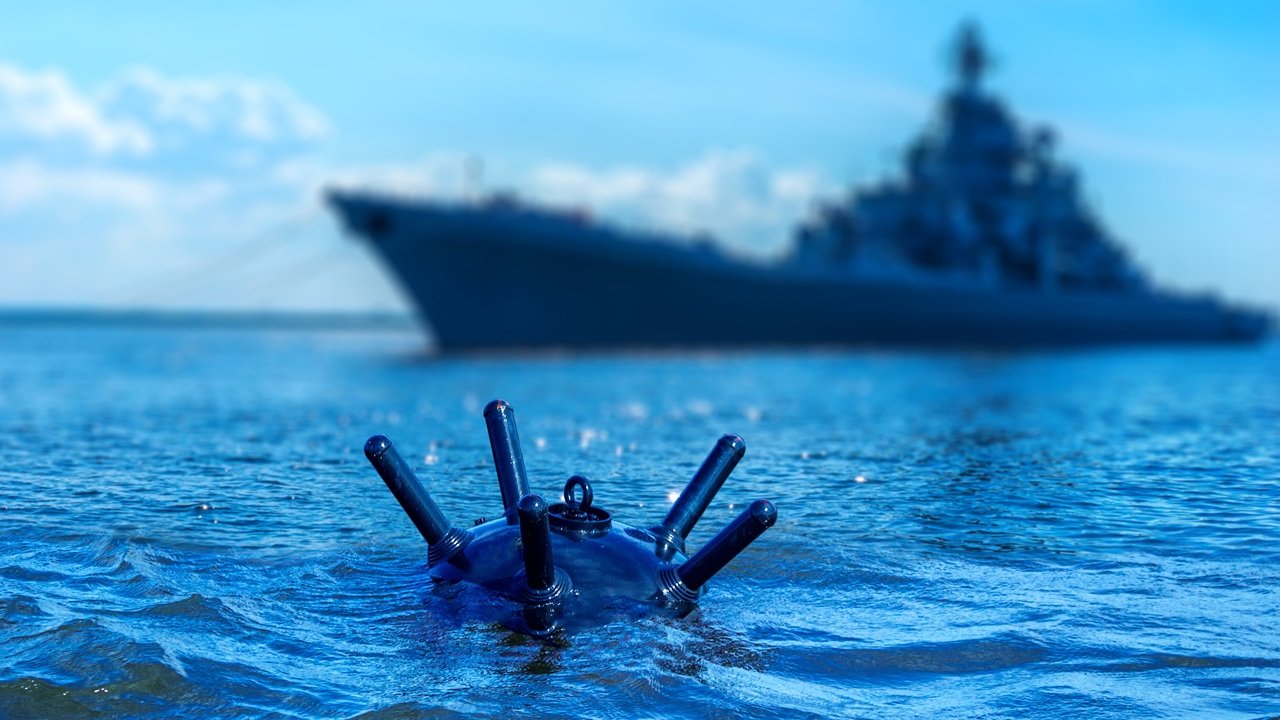
CENTCOM initiates unmanned mine countermeasure operations to establish safe transit corridors following extensive IRGC minelaying. The enduring threat of unlocated bottom and moored mines complicates full commercial reopening, requiring sustained clearance efforts beyond surface vessel presence.
The prevalence of naval mines in the Strait of Hormuz is a disaster for efforts to reopen the waterway—and the US Navy has reportedly launched new efforts to clean them up.
The US Navy is ready to deploy underwater unmanned systems to clear Iranian naval mines from the Strait of Hormuz.
Iranian naval mines have contributed to the closure of the important waterway, contributing to the surge of energy prices around the world.
The US Navy Is Preparing to Sweep the Strait of Hormuz
The Navy is reportedly deploying underwater unmanned systems to help clear one of the world’s most important waterways. However, US Central Command (CENTCOM) did not specify which drones it is using in the minesweeping operation.
Iran closed the Strait of Hormuz in the opening days of the war, attacking several ships that tried to run the gauntlet and escape from the Persian Gulf into the Indian Ocean or Red Sea.
Iran’s Islamic Revolutionary Guards Corps (IRGC) has been the main force behind minelaying in the Strait of Hormuz and the Gulf.
The White House has repeatedly claimed that the Iranian naval capability has been destroyed. US aircraft and warships have sunk dozens of Iranian vessels, including the Iranian frigate IRIS Dena in the Indian Ocean off the coast of Sri Lanka, after it was torpedoed by a US fast attack submarine. But the Iranians relied on small craft to lay mines in the key waterway, some of which they cannot locate as peace negotiations between Tehran and the White House continue.
“Today, we began the process of establishing a new passage and we will share this safe pathway with the maritime industry soon to encourage the free flow of commerce,” Navy Admiral Brad Cooper, the commander of CENTCOM, said in a CENTCOM press release.
In the past few days, at least two Navy warships passed through the Strait of Hormuz and operated in the Gulf. The USS Frank E. Peterson and USS Michael Murphy Arleigh Burke-class guided-missile destroyers sailed through the strait as part of the Navy’s mission to ensure that the waterway is fully clear of sea mines.
“The Strait of Hormuz is an international sea passage and an essential trade corridor that supports regional and global economic prosperity. Additional US forces, including underwater drones, will join the clearance effort in the coming days,” CENTCOM wrote.
Approximately 20 percent of the world’s oil and liquefied natural gas passes through the Strait of Hormuz on a daily basis.
Naval Mine-Clearing Operations
Ever since naval mines became a viable weapon system, navies have used them for both offensive and defensive purposes. And naval mines have been quite effective in the approximately 120 years they have been a viable option. During both world wars, naval mines sank many thousands of tons of shipping, including battleships, battlecruisers, submarines, cruisers, destroyers, support ships, and transport vessels.
In one of the most famous examples of sea mines at work, the HMHS Britannic, one of the Titanic’s two sister ships, was sunk by a German sea mine in the Mediterranean Sea in 1916.
Like land mines, sea mines are particularly menacing because they endure long after a conflict ends, meaning that ships could be sunk by them years or even decades later. The absence of major naval conflicts since World War II has somewhat lessened this threat. But the war in Iran has brought a once-staple naval weapon back into the limelight.