
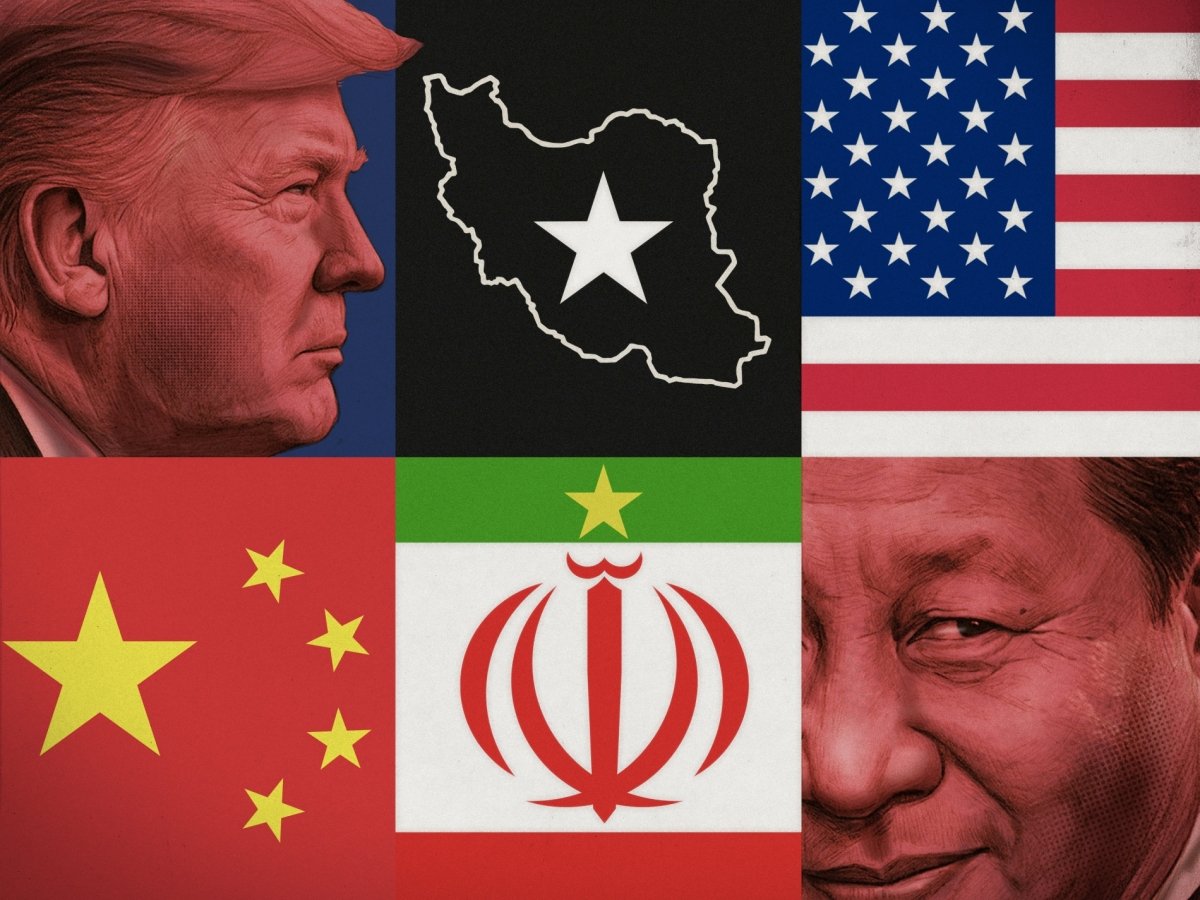
Trump seeks China’s help to end Iran war and reopen Hormuz, but Beijing demands Taiwan concessions. Iran ignores Chinese pressure, seeing existential zero-sum struggle. US midterms loom as Trump negotiates from weakness, caught between quagmire and allies’ backlash.
Securing a viable Iran war off-ramp has become a central objective for backchannel negotiators operating in contested diplomatic channels. Senior analysts evaluating a potential Iran war off-ramp emphasize that Washington’s maneuvering room is highly constrained by ongoing maritime and trade pressures. As the search for an Iran war off-ramp intensifies, Beijing is calculating the exact price it will demand in exchange for its mediation assistance. Ultimately, whether international actors can successfully implement an Iran war off-ramp will determine the future of security guarantees across both the Middle East and East Asia.
Islamabad Stalemates and the Search for a Diplomatic Exit
US President Donald Trump had wanted to conclude his war against Iran before touching down in China, having already postponed the trip once, but more than a month after the initial ceasefire, a negotiated end remains as elusive as ever, leaving the warring parties swapping proposals in Islamabad.
Despite being outgunned militarily, Iran still refuses to sit at the same negotiating table as the United States, which launched its attack on 28 February while bilateral negotiations with Iran were ongoing. Instead, Tehran is leveraging its strength in asymmetric warfare to even the playing field.
With the US mid-term elections fast approaching and his approval ratings at a record low, Trump had no choice but to head to China, even if it meant negotiating from a position of weakness, in the hope of securing a trade deal he could sell back home. Crucially, Trump wants China to convince Iran to accept a deal that lets the US withdraw, and that reopens the Strait of Hormuz, a vital shipping lane for Gulf oil and gas exports.
Trump came into office rejecting US military intervention abroad and vowing to put “America first,” yet his war on Iran has been anything but. By leading the US into yet another Middle Eastern quagmire, diverting resources and further alienating allies, critics now mockingly label it Trump’s “Israel first” policy.
The Price of a Chinese-Mediated Iran War Off-Ramp
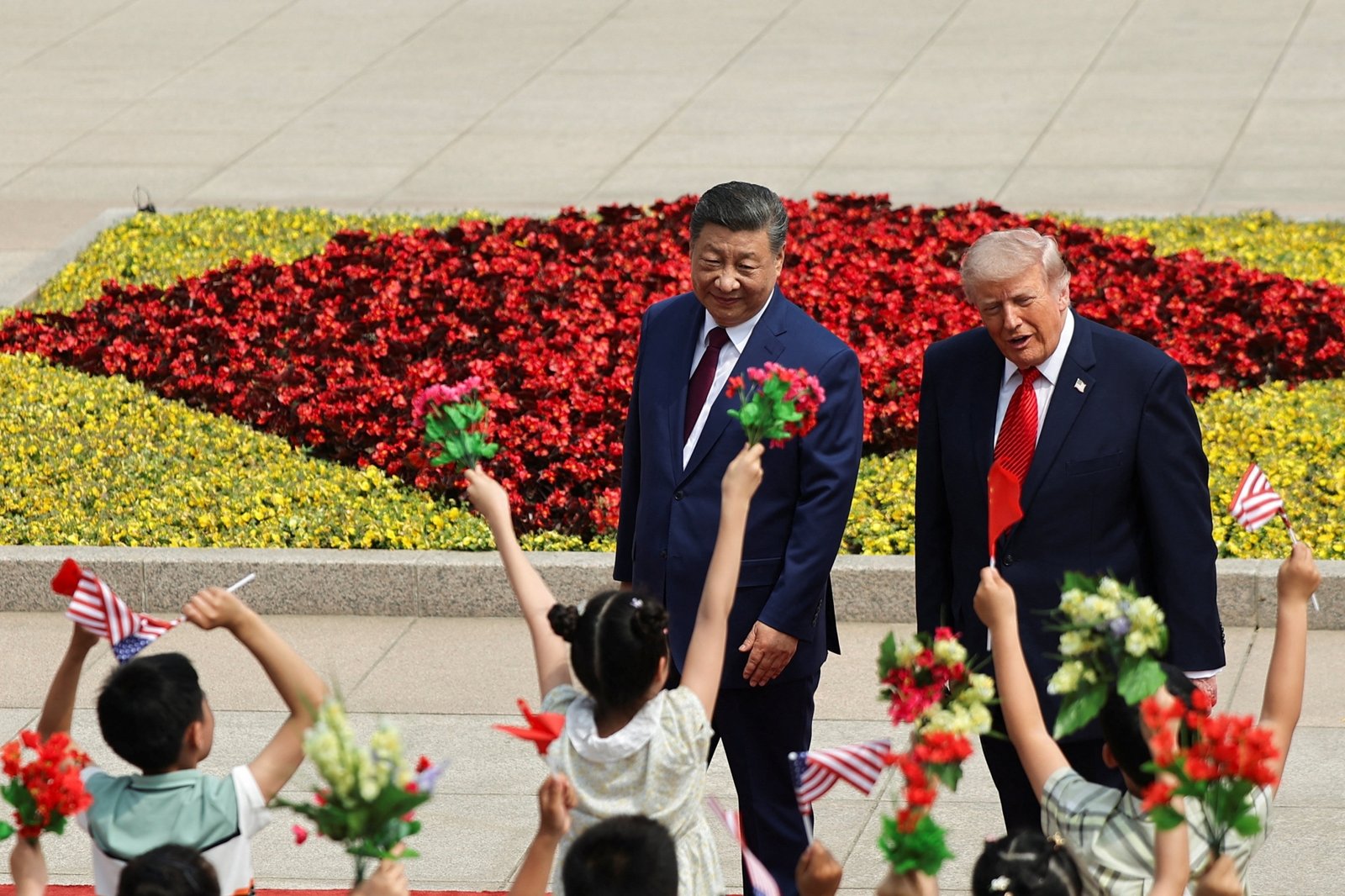
Like the rest of the world, China has been caught in the crossfire. Still, Beijing has no intention of remediating the consequences of its rival’s actions—at least not without Washington offering the right price. In return for Chinese help with Iran, it could want the US to withdraw its de facto security guarantee of Taiwan—a core Chinese interest.
If Trump were to abandon Washington’s decades-old policy of strategic ambiguity and pledge not to interfere in the event of a conflict, he would face a fierce backlash from both Democrats and the China hawks in his own Republican Party. Instead, Trump will likely reduce US support for Taiwan but stop short of changing the status quo. In recent months, President Xi Jinping has pressed Trump to delay a major arms sale to Taiwan. Since then, US ammunition stocks have been depleted following its war in Iran and its commitment of US military assets to the Middle East, so a pause may be useful. Crucially, some of these assets were diverted from the Asia-Pacific.
Strait of Hormuz Disruptions Hampering the Iran War Off-Ramp
Both China and the US share an interest in ending the latter’s war on Iran and restoring peace and stability to the Middle East. Both Iran and Gulf states are important trading partners for China. Had the war remained confined to Iranian soil, Beijing would likely have tolerated the pain.
But it spilt over when Iran attacked its Arab neighbours and seized control over the Strait of Hormuz through which much of China’s oil imports sail, thus threatening China’s economic interests in the region.
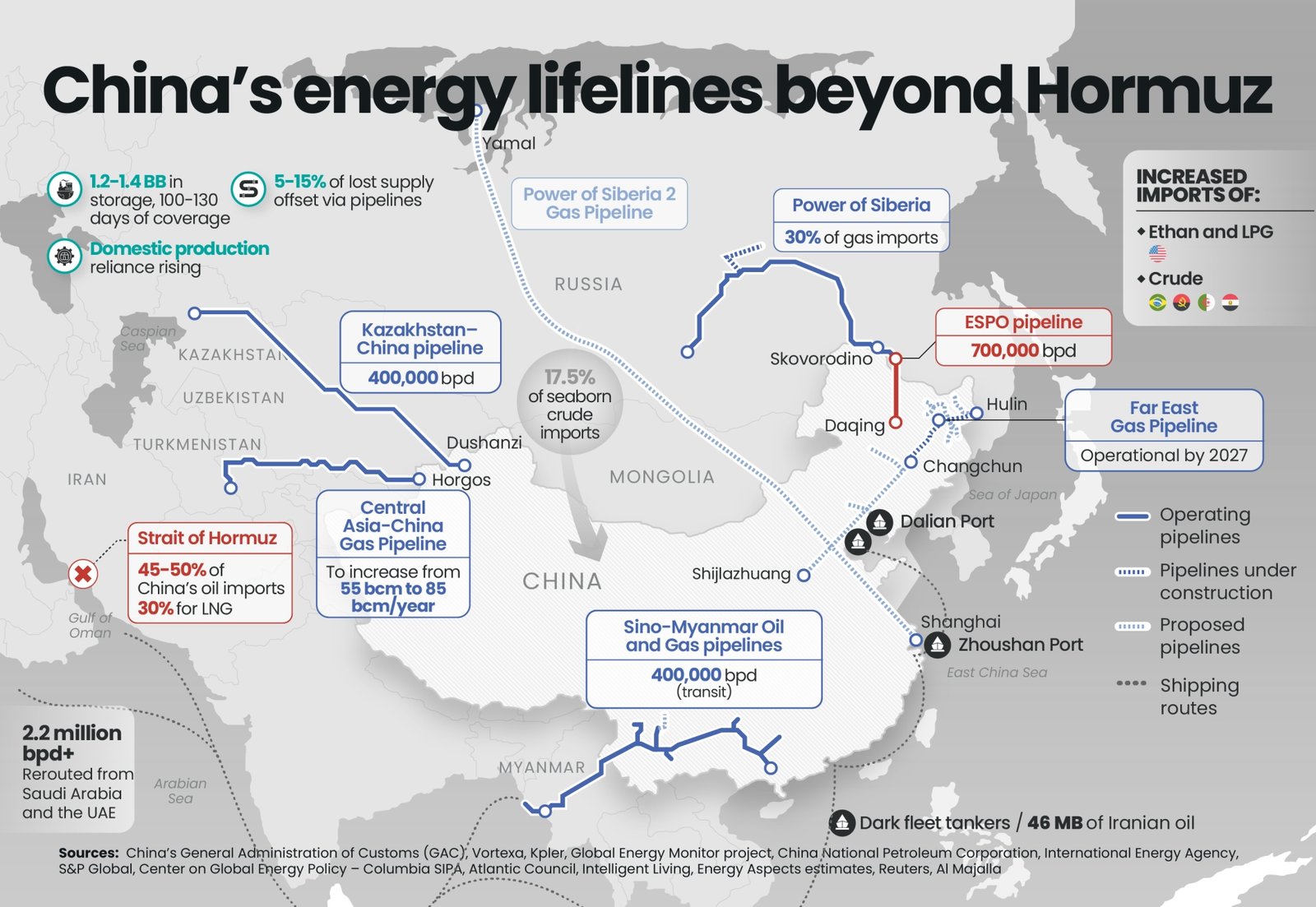
Despite Iran’s assurance that Chinese ships would still be able to pass through freely, in practice, that proved difficult. Most ships today sail under flags of convenience rather than their country of origin, and ‘Chinese ships’ may not refer exclusively to Chinese-owned ships but to ships carrying Chinese goods, goods bound for China, and ships with Chinese crews.
Regional Alignments Resisting a Smooth Iran War Off-Ramp
Diplomatically, Iran’s retaliation against Arab neighbours (some of whom host US military bases and/or have normalisation agreements with Israel) and its closure of the Strait of Hormuz have undermined years of Chinese efforts to reconcile Iran with the Gulf states. While China is sympathetic towards Iran for having been attacked, it insists that the “law of the jungle” has no place in contemporary international relations, irrespective of who it is.
Asymmetric Worldviews and the Limits of an Iran War Off-Ramp
Iran leverage Despite China and America’s shared interest in freedom of navigation in the Hormuz, Beijing’s leverage over Tehran isn’t quite clear. China condemned Iran’s indiscriminate attacks on Gulf states and called for safe passage through the Strait of Hormuz, an appeal that was ignored. Hardliners in power in Iran see the country as fighting an existential war and embrace a zero-sum worldview, in which any objection is interpreted as hostility, even when voiced by its largest trading partner.
Nevertheless, Trump’s claim that China helped to mediate the US-Iran ceasefire suggests that Beijing still has some pull. Whether it decides to push more depends on what the US concedes in exchange for China risking its relationship with Iran.