
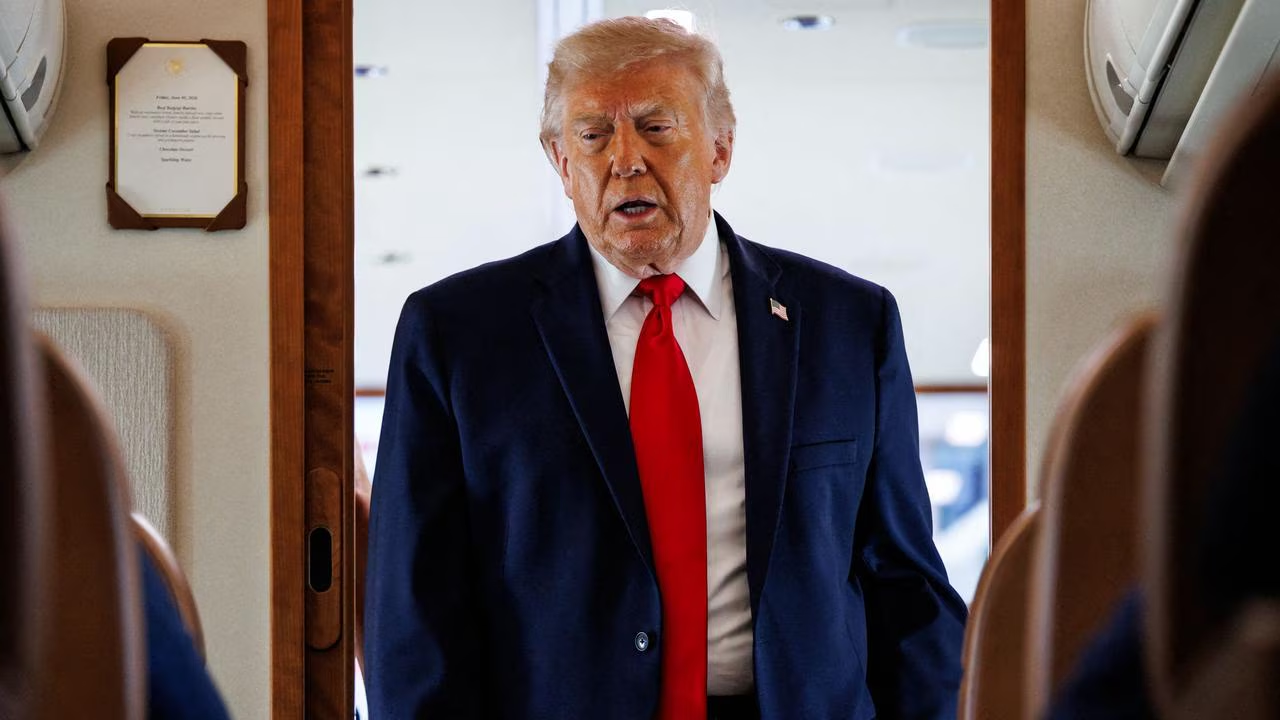
A profound corporate and political risk brief analyzing executive operational capability, public transparency protocols, and electoral vulnerabilities surrounding Donald Trump as his second term progresses amidst heightening legislative and geopolitical tensions.
Executive longevity at the highest echelons of governance demands rigorous structural scrutiny as geopolitical volatility accelerates on multiple fronts. The physical and cognitive stamina required to steer macroeconomic policy and manage high-stakes defense maneuvers means that a leader’s biological trajectory inevitably influences global market confidence and investor sentiment. Assessing how Trump’s age impacts legislative agendas and executive operational velocity provides critical predictive data for enterprise strategists navigating this institutional landscape. Because public perception remains closely tied to institutional stability, decoding how Trump’s age manifests across public disclosures and policy execution serves as an essential metric for tracking long-term sovereign risk and governance continuity.
Trump’s Age: Executive Milestones Evaluated
As President Donald Trump celebrates his 80th birthday on Sunday by hosting a UFC fight card on the White House lawn, the milestone once again brings the spotlight to his age.
Trump, who became the oldest person to assume the presidency when he was sworn in for a second term last year, is only the second president to become an octogenarian while in office, after predecessor Joe Biden. At the end of his second term, Trump will leave office older than any of his predecessors.
Biden dropped out of the 2024 presidential race because of widespread concerns about his age and mental fitness.
Trump’s age alone does not determine his fitness for office. But as he turns 80, his medical disclosures, public appearances and past attacks on Biden’s fitness have made age and transparency political issues heading into this year’s midterm elections.
He has repeatedly tried to fight off concerns about his age and stamina, saying in a February interview that he feels physically and mentally the same as he did 50 years ago. But as he seeks to project strength ahead of November’s midterms, questions about his age and health may remain on voters’ minds.
White House spokesman Davis Ingle told Newsweek that Trump “is the sharpest and most accessible President in American history who is working nonstop to solve problems and deliver on his promises, and he remains in excellent health.”
He added that Trump’s “sharpness, unmatched energy and historic accessibility stand in stark contrast to what we saw during the last administration when Democrats and the legacy media intentionally covered up Joe Biden’s serious mental and physical decline from the American people.”
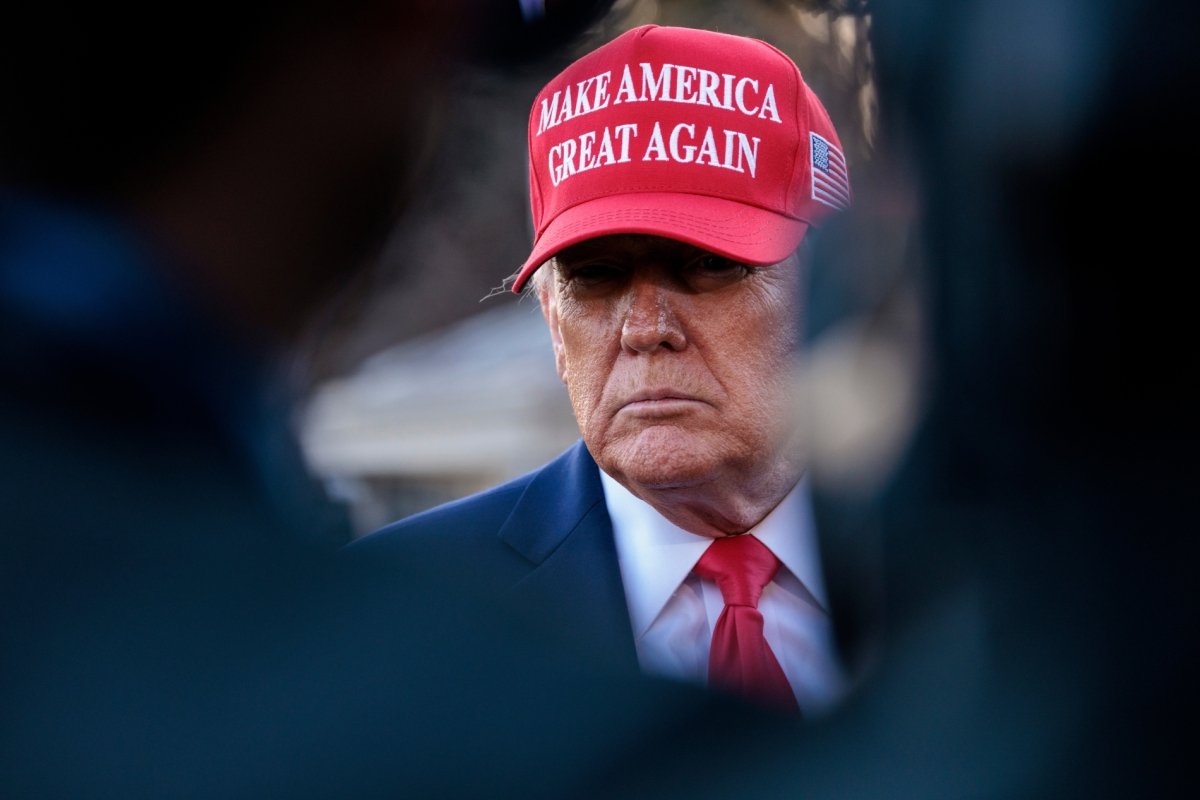
Medical Scrutiny Intersects Trump’s Age Deeply
Trump’s physician said the president is in “excellent health” and “fully fit” to serve as commander-in-chief after his May physical. Dr. Sean Barbabella reported that Trump demonstrated strong cardiac, pulmonary, neurological and overall health and that he had a perfect score on an assessment used to screen for dementia and cognitive impairment.
But past hyperbolic statements about Trump’s health from the president and White House officials, as well as the tendency to keep details about his health secret, have resulted in some experts expressing skepticism about his medical reports.
The White House last year disclosed that Trump was diagnosed with chronic venous insufficiency, a fairly common condition for older adults that causes blood to pool in the legs, following public speculation over visible swelling in Trump’s legs and bruises on his hands.
There is no law requiring presidents to disclose their full records, but a visit to Walter Reed National Military Medical Center in May raised questions as it was Trump’s fourth publicly disclosed medical exam since he returned to office last year. Dr. Mehmet Oz told reporters this month that Trump’s health is “spectacular” and that the visits are because Trump “likes the results” and “is curious to make sure everything is going in the right direction.”
Jay Olshansky, a professor in the School of Public Health at the University of Illinois-Chicago who has studied the health of past presidents, said age should be irrelevant when judging a president’s capability.
“It’s classic ageism to denigrate somebody just because of how old they are,” he told Newsweek.
But he noted that the “the probability of things going wrong as you grow older rises exponentially.”
In Trump’s case, Olshansky said it was “difficult to unsee some of the issues,” including instances of Trump slurring his words.
For Olshansky, concerns about Trump’s age and health could be put to bed if he were to release more detailed medical records, as other presidents have done.
“I think the best way for the president to address it would be to make all of his medical records publicly available unredacted,” he said.
Lawmakers on both sides of the political aisle have also called for greater checks on presidents, including an independent commission that could assess a president’s health and mental fitness.
In April, Maryland Representative Jamie Raskin, the top Democrat on the House Judiciary Committee, introduced legislation to establish a commission to determine presidential capacity under the 25th Amendment after Trump warned that Iran’s “whole civilization will die” if Tehran did not capitulate to his demands in the ongoing war that began on February 28.
The White House also provided Newsweek with a statement from Trump’s former physician, Texas Representative Ronny Jackson.
“As the former Physician to the President and still working closely with his world-class medical team, I can say unequivocally that President Trump’s health, both physically and cognitively, is excellent,” Jackson said in the statement. “His stamina, focus, and strength are exceptional and on display every day. Claims to the contrary are pure fiction from those who suffer from Trump Derangement Syndrome and are desperate to undermine a President whose success speaks for itself.”
Political Precedent Formed by Trump’s Age
Trump’s relentless focus on Biden’s mental fitness, including dubbing him “Sleepy Joe,” made age a central campaign issue in 2024.
But it was “inevitable” that Trump’s age would come under the spotlight after he regained the presidency given his attacks on Biden, Barbara Perry, a professor at the University of Virginia’s Miller Center where she co-directs the Presidential Oral History Program, told Newsweek.
“The irony is that because Joe Biden was declining so rapidly before our very eyes, the decline of Donald Trump and his appearance was really overtaken, understandably,” she said.
Costas Panagopoulos, professor of political science at Northeastern University, told Newsweek that by blasting Biden repeatedly, Trump “heightened the salience of age in assessing presidents and presidential candidates and likely caused voters to pay greater attention to age and ability than they might have otherwise.”
But Kambiz Akhavan, the managing director of the USC Dornsife Center for the Political Future, told Newsweek that it was perceptions of Biden’s mental fitness, or lack of it, not his age, that “plagued his presidency and crushed his shot at a second term.”
“That mattered way more than the number of birthdays he happened to have celebrated,” Akhavan said. “Trump may be turning 80, but he still seems mostly sharp and clearly in charge—at least when he’s not napping in meetings or the NBA Finals.”
Trump’s Age Mirrors Historical Trends
Perry said that age has become a bigger issue when assessing presidents in the modern era because men live longer than they used to. But she said that there are examples of older presidents navigating health challenges well while in office.
She noted that President Dwight Eisenhower took a transparent approach after suffering a heart attack in 1955 and was re-elected in a landslide the following year.
“He told his press secretary and his doctor every day to have a press conference and release all the information about what was happening to him,” she said.
President Ronald Reagan, on the other hand, faced questions about his mental fitness in his second term after surviving an assassination attempt early in his first term, Perry said.
She noted that his revelation that he had Alzheimer’s disease five years after leaving office raised questions about whether he was showing signs while in office.
She argued that the Trump and Biden presidencies may also reinforce to Americans that elderly candidates should not be elected to the highest office in the land.
“It’s telling the American people we should not elect most people in their late 70s or early 80s,” she said, adding that the lesson is not to be ageist but practical about the age and health of candidates. “I think it’s teaching the American people that, as [President John F.] Kennedy said, the torch has been passed to a new generation and that we should not have a gerontocracy in this country.”
Public Perception Captures Trump’s Age Nuances
Several polls have indicated that the American public has concerns about Trump’s age.
A YouGov poll in January found about half (49 percent) of Americans believe he is too old to be president, while just over one-third (36 percent) think he isn’t. The poll found about 49 percent of Americans also think he is suffering from some level of cognitive decline, including the vast majority of Democrats (85 percent) and about half of independents (49 percent). The poll found that a majority of Republicans (70 percent) do not think he is suffering from any cognitive decline.
A Reuters/Ipsos poll in February also found that a majority of Americans (61 percent) think Trump is too old for the job. A majority of Democrats (89 percent) and independents (64 percent) felt that way, while only 30 percent of Republicans said the same.
The Reuters poll also found that 61 percent of Americans believe Trump has “become erratic with age.” Some 89 percent of Democrats, 30 percent of Republicans and 64 percent of independents described him that way.
But Olshansky argued that there’s little evidence to suggest Trump is behaving more erratically as a result of his age.
“I wouldn’t draw conclusions that it’s age that’s causing what is perceived to be erratic behavior,” he said. “It may just be his normal temperament.”
The increasing scrutiny on Trump’s age and health comes as Republicans are fighting to retain control of Congress in the midterms—and the loss of one or both chambers would make it easier for Democrats to thwart his agenda.
The president has seen approval ratings slip amid the war with Iran and spiking inflation.
Age “can affect voter assessments,” Panagopoulos said, noting that it is often a proxy for physical and cognitive concerns.
“The presidency is a demanding job, after all, and voters want someone sharp enough to perform,” he said. “No American wants a president asleep at the wheel.”
But Grant Davis Reeher, a political science professor at Syracuse University, said Trump’s age is a “peripheral issue” when it comes to evaluating his presidency.
“Concerns about the administration are not about cognitive decline but rather WHAT he IS doing, in terms of policy, funding and rhetoric,” he told Newsweek.
Ultimately, Trump’s age may matter most when it comes to how his presidency is remembered.
“It is shaping his presidency and how people view it,” Perry said. “It’s certainly going to shape his and Joe Biden’s legacies.”
She noted that President Jimmy Carter was incredibly unpopular when he left office in 1981 after losing his reelection bid in 1980 but had almost five decades to reshape his legacy through humanitarian and diplomatic work.
“You saw the outpouring of love and respect for him when he died at 100 just a couple of years ago,” she said.
Presidents who are already at an advanced age won’t have the same kind of time to “resurrect” their legacy as Carter did, she said. Biden’s cancer diagnosis last May further raised questions about his time in office and decision to remain in the 2024 race for so long, she added.
When it comes to Trump, the questions about his age will hinge on how his final years in office play out, as well as his post-presidency.
“The passage of time, it seems to give a golden hue to post-presidencies and to former presidents as people get farther away from their faults or their mistakes,” Perry said.