
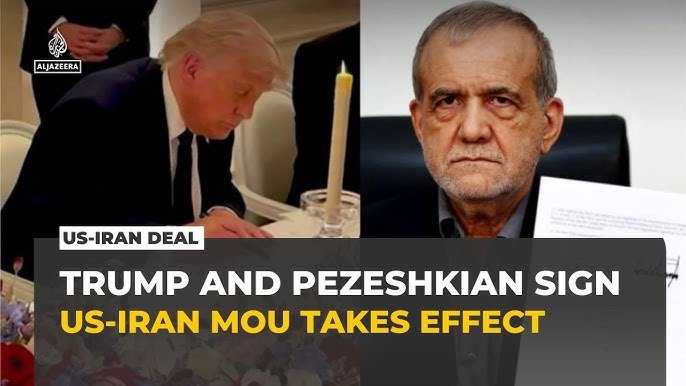
An elite corporate briefing evaluating structural vulnerabilities within the emerging U.S.-Iran framework, focusing on regional military escalations, shifting European strategic posture, and domestic institutional pressures threatening execution.
Global markets face an unprecedented geopolitical inflection point as Washington and Tehran navigate a high-stakes diplomatic matrix. The delicate architecture of this emerging Trump’s Iran Deal demands rigid implementation, yet systemic regional frictions and non-party actors threaten to destabilize the framework before final execution. To secure long-term maritime and energy stability, Washington must maintain intense diplomatic leverage, ensuring that the critical core of Trump’s Iran Deal remains insulated from immediate sabotage.
Trump’s Iran Deal Disruption Risks
The U.S. and Iran reached a memorandum of understanding on Sunday extending the ceasefire by 60 days. It is set to be formally signed in Geneva on Friday. The text of the agreement has not yet been released, but Iran has agreed to reopen the Strait of Hormuz, while the U.S. will lift its naval blockade.
According to Iran, the deal calls for a permanent and immediate cessation of hostilities on all fronts, including in Lebanon. But Israel, which is not a party to the agreement, says it plans to keep troops in parts of southern Lebanon. “The Israelis are trying to destroy this deal, and they will continue to try,” says Trita Parsi, executive vice president of the Quincy Institute for Responsible Statecraft. “It will require persistent, consistent pressure by Trump on the Israelis in order to hold them back.”
We also discuss how The Free Press, founded by Bari Weiss, published an article last week claiming the State Department had opened a probe into Parsi that could lead to his deportation. The State Department issued a statement just hours later claiming that it had “no plans to revoke the green card of Mr. Parsi at this time.”
“I do believe that there were elements inside the State Department that wanted to move in this direction,” says Parsi. “They thought that this hit piece would help move things forward, but I think, frankly, it backfired.”
Regional Pressures Facing Trump’s Iran Deal
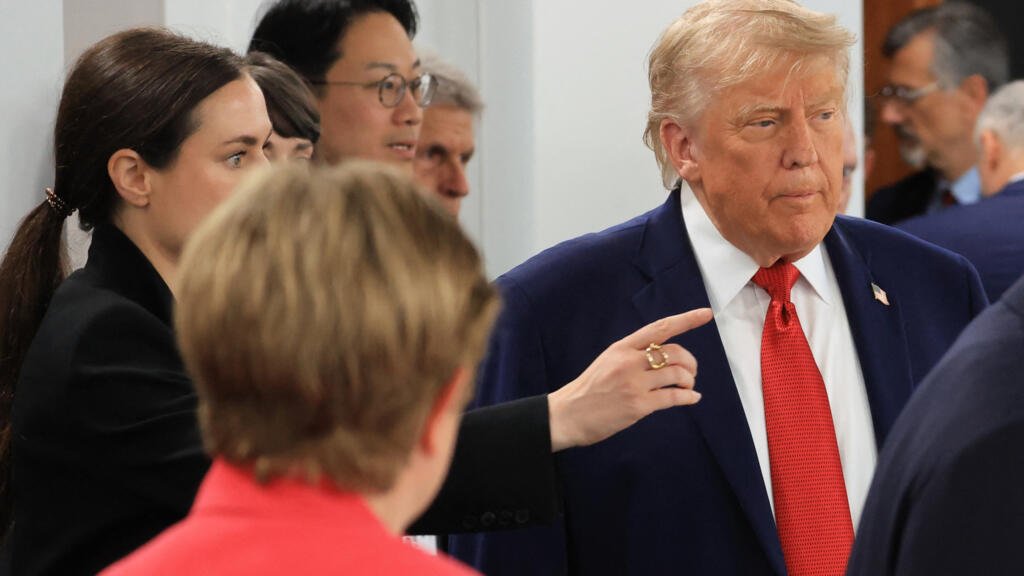
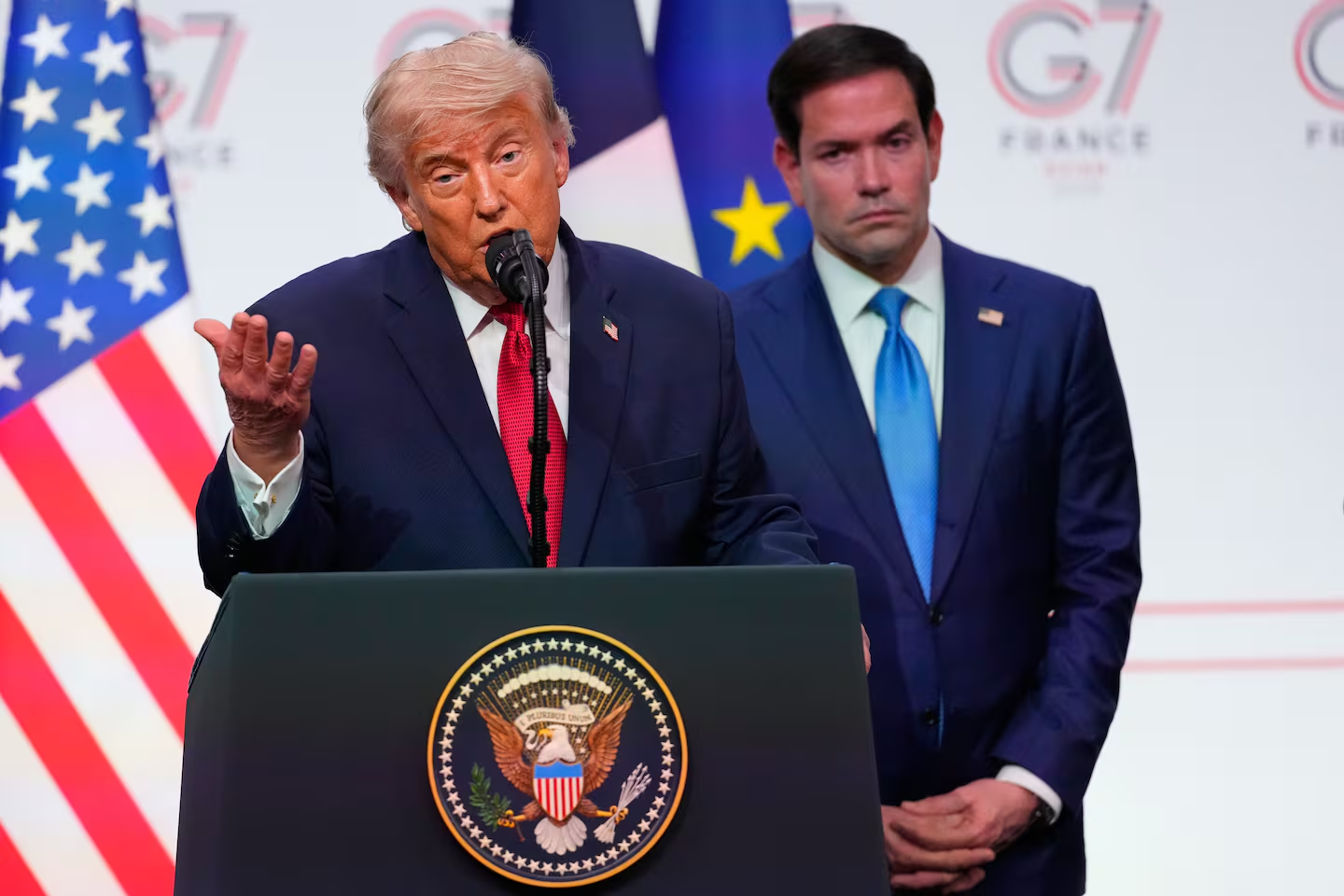
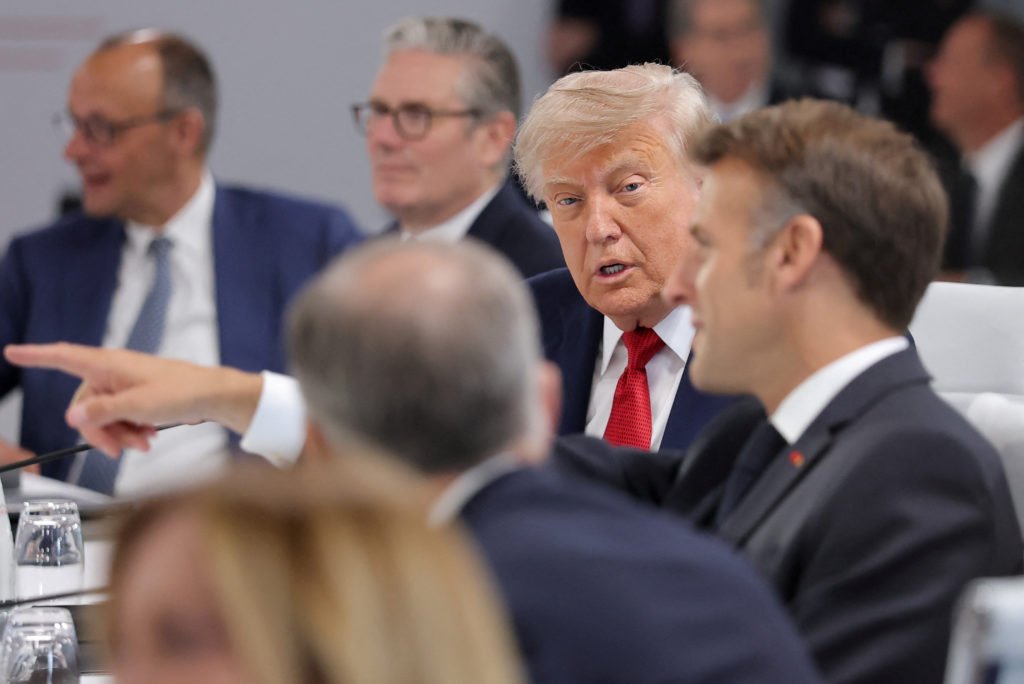
AMY GOODMAN: Donald Trump is meeting with world leaders at the G7 summit in France, with much of the world’s focus on Iran. On Sunday, the U.S. and Iran signed a framework agreement extending the ceasefire by 60 days. Iran has agreed to reopen the Strait of Hormuz, while the U.S. will lift its naval blockade. The text of the agreement, though, has not yet been released. According to Iran, the deal calls for a permanent and immediate cessation of hostilities on all fronts, including in Lebanon. But Israel, which is not a party to the agreement, says it plans to keep troops in parts of southern Lebanon. Earlier today, President Trump spoke about Israel at the G7.
PRESIDENT DONALD TRUMP: We’ve had a very effective relationship. Without us, without the United States, there would be no Israel. Without me, there would be no Israel, because no other president was willing to do what I did. I’ve had a great relationship with Bibi, but now Bibi has to be more responsible with respect to Lebanon. … No, I’m not happy with the way Israel has handled themselves with Lebanon and with Hezbollah. They should have been able to do the job faster. It just goes on forever. And when that happens, it throws a negative light on the big deal, and that’s the deal with Iran.
AMY GOODMAN: We’re joined now by Trita Parsi, executive vice president of the Quincy Institute for Responsible Statecraft. He was in the news himself last week after the right-wing online outlet The Free Press published an article claiming the State Department has opened a probe into Trita Parsi that could lead to his deportation. The Free Press was founded by Bari Weiss, who’s now editor-in-chief of CBS News. We’ll talk more about that in a moment, but let’s begin with the U.S.-Iran agreement.
Trita, your latest article is headlined the “Next 72 hrs will tell us whether Israel plans to kill Trump’s peace.” Explain.
Sabatoge Threats Against Trump’s Iran Deal
TRITA PARSI: Well, as we have seen, the Israelis did everything they could last minute to make sure that the deal would collapse by escalating matters and going into Beirut itself. There had been skirmishes between Hezbollah and Israel for the days prior to that. At the end of the day, the Israelis are invading Lebanon, of course, so that’s not necessarily surprising, but both sides have managed to keep it at a level in which there wouldn’t be any major escalation and no violation of the red line that both Iran and the United States had put forward, which was no more attacks on Beirut.
But just hours before there was supposed to be a signing or an electronic signing of this agreement, the Israelis struck at Beirut, which is part of the reason why Trump now for several days has been lashing out at the Israelis, because it’s very clear to him, ultimately now, that the Israelis are trying to destroy this deal, and they will continue to try. They did so with the Obama deal. They will do so with this one, as well. And it will require persistent, consistent pressure by Trump on the Israelis in order to hold them back.
JUAN GONZÁLEZ: Trump is now over in Europe at the G7 meeting. The European leaders are facing increasing opposition among their own people to the continued wars, Israel’s war on Gaza. Two million Italians went on a general strike in solidarity with Palestine last fall, a 24-hour general strike in Italy just less than a month ago, on May 18th. What do you sense is happening among the European governments?
TRITA PARSI: Well, the European governments are under tremendous pressure from their own populations, because they’re pursuing foreign policies, at least when it comes to Gaza, but also to a certain extent other places, that are just not in line with what the publics there want. They’re tired of these wars. They don’t want to see the support for a genocide. Even in countries such as Germany, that has been so supportive of Israel, beyond any other European state, the public is 60, 65% plus in opposition to Israel’s handling on all of this.
How Trump’s Iran Deal Affects Europe
And at the same time, you have this tension with the United States that is going its own ways, and the Europeans finally realizing that they have to have far more strategic autonomy than they have had before. They have put all of their eggs in the American security basket, made themselves so dependent on the United States, so dependent on NATO, that they have lost the ability to pursue an independent path, an independent path that in many ways actually was good for the United States itself.
The Germany of 2003 that stood up against the Iraq War, that spoke out against it, led the opposition to that war, is a Europe that the United States needs, because we do tend to have bad ideas over here every once in a while, and we need a partner that can tell us that this is not a path we should take. But Europe has lost that ability. It’s made itself so dependent on the United States that it has no longer that maneuverability to push back. And this is something that the European publics ultimately are not happy about, because they’re seeing the consequences of that vacillation of Europe as a continent.
JUAN GONZÁLEZ: And what do you make of the continuing disagreements voiced publicly between the Iranian government and the U.S. government over what this deal entails, and it’s supposedly going to be about a two-page memorandum, which obviously can’t deal with all the complexity of a deal of this type?
TRITA PARSI: Look, both sides are going to try to frame this as a win. And I think both sides also have media apparatuses in their countries that have put forward versions of this deal that may not be actually accurate. I do suspect that some of the hard-line media in Iran has actually put forward ideas or versions of this deal that are not the accurate ones, in order to make sure that the expectations are exaggerated, so that the final meet never meets them.
But this is a way, because of the effort from the hard-liners in Iran, to sabotage it, and we have similar problems here in the United States, as well. But this is being compounded by the fact that the actual text is not released. As long as you don’t have an official text that is released, there is going to be speculation that gives opportunities for those who want to sabotage it to do exactly that.
Strategic Realities Behind Trump’s Iran Deal
AMY GOODMAN: Trita, you wrote a book, Losing an Enemy: Obama, Iran, and the Triumph of Diplomacy, about the Iran deal that Obama struck. Can you talk about whether there’s any real difference between what is agreed about now and back then in 2015?
TRITA PARSI: Again, we don’t know the details yet to be able to make an accurate estimation of what the differences and similarities are. I suspect that there will be plenty of similarities and some differences, as well. If, for instance, the deal does contain the same elements that was on the table back in February before the war, when the Omanis were mediating this issue, then there are going to be some elements that are, frankly, going to be stronger than the JCPOA — for instance, that the Iranians will not be stockpiling any enriched uranium at all, and they would potentially even pause enrichment for several years.
The JCPOA did not contain that. On the other hand, the JCPOA had remarkable inspections regimes. We don’t know what inspections regime this deal will have, because the IAEA has not been involved in these negotiations. In the JCPOA, they were deeply, deeply involved.
Another very interesting difference that I think we already now can see, at least rhetorically, is that the Obama administration was very careful only to sell that deal as a nuclear agreement. They never tried to point to a possibility of a better future between the U.S. and Iran, a better relationship, a transformation of that relationship. If it were to happen, it would be an added bonus, but not something that was at the center of the deal, or not even something that was designed to be the ambition of the deal.
The Trump administration has done this completely reversely. They’re going out there and very ferociously arguing that this can be a peace deal, that this can be a full transformation, not just of U.S.-Iran relations, but the entire regional context, as well. Now, whether they have the political power and capital and means to make real out of that promise remains to be seen, but it is an ambition that the Obama administration did not even express, and it never even called their deal a peace deal.
And in some ways, I think this is a positive development, because we do need to finally get over this U.S.-Iran enmity; otherwise, if this continues, but it just has a nuclear component to it, that enmity eventually is going to lead to either the collapse of that nuclear deal or some other form of confrontation between the two countries. And I think it would be better for both states if they actually could put that enmity behind them.
AMY GOODMAN: Trita, I also want to ask you about the recent Free Press article headlined “Will the U.S. Deport Trita Parsi?” The outlet claimed the Trump administration is weighing whether to revoke your green card. You’ve described it as a hit piece designed to trigger your deportation. Of course, Free Press founded by Bari Weiss, who’s now the editor-in-chief of CBS News.
TRITA PARSI: Yeah. Thank you, Amy, for allowing me to correct the record on this one. I wrote about it on my Substack, as well, afterwards. Only hours after this hit piece came out, the State Department itself took the unusual move of coming out and denying it and saying that they have no plans to deport me, at least not for now, they said. So there was a caveat there. But nevertheless, this was a very unusual move, because usually the State Department doesn’t comment on these things at all.
But I think what happened — and this is my theory. I don’t have smoking gun evidence for it, but I do believe that there were elements inside the State Department that wanted to move in this direction. They have been pressured by people like Laura Loomer for months now tweeting that they should be deporting me. And they thought that this hit piece would help move things forward, but I think, frankly, it backfired, because not only was there a major backlash publicly against this, there was also opposition within the Trump administration against this move. And it’s part of the reason why the State Department came out so quickly and so unusually to deny this.