
The U.S.-Iran MOU offers Lebanon a precarious diplomatic window that could either entrench foreign domination or restore state sovereignty, requiring Beirut to leverage external negotiations while pursuing domestic institutional consolidation and Hezbollah’s integration.
The U.S.-Iran Memorandum of Understanding that opened a 60-day diplomatic window has inadvertently placed Lebanon at the crux of a geopolitical pivot, yet the very framework designed to de-escalate regional tensions could either ossify Lebanese state weakness or catalyze its long-overdue reclamation of sovereignty. For Lebanon, the U.S.-Iran MOU represents both a binding constraint and an unexpected lever, forcing Beirut to navigate between Iranian strategic depth and American security guarantees while its own territory remains the physical battleground for their rivalry. The fundamental question is whether this diplomatic interlude will produce a sustainable settlement or merely a more sophisticated form of paralysis for a state already fractured by decades of external manipulation.
U.S.-Iran MOU Ceasefire Realities
The wider U.S.-Israel-Iran war that Lebanon was dragged into in early March has been a disaster for the country. The diplomacy now underway to end it could deepen Lebanon’s strategic setbacks; alternatively, it could provide a historic opportunity to advance key Lebanese interests and contribute to a more stable regional order.
A Shared Interest in a Stable and Sovereign Lebanon
From Lebanon’s perspective, three strategic objectives stand out as a ceasefire is negotiated: (1) securing an Israeli withdrawal from Lebanese territory, (2) strengthening the authority and capacity of the Lebanese state, and (3) bringing Hezbollah’s military activities under the state’s monopoly of arms.
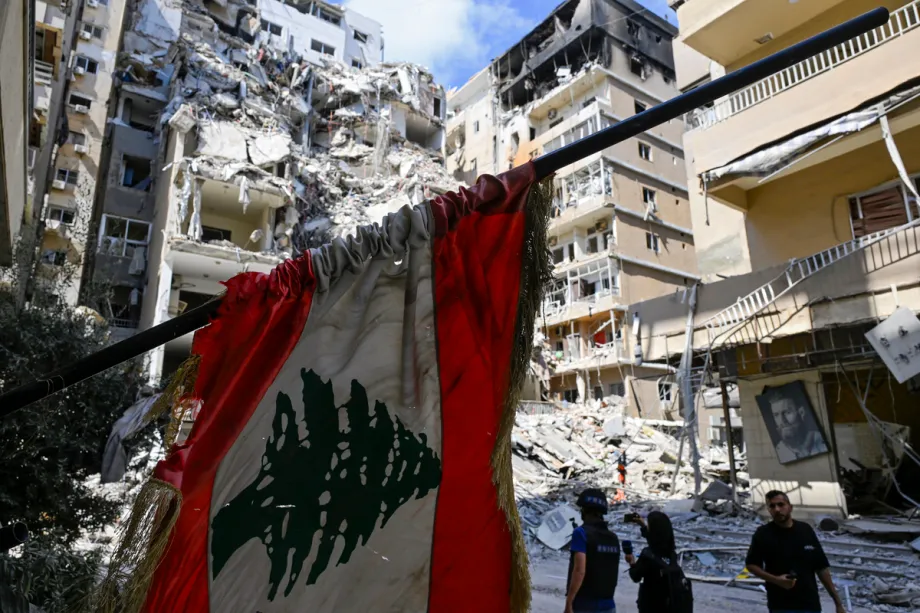
The war itself has pushed Lebanon further away from all three objectives. It has led to a major expansion of Israeli occupation, a revival of Hezbollah military activity, and the further marginalization of the Lebanese state in the face of these two combatants. This comes on top of the human and socioeconomic cost of the conflict: loss of life, massive internal displacement, the destruction of dozens of towns and villages, and yet another severe blow to an already struggling economy.
Lebanon’s neighbors—including Syria, the Arab states, Turkey, and Israel—as well as the United States and Europe all share an interest in a sovereign Lebanese state that exercises authority throughout its territory, free of foreign occupation and armed nonstate actors. Iran, by contrast, has long sought to maintain and strengthen Hezbollah as an Islamic Revolutionary Guard Corps (IRGC)–affiliated force that serves as a strategic asset against Israel and, indirectly, the United States.
Lebanon and the U.S.-Iran MOU
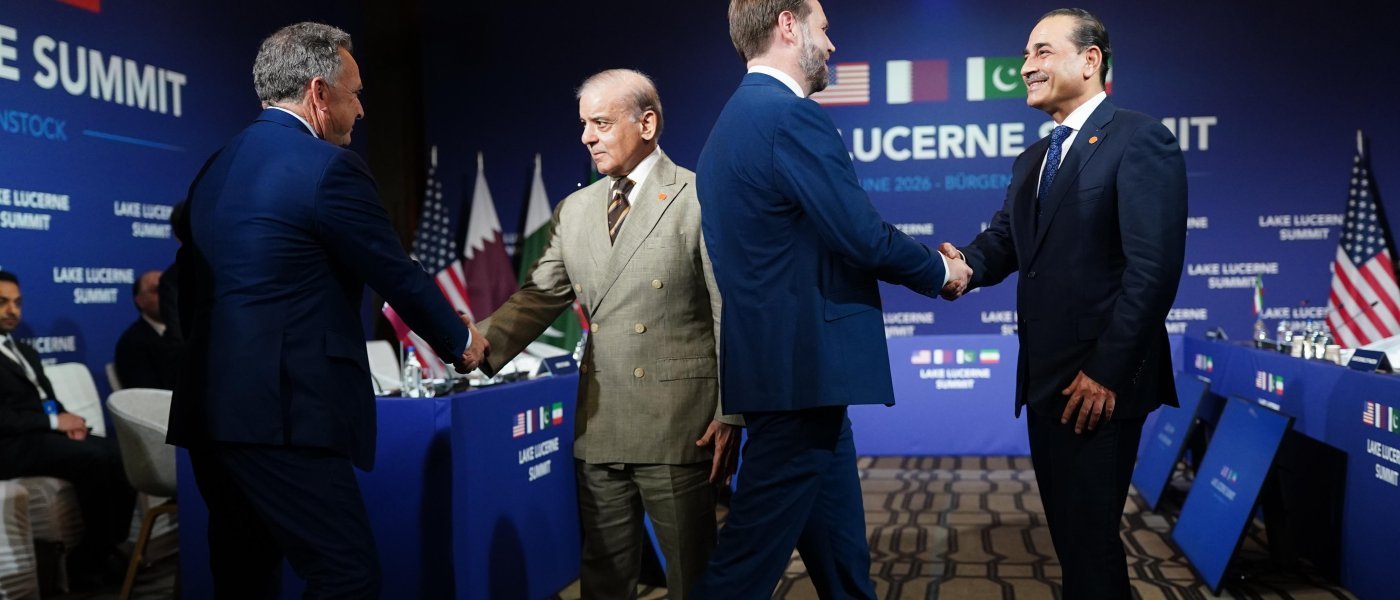
The U.S.-Iran MOU that secured the current 60-day diplomatic window placed Lebanon in a prominent position. The very first clause includes Lebanon within the ceasefire framework and commits both sides to respecting Lebanon’s sovereignty and territorial integrity. Unsurprisingly, Lebanon has emerged as a major issue in the diplomatic discussions now underway in Lucerne.
Since the outbreak of the war, Lebanon has consistently called for a ceasefire as a necessary first step to halt deterioration and create space for diplomacy. Discussions in Switzerland have explored the establishment of a “deconfliction cell” involving the United States, Iran, and Lebanon to oversee the cessation of military operations. While Hezbollah can be said to be represented in the cell through Iran, Israel is so far not a part of it.
In any case, the path toward a sustainable ceasefire remains fraught with challenges.
First, Lebanon faces not only ongoing clashes between Israel and Hezbollah but also the reality of a substantial Israeli military presence in parts of South Lebanon. Israel has indicated that it is prepared to respect a ceasefire if Hezbollah does the same, but it has also made clear that it does not intend to withdraw from occupied territory so long as it believes the Hezbollah threat persists.
Second, while Hezbollah may be willing to suspend attacks on Israeli soil, it continues to portray military action against Israeli forces inside Lebanese territory as part of its resistance mission. This creates a built-in source of instability even during periods of reduced violence.
Third, the United States has repeatedly supported ceasefire arrangements in Lebanon while simultaneously accepting Israel’s right to strike targets it considers an imminent threat. This ambiguity has weakened previous ceasefires and could undermine future ones as well.
There is no stable middle ground. Either diplomacy moves forward to a sustainable end point built on sovereignty and territorial integrity, or the Lebanon front risks sliding back to open-ended conflict and risks dragging other parts of the region with it.
The most viable path forward requires addressing both the Israeli occupation and Hezbollah’s defiance of state authority.
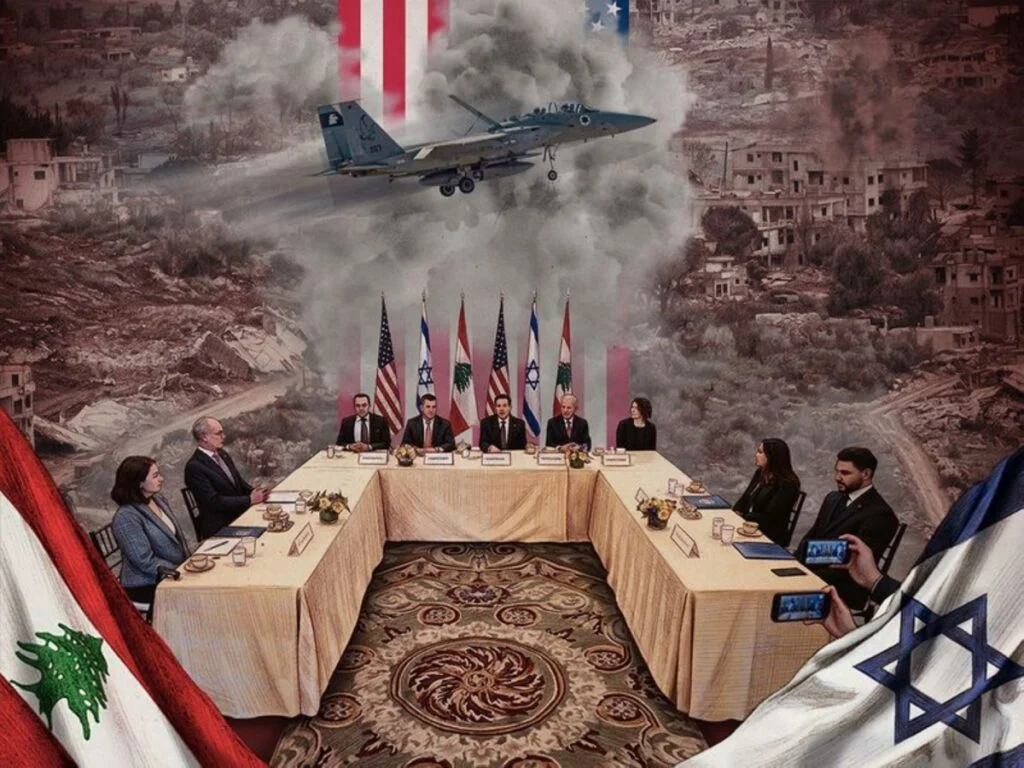
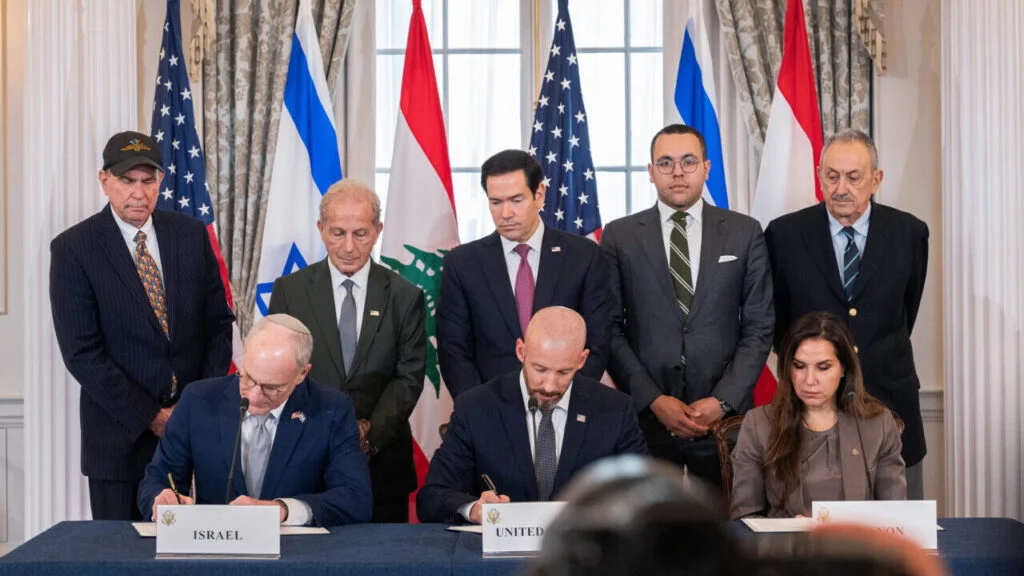
As direct Lebanon-Israel talks resumed in Washington on June 23, the parties—supported by sustained U.S. engagement—should seek agreement on a phased Israeli withdrawal from Lebanese territory. The Lebanese Armed Forces, with support from U.S. Central Command and other partner militaries, should be empowered to assume full responsibility for security in the south, ensure the absence of Hezbollah fighters and facilities, and facilitate a complete Israeli withdrawal.
At the same time, the principles highlighted in the U.S.-Iran memorandum—Lebanese sovereignty and territorial integrity—must be applied consistently. An Israeli withdrawal should be accompanied by the withdrawal of IRGC personnel and infrastructure from Lebanon, as well as a credible process for restoring the state’s monopoly over the use of force. The United States should insist that these elements remain integral components of any broader understanding with Iran.
Several regional powers have also become active participants in postwar diplomacy: Saudi Arabia, Turkey, Qatar, Egypt, and Pakistan have all engaged as mediators, facilitators, or interlocutors. These countries share an interest in a more stable Levant and generally view Lebanese sovereignty as an important component of regional stability. Their long-term vision includes a Lebanese state capable of exercising authority throughout its territory, securing an Israeli withdrawal, and creating conditions under which Hezbollah’s military role is brought under state control, much as other militias were integrated after the Lebanese civil war and as some armed groups in Iraq are doing today.
Reshaping Lebanon Under the U.S.-Iran MOU
Lebanon’s Urgent Agenda
The Lebanese state must ensure that it is at these diplomatic tables, not merely on them—making its case and helping drive decisions, not just standing by as other powers and parties determine its fate. Lebanon has good reason to be wary of outside powers determining its future. Yet Hezbollah’s role has never been solely a domestic Lebanese matter; it has always also been an extension of the IRGC’s regional power projection. Lebanon has an urgent interest in ensuring that its voice is heard in negotiations that will help shape both the future of the country and the wider region.
The stakes are considerable. The current diplomatic process could end up entrenching both Hezbollah’s armed status and a prolonged Israeli military occupation, possibly for decades. This would recreate the conditions that existed between 1982 and 2000. Alternatively, it could provide a pathway toward Israeli withdrawal, Hezbollah’s integration and disarmament, and the restoration of state sovereignty that Lebanon has struggled to recover since the late 1960s.
External diplomacy alone will not be enough; Lebanon also faces critical domestic tasks.
First, the government must continue rebuilding state institutions and advancing long-delayed reforms. The war does not provide an excuse to postpone these priorities. Security sector reform, banking restructuring, public sector modernization, and economic recovery all remain essential. Lebanon must also move quickly—like Syria—to reconnect with emerging regional networks in energy, transportation, trade, and digital infrastructure, linking the country not only eastward through Syria to the Gulf Cooperation Council, but also toward the Eastern Mediterranean, Turkey, Cyprus, and Europe.
Second, the state must steadily expand the areas under its exclusive authority. For decades before 2025, under the Assad regime and IRGC influence, Lebanese state institutions coexisted with—and were often penetrated by—the parallel structures of Hezbollah. The government’s decision over the past year to declare Hezbollah’s and the IRGC’s military activities illegal was a historic turning point. This must be translated into reality through a firm expansion of state control, led by the Lebanese Armed Forces and other security institutions. This process should begin in Beirut and the south but steadily extend throughout the country.
Third, the government should pursue a more robust political dialogue with Hezbollah itself. Experiences including the IRA in Northern Ireland and the FARC in Colombia demonstrate that disarmament and state consolidation rarely succeed through coercion alone. Political engagement is often an essential component. While the decision to keep or give up its strategic weapons remains a decision that will be made by Iran, many other issues that are of concern to this party, which represents one of Lebanon’s major communities, can and should be discussed domestically. Hezbollah will continue to have a long future as a regular political party if and when it decides to forego its nonstate military and security roles.
U.S.-Iran MOU Strategic Opening
A Rare Strategic Opening
The war has been a devastating setback for Lebanon. When the U.S.-Iran framework deal was first announced, many feared it might merely freeze the conflict while preserving Lebanon as an arena for Iran’s long-term confrontation with Israel. Others worried that Washington might accept such an arrangement in exchange for broader regional de-escalation.
Those risks remain real. Yet the negotiations in Switzerland, together with the active regional diplomacy surrounding them, also offer a rare strategic opening.
The United States remains the indispensable external actor in this process and should use its leverage to pursue a durable solution rather than another temporary pause in the fighting. Fortunately, it is not acting alone. Many regional partners and allies share an interest in preventing renewed war, restoring Lebanese sovereignty, and encouraging a regional order based not on proxy conflict but on state authority, stability, and economic integration.
Whether the current diplomatic moment ultimately entrenches Lebanon’s crises or helps resolve them will depend on the choices made in the months ahead. Opportunities of this scale are rare. Lebanon and its partners should not allow this one to pass.