
Molfar Intelligence Institute published Alabuga Special Economic Zone ledgers in August 2026 showing nuclear patent transfers and consultancy payments possibly settling Iranian Shahed drone debts. Records implicate SKTB PR, Rosatom, and Generation Trading FZE.
The discovery of corporate ledgers from Tatarstan’s Alabuga Special Economic Zone exposes a structural vulnerability in Washington’s financial sanctions architecture. The Russia-Iran barter recorded in those files bypasses dollar-clearing mechanisms entirely, shifting exchange into intellectual property and technical personnel transfers. Moscow’s apparent offset of Shahed loitering munition payments through nuclear-adjacent patent access represents a non-monetary clearing arrangement that Treasury’s current liquidity-focused enforcement cannot interdict.
The movement of a Russian engineer with Rosatom-linked design bureau experience and an Iranian materials scientist specializing in spent-fuel containment into drone production logistics demonstrates how dual-use compensation can hide inside routine factory overhead. This Russia-Iran barter blurs the boundary between commercial manufacturing and weapons-proliferation finance.
Federal sanctions against Generation Trading FZE and Bank Melli Iran address only the residual cash layer, not the underlying patent and consultancy value flows. As long as state sponsors can settle strategic debts with nuclear expertise, gold, or backdated invoices rather than convertible currency, the economic squeeze envisioned by Treasury will fail to constrain actual capability transfer. The Alabuga records suggest a coordinated mechanism that pairs drone assembly with nuclear-fuel-cycle knowledge, complicating enforcement and requiring a redefinition of what constitutes a sanctionable payment.
How the Russia-Iran barter Works
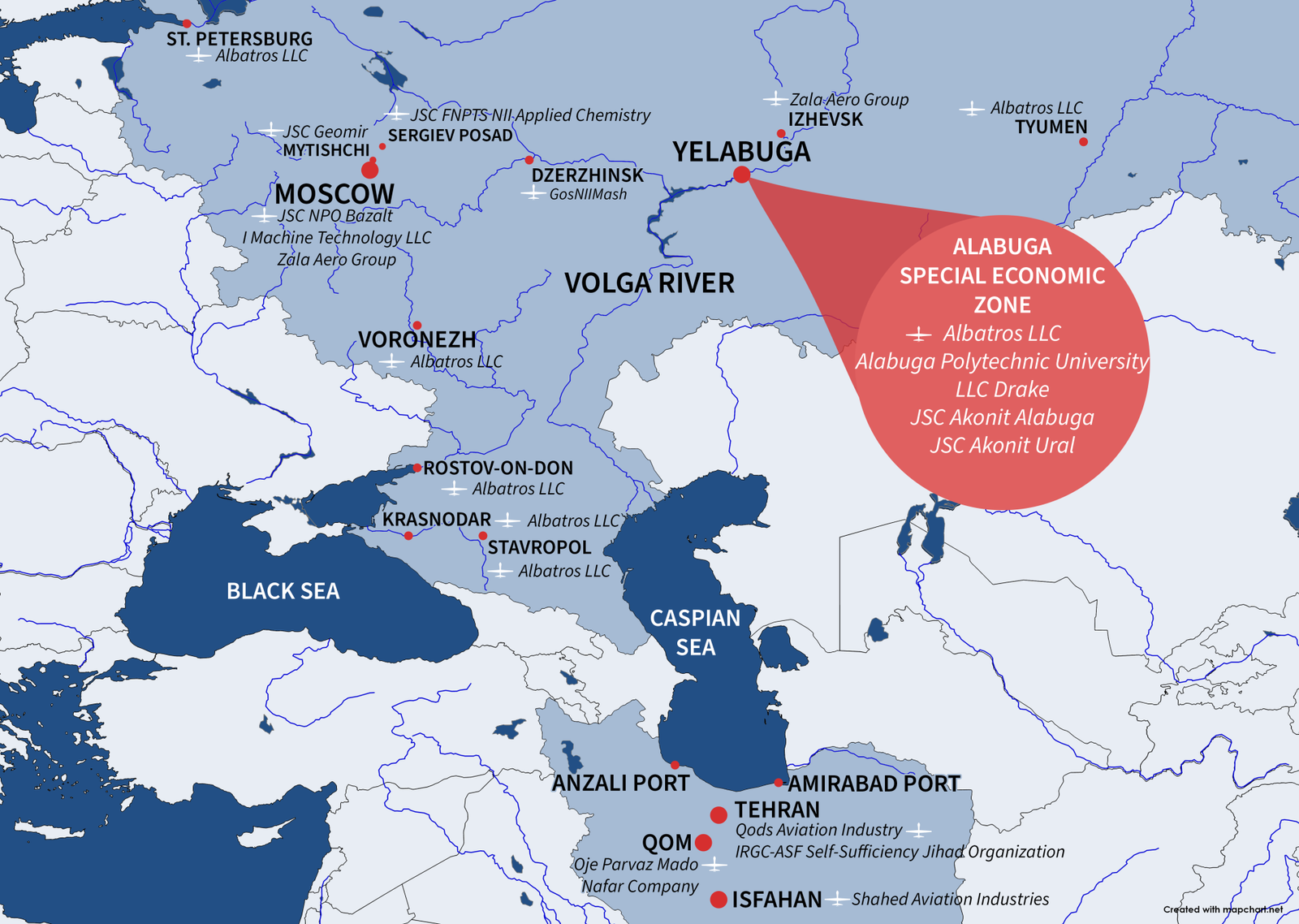
As Secretary of the Treasury Scott Bessent enforces an “Economic D-Day” against Tehran and Director of Central Intelligence John Ratcliffe conducts unannounced consultations in Moscow, Washington’s sanctions strategy faces a non-monetary blind spot. While federal enforcement chokes liquid revenue, defense transactions between Russia and Iran have migrated into non-monetary technology transfers. On August 20, 2026, the Ukrainian open-source organization Molfar Intelligence Institute published corporate ledgers from the Alabuga Special Economic Zone in Tatarstan.
Tracking the Flight Manifest
The records suggest a potential mechanism in which Moscow may have offset payments for Iranian Shahed loitering munitions by funneling nuclear expertise and patent access to Tehran through drone manufacturing overhead.
On March 10, 2023, an Alabuga delegation flew from Moscow to Tehran to organize localized drone assembly. The flight manifest included Dmitry Shubnyakov, a Russian engineer on Alabuga’s payroll as a flight control software engineer for Shahed production. Employment data confirm that Shubnyakov spent his career at SKTB PR, a Moscow design bureau contracted by Rosatom and the Russian Ministry of Defense. SKTB PR operated state contracts for VNIITF, a premier nuclear-weapons design institute, and ODC UGR, an enterprise that decommissions uranium-graphite reactors built to produce weapons-grade plutonium.
Nuclear Patents Enter Iranian Registry
Shubnyakov co-authored three patents for remote robotic systems designed to repair leaks in spent nuclear fuel storage pools. On February 28, 2023—ten days before the delegation departed for Tehran—the co-owners of the patent submitted the technology to Iran’s national patent registry following an international filing registered under application WO2022098254 at the World Intellectual Property Organization. Spent-fuel pool integrity addresses plutonium extraction concerns, leading the United States in 2005 to mandate that Iran return all spent fuel from the Bushehr nuclear plant to Russia. Shubnyakov drew continuous disbursements from Alabuga through mid-2025 while running an unrelated Moscow vehicle manufacturer and seeking external engineering roles.
Who Is Saeed Darki?
The same flight carried Saeed Darki, an Iranian materials scientist affiliated with Ural Federal University in Yekaterinburg. Darki co-authored seven papers on radial forging and seamless pipe production, research indexed in the International Atomic Energy Agency’s International Nuclear Information System database for applications in high-pressure spent-fuel containment.
Alabuga financial records document a July 2025 payment to Darki listed without department, position, or start dates, indicating a single contract fee. Researchers from Iranian universities tied to Tehran’s missile and nuclear programs cite Darki’s work, including an academic targeted during the June 2025 Israel-Iran conflict, according to findings detailed by the Institute for Science and International Security. Other reporting confirms Iranian nuclear scientists toured Russian facilities in August and November 2024 to inspect electron accelerators, klystrons, tritium, strontium-90, and laser diagnostic systems used to model nuclear warhead designs without physical explosive tests.
Gold, Invoices, and Dubai Intermediaries
Leaked files from Iranian defense proxy Sahara Thunder expose contract settlement friction for contract AM-103-23: Iran rejected rubles, while Russia lacked cash dollars. The parties initially settled debts using physical gold bullion, transferring 1.8 metric tons under a March 16, 2023, protocol and reaching two tons by summer 2023. Settlements then shifted to Generation Trading FZE, an Emirati intermediary issuing backdated invoices through Bank Melli Iran’s Dubai branch. The U.S. Treasury Department later designated Generation Trading FZE under Executive Order 13224 for terrorism-related financial support. Separate trade data show Generation Trading FZE cleared $27 million in specialized stainless-steel transfers to Alabuga Machinery in 2023 through Bank Melli under SWIFT code MELIAEADXXX.
Contract Terms Allowed Other Property
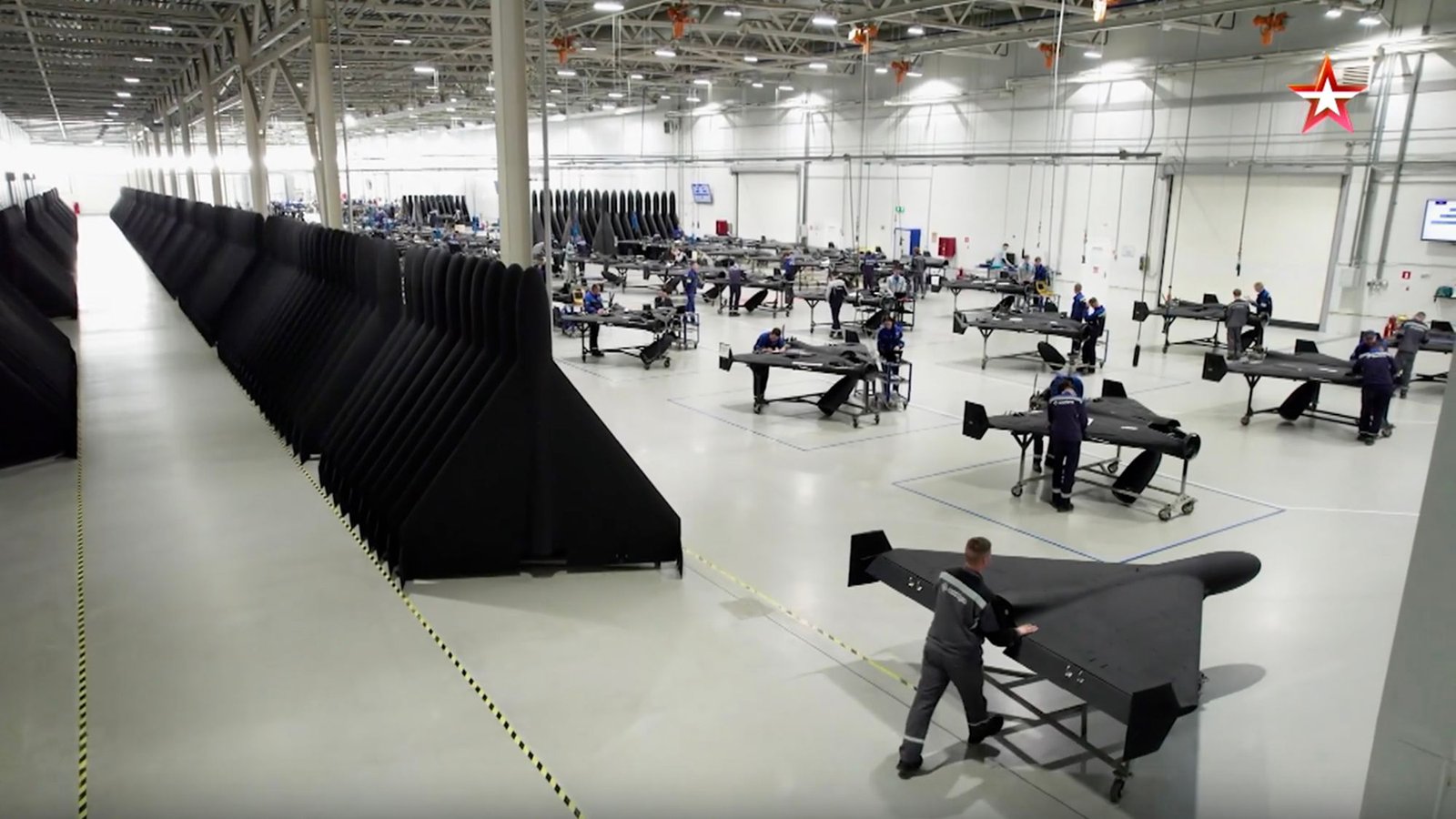
Contract AM-103-23 authorized settlements in dollars, rubles, euros, dirhams, rials, yuan, gold, and “other property.” Ukrainian intelligence reported in late 2022 that Russia offered military technology to Iran in exchange for missiles, a cooperation trajectory C4ADS confirmed extended beyond aviation into broader defense sectors. Under Molfar’s working hypothesis, Alabuga SEZ may have leveraged state subsidies and development loans to absorb technical royalty payouts to Shubnyakov and consultant fees to Darki, categorizing dual-use compensation as routine factory overhead.
Why the Russia-Iran barter Escapes Sanctions
Shahed platforms produced at Alabuga supply the Islamic Revolutionary Guard Corps and proxy networks across the Middle East, including Houthi forces in Yemen and Shi’i militias in Iraq and Syria. These platforms link Ukrainian territorial security directly to the Red Sea and Levant. Yet Israel—despite being directly impacted by Iran’s military escalation—refrains from sanctioning Russia and continues to afford Russian officials broad airtime across national media.
Financial sanctions targeting liquid currency allow state sponsors of terrorism to barter intellectual property for strike capabilities. U.S. policy must expand beyond currency interdiction. Washington should direct secondary sanctions against intermediaries like Generation Trading FZE, track dual-use research exchanges operating out of Russian nuclear hubs, and require interdiction of non-monetary technical clearing as a condition of bilateral diplomacy with Moscow.