
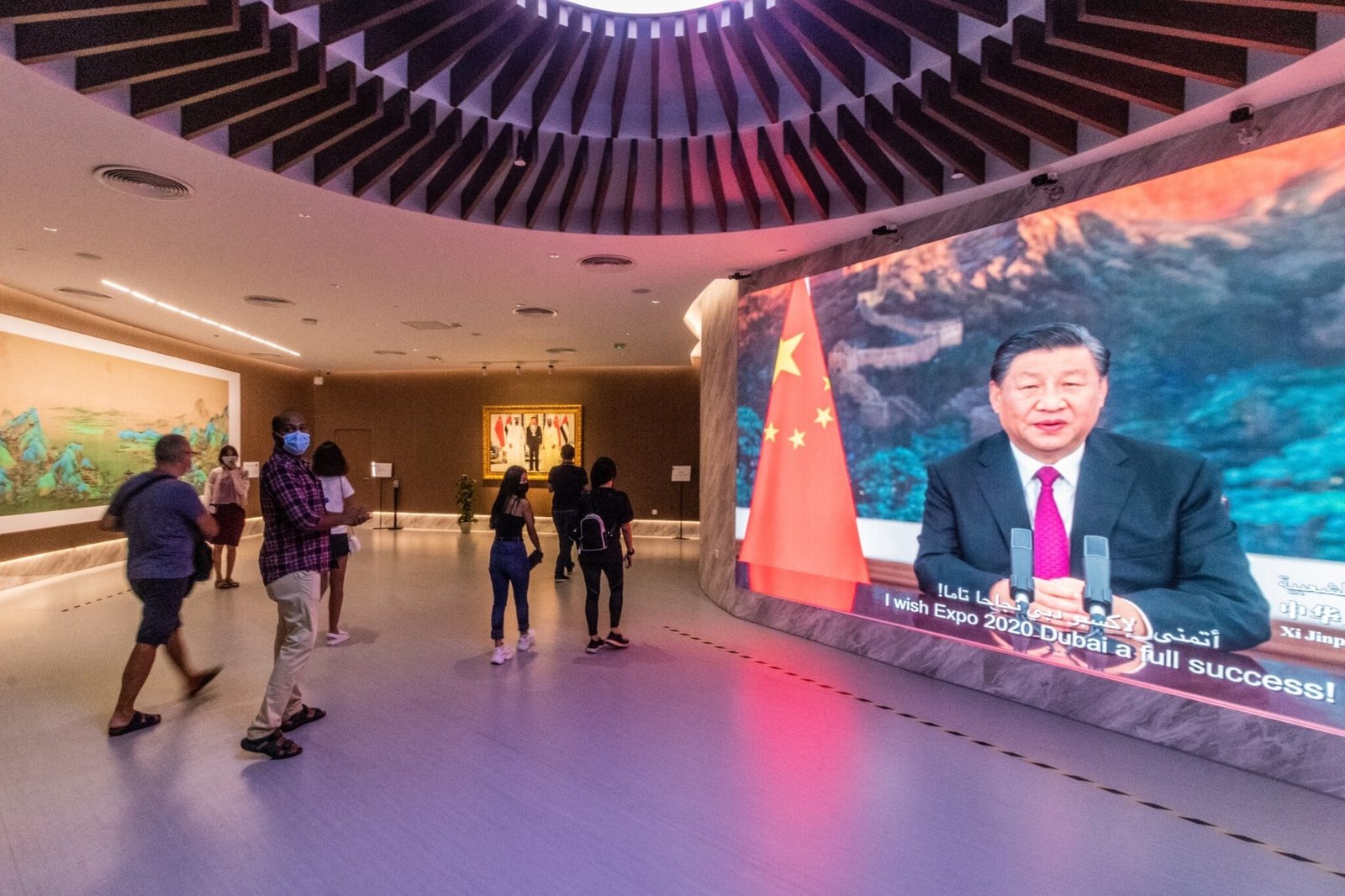
This strategic assessment utilizes 2025 Arab Barometer polling data to evaluate the severe erosion of US geopolitical standing across the Middle East. It outlines how perceived policy contradictions regarding international law are driving regional pivots toward China.
The geopolitical fallout from the Gaza crisis has fundamentally ruptured Washington’s remaining moral authority across the Middle East, signaling a profound structural shift where soft power is rapidly evaporating. This accelerating collapse of influence prompts a critical question that senior strategists must confront immediately: Has the US ‘Lost’ the Arab World?
As regional public opinion shifts sharply toward alternative global powers due to perceived double standards in international law, foreign policy initiatives face severe operational friction. Washington must urgently reconcile its diplomatic rhetoric with concrete, uniform action across global theaters if it hopes to repair alliances, manage regional security frameworks, and definitively answer whether the US ‘Lost’ the Arab World before rival networks permanently solidify their influence.
Arab World Challenges Global Double Standards
In February 2022, Russia invaded Ukraine in a war of blatant aggression. The United States responded by assembling a multinational coalition around a clear principle: countries cannot use force to invade or redraw the borders of their neighbors. The appeal to foundational international law—national sovereignty, territorial integrity, civilian protection, the laws of war—seemed straightforward. Two years later, Washington adopted a strikingly different posture toward a major conflict in the Middle East. New polling suggests this choice has come at a measurable cost to America’s regional standing in the Middle East.
After Hamas attacked Israel from Gaza on October 7, 2023, killing approximately 1,200 people—mostly civilians—Israel launched a sustained military operation in Gaza that has killed tens of thousands of Palestinian civilians and devastated much of the territory’s civilian infrastructure.
A 2025 UN Independent Commission of Inquiry concluded that Israel’s conduct met the legal threshold for genocide, a finding the United States has disputed. Ukraine and Gaza are not analogous situations, and Washington’s alliances, interests, and legal obligations differ in each case. But Arab nations have drawn a comparison, and their conclusions are reshaping how the region perceives American power.
For decades after the Cold War, the United States projected power in the Middle East, imperfectly but recognizably, around concepts of the liberal international order. Of course, Washington supported authoritarian governments across the region as well. But there was at least a notional framework to which it could be held accountable to the ideas of international law. That framework is no longer serving as a reference point in Arab public opinion. Something more fundamental has shifted.
China Outpaces Arab World Perceptions
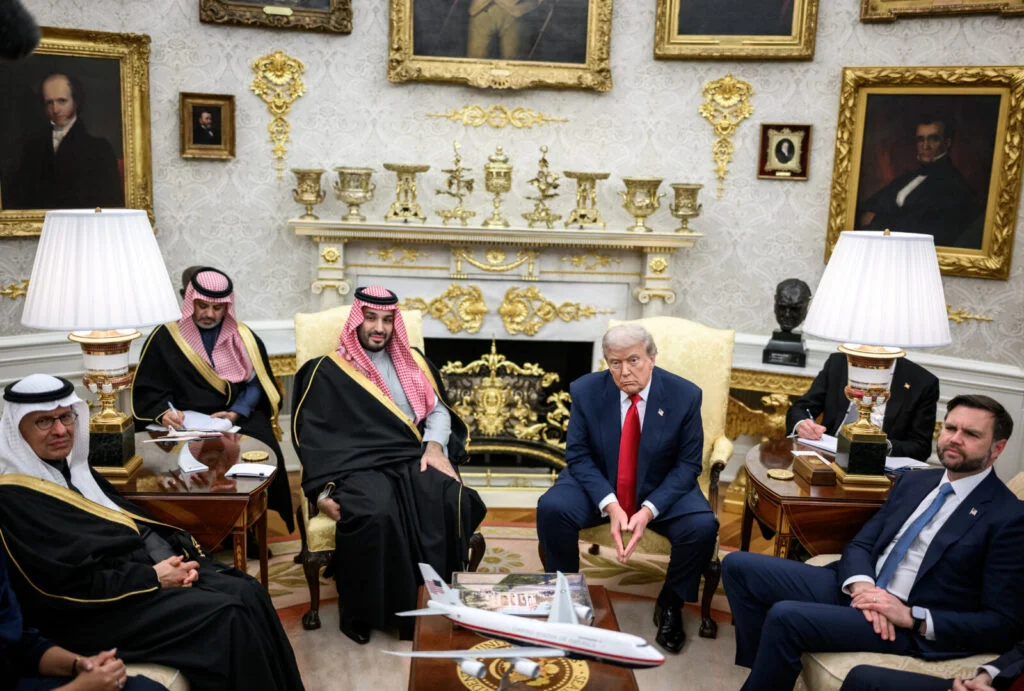
Arab Barometer, one of the few rigorous independent polling sources in the region, conducted surveys across eight Arab countries in late 2025. In “America has Lost the Arab World,” the results present a striking picture. It is now China, not the United States, that majorities in the Arab world consider more likely to uphold international law. This is not a marginal shift. It reflects a broad and consistent pattern across countries with very different relationships to Washington. President Donald Trump’s foreign policy approval ratings are deeply unfavorable across the region: 24 percent in Iraq, 14 percent in Tunisia, and 12 percent in Jordan and the Palestinian territories.
China’s overall favorability ranges from 37 percent in Syria to 69 percent in Tunisia—substantially higher than the United States in every country surveyed. Even Russia, a serial violator of the principles of national sovereignty that Washington invokes, outperforms the United States in favorability. President Vladimir Putin’s support rose by 33 percentage points in Morocco, 20 in Jordan, 17 in Tunisia, and 14 in the Palestinian territories. More than 40 percent of respondents in Tunisia and Iraq express support for him.
The pattern is particularly striking in Egypt, one of Washington’s oldest regional partners and a recipient of decades of American military assistance. Only 25 percent of Egyptian respondents say the United States upholds international law; 58 percent say the same of China.
When asked which country has the better policy for maintaining regional security, just 6 percent of Egyptians and Palestinians choose the United States, alongside 9 percent of Jordanians and 13 percent of Tunisians. China outpolls Washington by margins of 3, 4, and 5 to 1. Even on the question of which country better protects freedoms and rights—an area where the United States once led without serious competition—Arab publics now favor Beijing.
Unpacking Shifted Sentiments in Arab World
This raises an obvious question: why has Chinese favorability risen? Beijing has built no meaningful security architecture in the Middle East, fought no wars on behalf of Arab populations, and offers no model that could reasonably be confused with liberal governance or human rights. Arab respondents understand this. Large majorities continue to describe Iran’s nuclear program as a critical threat. They are not credulous about the countries they now rate above the United States. What appears to have changed is their comparative assessment of Washington itself.
The data suggests a clear cause. Across the eight countries surveyed, overwhelming majorities—86 percent in Egypt and Jordan, 84 percent in the Palestinian territories, 78 percent in Lebanon—describe the United States as siding with Israel against the Palestinians.
They watched Washington supply the weapons used in Gaza while shielding Israel at the UN Security Council and dismissing the findings of international institutions the United States helped establish. The charge in Arab public opinion is not necessarily due to underlying anti-American attitudes. It is more likely due to the specific accusation of hypocrisy—the selective application of principles that Washington claims as universal. Russia and China, which make no credible claim to uphold a liberal international order, may simply be immune to that particular charge.
Arab World Dynamics Inhibit Strategic Burden-Sharing
Foreign policy is not a popularity contest, and all states make choices that invite criticism from others. Some degree of inconsistency between ideals and practice is inherent in managing complex, overlapping, and occasionally contradictory national interests. But there is a difference between inconsistency that invites principled criticism and a posture that systematically undermines the principles a country publicly claims to uphold. The costs are not equivalent.
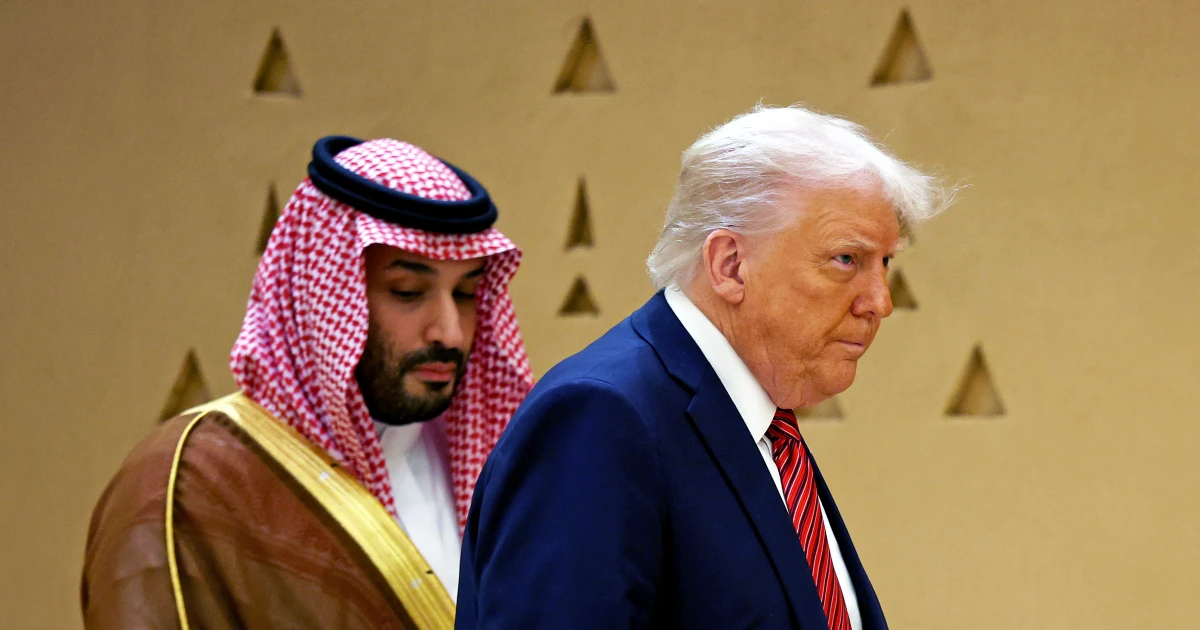
Arab governments, including the most authoritarian among them, are not entirely insulated from public opinion. Washington is working—sensibly—toward a regional framework of greater burden-sharing. But that framework requires trust and coordination with local partners, not less. This applies not only to defense cooperation but also to the diplomatic initiatives that have become central to the American strategic posture in the region, including the Abraham Accords normalization framework.
Rebuilding Standing Within Arab World Alliances
Publicly coordinating with a Washington perceived as morally compromised carries real domestic political costs for regional partners. It is reasonable to assume the collapse in American standing has already complicated some of those initiatives. Building a coherent front on Iran, or on regional stability more broadly, becomes harder when the anchor partner is viewed as applying its stated principles selectively. The data also contains a more hopeful signal about what is recoverable. After October 7, France’s favorability in the Arab world declined alongside Washington’s.
In September 2025, Paris formally recognized Palestinian statehood. Within months, French favorability rose by 11 percentage points in Tunisia, 10 in Morocco, and 7 in Lebanon. The act was largely symbolic in practical terms; the response appears real. This does not suggest that the United States must replicate the French decision or abandon its support for Israel’s security. But it does suggest that the collapse of American standing in the region is not irreversible. Concrete, principled action can move the numbers in ways that mere rhetorical reassurances cannot.
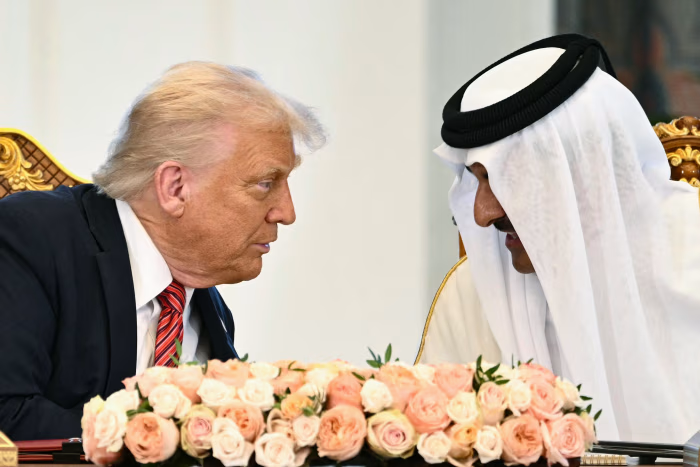
The Israel-Gaza conflict is not the only source of Arab grievances toward the United States, but the polling suggests it is the dominant one at this moment. The current ceasefire has been fragile and repeatedly violated. It has not addressed the underlying conditions—displacement, destruction of civilian infrastructure, ongoing operations in parts of Gaza, and continuing settler violence in the West Bank—that Arab publics are watching. Progress that exists on paper but not in practice will not restore credibility.
The United States has a choice. It can continue to assert moral leadership while pursuing policies that Arab publics—and a growing portion of the international community—regard as contradicting that claim, and accept the resulting continued erosion of its regional standing. Or it can recognize that standing was always conditional on a minimum degree of consistency between stated principles and actual conduct, and begin to close that gap. That does not require abandoning Israel. It does require applying the same standards Washington invoked for Ukraine to this conflict: civilian protection, accountability for violations of the laws of armed conflict, and meaningful pressure toward outcomes that address the conditions driving the crisis.
The Arab world is not waiting to be persuaded by American rhetoric. It is watching what the United States does. The latest polling suggests Washington has little time left to demonstrate that the gap between its words and its actions can be closed. The gap is narrowing, and the structural costs of continued inaction—to alliance management, to burden-sharing frameworks, to any coherent regional strategy—will accumulate faster than American policymakers appear to appreciate.