
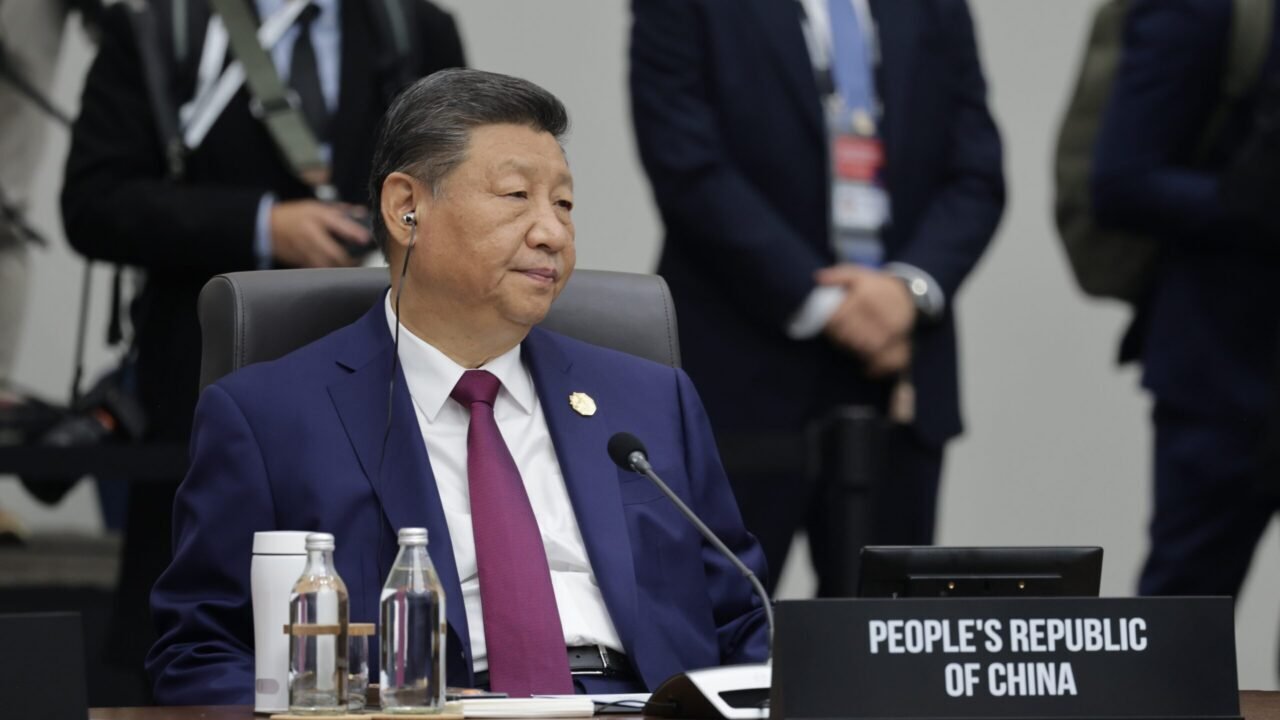
This strategic assessment details how China capitalizes on the Ukraine war as a live-fire laboratory, extracting invaluable combat data, securing supply chain hegemony, and splitting Western defense focus to actively establish theater readiness for Taiwan.
Beijing’s calculated geopolitical positioning indicates that the Ukraine war serves as a highly functional testing ground for an impending Pacific conflict. This systemic integration of real-world combat data allows the People’s Liberation Army to refine its operational capabilities, while the overarching strategic dynamic deliberately exhausts Western resources and splits Washington’s defensive focus, effectively ensuring the Ukraine war accelerates Chinese preparations for a decisive move against Taiwan.
Ukraine War Dictates Supply Chains
For two nights at the beginning of June, Russia sent more than 650 drones and over 70 missiles into Ukraine, killing 23 people and bringing down apartment blocks in Kyiv and Dnipro. By drone count, it was one of the largest Russian attacks of the war.
Examining the wreckage, one can find the same story in every fuselage. The flight controller, the optics, the engine, and the carbon-fiber skin are all of Chinese origin. It may have been bolted together in Russia, but its parts were manufactured in Shenzhen and Xiamen.
The man who arms Russian President Vladimir Putin, we are told, just sent him home empty-handed. That was the read on Beijing last month after President Putin arrived with a thin agenda and left without a Siberian pipeline. Chinese President Xi Jinping reportedly told US PresidentDonald Trump that Putin “may regret” the whole adventure. But in Brussels last July, officials briefed on a closed-door meeting say that Chinese Foreign Minister Wang Yi told the EU Commission Vice President Kaja Kallas the reverse: Beijing cannot accept a Russian defeat, because it would free Washington to turn its whole focus on China.
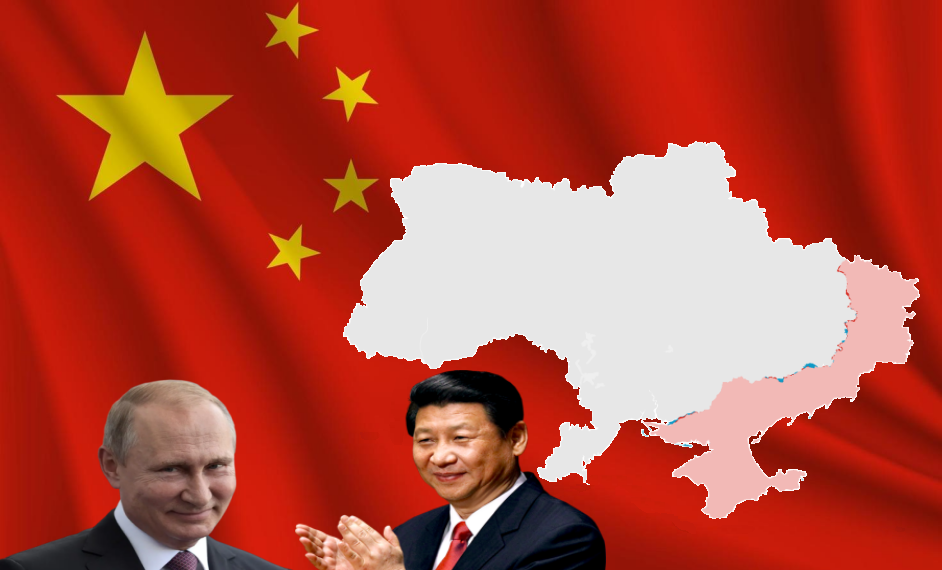
Operational Leverage Inside Ukraine War Infrastructure
Start with what Beijing can do, because it tells you what Beijing chooses not to do. When China wants a supply chain to stop running, it stops it. Days after the Trump administration imposed tariffs on global trade in April 2025, China put licensing controls on seven rare earth elements and the magnets that need them. Within weeks, the Ford Motor Company idled a plant in Chicago.
In October, Beijing widened the rule to apply to any product on Earth containing more than a trace of Chinese rare earth elements, then suspended that expansion in response to an American tariff cut while keeping the core controls in force. China’s strategy played out similarly with the Biden administration on gallium and germanium in 2023, and on dual-use exports to America in 2024. A state that can shut down a Ford line across the planet does not lack leverage over the supplier it bankrolls in Russia.
And China is undoubtedly the most critical supplier of Russia’s war effort. Nine out of 10 sanctioned technologies that Russia imports now come through China. Even the Oreshnik ballistic missile that hit near Kyiv last month has warheads cut on Chinese machines.
Wang Yi gave away the means in the same breath he gave away the motive. In that same meeting, pressed on whether China was fueling the fighting, he denied it with a boast: if Beijing were really helping Moscow, the war would already be over. He is right. That is the admission. The valve exists, but China’s hand is holding it still.
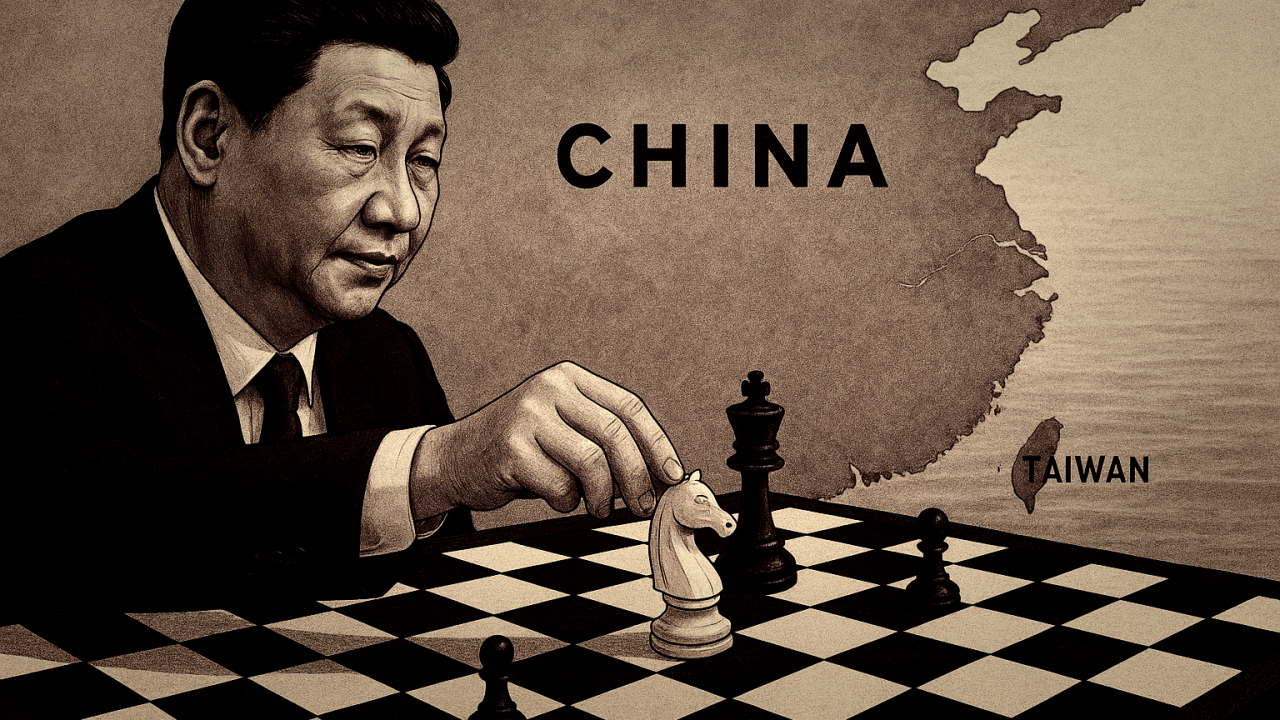
Combat Insights Derived From Ukraine War
Why hold it open? Because the war pays Beijing in a currency that the export-control debate never counts: data. Admiral Samuel Paparo, who commands American forces in the Pacific, said in February 2025 that China’s maneuvers around Taiwan are not exercises but “rehearsals.”
The word fits the supply chain, too. Every Chinese chip pulled from a downed Shahed drone in Kyiv, every guidance unit recovered from an Iranian-backed Houthi drone in the Red Sea, is a live-fire test the People’s Liberation Army never had to run and never had to pay for. Moscow and the Houthis are flying Chinese parts under real fire against real defenses, and the performance reports flow back to Beijing. For three years, we argued about what China can build. That was the wrong question. What decides the next war is what China learns from what it ships, and two live conflicts are subsidizing the lesson.
The military has a phrase for this kind of preparation: setting the theater. It is the work done before a shot is fired, the access, the logistics, the intelligence, the proven equipment that tilts the ground your way when the order comes.
Xi is setting up the Pacific theater with knowledge gained from other, more distant wars. Ukraine keeps Europe frightened, and Washington’s gaze is split across two oceans; NATO calls China the war’s “decisive enabler” but still drafts a separate Indo-Pacific strategy. Every component fired at Kyiv hardens the doctrine the PLA will carry into the Taiwan Strait. And the lesson isn’t only in the hardware. North Korea has sent more than 20,000 soldiers into Ukraine. And while that contingent has suffered thousands of casualties, the rest will return home schooled in drone war.
Ukraine War Framework Multiplies Pressures
Xi Jinping was in Pyongyang this week, his first visit in seven years. A bloodied North Korea is a second front waiting to open, the surest way to pin American forces in Korea while the PLA moves on Taiwan. Xi has ordered that the force be ready by 2027, a date CIA Director William Burns has confirmed and Admiral Philip Davidson flagged in 2021. He has a quieter option, too: Taiwan’s 2028 election and the Kuomintang, whose new chairwoman went to Beijing this spring and is in the United States this month, warning Americans against an “avoidable war” over Taiwan.
The comforting story is that Xi has tired of his Russian junior partner. The evidence points to the opposite conclusion. The junior partner is doing China’s dirty work: bleeding Europe, fixing Washington’s attention, and field-testing the tools of a Pacific war.
Western Counterstrategies Overcoming Ukraine War Dynamics
Once that reality is embraced, the policy follows. Washington should stop asking China for help on Ukraine or Iran. Beijing is reaping the benefits of both conflicts and sees no cost in its support for Moscow and Tehran. We should shine a bright light on China’s material support for aggression and terrorism, sanction the firms fueling Russia’s and Iran’s war machines, and increase our support to Taiwan.
A Russian defeat is exactly what Beijing says it cannot accept, which is why Washington should arm Ukraine to deliver one. Beijing did not send Putin home with nothing. It renewed his license. We should stop mistaking that renewal for restraint, and start reading the drones over Kyiv for what they are: a rehearsal, and a theater being set.