
The armed interception of an Iranian cargo ship has prompted Tehran to signal withdrawal from talks and vow retaliation, raising escalation risks. With U.S. naval deployments expanding, maritime coercion now threatens to eclipse diplomacy and destabilize an already tenuous ceasefire.
US Marines seized an Iranian-flagged cargo ship on Sunday—a move that Iran denounced as “piracy” and a violation of the two-week ceasefire.
On Monday, a US diplomatic delegation led by Vice President JD Vance, US special envoy Steve Witkoff, and President Donald Trump’s son-in-law Jared Kushner had been set to head to Pakistan for a second round of peace talks. By afternoon, however, the trip seemed off, with Iranian officials indicating a lack of interest in hearing what the US team had to say.
Iran’s seeming pullout from the talks followed the announcement by the United States Central Command (CENTCOM) that it had fired on and then seized an Iranian cargo ship in the Strait of Hormuz on Sunday.
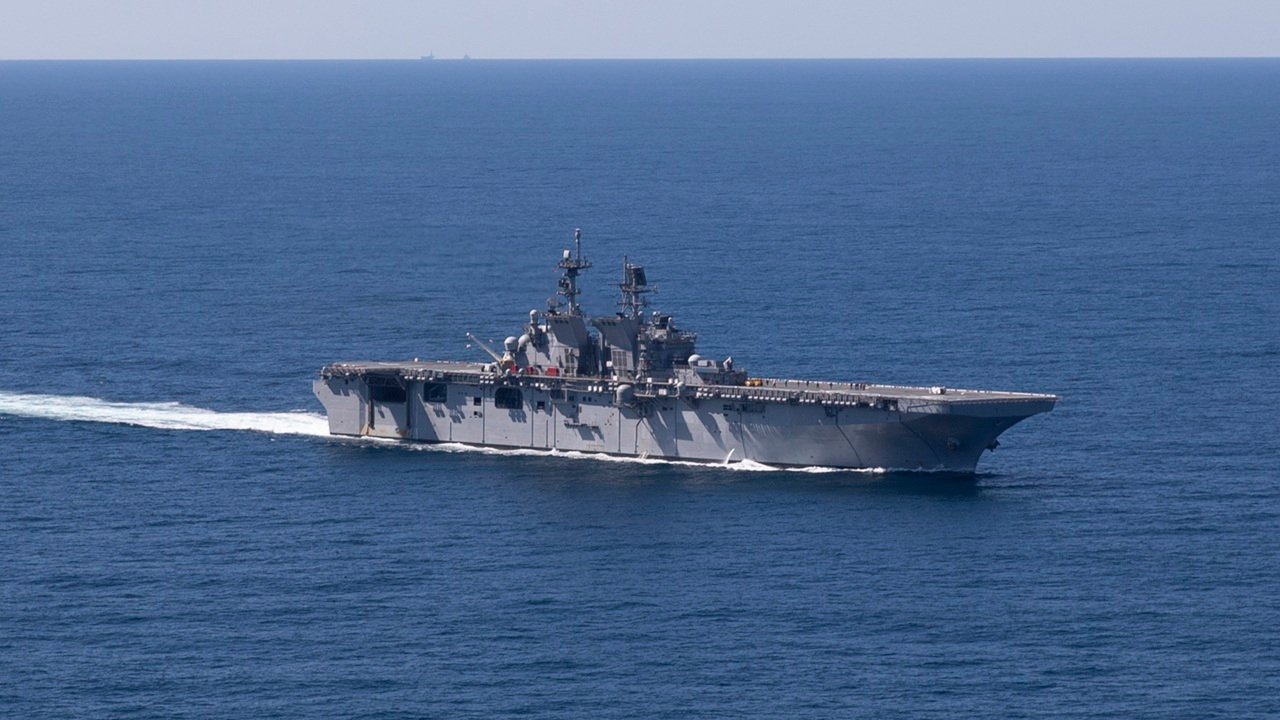
“US Marines [have] depart[ed] amphibious assault ship USS Tripoli (LHA 7) by helicopter and transit over the Arabian Sea to board and seize M/V Touska,” CENTCOM announced in a post on X (formerly Twitter) early Monday morning. “The Marines rappelled onto the Iranian-flagged vessel … after guided-missile destroyer USS Spruance (DDG 111) disabled Touska’s propulsion when the commercial ship failed to comply with repeated warnings from US forces over a six-hour period.”
CENTCOM also shared a video of the operation.
U.S. Marines depart amphibious assault ship USS Tripoli (LHA 7) by helicopter and transit over the Arabian Sea to board and seize M/V Touska. The Marines rappelled onto the Iranian-flagged vessel, April 19, after guided-missile destroyer USS Spruance (DDG 111) disabled Touska’s… pic.twitter.com/mFxI5RzYCS
— U.S. Central Command (@CENTCOM) April 20, 2026
President Donald Trump also described the incident in a post on Truth Social on Sunday.
“The US Navy Guided Missile Destroyer USS SPRUANCE intercepted the TOUSKA in the Gulf of Oman, and gave them fair warning to stop,” Trump wrote. “The Iranian crew refused to listen, so our Navy ship stopped them right in their tracks by blowing a hole in the engineroom. Right now, US Marines have custody of the vessel. The TOUSKA is under US Treasury Sanctions because of their prior history of illegal activity. We have full custody of the ship, and are seeing what’s on board!”
The ship was reported to be under the United States Department of the Treasury’s Office of Foreign Assets Control over its alleged ties to Iranian shipping companies.
The 31st Marine Expeditionary Unit in the Spotlight
Key to the action was the United States Marine Corps’ 31st Marine Expeditionary Unit (MEU), a rapid-response force of approximately 2,200 personnel based on Okinawa, Japan. An MEU can provide ground and aviation combat components, with some units specifically trained for special operations.
“An MEU consists of four elements: command, ground combat, air combat and logistics combat,” CNN wrote. “MEUs typically have been used for missions like evacuations and amphibious operations that require ship-to-shore movements, like raids and assaults.”
The 31st MEU has embarked on the America-class amphibious assault ship USS Tripoli (LHA-7), which has been operating with the amphibious transport docks USS San Diego (LPD-22) and USS New Orleans (LPD-18). Those vessels are specially designed to transport, embark, and land elements of a landing force, including an MEU, into a war zone.
Further Escalation Is Still Possible
This was the first interception of an Iranian vessel since the United States imposed its blockade of Iranian ports last week. Tehran has labeled the armed boarding of one of its vessels as an act of piracy, but also a violation of the already fragile ceasefire that is set to expire on Wednesday.
Oil prices shot up again on Monday, jumping by five percent, while European stock markets declined in early trading.
The Islamic Republic has vowed to respond—signaling that not only will it not be present at the peace talks, but that it is ready to continue to engage the United States in combat.
“We warn that the armed forces of the Islamic Republic of Iran will soon respond and retaliate against this armed piracy by the US military,” an Iranian spokesperson said in a statement to the media, reported by Canadian state broadcaster CBC.
The United States Navy continues to move assets to the region.
The nuclear-powered supercarrier USS Gerald R. Ford (CVN-78) is now operating in the Red Sea, and another supercarrier, the 10th and final Nimitz-class flattop, the USS George H.W. Bush (CVN-77), is now traveling around Africa and could be in the region later this week. The Nimitz-class aircraft carrier USS Abraham Lincoln (CVN-72) remains in the Arabian Sea.
The United States Navy has not maintained the presence of three aircraft carriers in the region since the 2003 invasion of Iraq.