
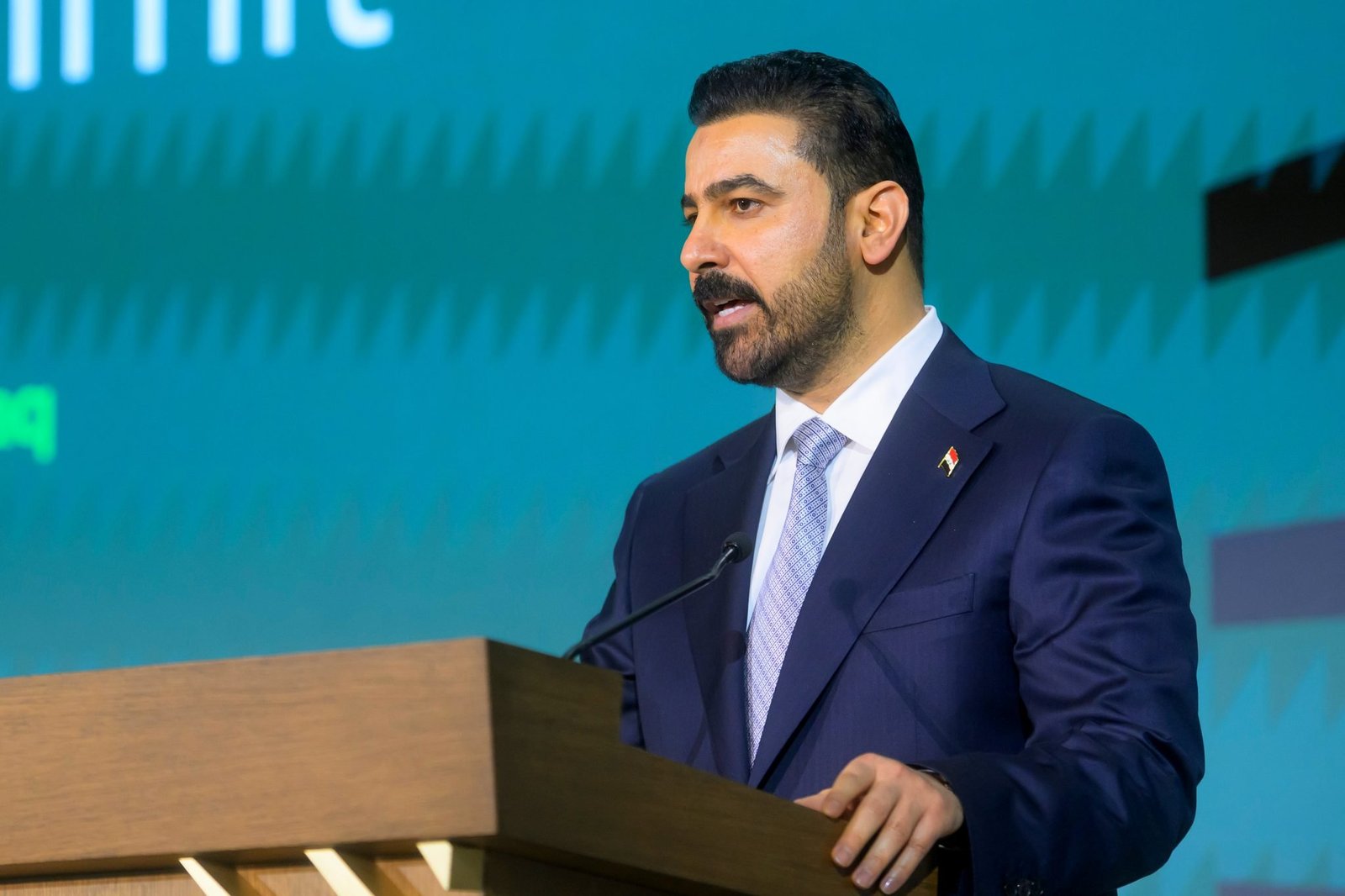
Iraq’s fiscal shock from Hormuz disruption exposes structural weaknesses in its rentier economy. Zaidi’s anti-corruption campaign creates political cover for reform while Baghdad negotiates Erbil, fiscal triage, oil investment, and private-sector development.
Iraq fiscal shock has arrived with a force that extends far beyond disrupted oil exports. The closure of the Strait of Hormuz, elevated insurance and security costs, and the unwinding of wartime price premiums have converged to expose the structural fragility of Iraq’s rentier political economy. Oil revenues finance salaries, pensions, social protection, subsidies, and the elaborate networks of political accommodation through which successive governments have managed elite competition.
When those revenues become uncertain, the state faces an immediate distributional crisis: which constituencies will be protected, which obligations delayed, and which bargains renegotiated. This is the test confronting Prime Minister Ali al-Zaidi’s new government.
The Iraq fiscal shock therefore represents more than a budgetary emergency. It is a political bargaining crisis with profound implications for Iraq’s post-2003 settlement. The state tends to protect immediate political stability at the expense of future economic resilience, delaying capital projects and maintenance while insulating politically connected networks. Yet the shock has also created an opening for anti-corruption enforcement, which can serve simultaneously as public reassurance, elite discipline, and political cover for deeper reform. Whether Zaidi seizes this opening or retreats to the old bargain will determine whether Iraq merely survives the current disruption or begins a genuine economic transition.
Iraq Fiscal Shock Exposes Structural Weakness
The disruptions to shipping through the Strait of Hormuz have left Iraq facing more than an immediate export shock. Transport has remained constrained, insurance and security costs have remained elevated, and the market premium generated by the conflict has begun to unwind. Iraq now faces a difficult combination: reduced revenues from disrupted exports, a backlog in restoring normal production and shipments, and a global oil market that may not sustain the high prices needed to finance its spending commitments.
Iraq remains a petro-rentier state par excellence: oil revenues finance salaries, pensions, social protection, food subsidies, electricity, provincial projects, contracts, and the networks of political accommodation through which successive governments have managed elite competition. When oil revenue becomes uncertain, the question becomes which constituencies will be protected, which obligations will be delayed, and which political bargains will have to be renegotiated. That is the real test facing Prime Minister (PM) Ali al-Zaidi’s new government.
A Political Bargaining Crisis Unfolds
Iraq entered the Hormuz disruption with almost no fiscal space. The country’s economic model remains overwhelmingly dependent on hydrocarbons, while its public spending structure is rigid. Salaries, pensions, transfers, and politically sensitive recurrent expenditures are difficult to reduce quickly. When revenue falls, the easiest expenditures to delay are usually capital projects, contractor payments, maintenance, infrastructure investment, and provincial development allocations. Yet those are precisely the expenditures most needed to improve productivity, create employment, and reduce long-term dependence on oil.
When oil revenues decline, the state tends to protect immediate political stability at the expense of future economic resilience. The Hormuz disruption has sharpened that dilemma. Baghdad must preserve confidence that salaries, pensions, and basic services will continue, while managing its obligations to international oil companies, provincial actors, the Kurdistan Region, and the coalitions that sustain the government. In this context, fiscal policy cannot be understood as a technocratic exercise, but as an exercise in managing the political marketplace. A government that delays contracts in Basra, restricts provincial allocations, postpones transfers, or slows recruitment is not merely making budgetary decisions. It is redistributing political costs among influential constituencies.
The danger is that a short-term response to fiscal pressure hardens into another round of selective adjustment, in which politically connected groups remain insulated while ordinary citizens, small businesses, and local service systems absorb the burden. That outcome would deepen public distrust and reinforce the perception that the Iraqi state is capable of distributing oil rents but unable to convert national wealth into a more equitable and productive economic order.
Anti-Corruption Emerges as Political Strategy
The new government’s anti-corruption campaign should be understood as more than a legal or symbolic initiative. The recent raids against politicians, members of parliament, and senior officials came at a politically consequential moment. The raids that started in late June reached senior figures connected to the oil sector and were presented as part of a broader effort to protect public funds and strengthen state institutions.
At a moment when Iraqis are concerned about fiscal pressure, delayed payments, and the state’s capacity to protect salaries and services, anti-corruption action is difficult to oppose publicly. Few political actors will wish to appear to defend networks accused of diverting public resources while the wider population is asked to absorb the consequences of a national revenue shock. This creates an important opening for PM Zaidi.
The campaign can serve four functions simultaneously. First, it can reassure the public that the costs of fiscal adjustment will not be borne only by citizens who depend on salaries, pensions, and basic services. Second, it can discipline political and bureaucratic networks that have treated access to office, contracts, procurement, and public funds as protected sources of income.
Third, it can create political cover for reforms that would otherwise be difficult to pursue, including procurement reform, expenditure prioritization, investment liberalization, and stronger oversight of state-owned entities and public contracts. Fourth, it can recalibrate Zaidi’s position within the governing coalition. Before taking office, he was widely perceived as a consensus choice: an executive with commercial experience but without a deep independent political base, whose appointment might allow the Coordination Framework to preserve influence behind the scenes amid wider regional uncertainty. The raids complicate that reading. By making anti-corruption the government’s first visible assertion of authority, Zaidi has begun to move beyond the image of a caretaker consensus figure and toward a more autonomous political role.
Can Anti-Corruption Produce Real Reform
In Iraq, anti-corruption enforcement will inevitably affect the balance of power among parties, factions, and economic networks. Its legitimacy will depend on due process, transparent evidence, judicial independence, and an ability to reach beyond isolated figures. If the campaign is seen as merely rearranging patronage networks, it may strengthen Zaidi temporarily but will not create the public confidence required for deeper reform. If, however, it demonstrates that no elite network is fully protected, it could become the government’s strongest instrument for building authority during a period of fiscal stress.
There is also a broader moral-political dimension. Political discussion in Iraq has suggested that the campaign is broadly compatible with Najaf’s long-standing emphasis on protecting public funds, limiting corruption, and strengthening state authority. This should not be interpreted as a formal endorsement by the Marjiya of the government or of specific raids. Yet the perception that anti-corruption action is aligned with the ethical expectations associated with Najaf gives the campaign broader political resonance.
Zaidi’s Practical Bargains Take Shape
Zaidi’s government is likely to respond to the crisis through a series of practical bargains rather than a single comprehensive reform package. The first is a Baghdad–Erbil bargain. The Hormuz disruption has reinforced the strategic value of alternative export routes, particularly the northern pipeline system through the Kurdistan Region and Turkey. Baghdad now has stronger incentives to reach workable arrangements with Erbil on production, export volumes, operating costs, revenues, and salary transfers. This is unlikely to produce a final constitutional settlement of Iraq’s long-standing dispute over hydrocarbons and federal authority. More likely, it will generate a transactional federal bargain shaped by immediate necessity.
Baghdad needs greater export optionality; Erbil needs predictable financial transfers and a clearer framework for operating costs and oil revenues. Both sides have incentives to cooperate, even if neither is ready to resolve the deeper political dispute. Baghdad is also exploring wider regional logistics and connectivity corridors. Recent Iraqi engagement with Syria, including Foreign Minister Fuad Hussein’s high-level visit and discussions on establishing a joint coordination mechanism for the rehabilitation of oil pipelines, indicates that Iraq is beginning to view export security through a broader regional lens. The UAE’s expanding economic diplomacy with both Iraq and Syria reinforces the growing importance of corridor politics, infrastructure diplomacy, and regional connectivity.
Fiscal Triage and Oil Investment
The second bargain is fiscal triage. The government is unlikely to pursue dramatic austerity, particularly in its first months. Broad cuts to salaries, pensions, or social protection would create immediate political backlash and could undermine the new government before it consolidates authority. Instead, Baghdad will likely prioritize politically sensitive recurrent spending while slowing lower-priority capital projects, renegotiating obligations to contractors, tightening procurement, and targeting leakages in state spending. While such measures may be politically unavoidable, they cannot become a substitute for reform. Iraq has repeatedly responded to fiscal strain by compressing investment and accumulating arrears, thereby protecting short-term stability while weakening long-term growth. The new government must avoid repeating that pattern.
The third bargain concerns oil investment and external capital. Iraq will need to restore production capacity, reassure international oil companies, improve operational security, and address outstanding payment and contractual concerns. It will also continue to seek greater flexibility through OPEC and explore alternative transport routes. But higher production alone will not resolve Iraq’s structural vulnerability. An oil sector concentrated around a narrow export geography, combined with a rigid fiscal model, remains exposed to future disruptions driven by regional conflict, price volatility, infrastructure failure, or domestic political paralysis.
From Fiscal Emergency to Economic Repositioning
The more consequential question is whether Zaidi can use the crisis to shift Iraq’s economic trajectory. His business background may matter in this regard. Zaidi entered office with experience in banking and commercial sectors closely connected to the Iraqi economy.
This does not automatically make him a reformer, but it may give him a clearer understanding of how outdated laws, discretionary regulation, cumbersome licensing procedures, weak banking systems, customs delays, procurement opacity, and inconsistent policy implementation constrain private investment. For decades, Iraq’s economic model has encouraged citizens to view the state as the primary employer, investor, lender, and source of economic security. This model was sustainable only when oil rents were high enough to finance the expansion of public employment and recurrent spending. It cannot meet the needs of a young and growing population indefinitely.
A lower-price oil environment is not inherently beneficial. It can deepen hardship, weaken services, and increase inequality. Yet it can also create the political necessity for reforms that high-rent periods repeatedly postponed. The government should therefore use the crisis to improve the operating environment for Iraqi businesses.
Priorities should include simplifying business registration and licensing, reducing discretionary administrative barriers, strengthening customs and trade procedures, expanding access to finance for small and medium-sized enterprises, modernizing payment systems, improving investor protections, reforming public procurement, and investing in electricity, logistics, and digital infrastructure.
The objective should be productive, private-sector-led, job-rich growth, not another cycle of politically connected contracting. Iraq does not simply need more private companies. It needs a more competitive economy in which small and medium-sized enterprises can start, survive, expand, and create jobs without depending on party affiliation, informal protection, or privileged access to public contracts.
Iraq Fiscal Shock and Reform Convergence
This is where anti-corruption and private-sector reform converge. International and regional investors will not commit capital merely because Baghdad announces a new reform strategy. They will assess whether contracts are enforceable, whether payments are predictable, whether customs and licensing systems are transparent, and whether politically connected actors can still distort competition. The anti-corruption campaign will matter economically only if it begins to alter these underlying incentives.
Zaidi’s early engagement with EU ambassadors, including his emphasis that the new cabinet will not tolerate corruption, should be understood as an exercise in reform signaling. Similarly, the proposed Development Fund for infrastructure and electricity projects, alongside outreach to Qatar, Saudi Arabia, and the UAE, is an attempt to crowd in external capital by demonstrating that Iraq has an investable pipeline of projects and a government willing to improve the conditions for investment.
Washington as Leverage, Not a Substitute
Within this context, Zaidi’s recent visit to Washington was significant. The visit offered an opportunity to deepen economic, trade, and investment ties at a moment when Baghdad needs capital, technology, credibility, and external partnerships. The Trump administration’s early engagement with Zaidi provided an important source of external validation. But Washington cannot substitute for domestic authority or reform ownership.
The visit’s lasting value will depend on whether Zaidi can use the agreements and partnerships announced in Washington to advance a credible Iraqi economic agenda: investment in energy infrastructure, private-sector development, banking modernization, trade facilitation, technology partnerships, and stronger institutional safeguards against corruption. Zaidi must demonstrate that deeper economic engagement with the United States strengthens Iraqi sovereignty and productive capacity rather than creating a new external dependency.
Zaidi will also need to manage the domestic and regional sensitivities that accompany any visible shift in Baghdad’s relationship with Washington. Recent Iraqi media coverage of meetings between government officials and American energy companies, including Zaidi’s meeting with Chevron and the Basra governorate’s MOU with KBR, points to an emerging effort to translate diplomatic engagement into commercial and investment opportunities. The challenge will be to move beyond isolated transactions and build a coherent investment framework that links energy, infrastructure, banking, logistics, and governance reform.
Iraq’s Narrow Opening
The Hormuz shock has exposed a structural weakness in Iraq’s post-2003 political economy. Iraq built oil production capacity without building sufficient fiscal resilience, export redundancy, or a durable economic alternative to rent distribution. It created a state capable of spending oil revenues, but not yet one capable of managing prolonged revenue uncertainty without immediate political strain. Zaidi’s government now faces a narrow but important opening.
It can seek to restore the old bargain: resume oil exports, protect existing distribution networks, delay difficult reforms, and wait for higher prices to relieve pressure. That path may offer temporary stability, but it will leave Iraq exposed to the next disruption. Or it can use the crisis to begin a more difficult transition: protect citizens and essential services, pursue credible anti-corruption enforcement, negotiate pragmatic federal arrangements, reduce barriers to international and regional investment, and build a more resilient fiscal and economic model. The immediate fiscal shock is severe. Strategically, however, Iraq may not have had a clearer reminder that the rentier state is no longer sufficient for the country it is becoming.