
Examining whether the Iran War functions as America’s Winter War reveals how coercive campaigns can paradoxically signal weakness. This analysis explores perceptual dangers, strategic miscalculation risks, and why military outcomes matter less than the resolve adversaries perceive.
The memorandum with Iran exposes a haunting strategic paradox: coercive power that appears sufficient on paper can, in execution, signal vulnerability to adversaries. When the Iran War concluded with terms critics deem generous to Tehran, it risked projecting a dangerous image of American exhaustion, precisely as America’s Winter War once did for Stalin’s Soviet Union. The Iran War must now be examined through this lens, because America’s Winter War legacy may lie not in its battlefield outcomes but in the perceptions it cultivates among those watching for weakness.
America’s Winter War and the Misperception Trap
The recent memorandum of understanding between Iran and the United States has raised an important question among analysts and critics: Did Washington halt the Iran War on terms that appear too favorable to Tehran, and could this perception encourage America’s adversaries to test the limits of US power? Some critics argue that the agreement exposes the constraints of American coercion and may embolden rival states to act more aggressively, assuming that Washington is unwilling or unable to sustain the costs of escalation.
This concern should not be idly dismissed; history shows that costly wars fought by major powers can create dangerous misperceptions among their adversaries. A military campaign may succeed in narrow terms, but still project weakness if it appears slower, costlier, or less decisive than expected.
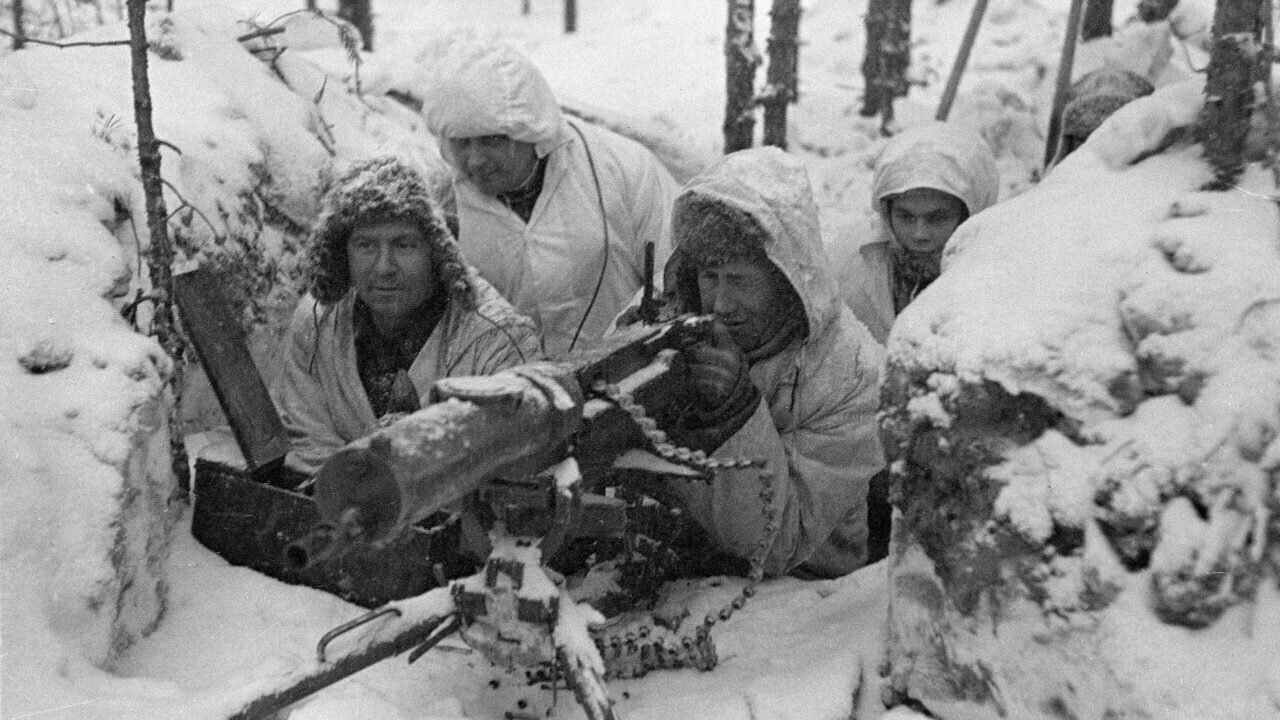
One of the clearest examples of this is the Soviet invasion of Finland in 1939–40, better known as the Winter War. The Red Army eventually forced Finland to accept harsh territorial concessions, but its mediocre performance against a much smaller opponent severely damaged the Soviet Union’s military reputation in Europe. Nazi Germany, already emboldened by its rapid victories in Poland and France, drew misleading conclusions from the Red Army’s difficulties in Finland.
Together with Soviet dictator Joseph Stalin’s purges of the Soviet officer corps, the Winter War helped reinforce the German belief that the Soviet Union could be defeated quickly. That miscalculation contributed to the confidence behind Operation Barbarossa, the German invasion of the Soviet Union in June 1941—an operation that ultimately doomed Nazi Germany and altered the fate of the world.
Legitimate Aims and America’s Winter War
The comparison between the Winter War and the recent US–Iran war should not be pushed too far. The United States is not Stalin’s Soviet Union, and Iran is not Finland. Yet the analogy is useful because both cases show how a major power can enter a war with legitimate security concerns while also carrying broader political ambitions that complicate the conflict and distort its aftermath. In both cases, the gap between stated security objectives and wider political aims shaped how outside observers understood the war.
US and Soviet Security Concerns Spur Foolish Adventurism
In the Soviet case, Moscow’s security concerns were not entirely imaginary. Leningrad lay dangerously close to the Finnish border, and Soviet leaders feared that Finland’s territory, islands in the Gulf of Finland, or naval facilities could be used by a hostile power to threaten the city and Soviet access to the Baltic Sea. In October 1939, Stalin demanded border adjustments on the Karelian Isthmus, the cession of several Finnish islands in the Gulf of Finland, part of the Fisherman’s Peninsula, and a lease on the port of Hanko for Soviet naval and air facilities. In exchange, Moscow offered Finland territory in Soviet Karelia. The stated purpose was to create a strategic buffer around Leningrad.
Nearly a century later, the United States entered its war with similarly real security concerns. Iran’s nuclear program, its missile capabilities, and its network of regional partners and proxies had long posed challenges to US interests and to American allies in the Middle East. Concerns about nuclear proliferation, attacks on US forces, and Iran’s regional reach were not invented. They formed the core of Washington’s stated justification for military action and later negotiations.
In both cases, however, security concerns were accompanied by broader political ambitions. In the Soviet case, Moscow’s aims moved beyond limited border security. By late November 1939, the Soviets had established a puppet Finnish Communist Party political bloc under Otto Wille Kuusinen, suggesting that the installation of a compliant political order in Finland was now part of Soviet planning. What began as a demand for strategic depth around Leningrad quickly became entangled with the far more enticing possibility of remaking Finland’s political future.
Lessons from America’s Winter War
A similar ambiguity surrounded the US approach to Iran. Although Washington framed the war primarily around Iran’s nuclear and regional threats, reports and public debate suggested that some US and Israeli officials also considered political scenarios for a postwar Iran, including the possible role of former President Mahmoud Ahmadinejad or exiled opposition figures such as Crown Prince Reza Pahlavi. Whether these ideas represented serious policy, contingency planning, or mere political fantasy, they blurred the line between coercive diplomacy and regime-change thinking. That ambiguity matters because adversaries rarely judge a war only by its official objectives; they judge it by the political expectations it creates and the results it fails to deliver.
Small Success Can Breed Overconfidence—and Larger Failures
Several other parallels exist. Both the Winter War and the recent Iran conflict were shaped by external events that encouraged overconfidence. For Stalin, the Molotov-Ribbentrop Pact of August 1939 removed the immediate German constraint and gave Moscow greater freedom of maneuver in Eastern Europe. The partition of Poland and the temporary accommodation with Hitler created the impression that the Soviet Union could act against Finland without facing a broader European war.
In the American case, Operation Absolute Resolve, the United States’ seizure of Venezuelan dictator Nicolás Maduro in January 2026, may have strengthened confidence in the effectiveness of decisive military action against hostile regimes. A fast, tactically successful operation in one theater can create dangerous expectations when applied to a very different strategic environment.
Disputed trigger events also preceded both wars. In the Winter War, the Soviet Union cited the Mainila incident of November 26, 1939, claiming that Finnish forces had shelled Soviet territory. That claim was widely questioned then, and has since been treated by many historians as a Soviet fabrication used to justify the invasion. In the US-Iran case, President Donald Trump argued that Iran was approaching a dangerous nuclear threshold and that military action was necessary to prevent weaponization. That claim has been hotly contested, including within the broader US intelligence and policy community; it also runs contrary to Trump’s claim that he had “obliterated” Iran’s nuclear program the previous year.
America’s Winter War and Strategic Echoes
This does not mean the two wars are identical. It means they may produce a similar strategic effect: a major power enters a conflict with real security concerns, expands or blurs its political objectives, encounters higher costs than expected, and then accepts an outcome that critics interpret as less than decisive. The danger is not simply that Iran may claim victory. The larger danger is that other US adversaries may study the war and conclude, rightly or wrongly, that American power has limits that can be exploited.
US and Soviet Strength Doesn’t Guarantee Victory
In this context, both wars began with overwhelming force and high expectations. The Soviet Union entered the Winter War with massive advantages over Finland in manpower, armor, artillery, and aircraft. Moscow expected that Helsinki would collapse quickly under the weight of Soviet pressure. The United States began its war with Iran in a similarly forceful manner. On February 28, Washington and Israel launched major strikes against Iran’s senior political and military leadership, air defenses, missile facilities, naval assets, and command infrastructure. Within the first phase of the campaign, US aircraft and warships struck more than a thousand Iranian targets.
Yet both wars exposed a strategic and doctrinal mismatch. In each case, the attacking power assumed that overwhelming force would produce rapid political results. The Soviets expected a quick victory over Finland. In the American case, Trump and senior officials presented the war as a short, decisive campaign that would degrade Iran’s military capabilities and compel political concessions. But both wars became more complicated than their planners expected. The Soviet campaign lasted more than three months and ended with the Moscow Peace Treaty of March 1940.
Finland was forced to cede important territory, including parts of Karelia and the Hanko Peninsula, but it preserved its independence and its existing political system; Kuusinen, whom Stalin had picked to lead a Sovietized Finland, quickly faded back into obscurity. The United States, by contrast, did not lose militarily in Iran, but it was unable to achieve its main political objectives; the war ended (at least for now) in an interim memorandum of understanding, rather than a decisive settlement of the nuclear, missile, proxy, or regime-change questions.
Reading America’s Winter War Correctly
The Soviet Union won the Winter War in a narrow territorial sense, but the victory came at a high strategic cost. Official Soviet wartime figures reported nearly 49,000 killed and 207,000 total casualties. Unofficial estimates, however, place total casualties between 320,000 and 390,000, with fatalities possibly three times higher than the official count.
Far more importantly, the war created a dangerous perception of Soviet weakness among Moscow’s adversaries, particularly Nazi Germany. Hitler and his generals concluded that the Red Army was weaker than it really was, and that the Soviet Union could be defeated in a short campaign; as Hitler infamously quipped, “We have only to kick in the door and the whole rotten structure will come crashing down.” As subsequent events showed, this was a catastrophic miscalculation on Berlin’s part.
Operation Barbarossa did not emerge from the Winter War alone, but the Finnish campaign reinforced German confidence that the Soviet system was militarily brittle. The result was a war that, though it ultimately defeated Nazi Germany, cost the Soviet Union millions of lives.
What Will US Adversaries Learn from the Iran War?
This is the point at which many observers now draw a parallel with the United States. They argue that America’s adversaries, especially China, Russia, and Iran itself, may look at the US–Iran war and conclude that Washington’s tolerance for escalation is lower than its military power suggests.
That argument has some merit, but it requires qualification. There are major differences between the Soviet Union in 1940 and the United States today. The Soviet Union committed an enormous portion of its available military power to the Finnish campaign, including a quarter of the Red Army’s manpower and half of its armored strength. The United States did not fight Iran in that way. It did not send large ground forces into Iran; even the deployment of three aircraft carriers to the Persian Gulf, a concentration of forces unseen since 2003, represented only about one-fourth of America’s total carrier strength and a far smaller fraction of its global military capacity.
US casualties, while politically significant, were limited in relation to the scale of the campaign. The United States also demonstrated impressive operational capabilities: it degraded much of Iran’s air defense network, struck thousands of targets, operated across the region with relative freedom of maneuver, and imposed severe damage on Iran’s conventional military infrastructure.
Therefore, America’s adversaries would be foolish to conclude that the United States is militarily weak. That would be a serious misreading, perhaps a fatal one; a direct attack on US forces or core American interests would still invite devastating retaliation. The US military remains far more capable, experienced, and globally deployable than any rival force. Unlike the Soviet Union in 1940, the United States did not reveal military incompetence. Ultimately, the affair revealed something different: the limits of political tolerance in a prolonged regional war.
Cautionary Echoes of America’s Winter War
The real pressure on Washington was not primarily military, but political and economic. Opposition at home, division within Trump’s own political coalition, market anxiety, energy disruption, and the pressure created by Iran’s ability to threaten or obstruct the Strait of Hormuz all shaped the path toward the memorandum of understanding. In that sense, Iran’s most effective leverage was not battlefield victory, but the ability to raise the political and economic costs of continuing the war.
This distinction matters. China and Russia are likely to conclude from the war that while they cannot defeat the United States directly, they may not need to. The war is clear evidence that Washington is increasingly reluctant to sustain costly commitments on behalf of its allies and partners around the world. This concern is already visible in debates over aid to Ukraine, in growing fatigue within parts of the Republican Party, and in the criticism of the Iran war from figures close to Trump’s political base. The message adversaries may take is not that America will not defend itself, but that America’s willingness to fight for others—Ukraine, Taiwan, Israel, or Gulf partners—may be more fragile than before.
Here, too, there is room for miscalculation. In 1941, Nazi Germany misread Soviet weakness and underestimated Soviet resilience. Today, America’s adversaries could make a different but equally dangerous mistake: they may distinguish between US military capability and US political will, concluding that the former is formidable but the latter is negotiable. That conclusion may turn out to be erroneous; Saddam Hussein’s 1990 invasion of Kuwait was predicated on a similar misreading of US resolve. But whether the conclusion is true or not is less important than whether they believe it. Wars often begin not because power is absent, but because power is misread.
The Winter War offers a cautionary lesson. A major power can win on the battlefield yet still encourage dangerous interpretations of its limits. The United States did not suffer a Soviet-style military embarrassment in Iran. But if the war leaves rivals convinced that Washington is unwilling to bear the costs for its allies, the strategic consequences may outlast the memorandum itself. The greater danger is that others believe the war revealed a pattern: America remains powerful, but its patience is shorter, its domestic consensus weaker, and its commitments easier to test. That is a conclusion US adversaries should not be encouraged to test, and one Washington should be careful not to confirm.