
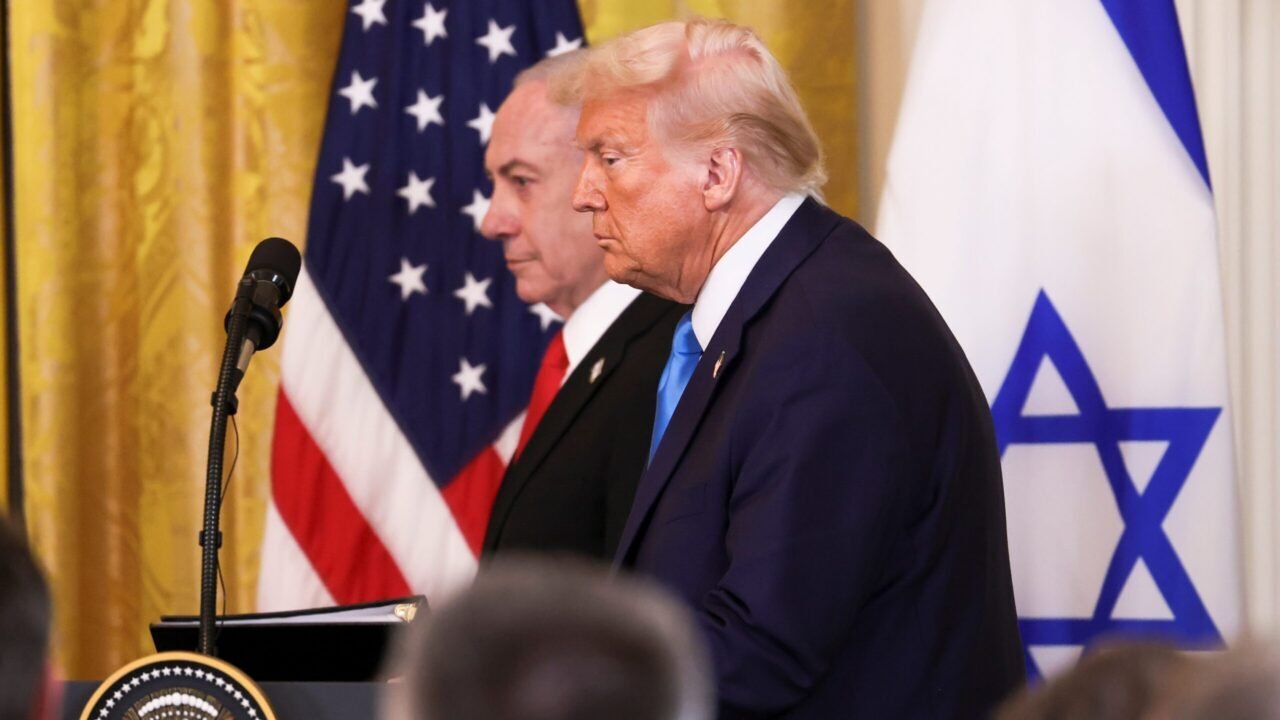
A high-level strategic evaluation of structural divergences within the US-Israel alliance, contrasting the geopolitical outcomes of the 1973 Yom Kippur War with the imposed ceasefires of the 2025-2026 Middle Eastern conflagration.
Global superpower dynamics dictate that regional conflicts end not when local combatants exhaust their ammunition, but when Washington determines that further escalation threatens broader macroeconomic stability and systemic alliance structures. The recurring geopolitical friction between the United States and Israel during major structural transitions highlights an inescapable reality: a global superpower with diversified international commitments will always subordinate the total military victory of a regional proxy to its own overarching containment strategy. The strategic maneuvers across the five decades separating historical and modern conflicts expose a rigid hierarchy within this special partnership, revealing that Washington’s diplomatic umbrella functions primarily to enforce boundaries that prevent local victories from triggering unmanageable systemic chaos.
Iran Peace Initiatives Require Dual-Track Diplomacy
History, as the great powers of the Middle East have never quite managed to learn, does not repeat itself exactly. Fifty-three years separate the October ceasefire that ended the Yom Kippur War and the rickety truce now descending on the Iran-Israel-America conflagration of 2025–2026. And yet, for anyone who has spent time studying the peculiar geometry of the US-Israel “special relationship,” the two endings feel eerily familiar, a reminder that Washington’s friendship, however genuine, has always come with asterisks written in very fine print.
Begin with the mechanics. In October 1973, with Israeli armor encircling Egypt’s Third Army on the western bank of the Suez Canal, and with Israeli Prime MinisterGolda Meir’s government poised to deliver a conclusive military blow, the Nixon administration did something that would become a recurring feature of American statecraft: it saved the enemy from total defeat and called the result a diplomatic triumph. Henry Kissinger, the supreme practitioner of what he might have called “constructive ambiguity” and what his critics called breathtaking cynicism, brokered a ceasefire that rescued Egyptian President Anwar Sadat’s battered forces and handed Washington the enviable role of the region’s indispensable mediator.
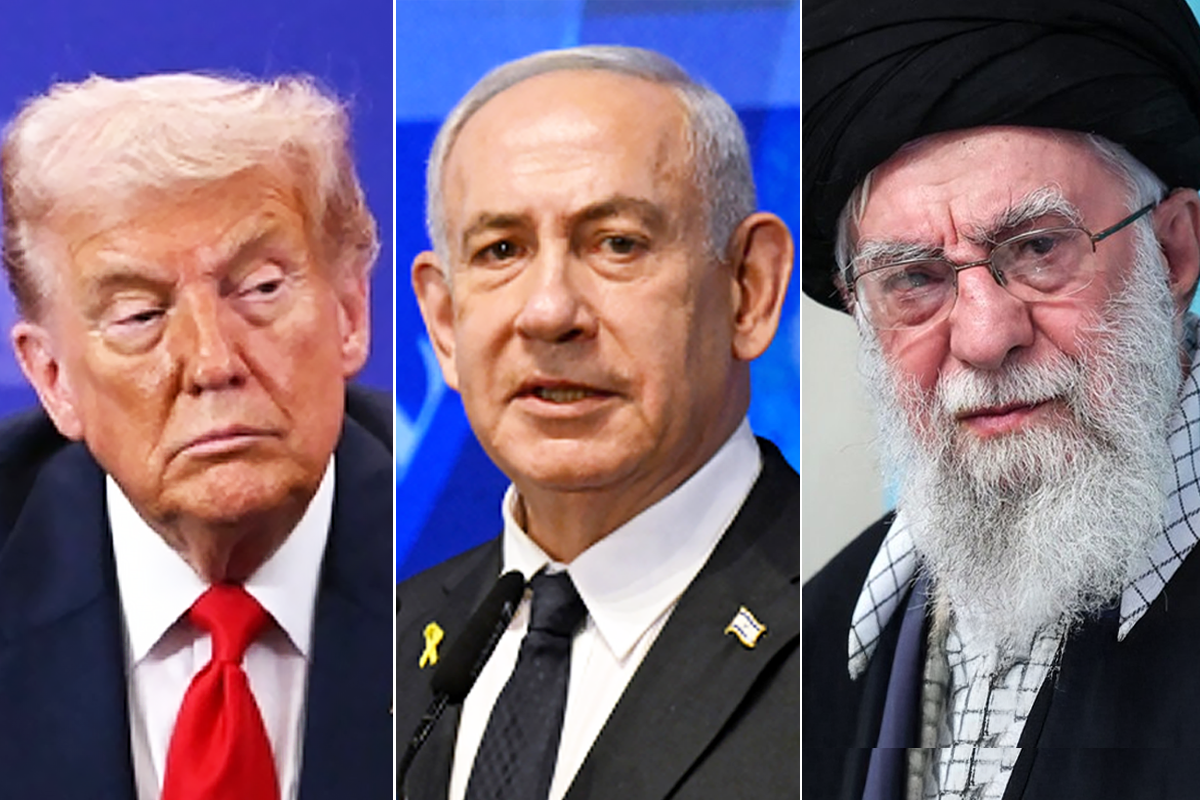
Navigating Constraints to Secure Iran Peace Realities
Israel accepted, not because it wanted to, but because it had no real choice. The US airlift that had resupplied Israeli forces, Operation Nickel Grass, had also created a dependency. Those who supply the ammunition tend to acquire a veto over their beneficiary’s operations.
Jump forward five decades. In June 2025, after 12 days of Israeli and American airstrikes that targeted Iran’s nuclear facilities and military infrastructure, President Donald Trump announced a ceasefire, publicly, on social media, with characteristic flourish, before Jerusalem had fully signed on. Washington, having achieved its core objective of degrading Iran’s nuclear program, was satisfied. Israel, which had its own list of targets yet to be struck, was told, in effect, “enough”. Prime Minister Benjamin Netanyahu’s government complied, albeit with visible reluctance, as it would again when the conflict reignited in February 2026 and another ceasefire was eventually imposed through Pakistani mediation in April.
Structural Realities Dictating Iran Peace
The pattern is so consistent it might as well be doctrine. America intervenes, America decides when the fighting stops, and Israel, the nominal partner, discovers that the “special relationship” has a hierarchy that becomes most visible precisely at the moment of victory.
The differences between 1973 and 2025–2026 are real and should not be elided. In 1973, Israel was attacked; the United States rushed arms to prevent its defeat. In 2025–2026, it was Israel and the United States that struck first, a joint operation against Iranian nuclear sites that both governments had been contemplating, in various forms, for the better part of two decades. The adversaries also differ in kind: Sadat’s Egypt was a Soviet-aligned state with a conventional-warfare army; the Islamic Republic of Iran, in its weakened post-October 7 condition, was a regional hegemon whose proxies Israel had systematically dismantled in the preceding years.
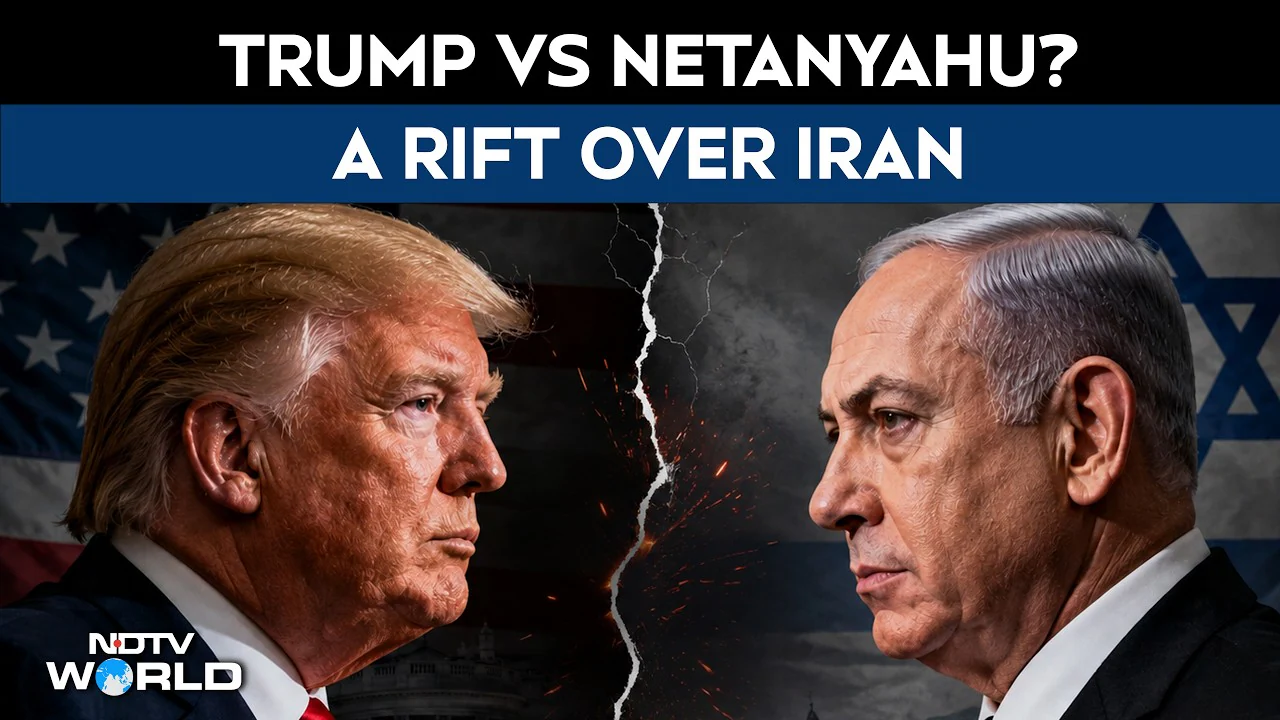
Iran Peace Paradigms Reshaping Alliances
Yet the underlying geometry of the US-Israel relationship remains stubbornly unchanged. In both cases, Washington found itself in the uncomfortable position of having to manage not only the enemy but also its ally. In both cases, the United States discovered that Israel’s strategic objectives and America’s, so neatly aligned in the heat of crisis, begin to diverge the moment the endgame comes into focus.
Kissinger, in his unsentimental way, understood this perfectly in 1973. He wanted to use Israel’s battlefield success as leverage, not as a conclusion. A destroyed Egyptian Third Army would have been a humiliation that hardened Arab opinion for a generation; a rescued Egypt, grateful for American intervention, might be peeled away from Moscow and brought into Washington’s orbit. Israel’s victory opened the Arab world to American diplomacy.
Superpower Interests Framing Iran Peace Dialogues
Trump’s calculus, characteristically less articulated but no less real, followed a similar logic. Having struck Iran’s nuclear facilities in 2025, he wanted an Iran chastened but not destroyed. Similarly, in 2026, after it became clear that the Islamic Republic would not collapse after the targeted killing of Supreme Leader Ali Khamenei, Trump wanted an Iran that could eventually sign an agreement, reopen the Strait of Hormuz, and allow the president to declare a historic deal. A maximalist Israeli campaign that continued to aim for toppling the Iranian regime risked generating exactly the kind of chaos, a power vacuum, regional escalation, a nuclear program dispersed into unknown hands, that Washington had gone to war to prevent.
Hence the pattern, repeated across both conflicts and over five decades: America provides the strategic umbrella, absorbs the costs of regional entanglement, and then insists on shaping the outcome in accordance with its own interests, which are not identical to Israel’s, however much the two governments prefer to pretend otherwise.
The aftermath of the Yom Kippur War is remembered, with the benefit of hindsight, as a qualified Israeli victory that paradoxically opened the door to peace. The 1979 Camp David Accords, arguably the most consequential diplomatic achievement in the region’s modern history, grew directly from the soil tilled by Kissinger’s post-1973 shuttle diplomacy. Egypt left the Soviet orbit, signed a separate peace with Israel, and the Arab coalition that had threatened Israel’s existence fractured irreparably.
But for Israel in late 1973, none of this was visible. What was visible was the shock of an intelligence failure that had nearly proved catastrophic, the death of nearly 2,700 soldiers, a society shaken to its core, and a sense, troubling and not entirely irrational, that even the United States, its patron and arms supplier, had kept it on a leash during the critical final hours.
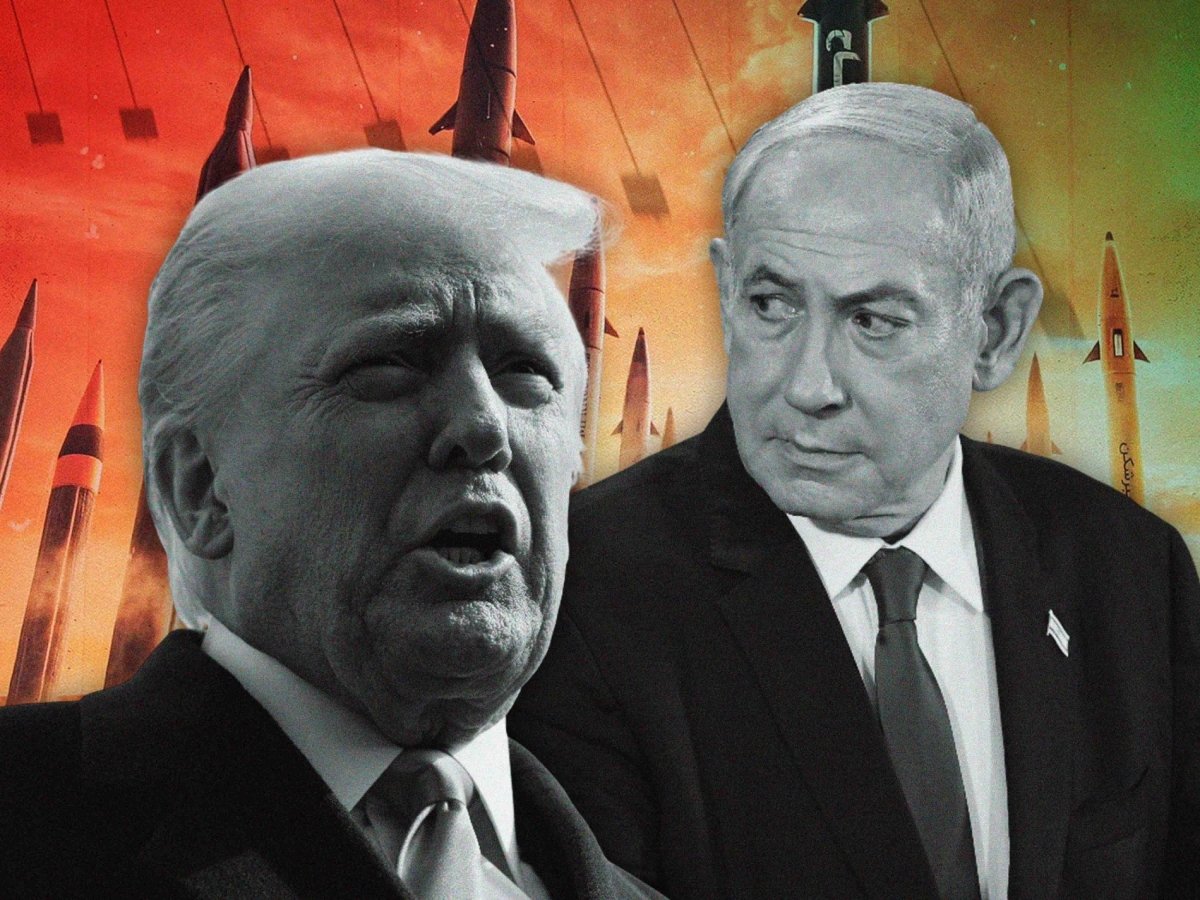
The aftermath of the 2025–2026 conflict is likely to present its own ambiguous ledger. Iran’s nuclear program has been set back by months, according to some American intelligence assessments, potentially longer if the strikes proved as effective as claimed. The regime survived the decapitation strikes, appointing Mojtaba Khamenei as supreme leader and continuing to resist. The disruption in the Strait of Hormuz sent ripple effects through global energy markets. And Israel, having fought across multiple fronts, Gaza, Lebanon, and now Iran, is exhausted.
What the 2026 ceasefire negotiations have revealed, in the fragile memorandum of understanding announced by mediators, is that the fundamental questions remain unresolved: Iran’s nuclear program, its ballistic missile arsenal, and the reconstruction of its military capacity. After 1973, the guns have stopped, but the underlying conflict has not been concluded, merely deferred, at considerable human and economic cost, to the next administration or the next crisis.
Observers on both sides of the American debate will draw their preferred lessons. Those inclined to see the US-Israel relationship through a sentimental lens will emphasize the partnership—the airlift in 1973, the joint strikes in 2025, the diplomatic cover provided across both conflicts. Those inclined toward a more realist accounting will note what the historical record makes unmistakable: when American and Israeli objectives diverge, it is Israel that is asked to defer.
This is not necessarily a betrayal, nor is it inexplicable. A great power with global commitments to manage, energy markets to stabilize, alliance structures to maintain, and domestic politics to navigate cannot simply subcontract its foreign policy to a smaller ally with existential stakes and a different time horizon. Kissinger understood this, even if he said so more tactfully in public than he did in private. Trump, whose transactionalism cuts through the diplomatic underbrush with the subtlety of a Caterpillar D9, has made the same calculation in his own idiom.
The question for Israel, the question that Israeli strategists and politicians have been debating in earnest since 1973, is what to make of a patron whose support is indispensable and whose constraints are inescapable. The answer, available to Israeli leaders willing to look squarely at the record, is that the special relationship is real but bounded; that American power can save Israel from its worst dangers but cannot be counted on to let Israel finish every fight on its own terms; and that the morning after every American-brokered ceasefire will require Israel to rebuild its deterrence, reconstitute its alliances, and prepare for the next round that the ceasefire did not prevent, merely postpone.
The Middle East that greeted the Yom Kippur War ceasefire in October 1973 was reorganizing itself for a long transition, one that produced, eventually, a cold but durable peace between Israel and Egypt, the hollowing out of pan-Arabism as an ideological force, and the eventual emergence of Iran as the region’s principal disruptive power. It is not entirely fanciful to wonder whether the 2026 ceasefire might similarly set in motion a long, painful transition, one whose endpoint no one can yet discern, but which will likely look quite different from the maximalist visions advanced by either Netanyahu or Trump during the heat of the campaign.
In the meantime, Israel finds itself where it has so often found itself since 1948: militarily formidable, diplomatically dependent, and navigating the yawning gap between what it feels it needs to survive and what its indispensable ally is prepared to permit. The morning after the guns go quiet is always, for Jerusalem, a morning of reckoning—with what was achieved, what was left undone, and what price will be paid, years hence, for the terms that Washington imposed.
Fifty-three years on, the lesson of 1973 has not changed. It has merely been confirmed, again, at a higher cost and to a wider audience.