
The trilateral Lebanon’s Washington framework does not resolve conflict but institutionalizes asymmetry, transforming peace into conditional privilege managed by external powers. It reveals sovereignty as legally attributed rather than empirically exercised, exposing how modern diplomacy curates instability.
The trilateral Lebanon’s Washington framework does not resolve conflict but institutionalizes asymmetry, transforming peace into a conditional privilege managed by external powers. This Lebanon’s Washington framework reveals sovereignty as legally attributed rather than empirically exercised, exposing how modern diplomacy curates instability while preserving strategic hierarchy for the strongest actors.
Lebanon’s Washington framework institutionalizes structural imbalance
Diplomacy often celebrates the signing of agreements. History judges whether those agreements change realities or merely rename them. The trilateral framework negotiated in Washington between Lebanon, Israel and the United States belongs, at least in its current form, to the latter category.
Marketed as the ‘beginning of the beginning’ of a pathway towards peace, the arrangement appears less a diplomatic breakthrough than a sophisticated mechanism for managing instability. Rather than resolving the conflict, it institutionalises its underlying asymmetries, transforming peace into a conditional privilege rather than a reciprocal obligation. Even the framework’s architects have stopped short of calling it a final settlement, acknowledging that it remains only an experimental process built around phased implementation and ‘pilot’ security zones.
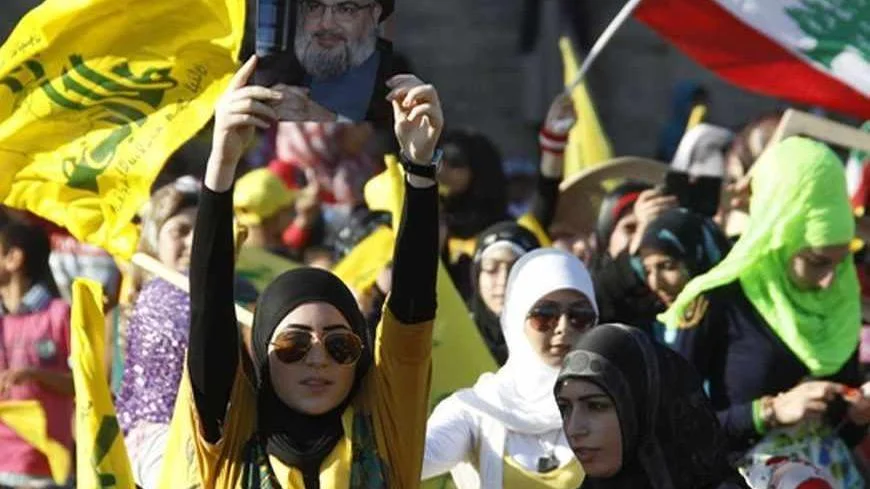
As the framework itself acknowledges, the Lebanese Armed Forces are expected to establish authority over southern Lebanon through internationally supported deployments, while Israel retains the right to resume military operations should Hezbollah violate the arrangement. The agreement therefore depends upon compliance from an actor that never accepted its legitimacy in the first place.
The performative sovereignty of Lebanon’s Washington framework
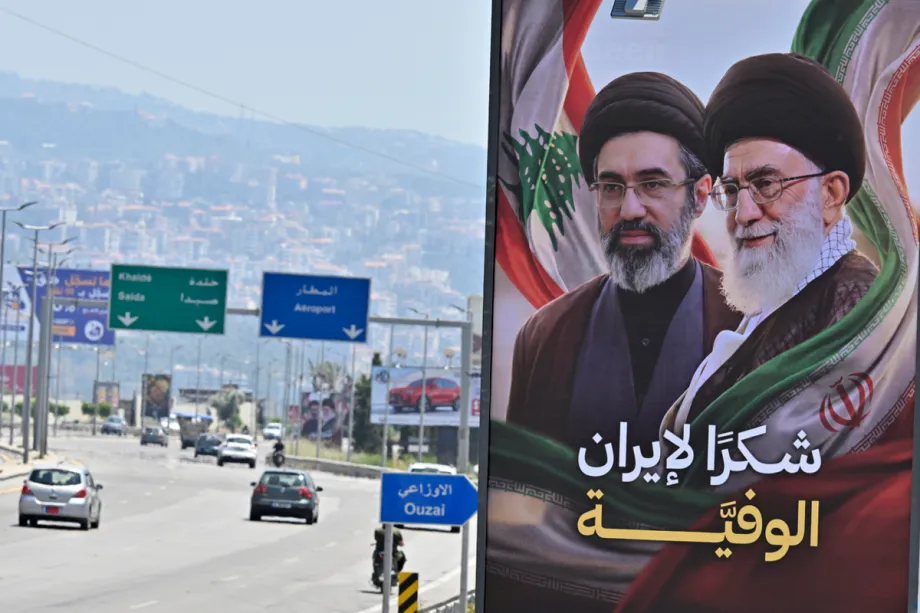
This disconnect exposes something deeper than another fragile Middle Eastern ceasefire. It reveals the increasingly performative character of sovereignty in contemporary international politics. Classical international law assumes that governments exercise a monopoly over the legitimate use of force within their territory. Lebanon demonstrates the limits of that assumption. Formal sovereignty exists on paper, yet decisive coercive authority remains fragmented among the Lebanese state, Hezbollah, Israel and the external patrons sustaining each side.
International diplomacy nevertheless continues treating Beirut as though it possesses unified control over territory and armed actors, creating what amounts to sovereignty by legal attribution rather than empirical reality.
Performance and parity in Lebanon’s Washington framework
This matters because the Washington framework is built around performance rather than parity.
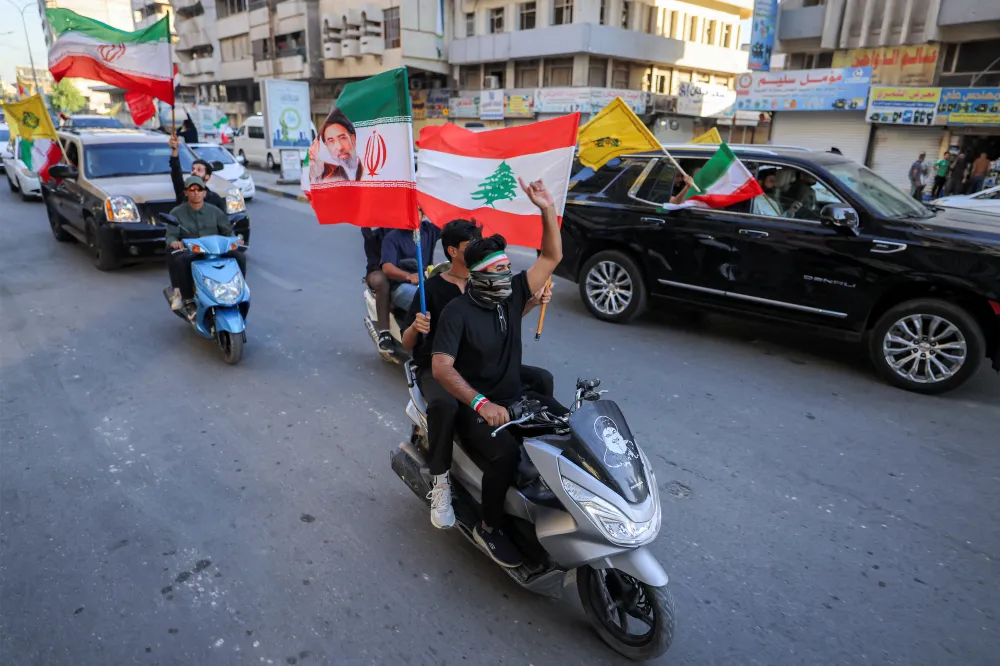
Lebanese compliance is externally monitored. Hezbollah’s behaviour determines implementation, despite Hezbollah refusing participation altogether. The result resembles less a peace treaty than a perpetual examination in which only one side continuously sits the test.
Lebanon’s Washington framework extends beyond the map
The real story begins where the map of Lebanon ends. The framework treats the conflict as a local security problem, yet its trajectory is increasingly dictated by a regional balance of power stretching from Washington to Tehran. Peace on the border has become inseparable from rivalry far beyond it.
The architecture inherits the structural asymmetries embedded within United Nations Security Council Resolution 1701. Passed after the 2006 Lebanon war, Resolution 1701 requires the Lebanese state to prevent armed groups from operating south of the Litani River and calls for the extension of exclusive state authority. Yet it has never established equivalent enforcement mechanisms regarding Israeli overflights, cross-border incursions or targeted strikes inside Lebanese territory.
The consequence is not simply legal imbalance but political predictability: Lebanon remains perpetually vulnerable to accusations of non-compliance while Israel retains broad latitude to justify exceptional measures under the doctrine of self-defence. As your source argues, this asymmetry transforms UNSCR 1701 into a framework of ‘managed failure’ rather than durable conflict resolution.
Asymmetric obligations within Lebanon’s Washington framework
This is where the Washington framework becomes more than a Lebanese story. It illustrates an emerging characteristic of the contemporary rules-based international order: legal obligations increasingly operate asymmetrically according to relative power rather than formal equality. The strongest actors retain considerable discretion in interpreting obligations, while weaker states are judged primarily by their capacity to satisfy externally defined conditions.
Israel occupies a unique position within this structure. It functions not simply as a participant in negotiations but, in practical terms, as a de facto veto-player over implementation. Security concerns become self-interpreting legal instruments. Military action can be presented as a defensive necessity rather than a treaty violation.
Equally significant is the role of the United States. Washington simultaneously serves as mediator, principal military supporter of Israel, and principal architect of implementation mechanisms. That combination inevitably raises questions about structural neutrality. Mediation traditionally depends upon confidence that competing interests receive comparable consideration.
Yet the framework overwhelmingly translates Israeli security requirements into operational benchmarks while asking Lebanon to demonstrate state capacity that decades of internal fragmentation and regional intervention have rendered extraordinarily difficult. Even supporters of American diplomacy acknowledge that the arrangement is fundamentally security-driven rather than politically balanced.
Managing instability through Lebanon’s Washington framework
The framework exposes an uncomfortable truth: modern diplomacy has become remarkably adept at managing instability while repeatedly failing to resolve it. Lebanon is no longer the subject of diplomacy but its object—a battlefield governed by external calculations rather than national sovereignty. Peace has become a carefully curated illusion, preserving strategic hierarchy while leaving the conditions for the next confrontation entirely intact.
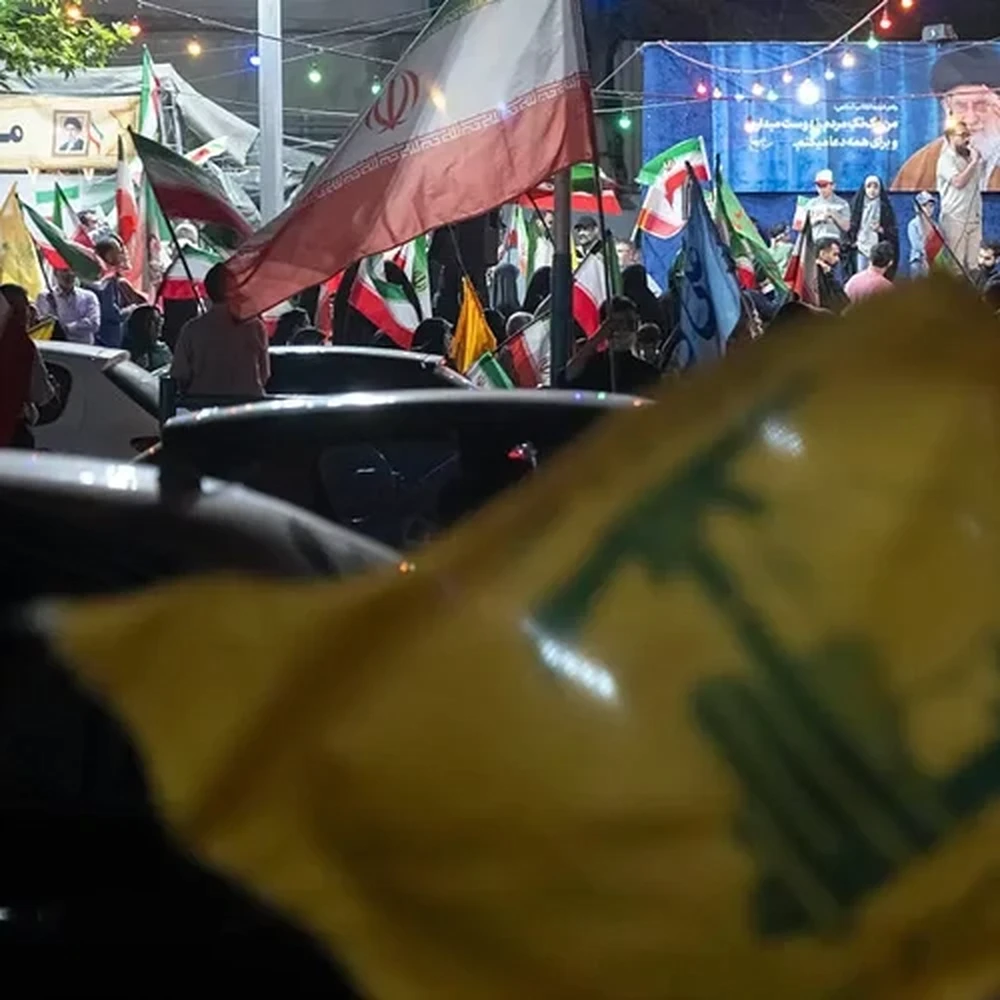
The broader geopolitical picture reinforces this concern. The framework cannot be understood independently of US-Iran relations. Hezbollah’s strategic calculations remain closely linked to Tehran, while Israeli military decisions remain deeply intertwined with Washington. Consequently, southern Lebanon risks becoming less a bilateral frontier than a pressure valve within wider regional bargaining. Local communities become spectators to negotiations whose decisive variables increasingly reside in Washington and Tehran rather than Beirut or Jerusalem.
This reality challenges one of international relations’ oldest assumptions: that peace agreements reflect the sovereign consent of the parties most directly affected. Here, sovereignty appears increasingly conditional, mediated through external patrons whose strategic calculations ultimately shape the conflict’s trajectory. Lebanon signs. Israel calibrates. Iran influences. The United States arbitrates. The state ostensibly at the centre of the agreement exercises the least strategic autonomy.
None of this diminishes Israel’s legitimate security concerns, nor does it excuse Hezbollah’s refusal to submit to exclusive state authority. Both remain central obstacles to lasting peace. But sustainable diplomacy requires recognising that stability achieved through structural imbalance rarely remains stable for long. History repeatedly demonstrates that agreements perceived as privileging one side’s strategic discretion over genuinely reciprocal obligations tend to postpone confrontation rather than resolve it.
International legitimacy becomes contingent upon alignment with prevailing distributions of power. Sovereignty becomes conditional. Compliance becomes selective. Stability becomes synonymous with preserving strategic freedom for the strongest actors. If that becomes the accepted model of conflict resolution, Lebanon will not be the exception. It will be the precedent.