

Washington’s retreat from Iran confirms a strategic defeat. The ceasefire ends a $200 billion quagmire, allowing America to pivot from primacy toward restrained realism, accepting that The US Lost the Iran War.
Washington’s formal retreat from the Middle East’s most volatile front confirms a grim reality: The US Lost the Iran War. This ceasefire, far from a diplomatic embarrassment, represents the least-bad outcome after a conflict that drained American treasure, blood, and global standing. Accepting that The US Lost the Iran War finally permits a strategic reset away from failed maximalism toward pragmatic retrenchment.
The US Lost the Iran War: First Lesson
Across the American political spectrum, many have deemed the US-Iran ceasefire deal to be a humiliating surrender for the United States. But these accusations fundamentally miss the mark. The now-signed memorandum of understanding is not a failure for the United States; it is an acknowledgment that the United States lost the war because it could not achieve its maximalist aims at an acceptable cost.
Even though the terms are highly favorable to Iran, the Trump administration made the right move in reaching this agreement, which will hopefully permanently end this costly conflict, whether or not a comprehensive agreement is reached down the road. In the long term, the lessons from this war should lead to a better, more restrained US foreign policy that actually serves Americans’ interests.
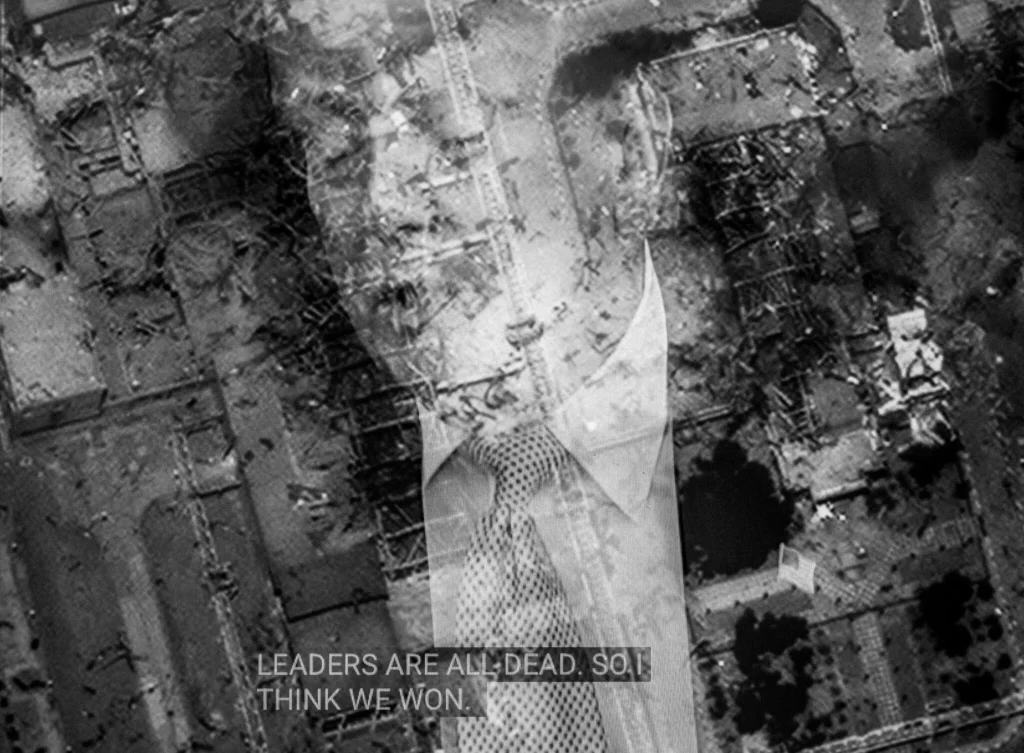
Accepting The US Lost the Iran War
For decades, the United States, encouraged by Israel, has overhyped the threat posed by the Islamic Republic. If the United States hadn’t needlessly overextended itself in the Middle East, there was almost nothing Tehran could do to harm the United States. But the war has strengthened Iran’s strategic position, as Tehran now has a stranglehold over one of the world’s most important commodity chokepoints. Meanwhile, the conflict has been a disaster for the United States and the global economy.
By some estimates, the war may have cost the United States up to $200 billion. Washington now has the blood of thousands of Iranian and Lebanese civilians on its hands, and at least 13 American servicemembers have been killed. Meanwhile, the largest energy disruption in history has not only affected prices at American grocery stores and gas pumps but also had deleterious consequences for billions of people worldwide. China’s influence is ascendant, as it presents itself as a stable world power with a thriving green energy industry.
Why The US Lost the Iran War
The Trump administration incurred all these costs for a war in which no core US interests were at stake. Many have questioned if this failed war could be America’s Suez moment, referring to the 1956 crisis that ultimately led to the end of the British and French empires. If this war does indeed bring about a similar result for the United States, then the conflict will have had a long-term net benefit for US interests, especially for everyday Americans, and for the world. The United States should internalize three key lessons.
First, it’s time to finally get out of the Middle East. US engagement in the region has sapped American lives, resources, and bandwidth for far too long. US attempts to dominate the region have had bloody and destabilizing consequences for the people of the region and wasted money that could have been used to improve American lives. Washington’s enormous and costly bases have proven ineffectual at best, and our unwavering support for Israel has enabled its aggression. The Middle East has long been a region of declining strategic importance, and its challenges are fundamentally political. These problems, from the threat posed by terrorist groups to the free flow of oil from the region, are best addressed by regional states.

The US Lost the Iran War: Strategic Reset
Second, the United States needs to give up its perpetual pursuit of global primacy. US attempts to assert hegemony over the Middle East are but a microcosm of Washington’s broader post-Cold War foreign policy. The United States has enormous geographic advantages, with massive oceans to the east and west and friendly neighbors to the north and south. It does not need to project power around the world to be safe and prosperous.
The world is becoming more multipolar, and new technologies are giving weaker states stronger defense capabilities, rendering US military superiority less effective. The war in Iran has been a profound demonstration of this new reality. US policymakers should take it to heart and reorient US foreign policy toward a more pragmatic direction, focusing on protecting the homeland.
Energy and The US Lost the Iran War
Third, the United States needs to take energy diversification seriously. It’s clearly in America’s strategic interests to be less reliant on oil. American politicians have touted US energy dependence for years. But the Iran War has demonstrated the flaw in that logic. Oil prices are determined by the global oil market, not by how much oil the United States produces, which means the United States will always be vulnerable to market disruptions, whether in the Strait of Hormuz or elsewhere. Green technologies provide a strategic firewall against these energy vulnerabilities.
The United States has provided Iran with up-front concessions and a much-needed economic lifeline, after decades of US sanctions, with Tehran giving up nothing. But the notion that this is a bad deal—proffered by those who will never give up on their goal of regime change in Tehran or those who want to score political points against President Donald Trump—fundamentally misses the point. The deal isn’t a loss; the war is, and because the United States lost the war, it doesn’t get to dictate the terms of its end. But ending it is a first and necessary condition for moving toward a less militaristic foreign policy and domestic renewal.