
Clearing 80 Maham mines from the Strait demands Iranian intelligence and international assets. AIS blackouts and GPS jamming complicate efforts. Success requires coordinated naval cooperation and political trust.
The reopening of the Strait of Hormuz hinges on a perilous dual challenge: neutralizing approximately 80 blast mines while managing congested, darkened shipping lanes where AIS silence and GPS jamming elevate collision risks. This demining the Strait of Hormuz demands technical precision, yet the true bottleneck lies in political trust. Success requires Iran to share its unique mine-location intelligence, transforming this demining Strait of Hormuz from a mere cleanup into a litmus test for sustainable de-escalation.
Demining Strait of Hormuz faces immediate gridlock
Shipping through the Strait of Hormuz has begun to increase following the US-Iran deal. Yet for the Strait to fully reopen, it will need to be cleared of sea mines that put ships at risk.
This will be a difficult and lengthy task that will put the ceasefire to the test. But it also offers an opportunity to for Iran to work with others to demonstrate its commitment to de-escalation.
Mines in the Strait of Hormuz
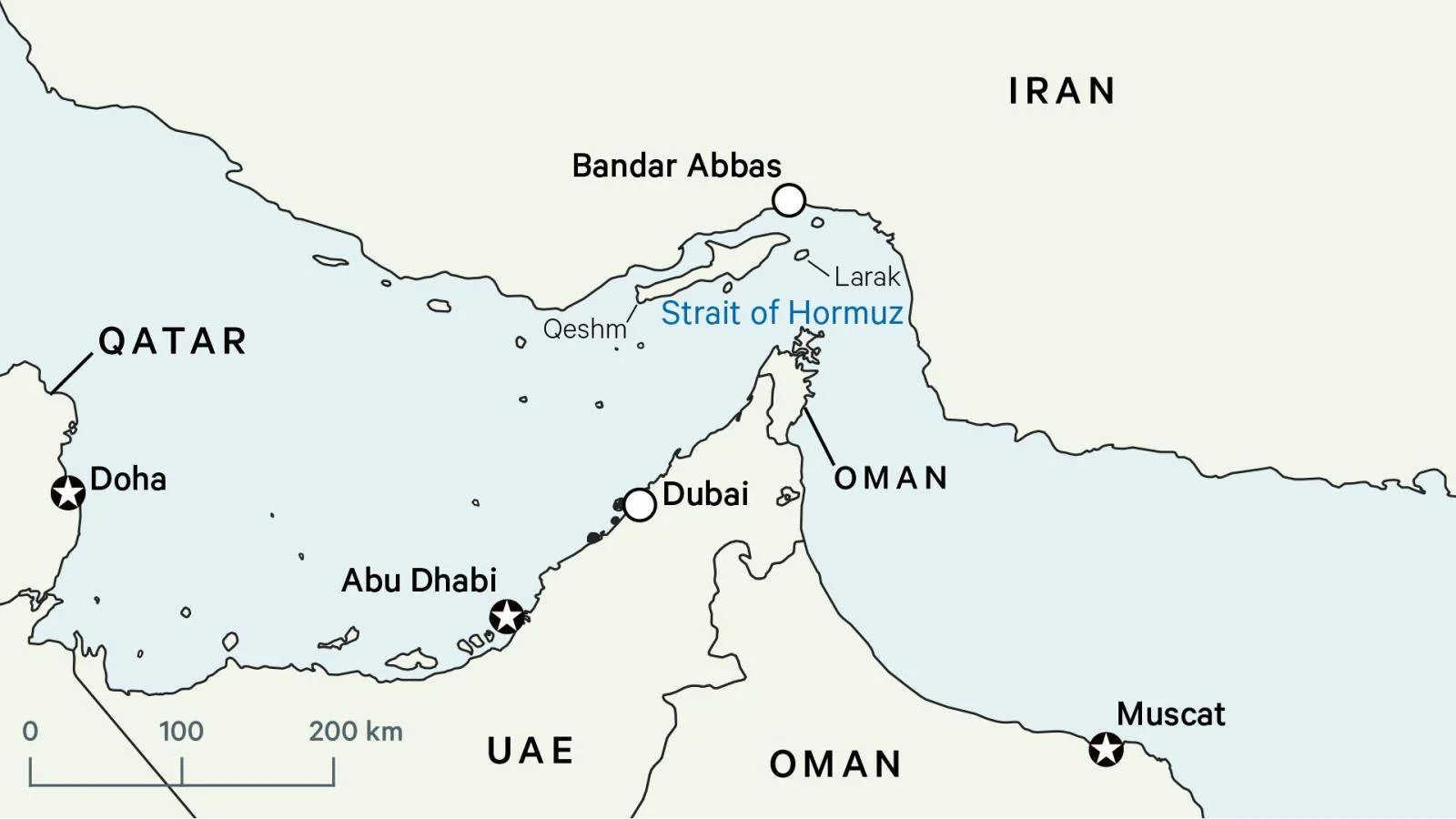
Iran has not publicly confirmed how many mines it laid in the Strait of Hormuz or their precise location. Estimates suggest there are about 80 mines in the Strait. These are primarily Maham 3 and Maham 7 high-explosive blast mines. Importantly, Maham mines resist detection by deviating sonar waves used by minesweepers, making them extremely difficult to detect and remove.
Before the war, Iran had an estimated stock of about 5,000-6,000 sea mines, a significant amount of which are produced domestically. Some analysts believe that Tehran has retained 80-90 per cent of its small boats and minelaying vessels, but there is no official confirmation of these numbers.
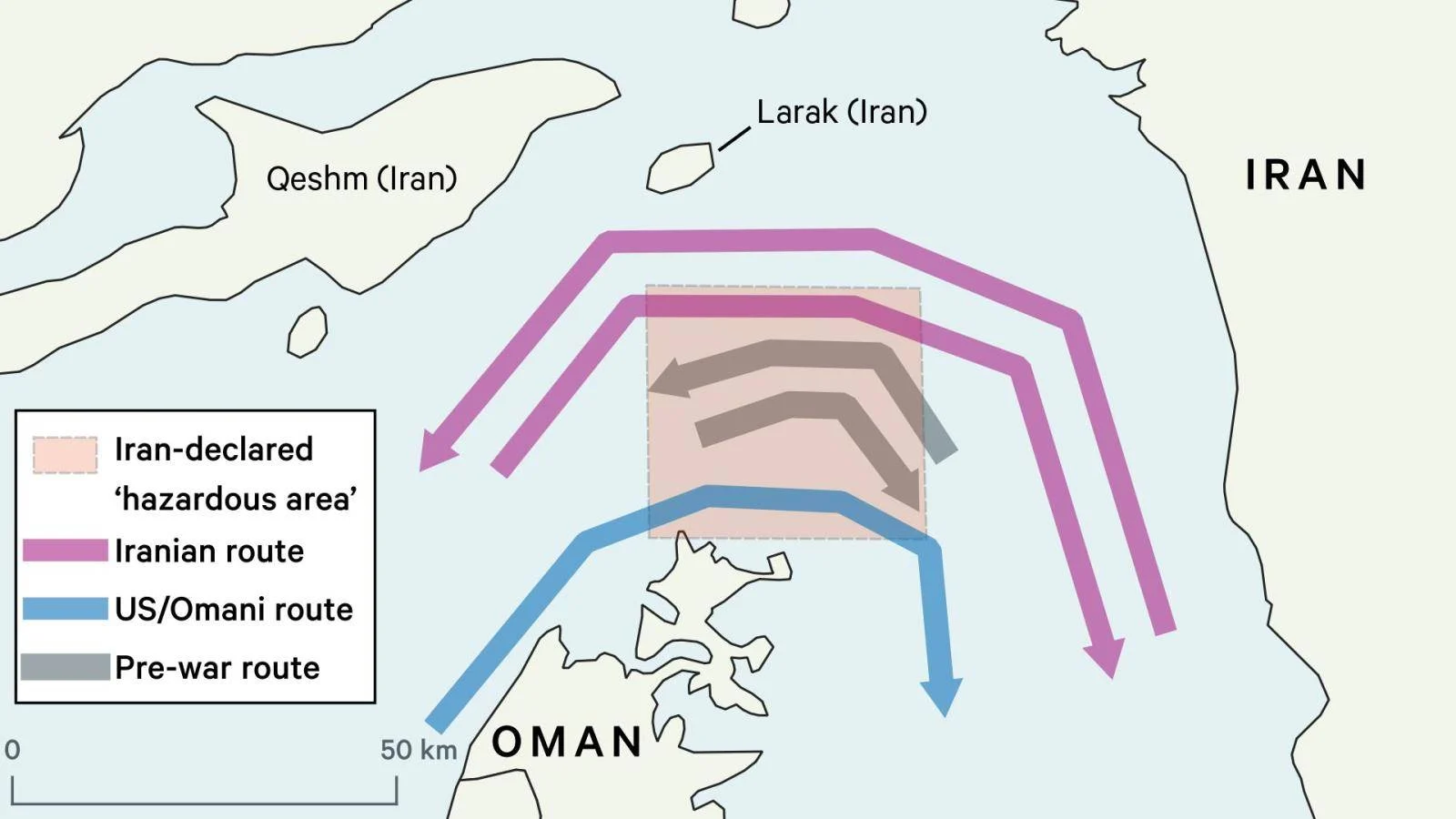
Iran previously declared an area that covered the established traffic lanes as a ‘hazardous area.’ There are currently four suspected but unconfirmed minefield areas around these lanes. These are likely around the western entrance to the Strait, the central eastbound shipping lane, the central westbound shipping lane, and the eastern exit toward the Gulf of Oman.
Why demining Strait of Hormuz grows complex
Demining Strait of Hormuz will be extremely complicated, in part because it will have to take place amid changing shipping traffic patterns and potentially dangerous congestion in the narrow waterway.
Since the main central route through the Strait became effectively closed by Iranian mines, there are now two passable routes through the Strait. Iran has established a northern route closer to the Iranian coast, putting ships at risk of being seized and potentially enabling Iran to charge tolls or ‘service fees’ in future. Meanwhile, the US has established its own southern route that hugs the Omani coast, which it says ships can ‘freely and safely transit.’
Both routes push shipping to the shallow edges of the Strait, increasing the risk of ships running aground. Both are also narrow; in recent days only an average of 25 ships have transited daily, compared to the pre-war daily average of around 125. There are around 500-600 ships still stranded in the Persian Gulf. Traffic cannot be effectively restored to pre-war levels without reopening the main central channel.
Mine clearing will also be difficult to manage safely due to ships turning off their AIS location signals. This has helped ships avoid detection from Iranian forces while traversing the southern route, but also prevents them from communicating their location to other nearby ships, increasing risks of collisions. Turning off AIS signals or ‘going dark’ is also a practice used by ships participating in sanctions evasion and illicit activity at sea, including many Iranian ships and vessels within the shadow fleet.
Today, ships may be reluctant to use their AIS signals for fear of becoming targets if hostilities restart. Likewise, GPS jamming has also been used widely across the Gulf in missile defences; GPS jamming disrupts AIS signals, making it impossible to navigate effectively and safely.
Demining and traffic management will be further complicated by Iran’s new claims of sovereignty across the Strait of Hormuz. Iran’s recently established Persian Gulf Strait Authority has warned that any ships not using ‘unauthorised routes’ would not be guaranteed safe passage.
On Thursday, the International Maritime Organization announced it was pausing its efforts to evacuate stranded seafarers from the Persian Gulf after an attack on a cargo ship off the coast of Oman, which the US blamed on Iran. The IMO mission also presents an additional cause of congestion in the Gulf that will need to be managed alongside mine clearing.
International coalition for demining Strait of Hormuz
Point 5 of the US-Iran memorandum of understanding (MoU) seems to place the responsibility on Tehran to demine Strait of Hormuz: ‘The traffic of commercial vessels will immediately start, and considering the need for removing the tactical and military obstacles and demining by the Islamic Republic of Iran will be instated within 30 days.’
However, while Iran does have some mine clearing capabilities, its forces are optimized for laying mines rather than removing them. Iran alone may also not be able – or trusted – to clear the mines in the Strait by itself.
But its role cannot be discounted altogether. Given that Iran laid the mines, it could have crucial information about the location of mines, mine types and arming settings. Iran’s participation in demining operations could also provide an opportunity for Tehran to signal its commitment to the peace process and decreases the incentive for it to place more mines in the future.
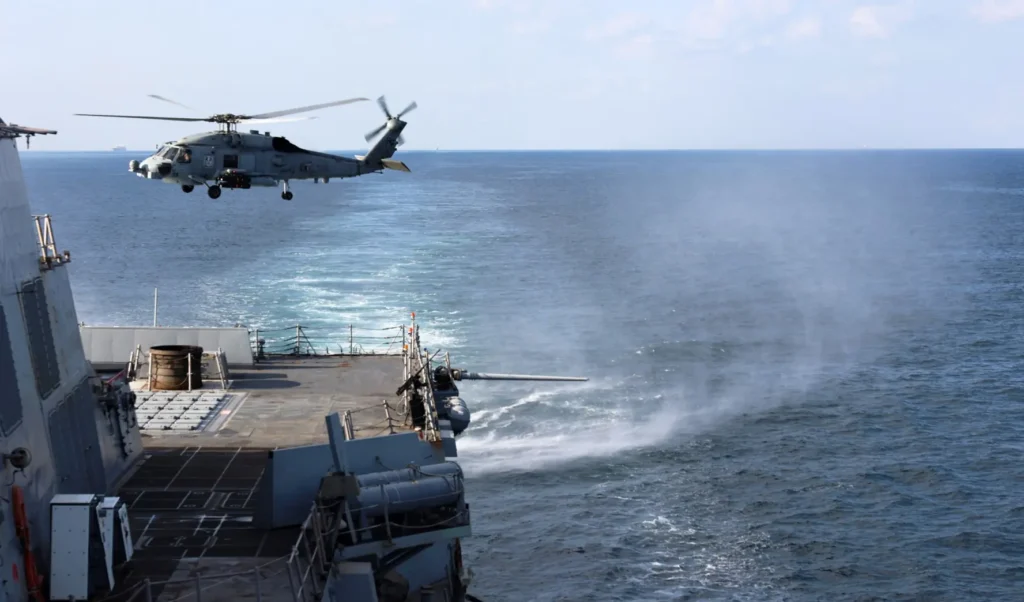
While the US has an arsenal of drones, explosive-laden robots and helicopters for mine detection, it also cannot do the job alone. Mine-clearing through deactivation or detonation still requires highly skilled crews and advanced equipment. The US has historically relied on its NATO allies to cover these areas in an implicit division of labour; it currently only has one ship available for mine clearing in the Middle East. As a result, the US will have no choice but to depend on and coordinate with its allies and partners to reopen the Strait of Hormuz.
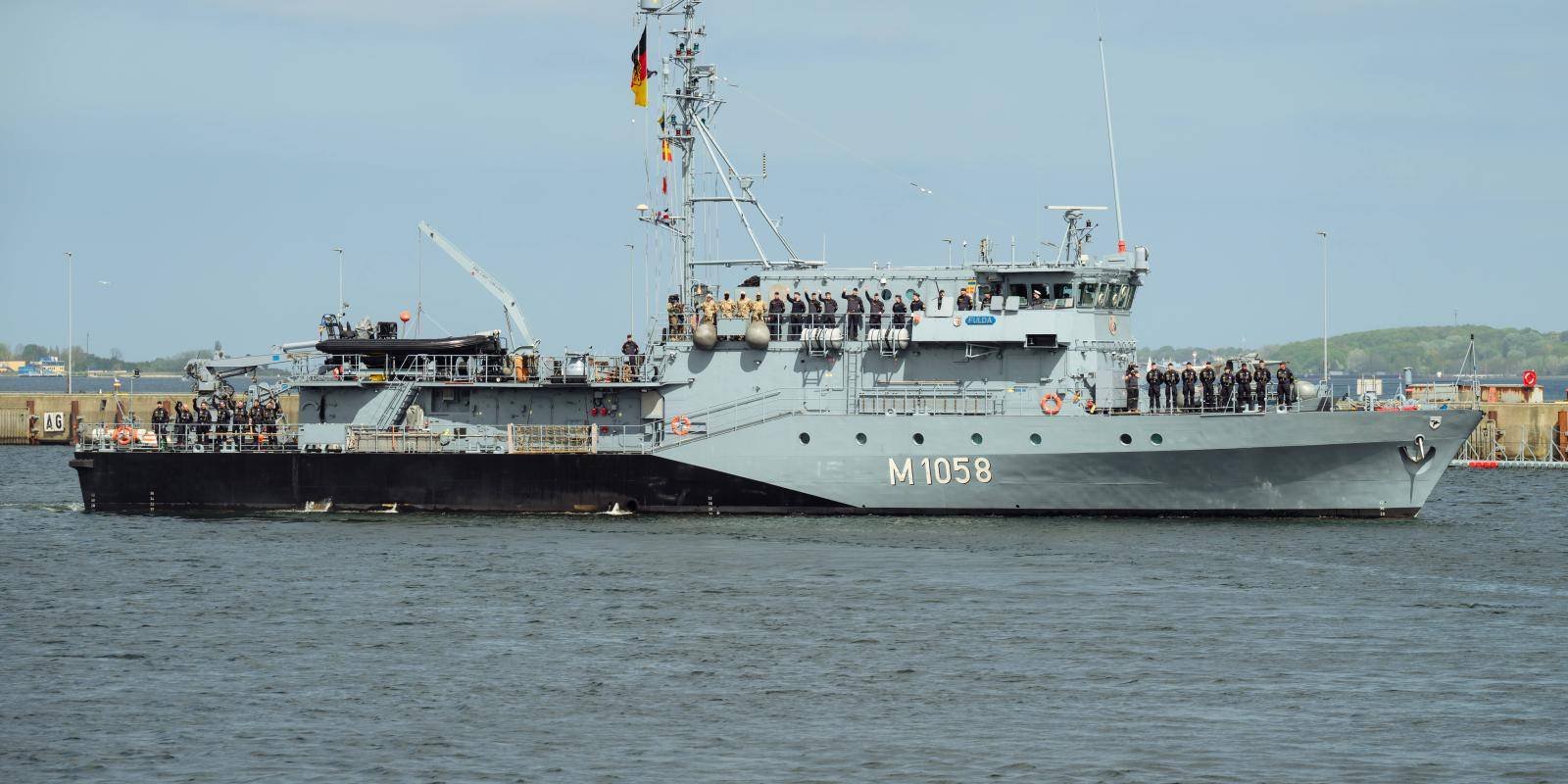
Other countries have a willingness to join a Hormuz mine-clearing mission, with some publicly offering forces. The UK-France proposed multinational coalition includes several European navies that have specialist mine countermeasure forces. The UK has offered some of its newer unmanned mine warfare capabilities for mine detection, which would be paired with HMS Dragon for escort and force protection. Germany, the Netherlands, Italy and the European Union’s EUNAVFOR Operation Aspides among others could all contribute too.
Ultimately, reopening the Strait of Hormuz is a shared global necessity. Mine clearing can only effectively and practically happen through international cooperation and coordination. Iran has not only agreed to play a role as per the MoU, but it must also be stakeholder in the reopening of the Strait if the world is to avoid another chokepoint closure in the future.
Demining Strait of Hormuz needs political will
Mine clearance is often considered a technical challenge, but in the Strait of Hormuz the greater obstacle may be political. Clearing mines is a slow, deliberate and resource-intensive process that requires specialized vessels operating predictably in confined waters. These forces cannot work effectively unless all parties have confidence that they will not become targets.
For that reason, a sustained cessation of hostilities between the US and Iran is a prerequisite for any meaningful demining effort. Both sides would need to commit to not attacking each other, but also to protecting mine-countermeasure vessels, support ships, and civilian traffic transiting through the Strait. At present, the ceasefire and accompanying MoU provide only limited guarantees, while large-scale mine clearance has yet to begin. If demining operations are to succeed, these guarantees will likely need to be extended well beyond the current timeline.
Importantly, reopening the Strait does not require a comprehensive political settlement between Washington and Tehran. Mine clearance can instead serve as an intermediate step in a broader diplomatic process. Negotiators should therefore consider how demining can be sequenced alongside confidence-building measures, maritime security arrangements and sanctions relief. Iran’s participation in mine-clearance operations could serve as a tangible demonstration of its commitment to de-escalation, while international involvement would help provide transparency and reassurance to all parties.
Trust sustains demining Strait of Hormuz
Ultimately, the question is not simply how quickly mines can be removed from the Strait of Hormuz, but whether the political conditions can be created to keep the waterway open afterward. Technology can locate and destroy mines; only diplomacy can ensure that they are not laid again.
Fully reopening the Strait fully will therefore require more than a demining operation. It will require a durable framework of cooperation between Iran, the US, regional states, and international maritime partners. Mines may be the most visible obstacle to restoring navigation, but the lasting challenge will be rebuilding enough trust to prevent the Strait from becoming a battlefield once again.