
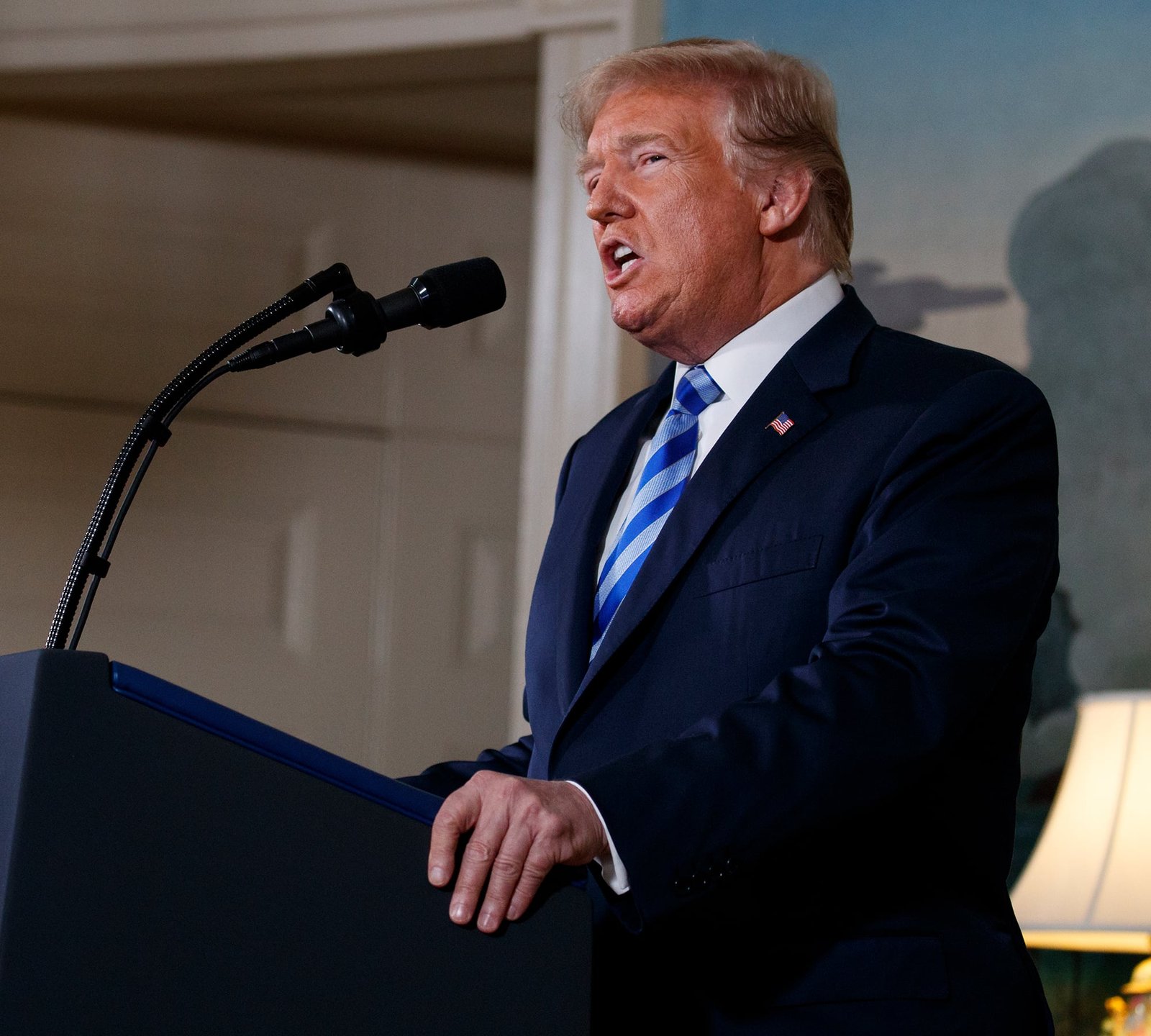
America’s military supremacy against Iran has been squandered through strategic incoherence, as Trump’s Chaos on Iran replaces disciplined statecraft. This dysfunction emboldens Tehran, demoralizes allies, and transforms tactical victories into diplomatic defeat with long-term consequences.
The strategic incoherence emanating from Washington has systematically undermined American leverage against Tehran, transforming a position of military supremacy into diplomatic retreat. This erosion, rooted in the Trump administration’s endemic disarray, has handed Iran a path to resurgence precisely when it appeared weakest. The resultant Trump’s Chaos on Iran represents a catastrophic failure in statecraft that will resonate for decades, as Trump’s Chaos on Iran has normalized Iranian defiance while demoralizing allies.
Trump’s Chaos on Iran spawns strategic drift
On June 19, the Trump Administration signed a Memorandum of Understanding (MOU) with Iran that, even on the White House’s own interpretation and public messaging – let alone Iran’s – amounts to a 60-day extension of the shaky ceasefire in place since April 8, and an agreement to reopen the Strait of Hormuz, along with hope that with substantial enticements, this will pave the way for an agreement to give up, send off, or otherwise address certain elements of Iran’s nuclear program. Maybe. [Ed. For more on the details of the MOU, and its implications, see here]
The conflict with Iran launched on Feb. 28 has seen 13,000+ strikes on Iran’s military industrial base. Iran’s ability to reconstitute its weapons programs has been set back. Nonetheless, absent a nuclear deal of the kind no Iran expert of any stripe believes Teheran would agree to, it is safe to say that while the new regime in Iran has not come out of this confrontation stronger right away, it appears clear that shortly it will be much stronger.
How did we get here?
This deeply troubling outcome is part and parcel of the fact that, on the question of Iran, the chaos and disinformation that is the Trump Administration has been uniquely disastrous.
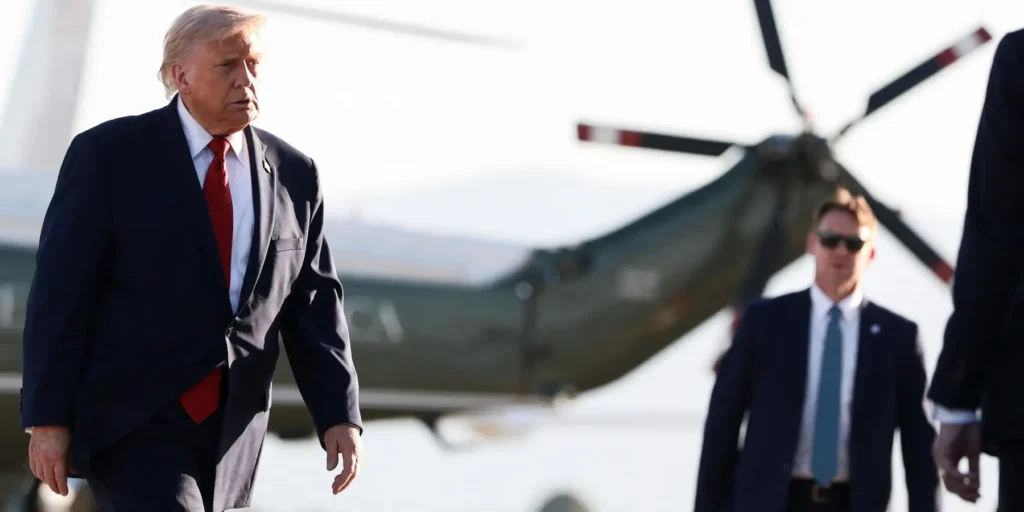
Decoding the reality of Trump’s Chaos on Iran
The President is far from scripted; indeed, what he says on one day often contradicts what he says on another. There is no process inside the National Security Council, nor at the Department of State. Thousands of positions in both Washington and overseas are unfilled. As a result, the field is open for unauthorised leakers claiming to speak for, speak to, listen in on, and otherwise know what Donald Trump is thinking at any given moment.
Arguably, the notion of American strikes on Iran began with the hugely successful Israeli Operation Rising Lion in the dog days of June 2025. Jerusalem launched its war on the Islamic Republic with a view to stymieing an increasingly hardened nuclear, missile, and WMD program that promised to be unassailable in the future. Targeting those sites, Islamic Revolutionary Guard Corps and other military leadership, nuclear and political and scientific leaders, the Israelis operated with near impunity over Iranian territory. But the hardest targets were Iranian nuclear sites at Fordow, Natanz, and Isfahan.
On the night of June 20-21, two waves of B-2 Stealth bombers launched from Whiteman Air Force Base in Missouri. One wave headed east, another west as decoys, eventually joining their compatriots over the skies of Iran.
Hours later, per Chairman of the Joint Chiefs Dan “Razin” Caine, “the lead B-2 dropped two GBU-57 Massive Ordnance Penetrator weapons on the first of several aimpoints at Fordow.” More followed against Natanz. It was the largest B-2 operation in history.
Military might meets Trump’s Chaos on Iran
Notwithstanding a barrage of pro-Iran disinformation and spurious “intelligence assessments” that suggested the damage to Iran was minimal, the reality of the 12-day Israeli-American war on Iran was debilitating – though not devastating – to Iran’s ability to operationalise and deliver a nuclear weapon. However, what the brief and hugely successful operation did was to eliminate any hesitation about what a larger such operation might mean. And thus, when the United States and Israel watched Iran work assiduously to resuscitate its missile program in the wake of that war, the idea of going back in seemed… appealing. Too easy.
It was not.
The entire old guard of the Iranian regime has been eliminated; per America’s CENTCOM Combatant Commander Adm. Brad Cooper, more than 13,500 US airstrikes have demolished more than 85% of Iran’s military industrial base. Iran has lost all control of the airspace above the country. And yet, the regime remained in control of the country, and worse yet, was able to exert nominal control of the Strait of Hormuz for months.
Critics have asked, reasonably, why President Trump, outraged by the regime’s wanton killing of some 42,000 Iranians seeking freedom, promised that help was on the way. They have wondered why it is that the United States appeared not to have expected Iran to close the Strait. And why, having demanded that Iran accept limits on its missile program, end its oppression of its people, and give up, lock, stock, and barrel, its nuclear program, including centrifuges and “dust” (highly enriched uranium stocks), the United States now appears to be settling for a deal to negotiate to pay billions of dollars to the Iranian regime in exchange for… a promise not to seek a nuclear weapon and little more.
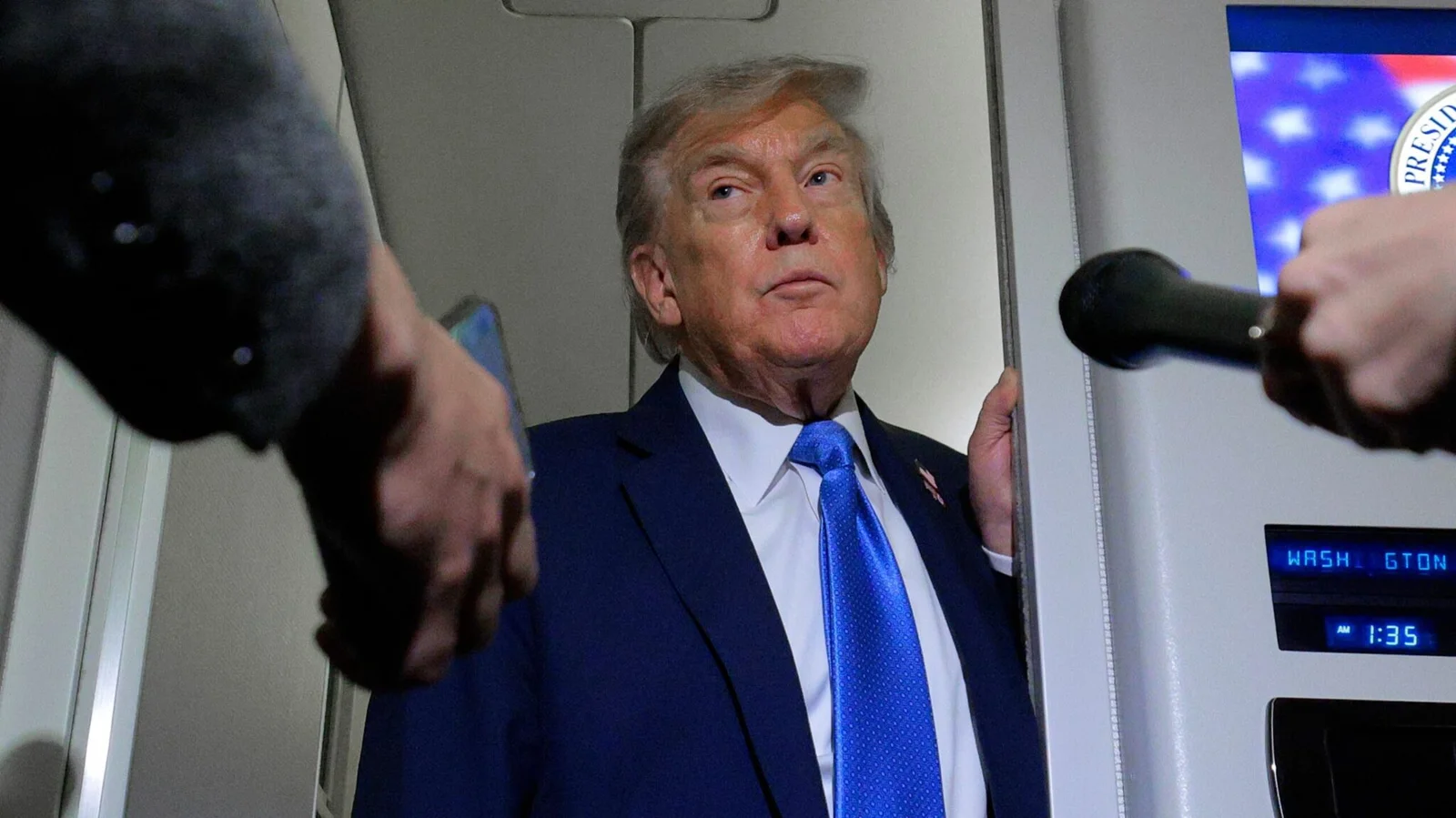
Trump’s Chaos on Iran derails clear objectives
The answer to every question comes back to the disarray in the White House, the lack of process, and the capricious nature of Trumpian decision making. Why are we not supporting the Iranian people? Because the plan to help them was derailed by Trump himself following a call from Turkish leader Recep Tayyip Erdogan. Why did we not expect the Iranian takeover of the Strait of Hormuz? We did, but the President wouldn’t allow US forces in the region to drive them out.
Why are we now giving up on missile restrictions? Because the Iranians won’t accept them. Why are we defining down victory on the nuclear weapons file? Because our negotiators know very little about nuclear weapons proliferation. Why has Trump turned on Israeli PM Netanyahu? Because Netanyahu thought the regime would fall more quickly.
Was anyone lying? Was the Israeli Prime Minister misleading the President? No. War is hell, and rarely goes according to plan. And it never goes according to plan when the Commander in Chief can’t decide what he wants to do. When he gives conflicting orders. When he tells the US military to go, then stop, then go again. When he isn’t entirely sure what his aims are because he has never articulated them clearly.
When leadership fails amid Trump’s Chaos on Iran
The real problem is that the President of the United States changes his mind based on the advice of incompetent confidantes, pernicious foreign leaders, outside players, and pretty much anyone who has his cell phone number.
Is the battle against the Islamic Republic salvageable? Of course. Donald Trump, notwithstanding evidence to the contrary, does not like the regime. They have overplayed a weak hand, just as he has underplayed a strong hand. Trump could still decide he is fed up with Teheran’s efforts to lead his hapless negotiators around by the nose and restart military operations. He could turn back to the original plan to empower the Iranian people.
But that doesn’t look likely right now.