
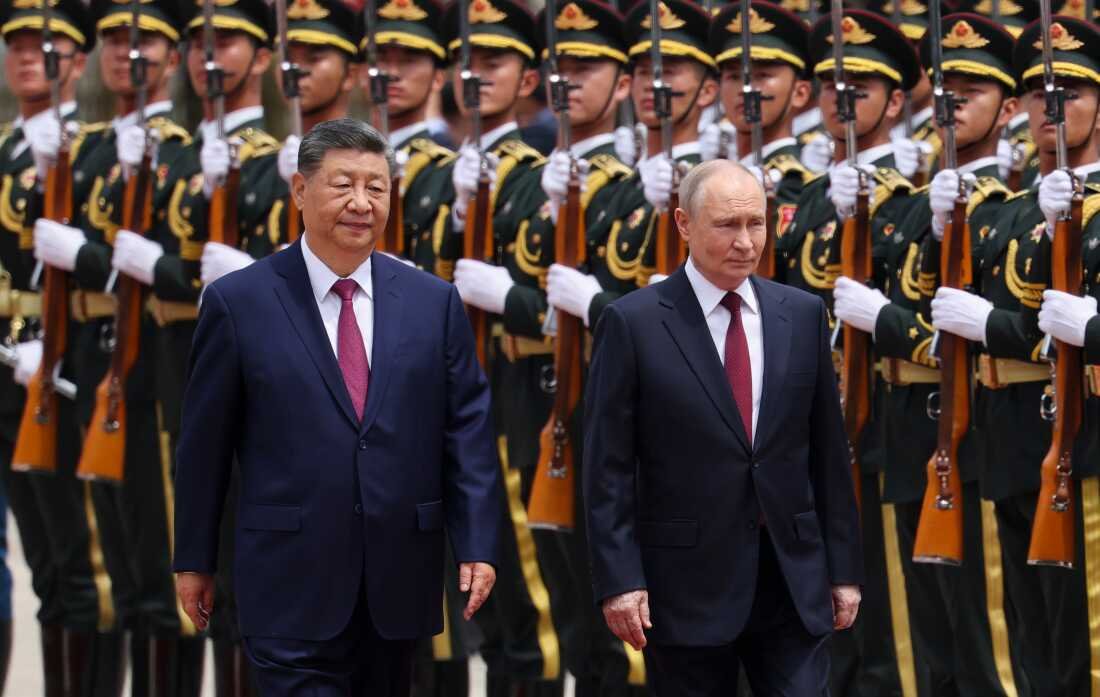
A profound evaluation of the Sino-Russian alignment following the strategic talks in Beijing. The brief highlights the transactional boundaries of their partnership, noting how deep-seated pricing disputes continue to stall critical energy infrastructure goals.
The recent diplomatic engagement in Beijing underscores the complex, transactional boundaries governing the contemporary Sino-Russian alignment.
While Moscow increasingly relies on its neighbor for economic survival amid mounting battlefield pressures, Beijing carefully calibrates its strategic depth to avoid structural overexposure. This reality became starkly evident during the recent Putin-Xi Summit, an event that highlighted the limits of their mutual leverage. Ultimately, the Putin-Xi Summit exposed deep-seated pricing disagreements that continue to stall Russia’s most critical energy export ambitions.
Putin-Xi Summit Yields Modest Results
Russian leader Vladmir Putin and Chinese leader Xi Jinping met for a two-day summit on May 20 to 21 and signed 40 limited agreements covering education, trade, technology, and nuclear energy, though failed to close a deal on a stalled, major pipeline project pushed by Moscow.
Coming in the immediate wake of a separate summit between U.S. President Donald Trump and Xi, the Xi-Putin meeting highlights China’s hedged commitment to the Axis of Aggressors — which also includes Iran and North Korea — even while pursuing “strategic stability” with the United States.
Stalled Energy Agendas During Putin-Xi Summit
Amid diminished demand for Russian natural gas in Europe, Moscow has pivoted toward prioritizing the Power of Siberia 2 project, a planned pipeline intended to cross Mongolia and intersect with China’s internal pipeline infrastructure. While Kremlin representative Dmitry Peskov touted a “general agreement” on the proposed pipeline, including its route and construction, none of the agreements signed by Putin or Xi offered terms for pricing and volume, both of which remain key points of contention between Moscow and Beijing.
With regard to security cooperation, Putin mainly directed criticism at Washington and its allies. In a Chinese state media readout of the meeting, Xi repeated his call to avoid a return to the “law of the jungle” — a phrase Beijing has previously used to criticize U.S.-Israeli strikes on Iran — while portraying Chinese cooperation with Russia as a stabilizing force.
In a joint press conference with Xi, Putin endorsed both leaders’ efforts to counter “fascism and militarism,” references to both Ukraine and to Japan, which Beijing has accused of raising tensions over Taiwan. Beyond commenting on current conflicts, both leaders also criticized the U.S.-proposed “Golden Dome” missile defense project and the expiration of the 2010 New START arms control treaty as signs of Washington’s “irresponsible” nuclear policy.
Moscow Dependent on Putin-Xi Summit
China’s support for Russia has taken on a new significance as Moscow has faltered on the battlefield under the weight of Ukraine’s stout defense while facing greater pressure from Kyiv’s long-range strike capabilities. China remains a key supplier for Russia’s war machine, providing microelectronics, precision machine tools, drone components, and other dual-use goods to fuel Moscow’s defense industrial base. China’s purchases of Russian gas and oil have provided a partial fiscal foundation for the Russian economy, forestalling a more painful contraction due to its intense reliance on energy exports and its loss of European market access.
Russia and China’s military relationship continues to deepen as well. Reuters reported on May 19 that European intelligence agencies have documented how Beijing has trained 200 Russian soldiers in Chinese military facilities beginning in July 2025, with Chinese military officers providing expertise in drones, electronic warfare, armored infantry, and other subjects. Some Russian personnel who allegedly received training were instructors intending to disseminate Chinese tactics throughout Russian drone units, while others had been deployed to the occupied Ukrainian territories of Crimea and Zaporizhzhia.
Putin-Xi Summit Exposes Interdependence Limits
The Putin-Xi summit highlights Russia’s reliance on China as a lifeline for its faltering war economy and a source of critical components for its military industrial base. Nonetheless, Moscow’s failure to land a major gas deal at a moment of maximum leverage given the current global energy crisis signals Beijing’s reluctance to become overly reliant on Russia.
In response, the United States can further weaken Russia’s war economy by properly enforcing sanctions on Russian oil exports once the Strait of Hormuz is reopened, placing even greater pressure on Moscow as Ukraine continues its strikes on Russian oil refineries.
Strategic Geopolitical Friction After Putin-Xi Summit
In the wake of Trump’s trip to Beijing, Washington should also begin enforcing sanctions on Chinese firms involved in transferring dual-use components to Russia. Likewise, the White House should resist pitching a potential relaxation of sanctions on China as a possible concession.