
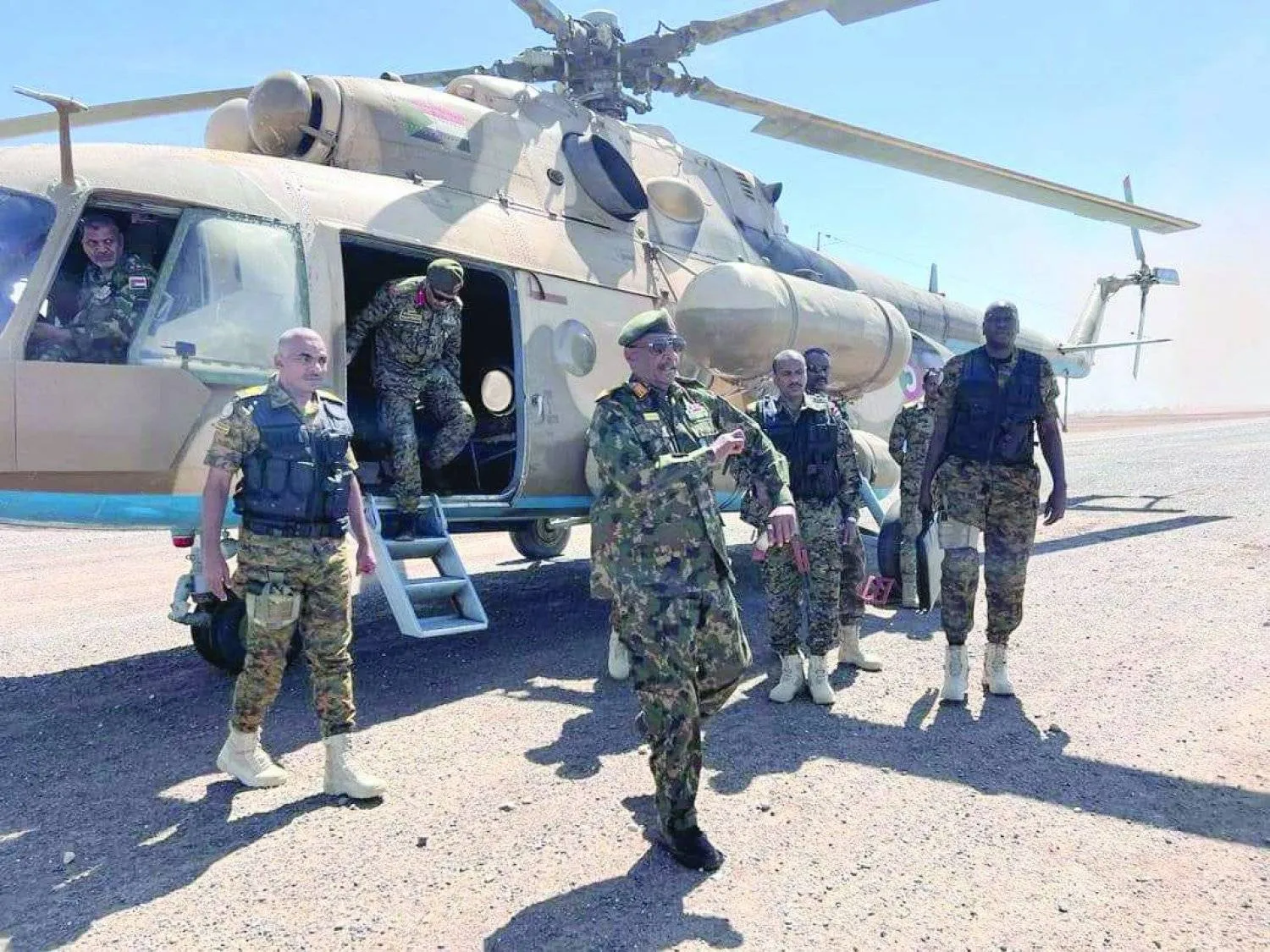
Sudan’s pivot from Iranian weapons to court Washington exposes a strategic gamble, yet foreign drone dependency and proxy supply chains ensure Tehran’s military footprint persists regardless of official policy shifts.
Sudan’s strategic pivot away from Iranian weapons signals a calculated gamble for U.S. backing, yet this move exposes a deeper paradox in Khartoum’s war calculus. While the Sudanese Armed Forces seek to rebrand as a viable American partner, the enduring reliance on foreign drone technology underscores how Iranian weapons have become inseparable from the regime’s survival. The decision to halt purchases is a necessary political gesture, but disentangling the military’s operational dependence on Iranian weapons will prove far more arduous than any diplomatic statement suggests.
Iranian weapons Drive Khartoum’s Offensive
Sudan’s civil war, now in its fourth year, has become one of Africa’s first drone wars.
Yet the drones dominating this battlefield are overwhelmingly foreign. From approximately 3,000 miles away, Iran has supplied the Sudanese Armed Forces (SAF) with drones manufactured by Qods Aviation Industries, a U.S.-sanctioned entity since 2013.
Between December 2023 and July 2024, at least seven cargo flights traveled between Iran and Sudan, likely transporting drones and components. In April 2026, an Iranian-born U.S. resident was arrested at Los Angeles International Airport for allegedly brokering a $70 million deal to supply Mohajer-6 systems and other hardware to Sudan’s Ministry of Defense, suggesting transfers remain ongoing.
Washington Courts Sudan Amid Iranian weapons
Now, the SAF is reportedly halting purchases of Iranian weapons in hopes of courting Washington as a backer in ceasefire negotiations. This, however, is a necessary but insufficient condition for Washington to back the SAF.
Moreover, even if the SAF follows through, distancing itself from Tehran does not guarantee that Iranian weapons will disappear from the battlefield. The Houthis, themselves recipients of the same drone systems, represent an alternative channel through which Khartoum could continue to source dual-use technology without a direct transaction with Tehran.
Precision Strikes Rely on Iranian weapons
Tehran has famously deployed its drones across its proxy network, supplying them to Hezbollah and the Houthis for operations against Israel and Red Sea shipping and to Russia for use against Ukraine beginning in 2022.
For the SAF, Iranian drones have allowed it to deliver precision strikes that less sophisticated forces cannot counter, aiding its efforts to seize key territory, especially around Khartoum.
For Iran, Sudan is both a market and a foothold. Arms sales generate revenue for the sanctions-pressured regime. Access to the SAF, meanwhile, gives Tehran positioning along the Red Sea corridor, extending its reach toward the Bab el-Mandeb and the Houthi-controlled chokepoints beyond it.
Iranian weapons Face Regional Proxy Rivalry
Sudan’s shifting battlefield dynamics have drawn deeper regional engagement. Egypt views instability in Sudan as a direct national security threat, particularly regarding its southern border and Nile water security. Cairo has operated an airbase on its shared border with Sudan for at least six months and used it to carry out strikes on the Rapid Support Forces (RSF), the U.S.-sanctioned paramilitary fighting the SAF. Saudi Arabia, meanwhile, has aligned with Egypt in backing the SAF, viewing the army as the more viable bulwark against fragmentation and extremist resurgence.
The United Arab Emirates, by contrast, has provided significant support to the RSF, with Emirati leadership viewing RSF commander Mohamed Hamdan Dagalo, also known as Hemedti, as a key intermediary for Sudan’s gold exports and a pathway to Emirati ambitions for Red Sea port development. Turkey has also expanded its footprint in Sudan, with Turkish firms reportedly selling weapons to both the SAF and the RSF in violation of U.S. sanctions.
Washington Pressures Allies Over Iranian weapons
The SAF’s decision to distance itself from Iranian weapons is a constructive but incomplete signal. Washington’s leverage in Sudan does not run through the SAF alone. The foreign actors sustaining this war — namely Iran, the United Arab Emirates, and Turkey — remain the pressure points.
Washington should work to align regional allies such as Egypt, Saudi Arabia, the United Arab Emirates, and Turkey around the core shared goal of preventing Sudan from becoming a hub for Islamist networks. At the same time, Washington should target the supply chains and financial networks enabling foreign backing, particularly the weapons transfers that have allowed the conflict to fester.
Demanding the SAF sever all foreign ties risks handing the RSF a battlefield advantage. The right approach includes coordinated external pressure on all actors intervening in Sudan, diplomatic alignment, targeted sanctions, and the credible threat of isolation for those who continue to fuel the war.